Due to COVID (especially with 2 unvaccinated children) we wanted to rent a car for transportation rather than using public transit (13 Sept – 9 Dec 2021). We did not weigh the pros and cons of renting an electric vehicle (EV) vs a gas car, because we wanted to reduce our emissions wherever possible and I had some familiarity with EVs through my work and family. An EV driver at a curb-side charger in Paris told us that we were adventurous (to be generous) for making this choice!
We rented a DS 3 CROSSBACK E-TENSE 100% EV on a subscription basis from Sixt for ~three months. (The car had only 4000 km on it at the start of our rental. We’re not sure if it was a 2020 or a 2021 model.)
We prepaid for 2000 km per month, and purchased extra kms when necessary. (Make sure you do this before reporting your monthly mileage, or you will be charged a higher rate automatically).
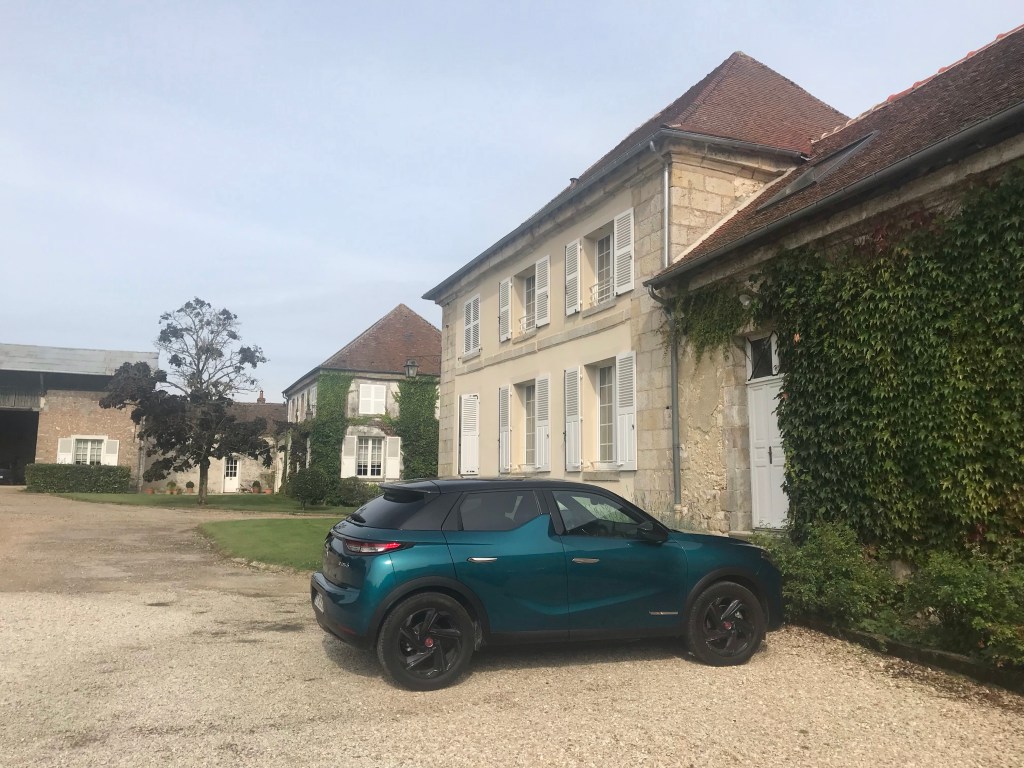
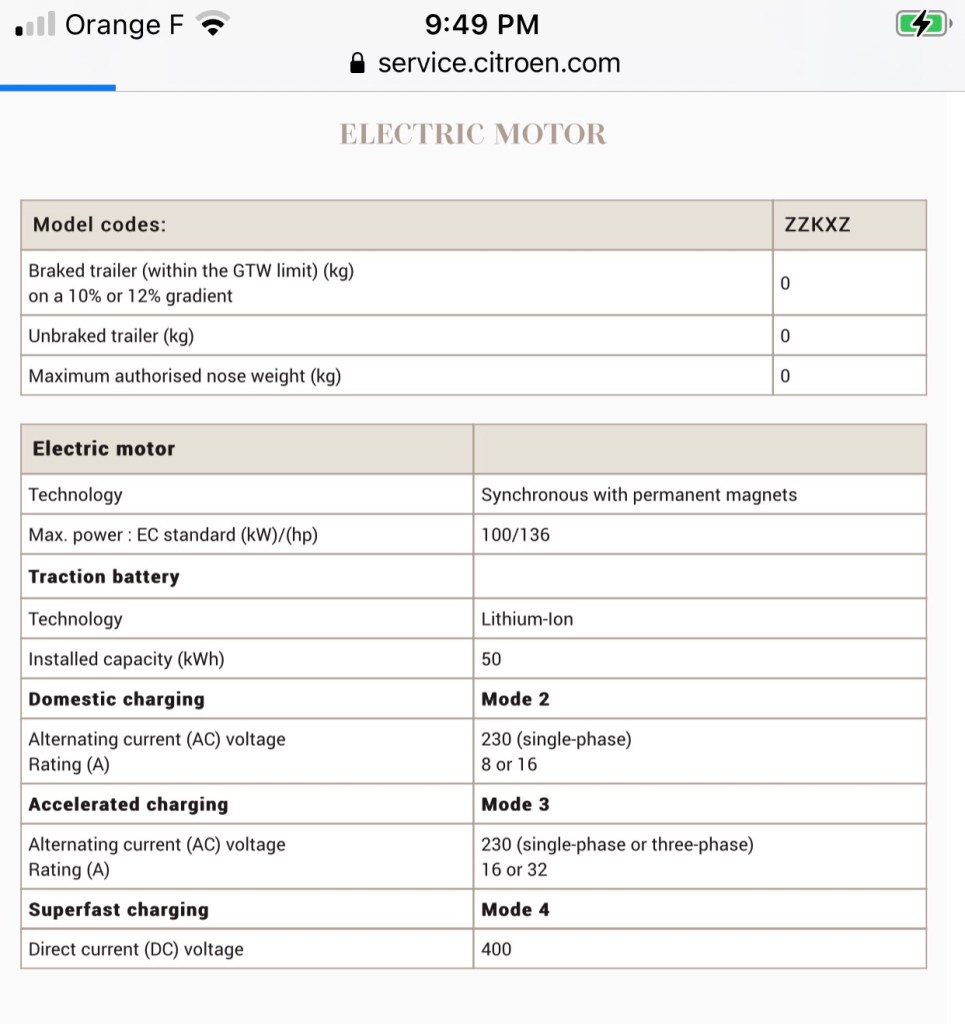
The vehicle had a 50 kWh lithium-ion battery with a maximum power of 100 kW. The five of us and all of our luggage just barely fit in the car, but we wouldn’t have wanted anything larger considering the narrow roads and parking spots in Europe.
The car had Eco, Normal and Sport modes and regenerative breaking (B) or regular drive (D) modes as well. D mode does use the regenerative braking, but not as much. I noticed that I hardly had to use the brake pedal at all in B, but a friend let me know that this can damage the brakes long term due to lack of use, so I did try to use them a bit more after learning that.
The car was super peppy in normal and sport modes. I drove in Eco mode or light on the pedal to conserve energy on open roads. We found that the battery drained very quickly during highway driving, so I stayed around 95 km per hour on large highways. Up hills also drained the battery quickly. Driving around Paris, we barely noticed any decrease in battery charge at all, due to the slow speeds and frequent regenerative braking.
The charging port for the car accepts CCS (Type 2 combo) or Type 2 connectors. The CCS (or Type 2 combo connector) cables are for DC fast charging. The Type 2 cables are for charging at medium speed (Level 2 chargers in North America). For slow charging from a wall outlet (Level 1 charging in North America), the car comes equipped with a cable/power supply with a regular plug at one end for the wall and a Type 2 connector for the car. The car also comes with a cable with Type 2 connectors at both ends to use with chargers that do not provide a cable.

*See all of our charging data & notes in an Excel file on the blog home page.

 Carbon conscious COVID dodging family travel