Electric bicycles are a game changer. A reasonable commute distance increases from 5 to 20 km (if the infrastructure exists). Hills are not an issue. No need to wear exercise clothes and shower upon arrival, unless you want to make it a work out. Seniors and people living with disabilaties can participate. Kids and cargo can come along. E-bikes can replace vehicles for many trips.
The cost of an e-bike ranges from ~$1000 to ~$10000. The Nova Scotia government started offering rebates for electric vehicle (EV) or bicycle purchases in 2021. 4-5x as many ebike rebates have been sent out vs EV rebates! There is a noticeable change on the streets of Halifax.
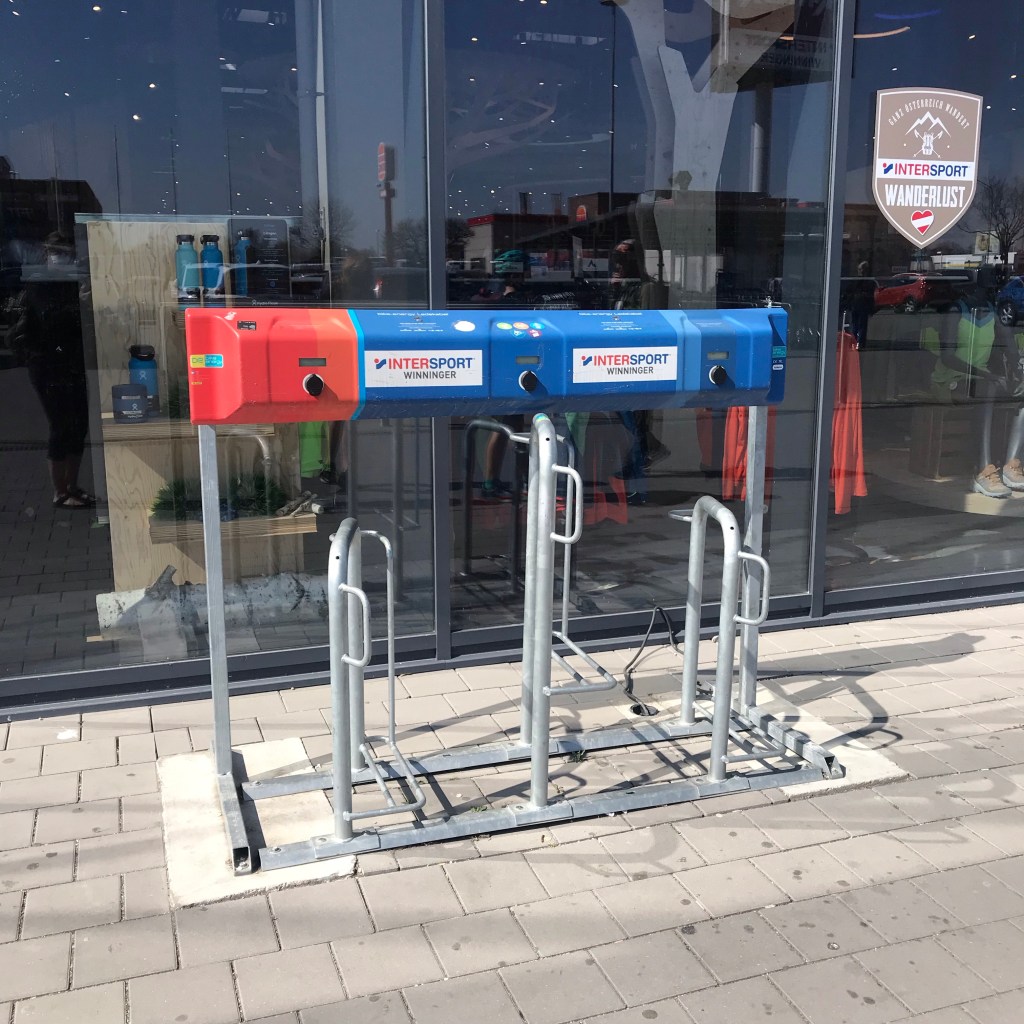
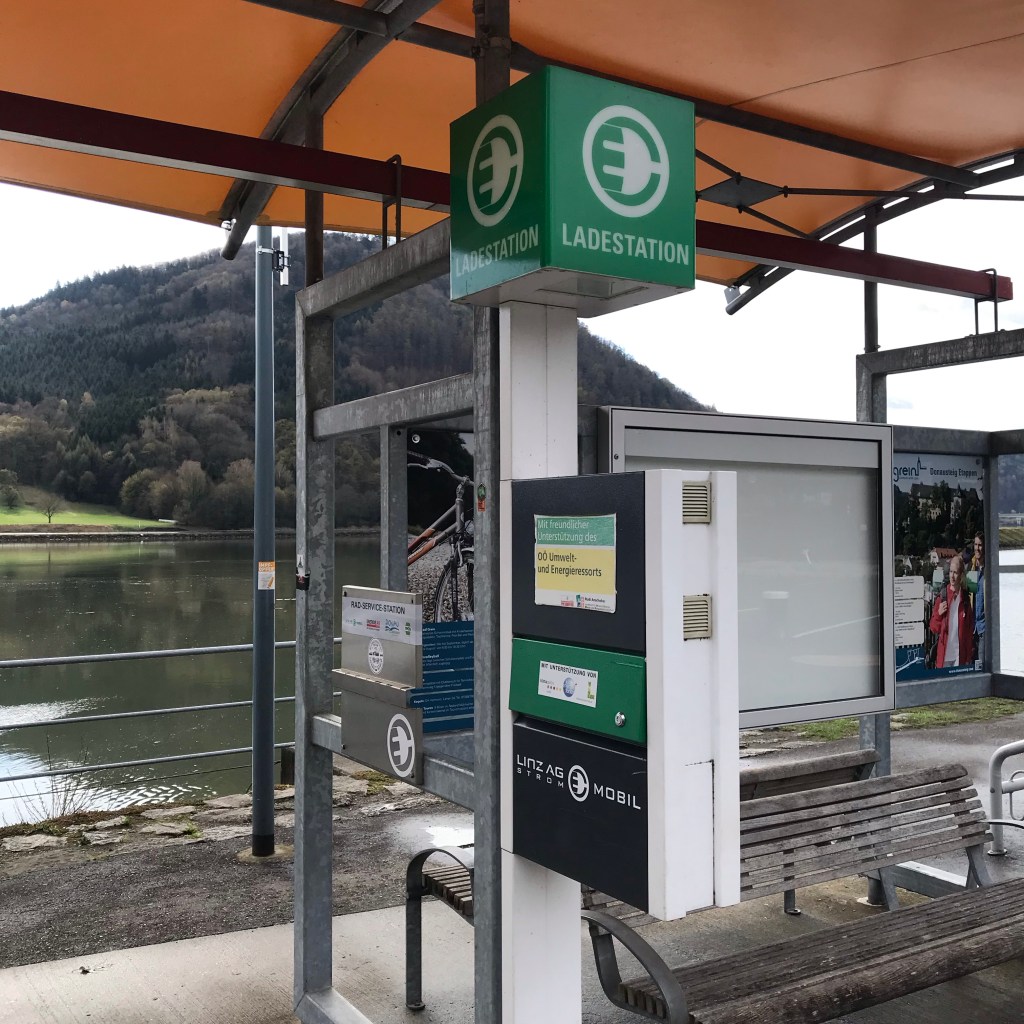
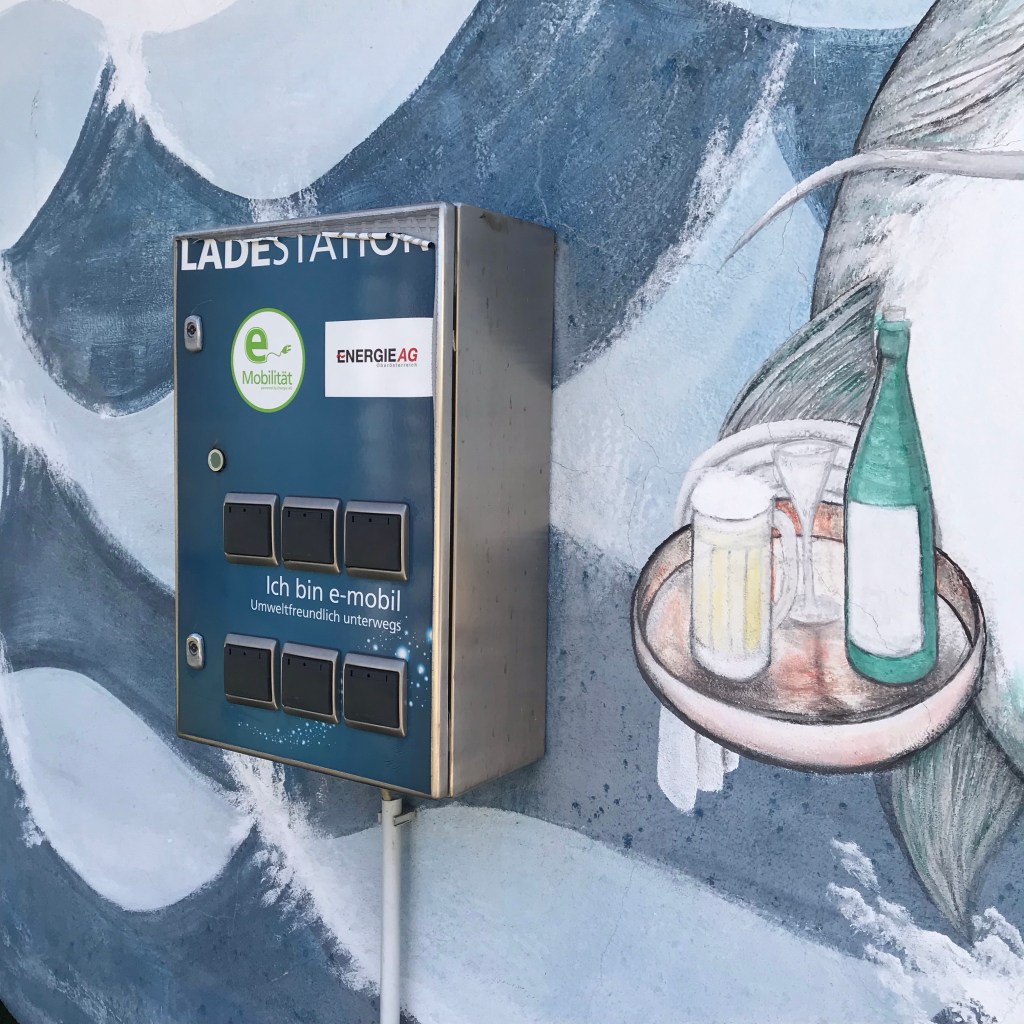
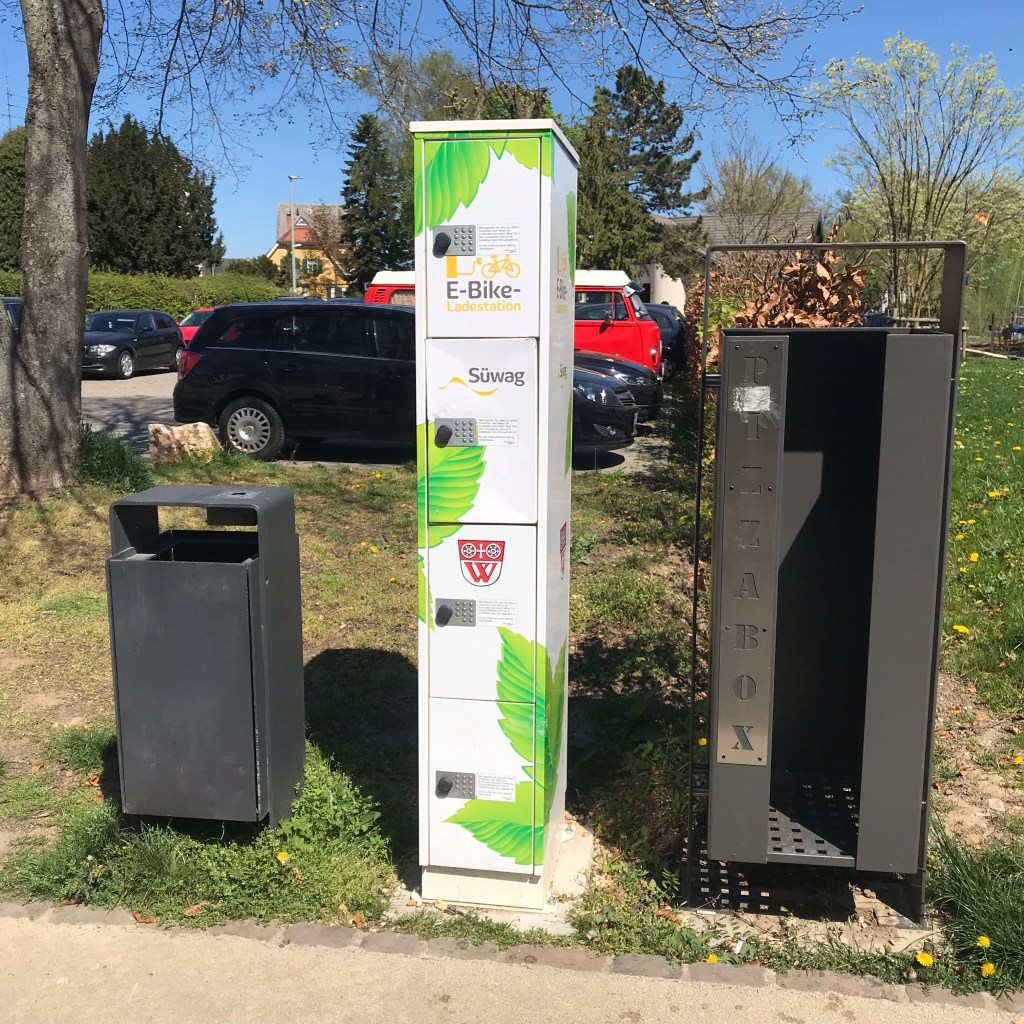
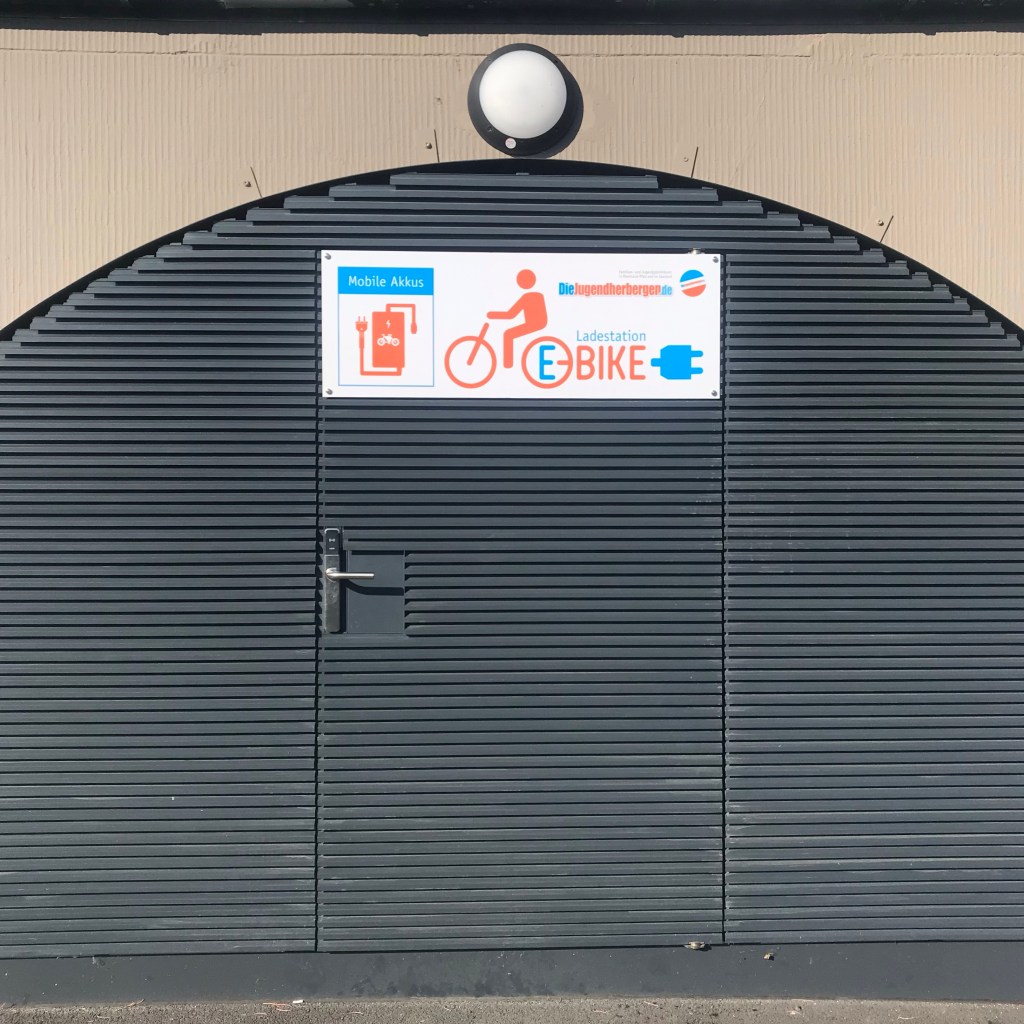
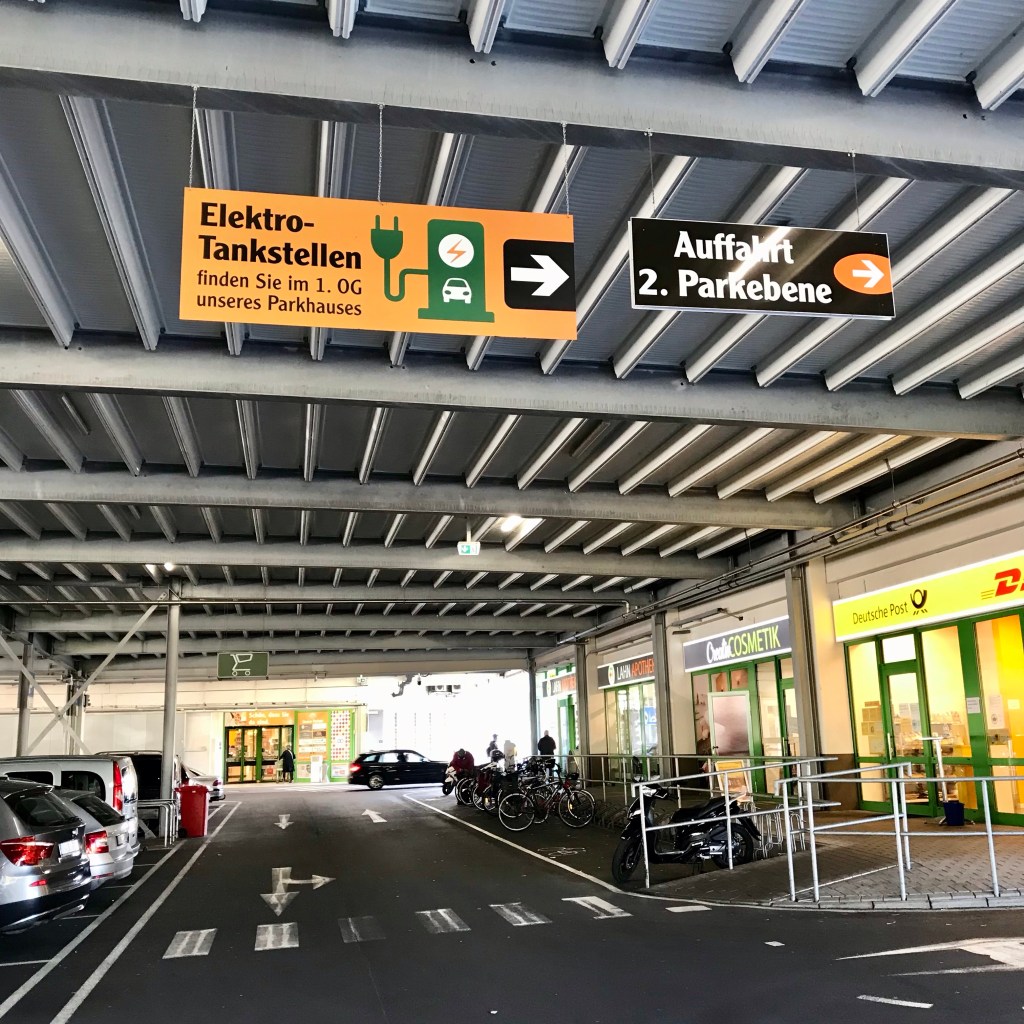
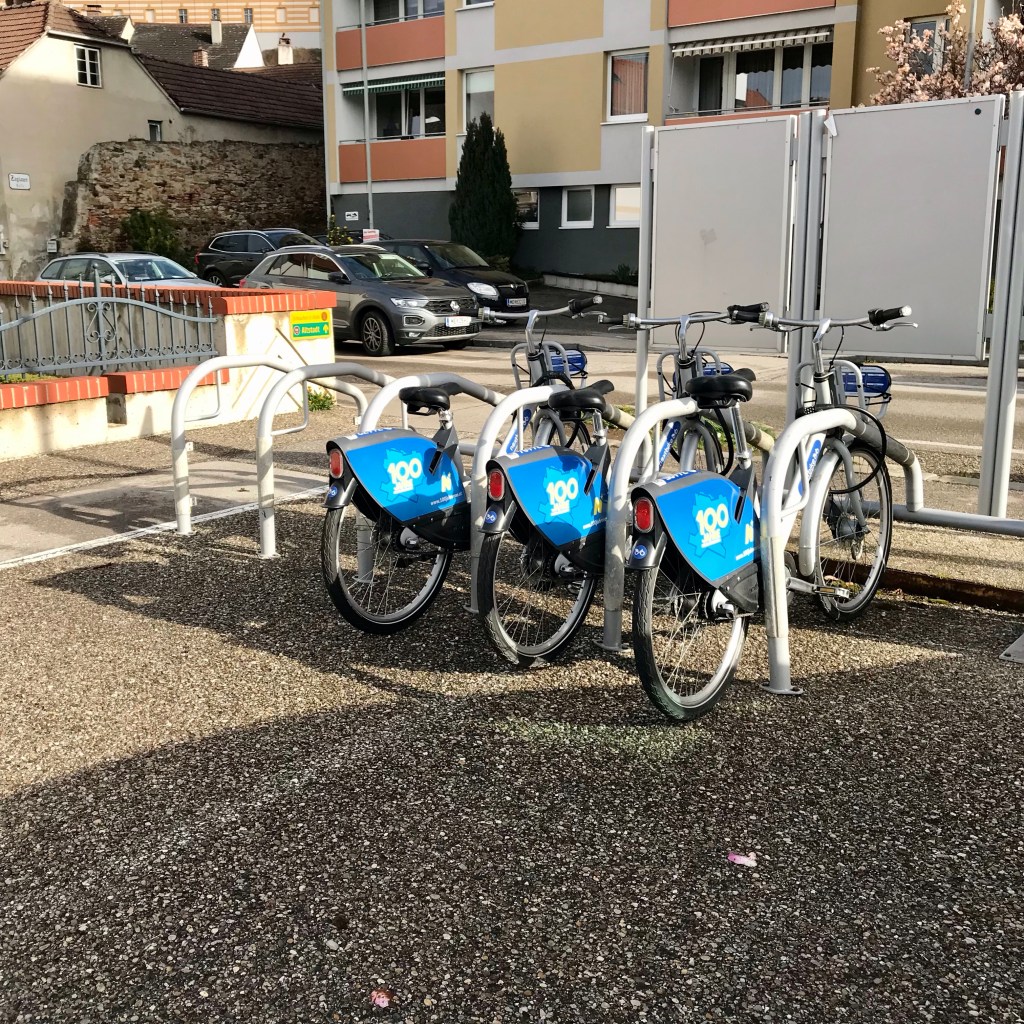
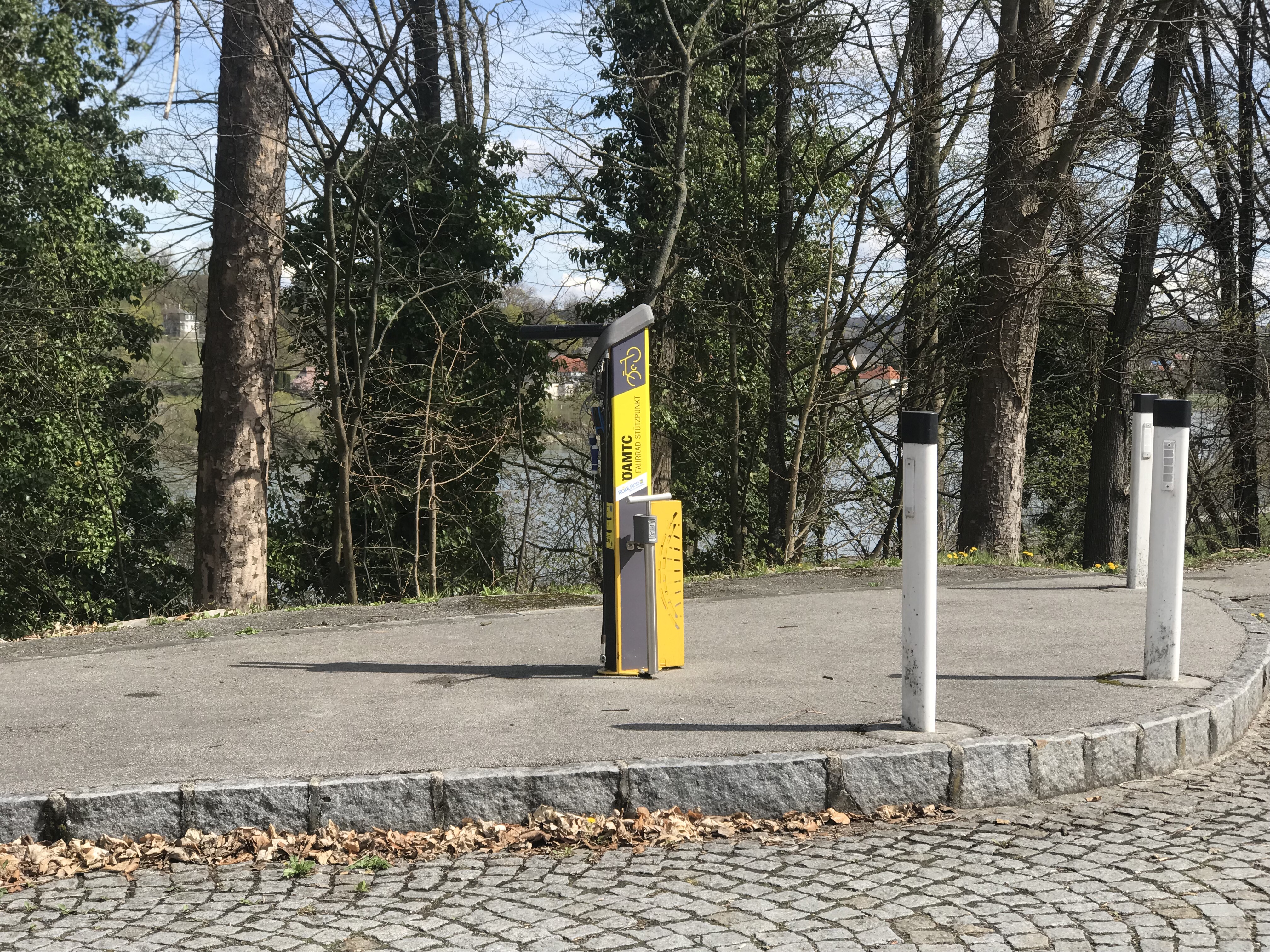
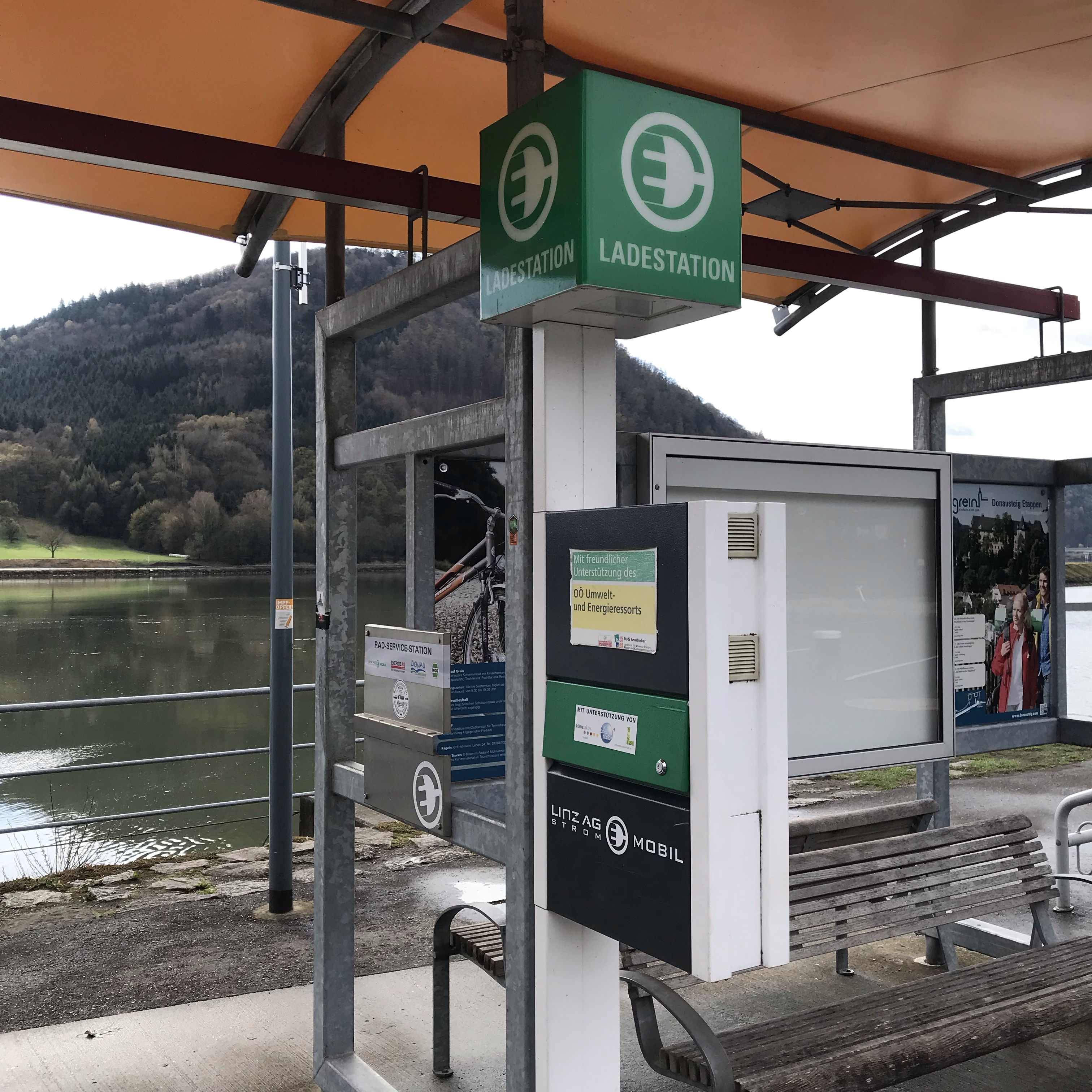
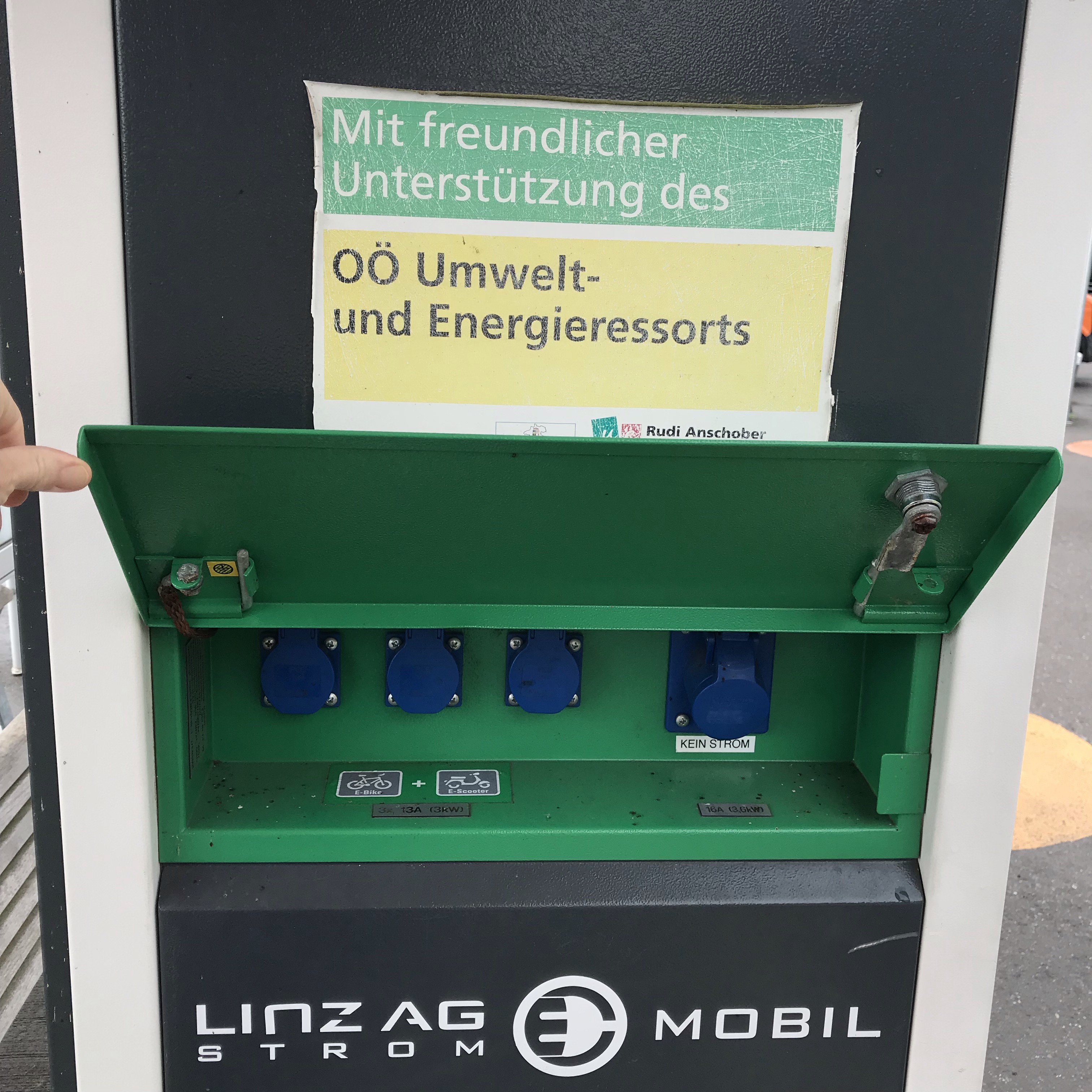
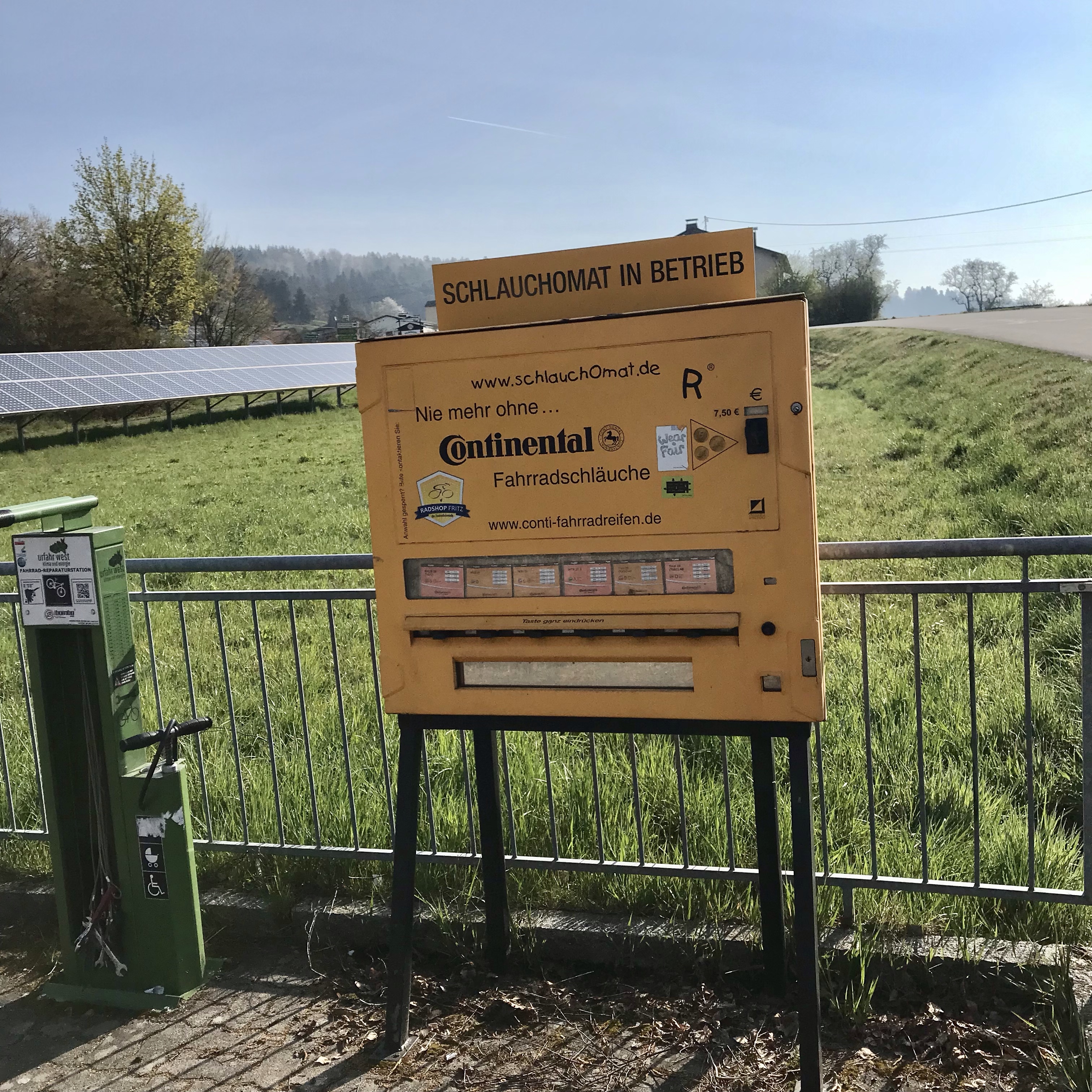
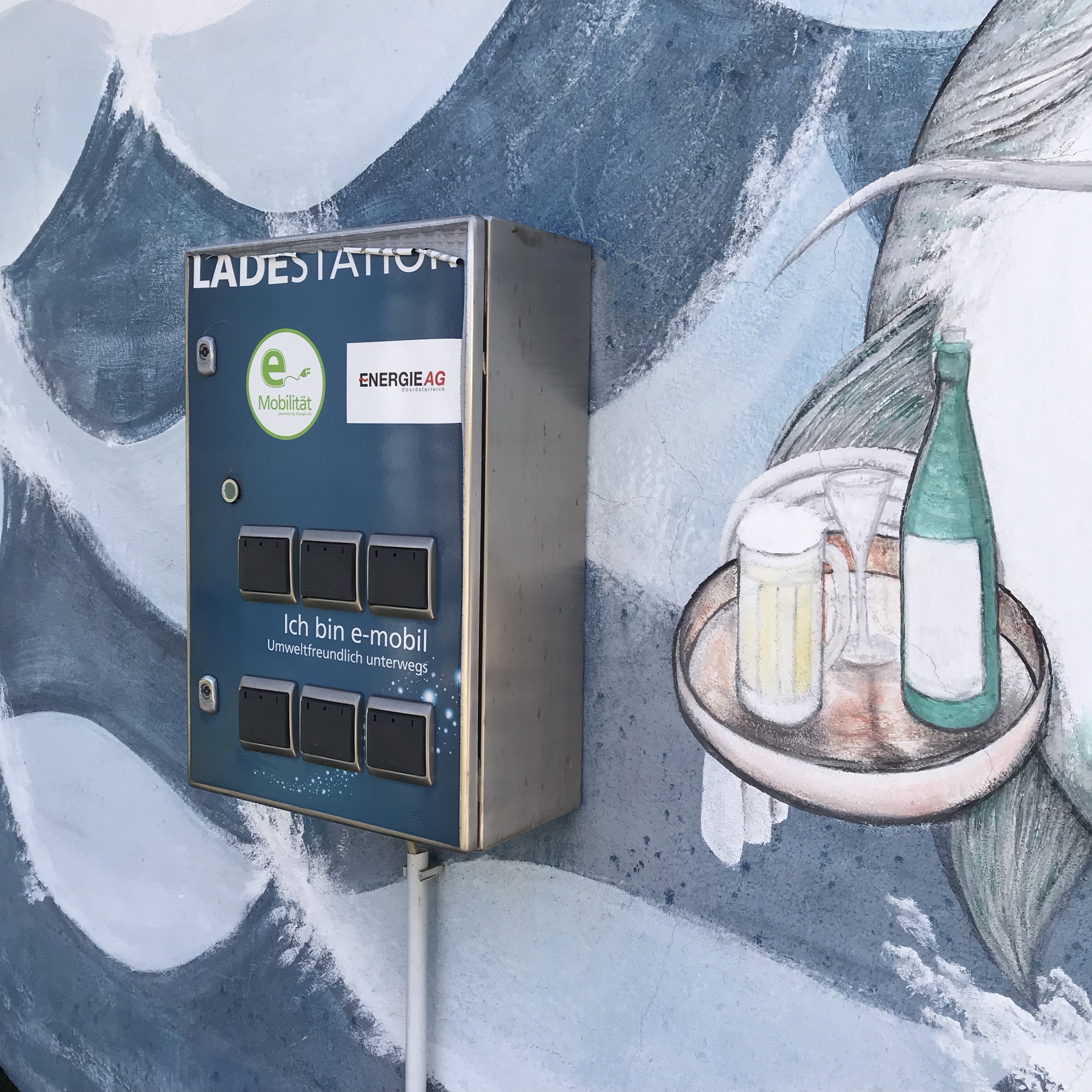
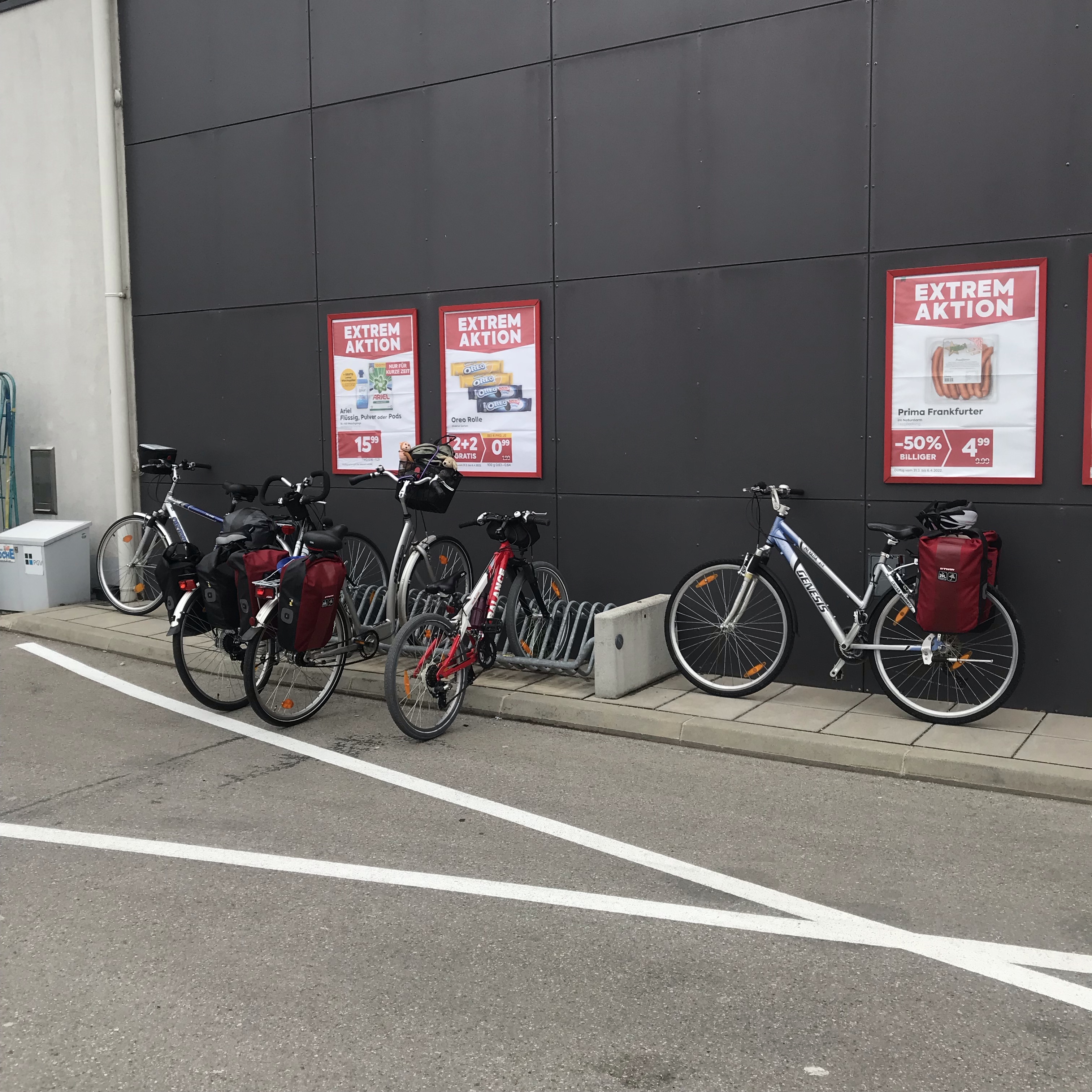
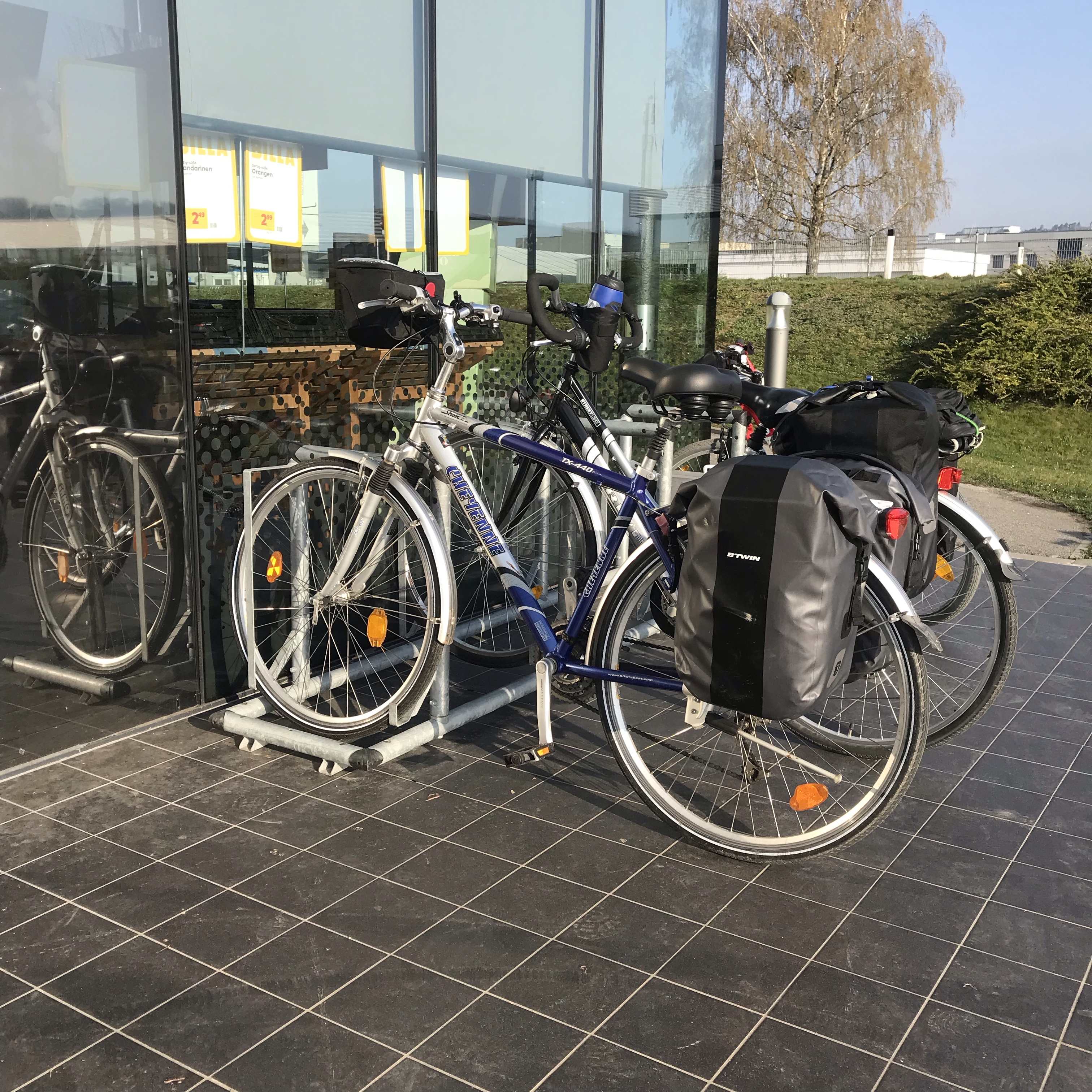
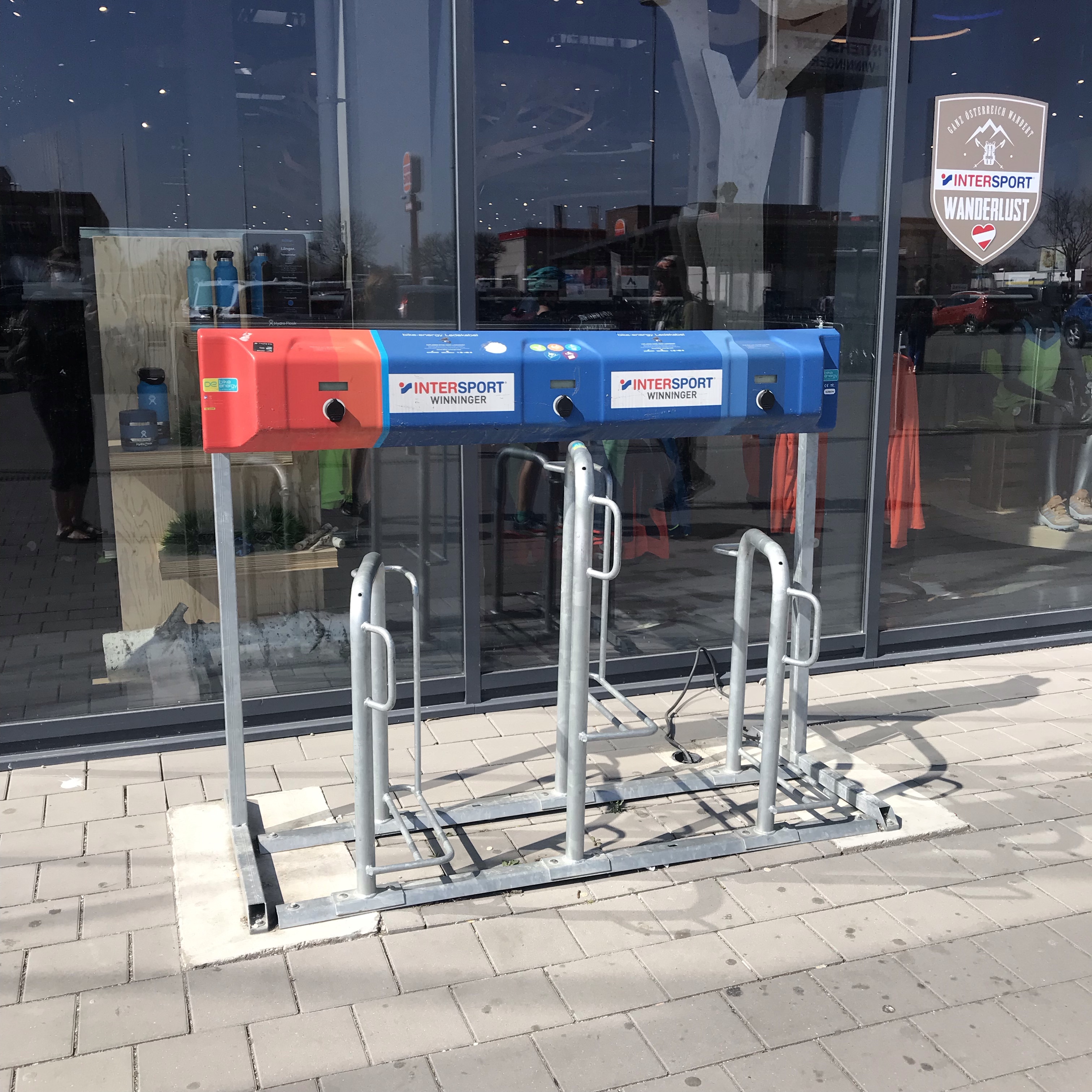
We observed a number of charging stations/storage spots along our route from Vienna to the UK.
Big box store in ViennaAt our Airbnb in Spitz, Austria ❤️Grein, Austria near a park & public bathroomAlong the EuroVelo 6 in Austria Near a public bathroom, restaurant & cycle path in Germany youth hostel in GermanyGrocery store in Germany
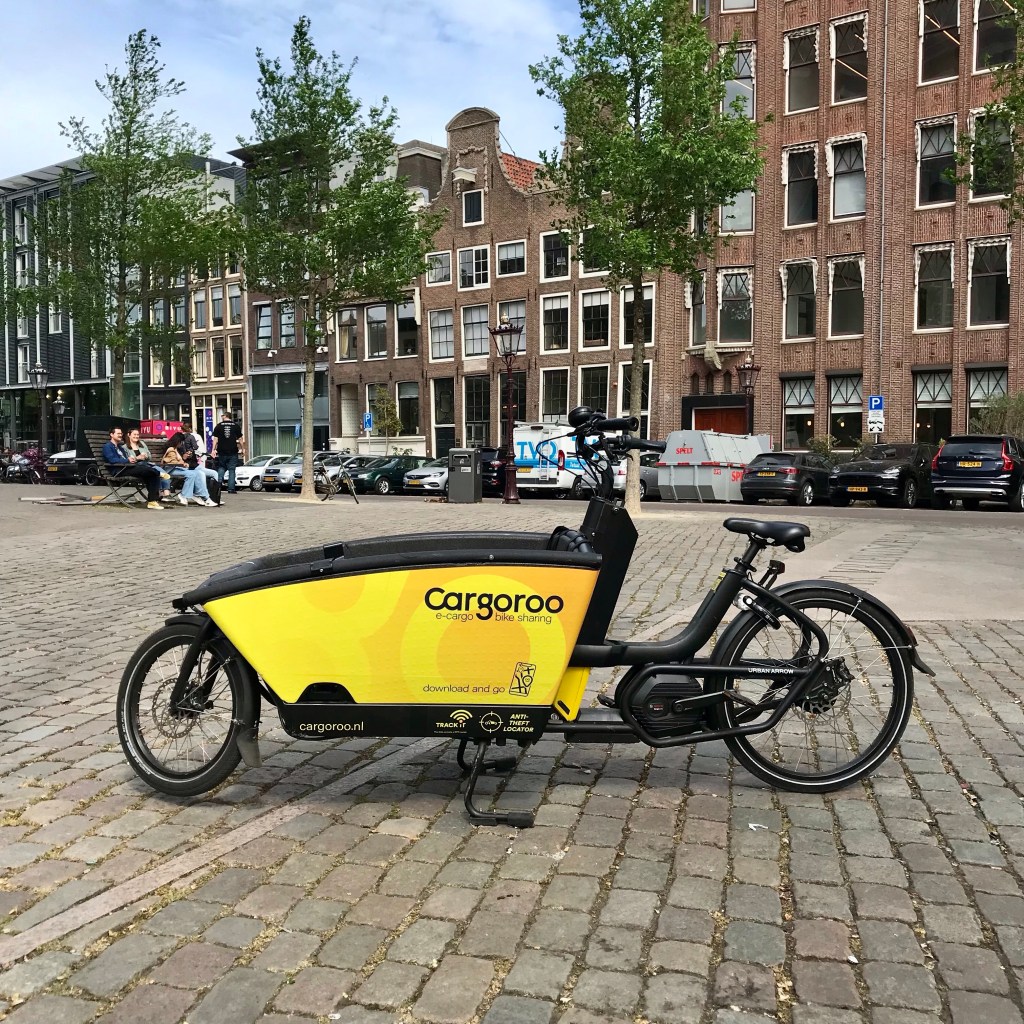
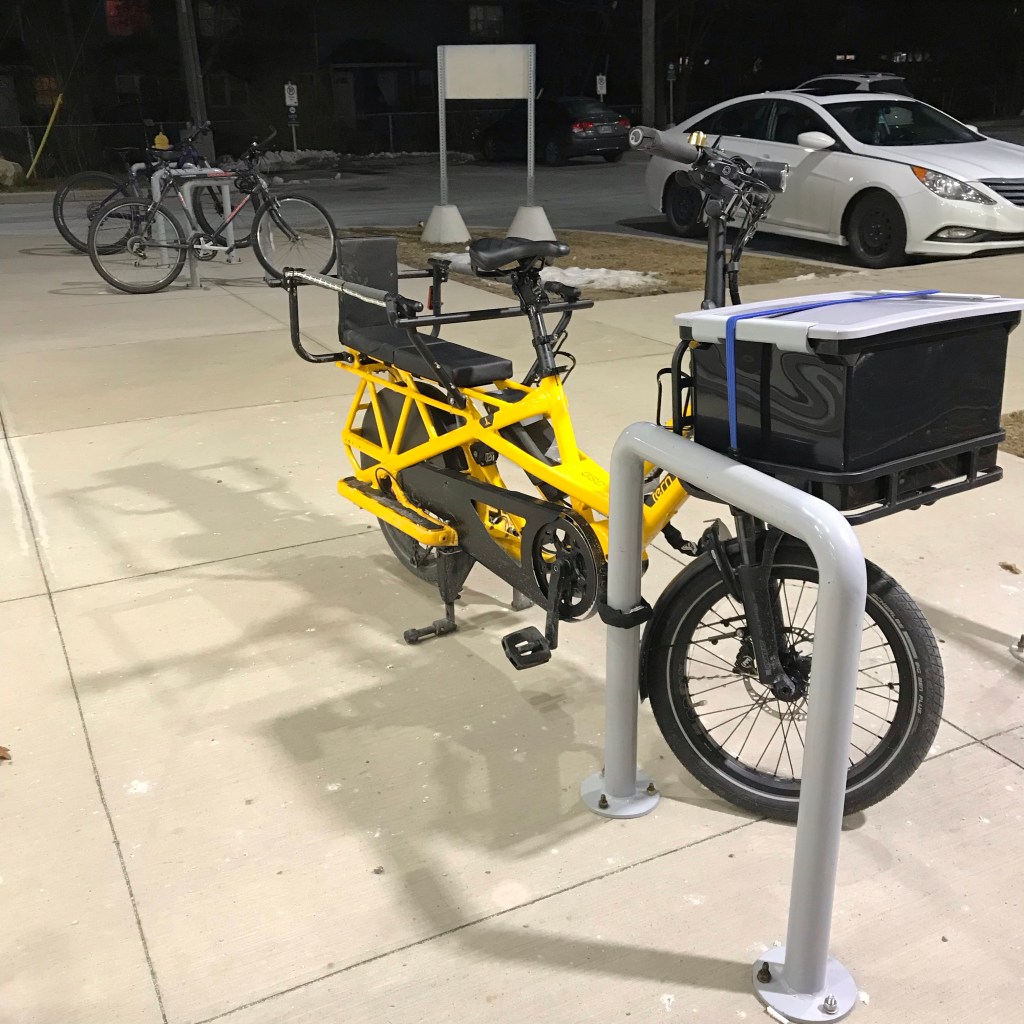
Within a week of arriving back in Canada we purchased an electric pedal-assist cargo bike that can carry two children, one adult and/or cargo. We had sold our mini-van before the trip, so we now rely on this bike, regular bikes, walking, car share and transit to get around. We (not including our teenager) are loving the freedom and cost savings that come with this active lifestyle. 1330+ km to date.
I am keen to share examples of some of the great infrastructure we observed while away on our big trip.
Roads have been built in the past to get drivers from point A to B as fast as possible, with little regard for vulnerable road users like pedestrians, cyclists and those using mobility devices. I recall reading a Tweet where a child asked their parent why the sidewalk always ends, but the road never does. Great point, kid! Municipalities are working on this problem, but until dangerous roads are the exception and not the norm, we need to keep talking about ways to improve.
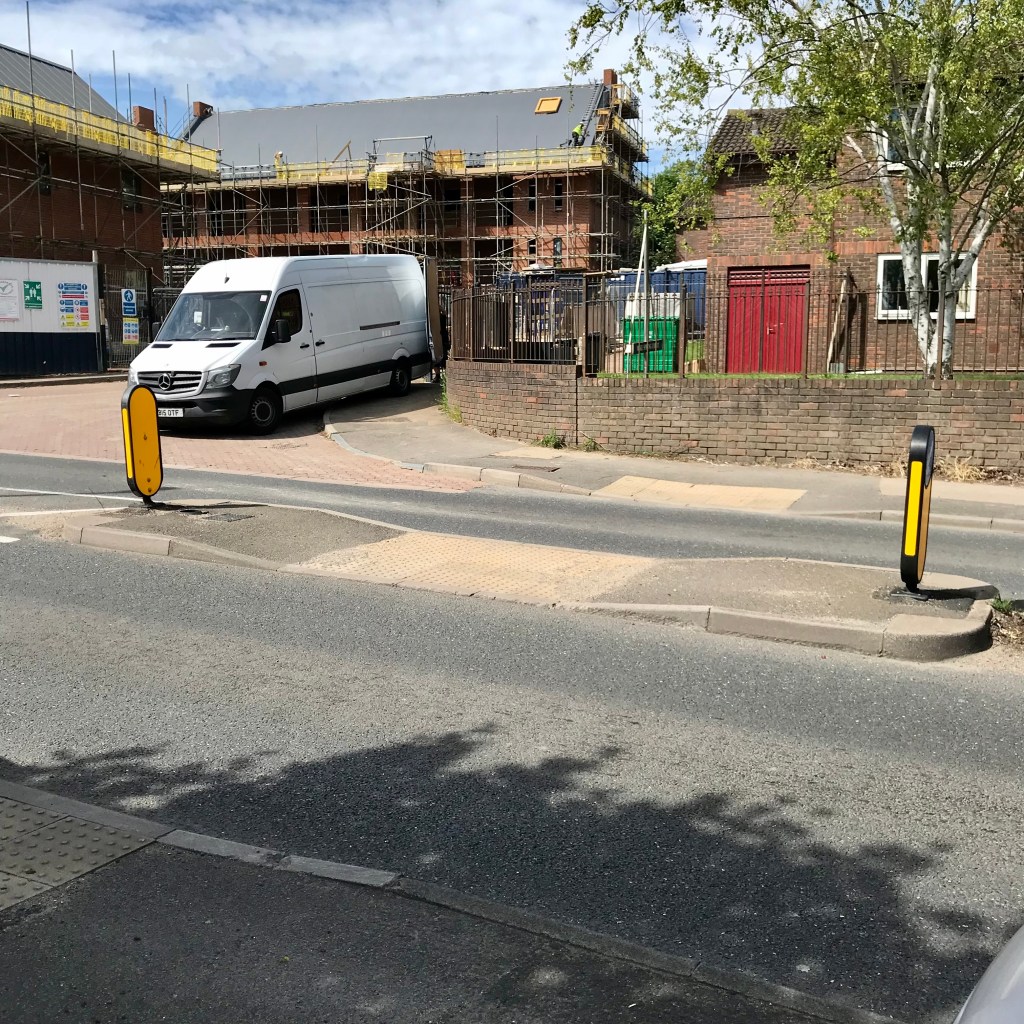
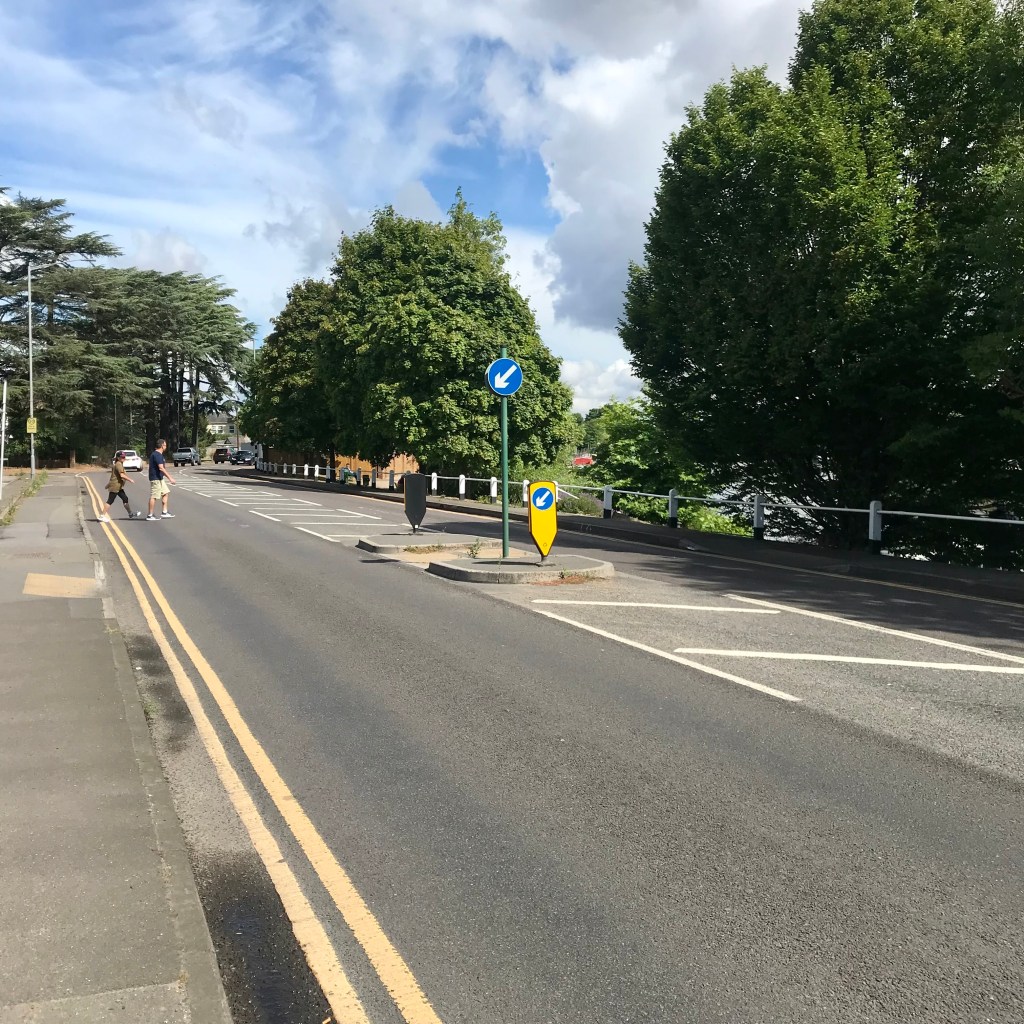
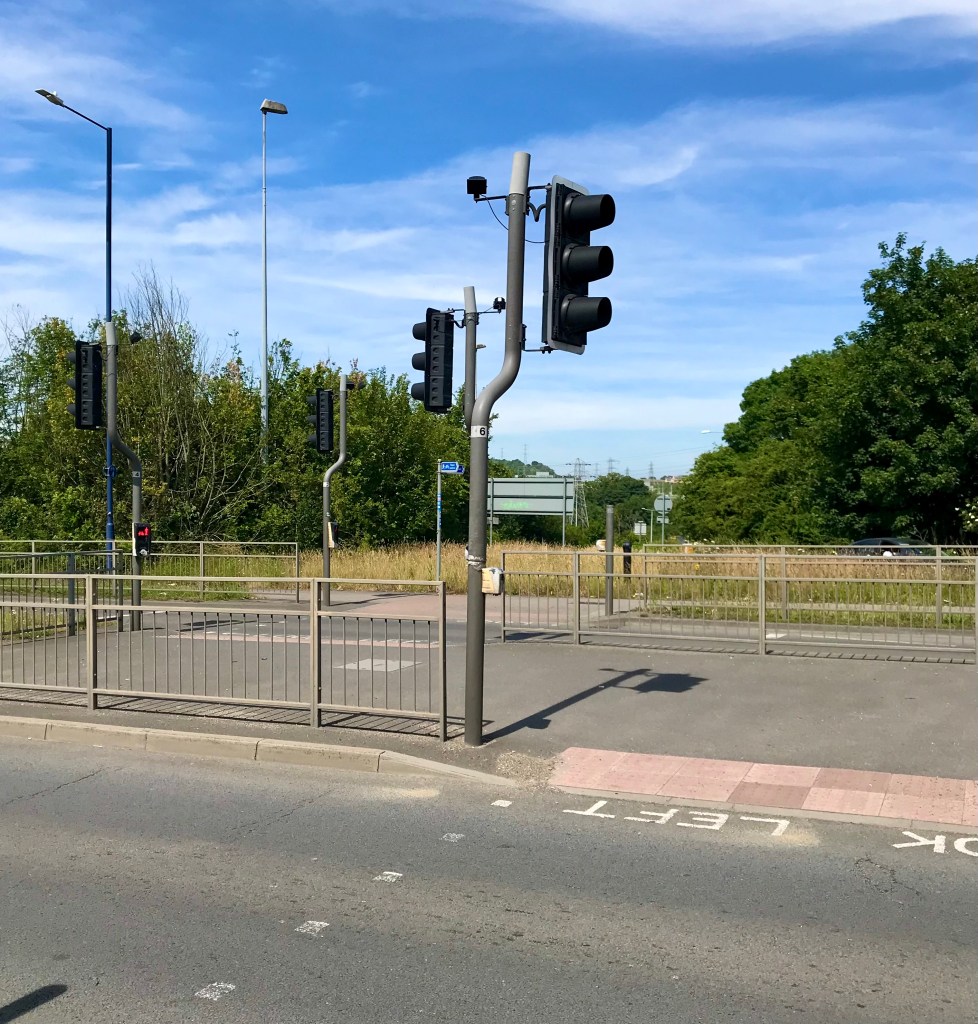
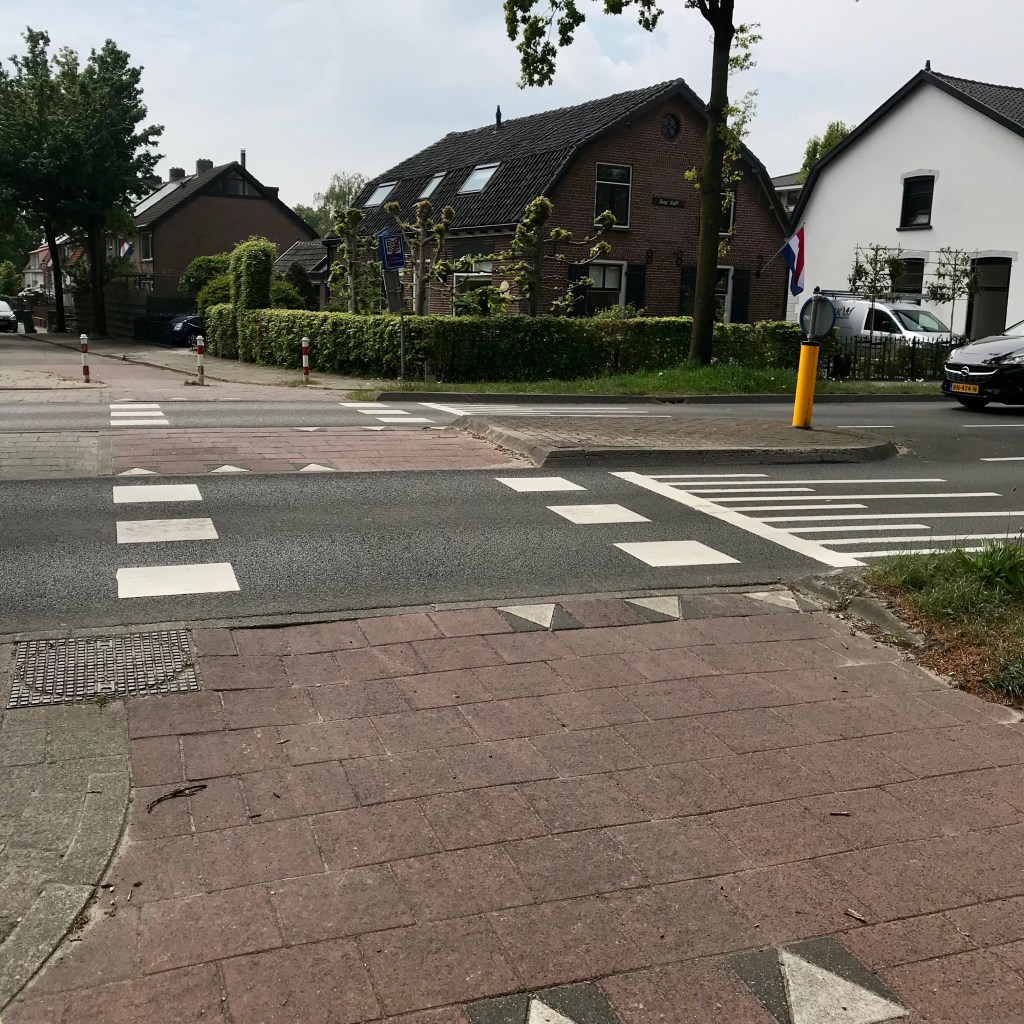
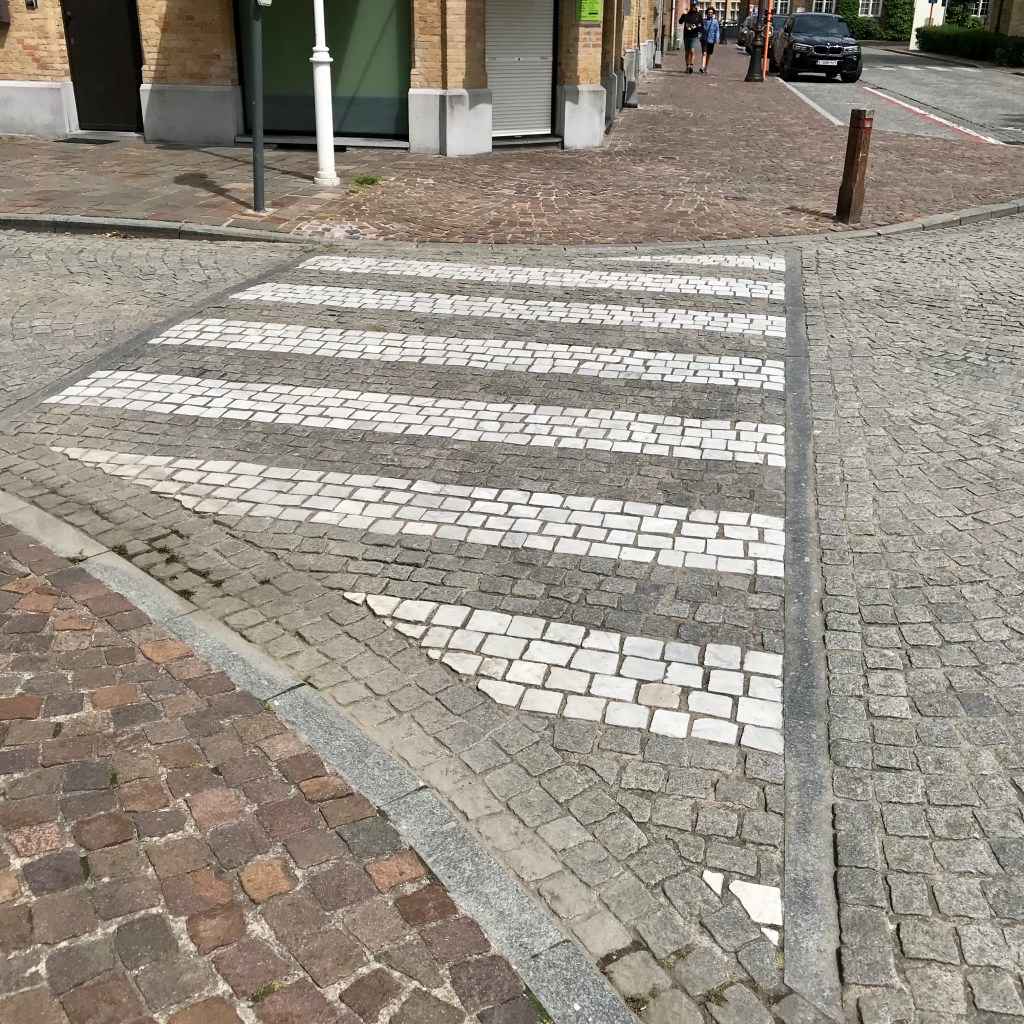
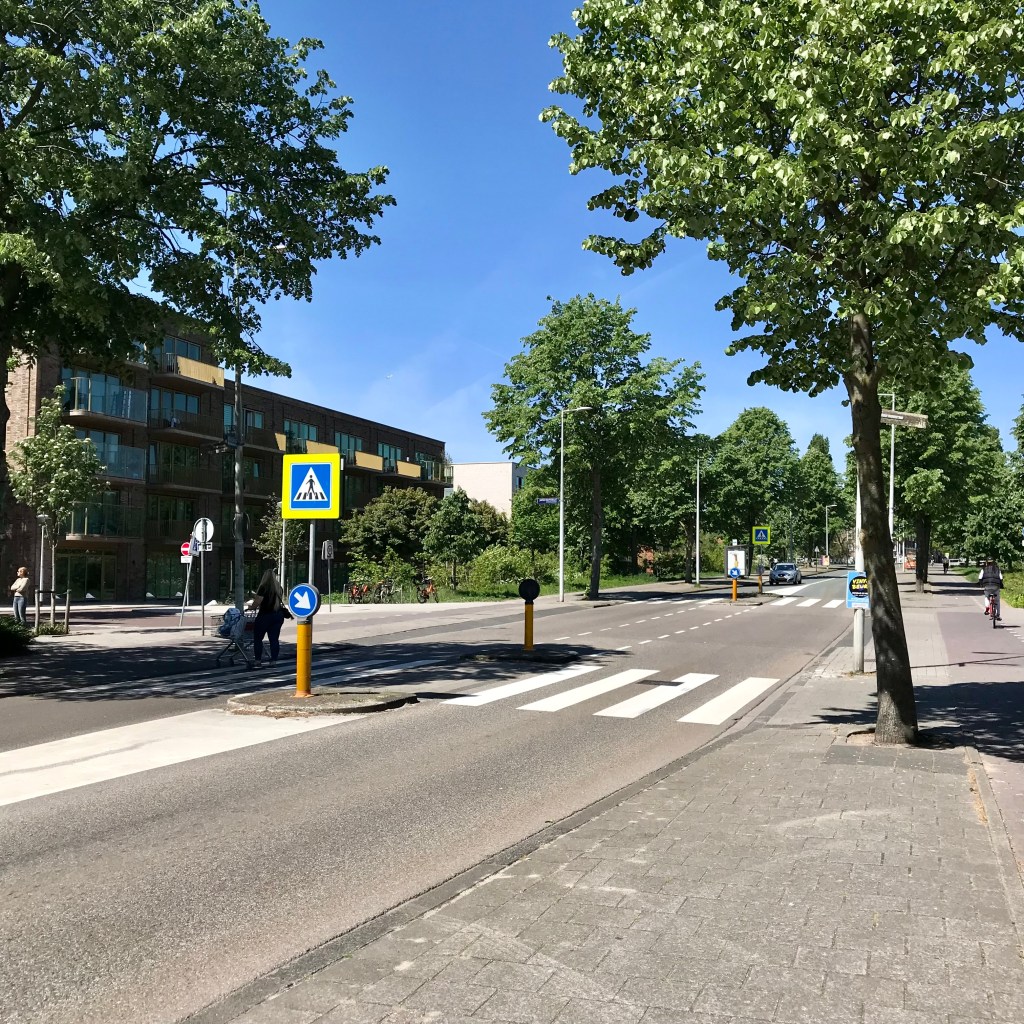
Often, when we cross a street, we need to look for right, then left, then again right turning drivers to make it across safely. Depending on the direction we are crossing, the left turning drivers are coming at us from behind. Designing shorter road crossings, especially ones that cross a stretch of road where vehicles are only going in one direction, helps a lot.
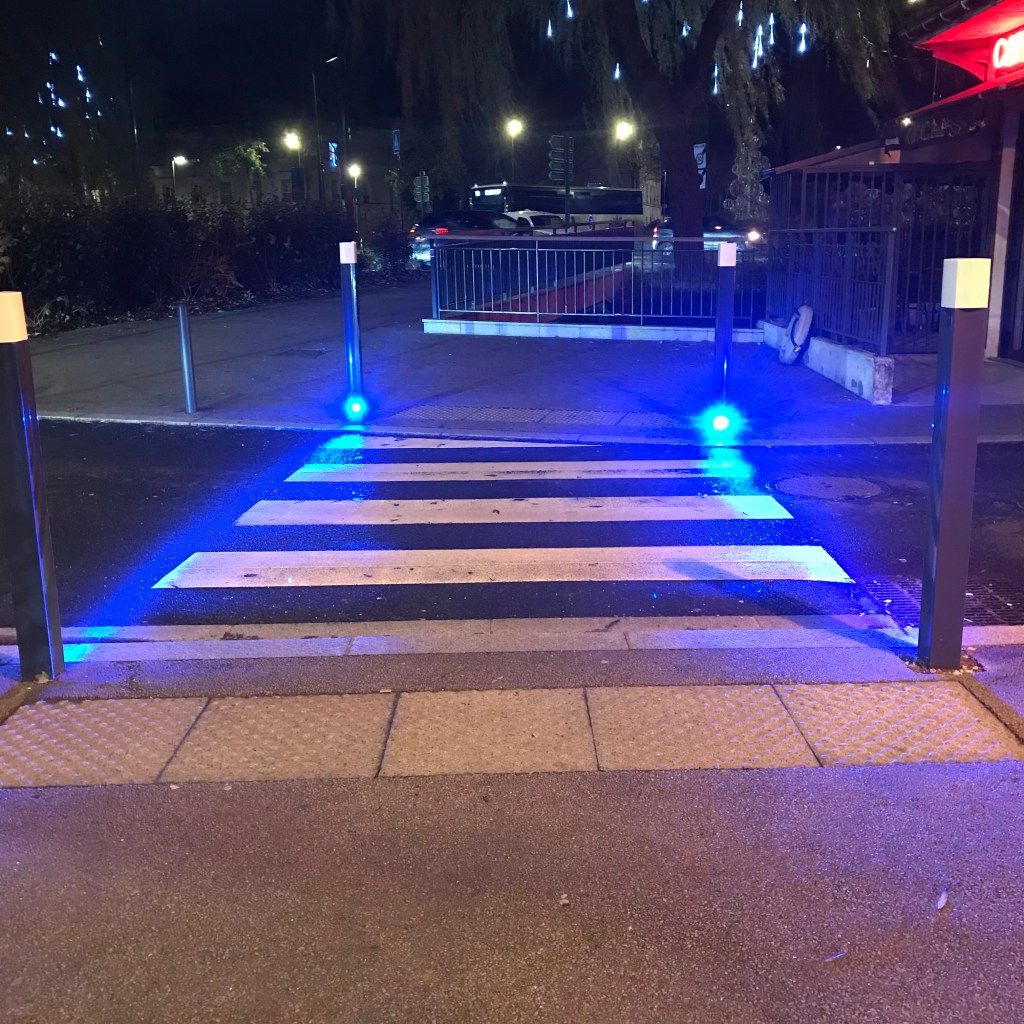
Here are some examples including using lighting, refuge islands, bump outs, texture, road markings, signs and signals to slow drivers.
As soon as we arrived in Austria after spending 2 weeks in Athens and 3 months in Thailand before that, we were blown away by the fantastic public spaces. Playgrounds & cycle paths & public art everywhere. This post highlights some of the cool things spotted as we cycled the EV6.
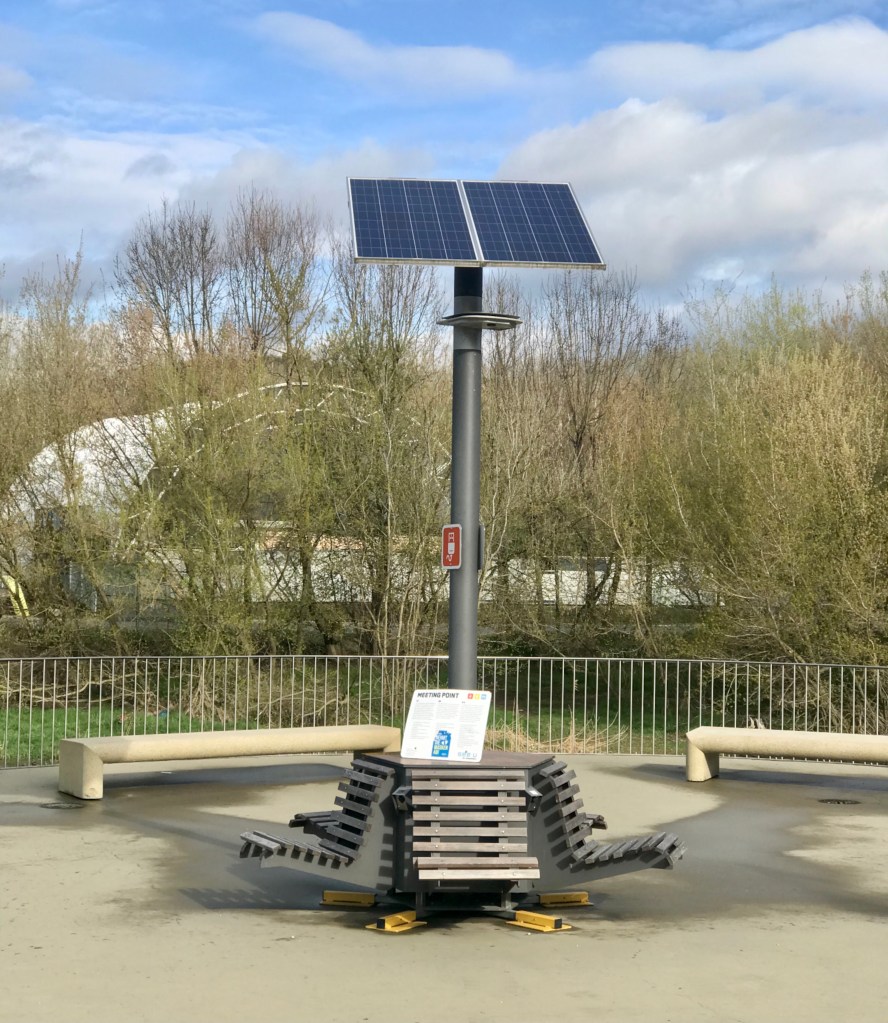
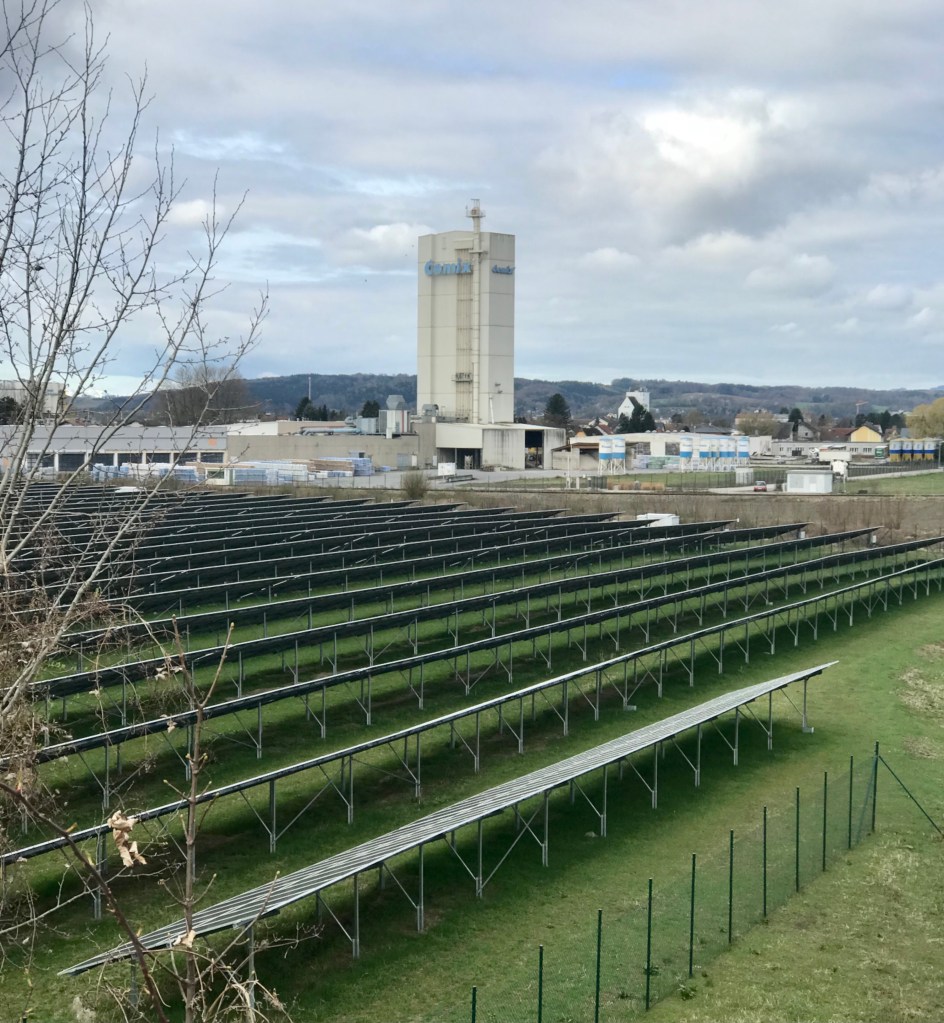
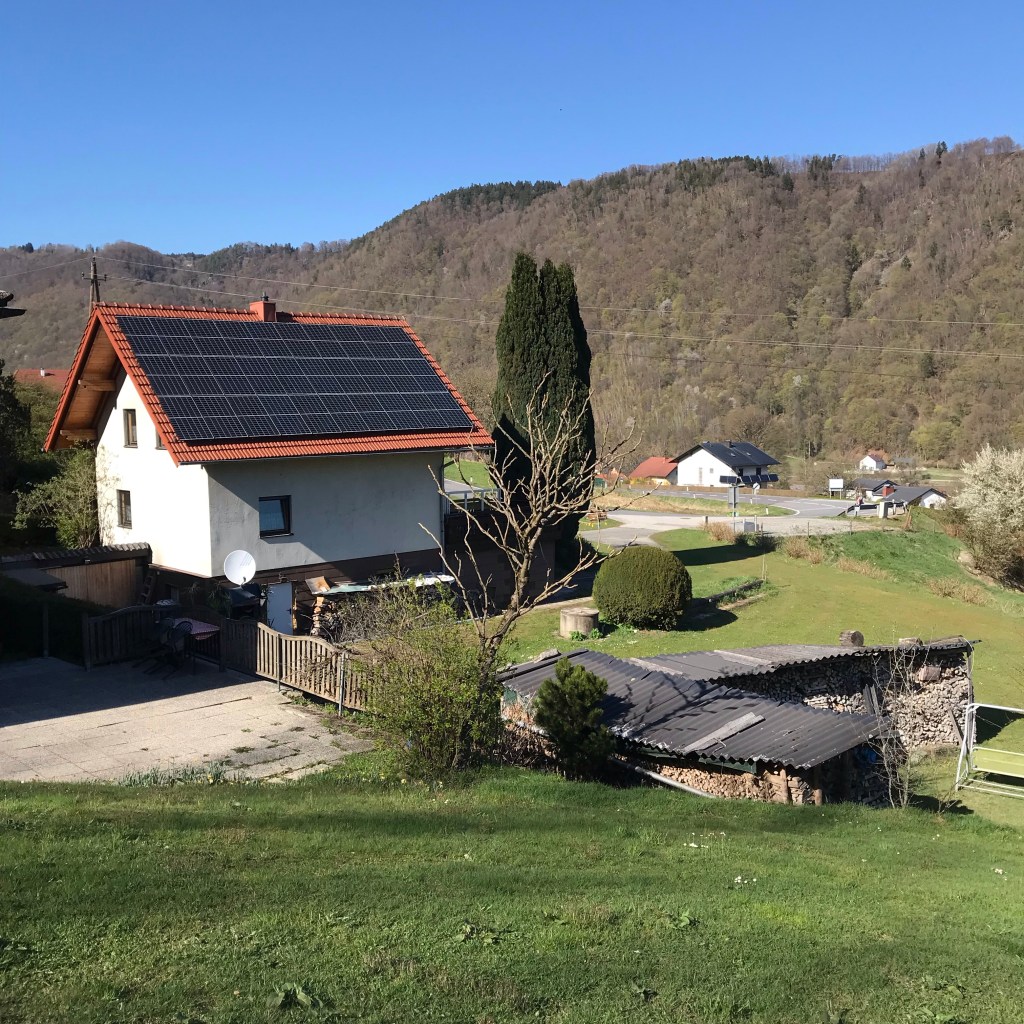
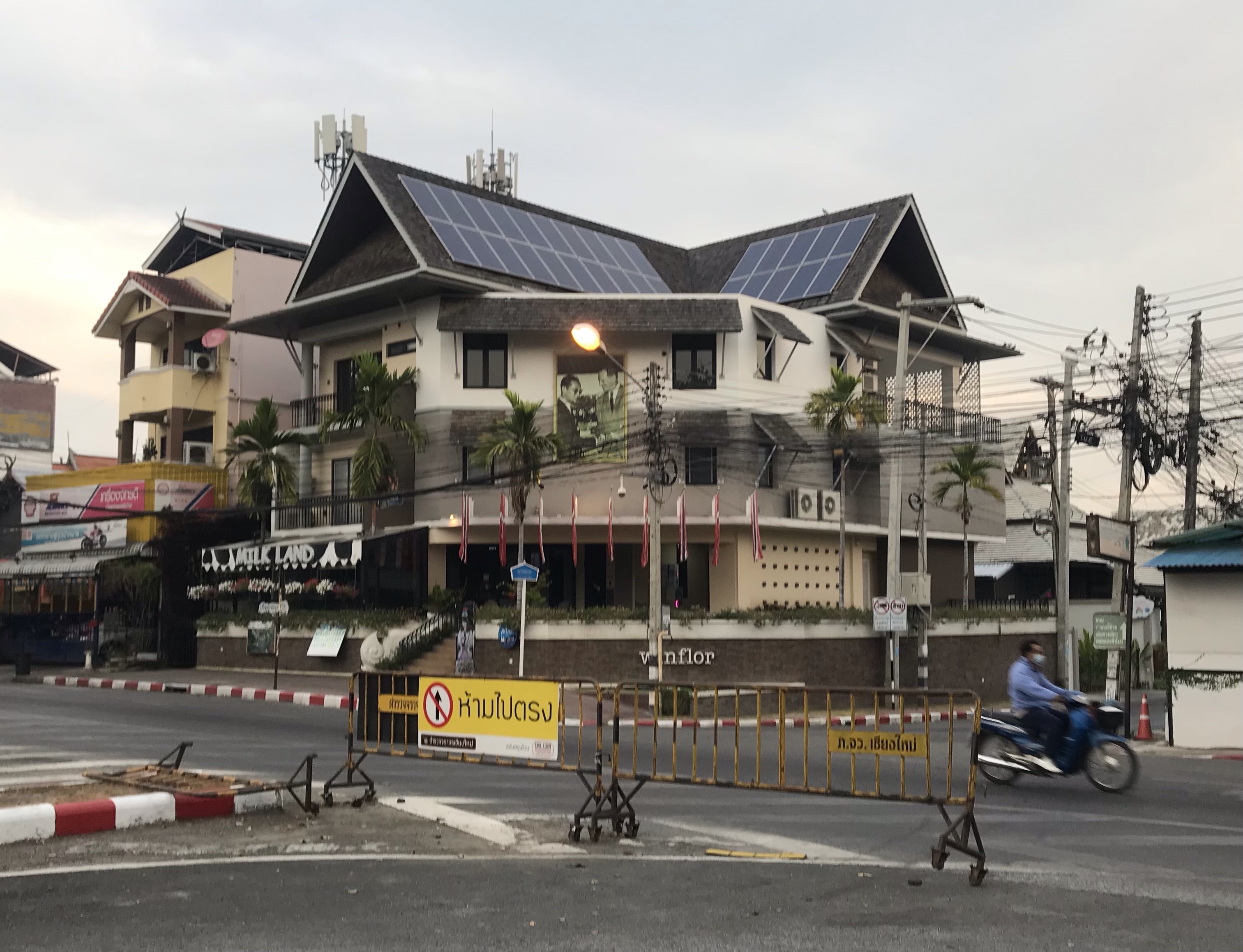
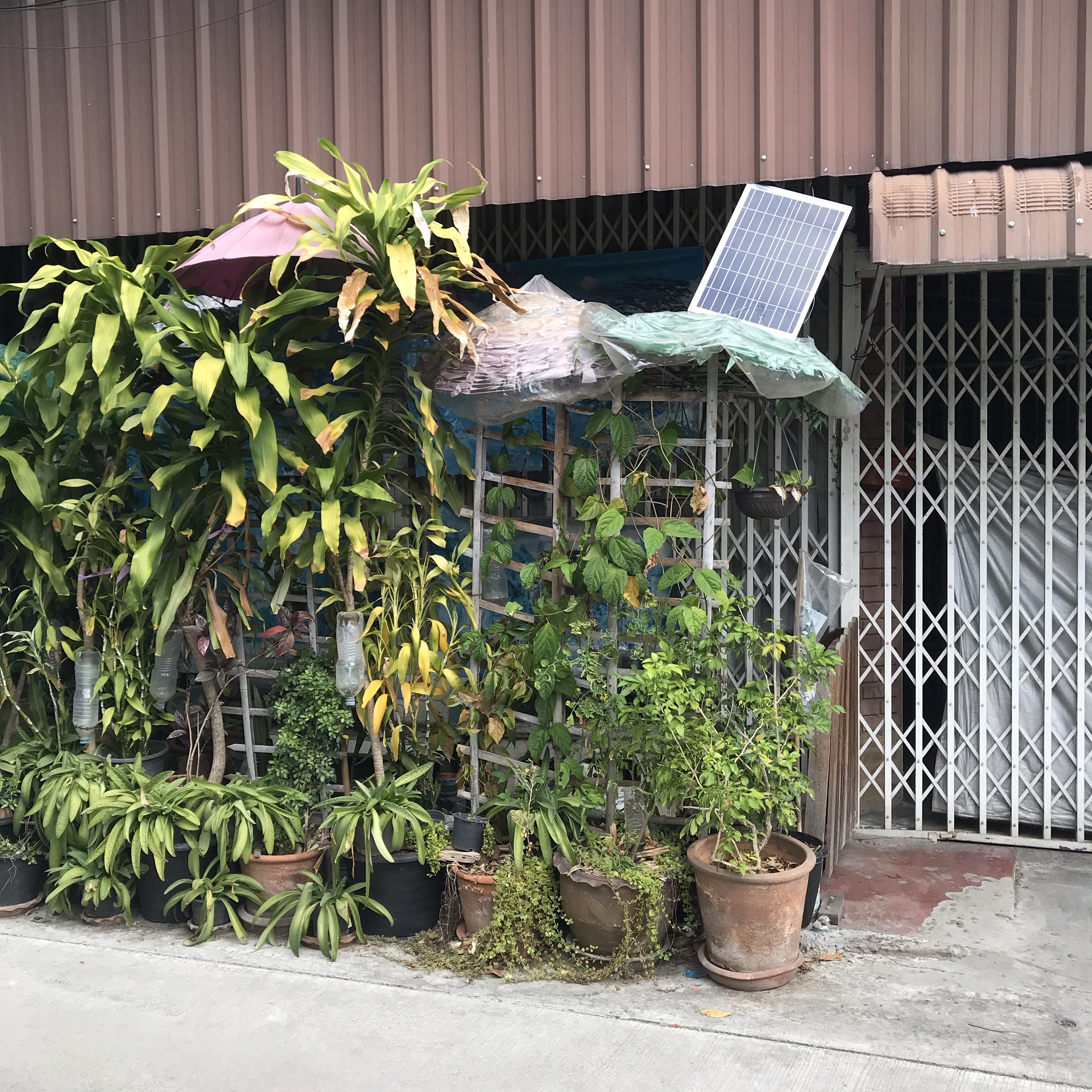
Solar PV panels were a common sight:
Saw a few of these micro grids/work stations?Solar benchAt a cement plant, carbon offsets?On a B&B we stayed at
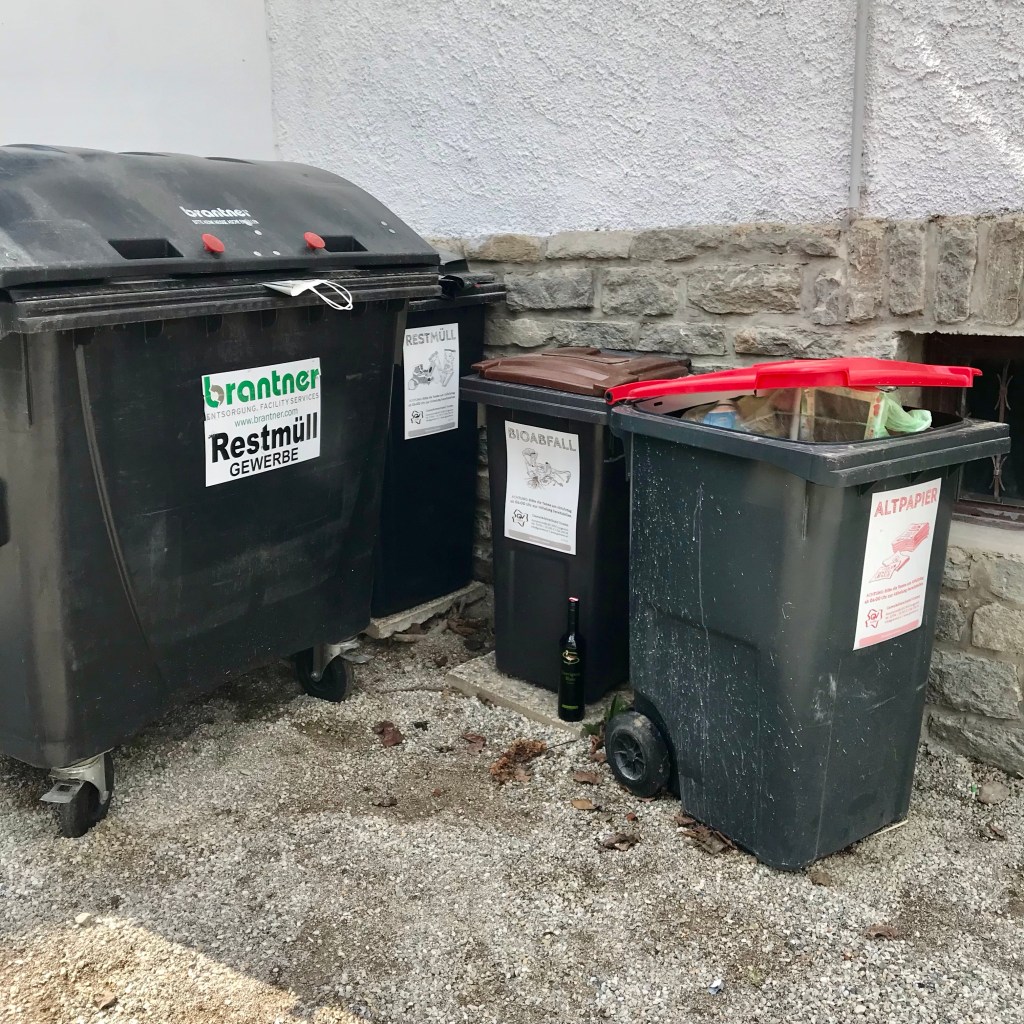
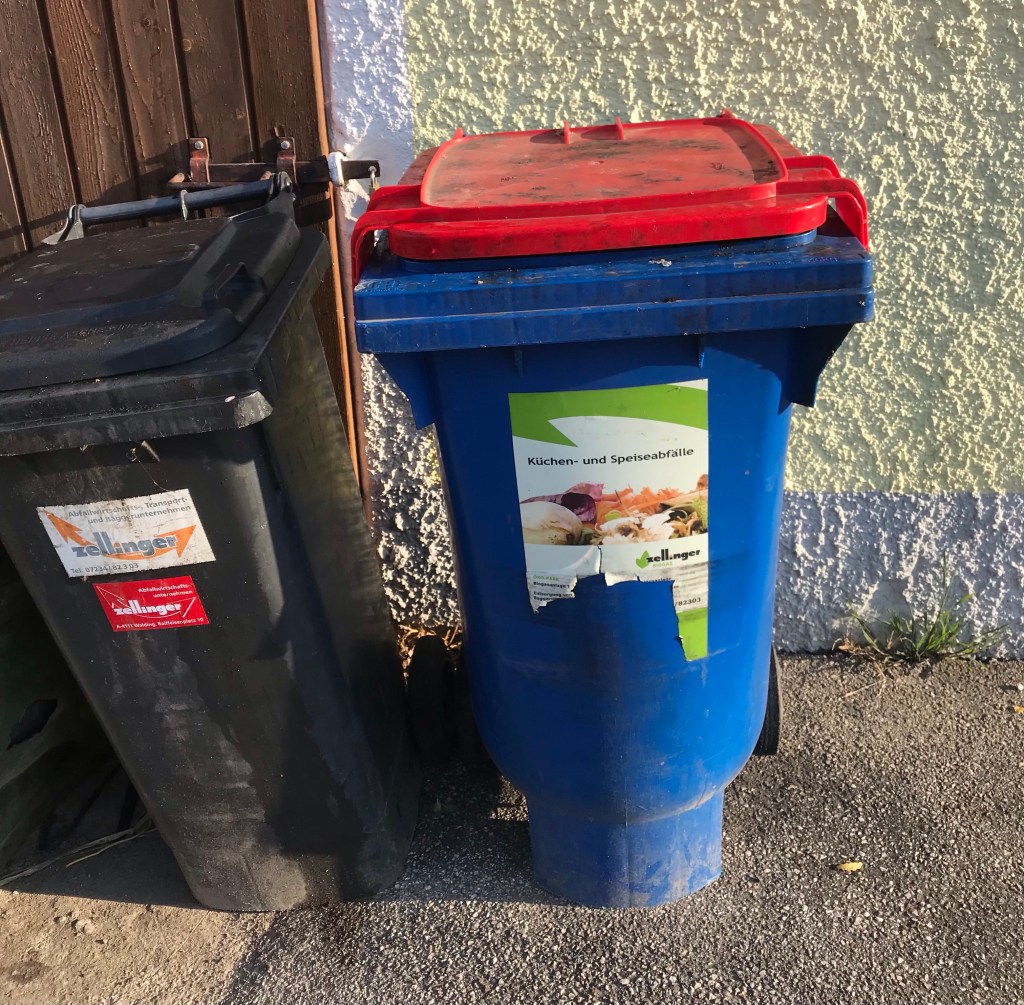
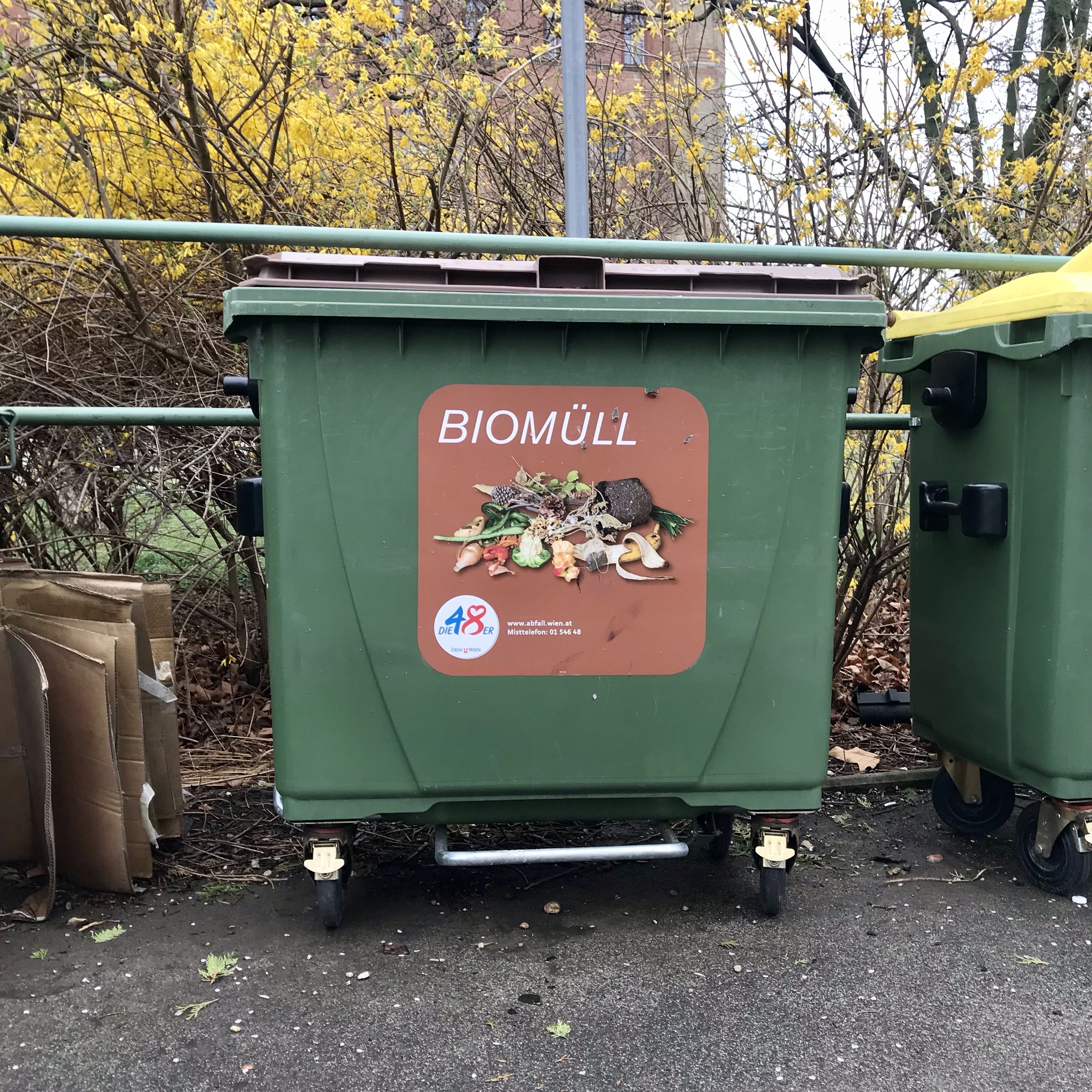
Municipal compost pick up:
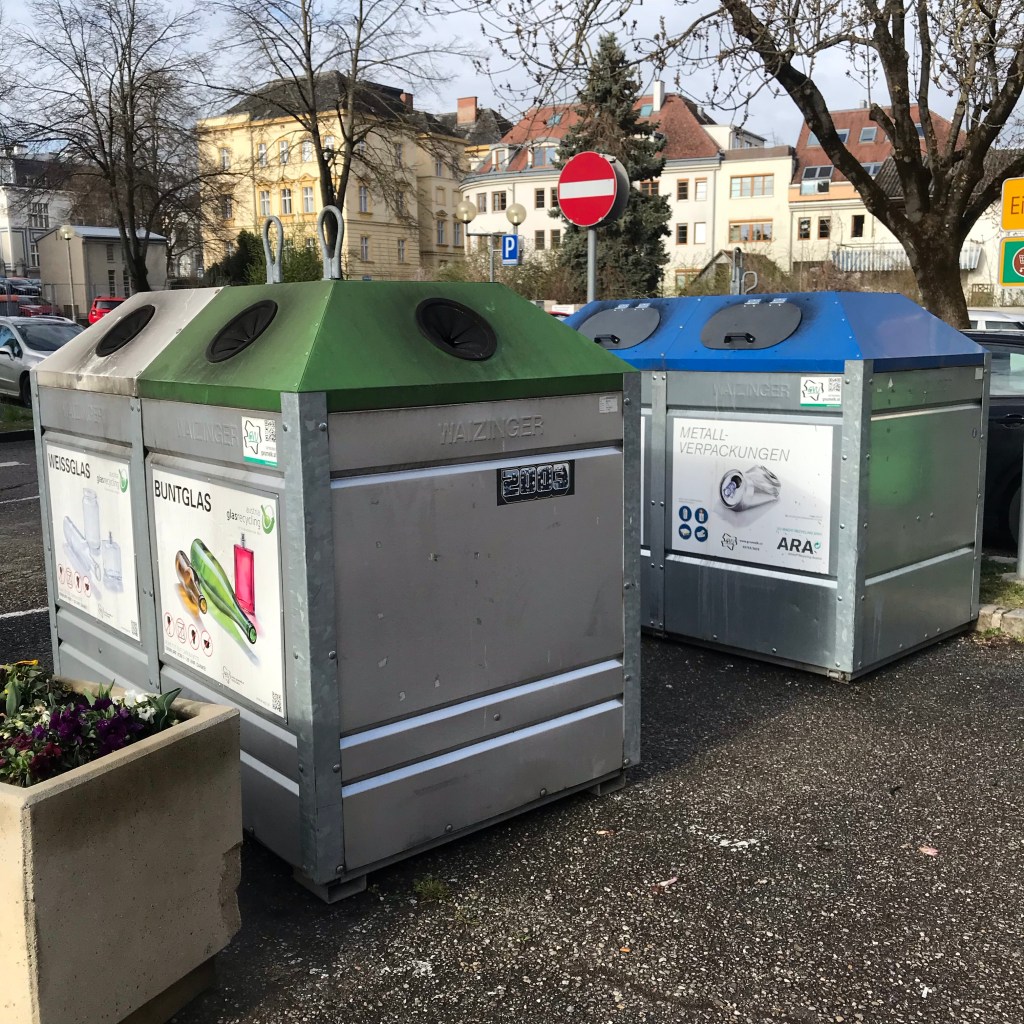
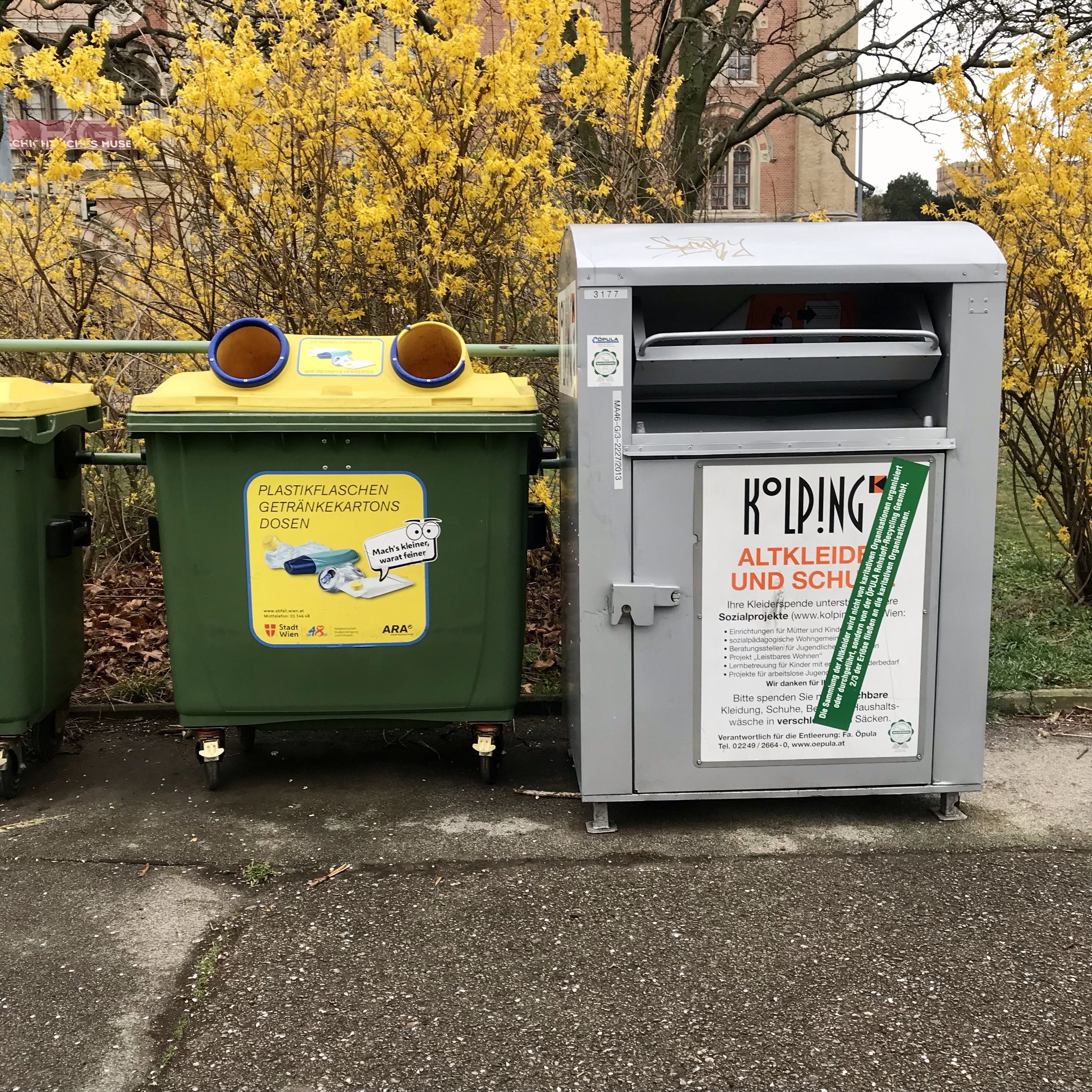
Recycling bins are large and accept household and public materials. This is very helpful for travellers, people out & about and tenants (so they don’t have to depend on landlords to participate).
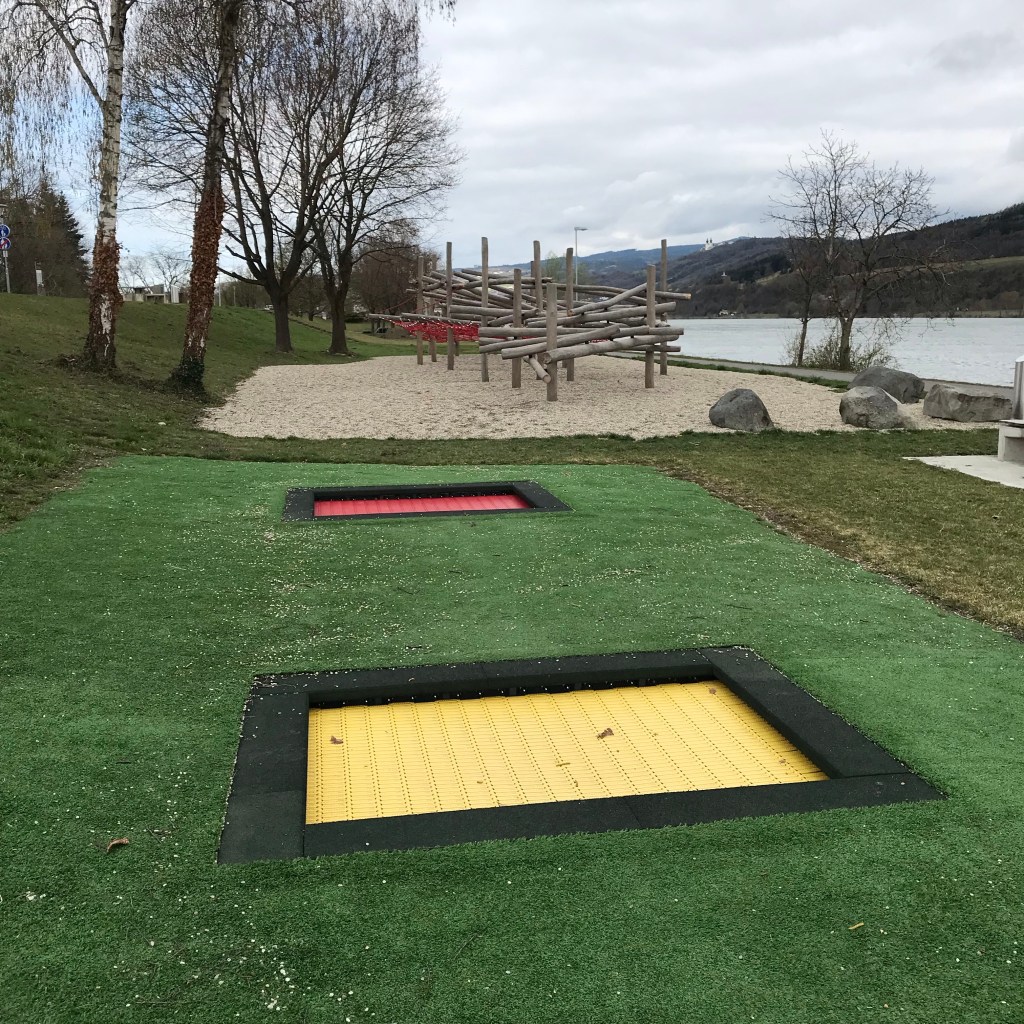
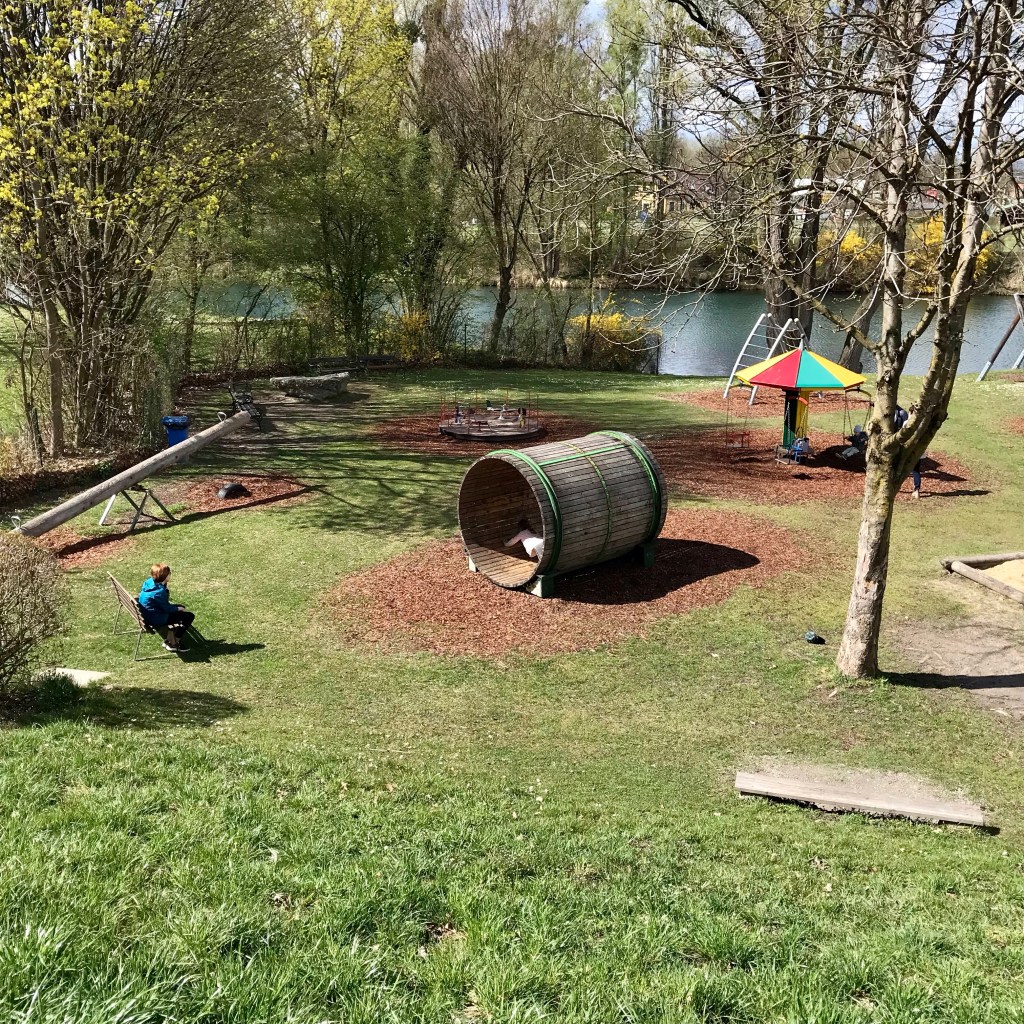
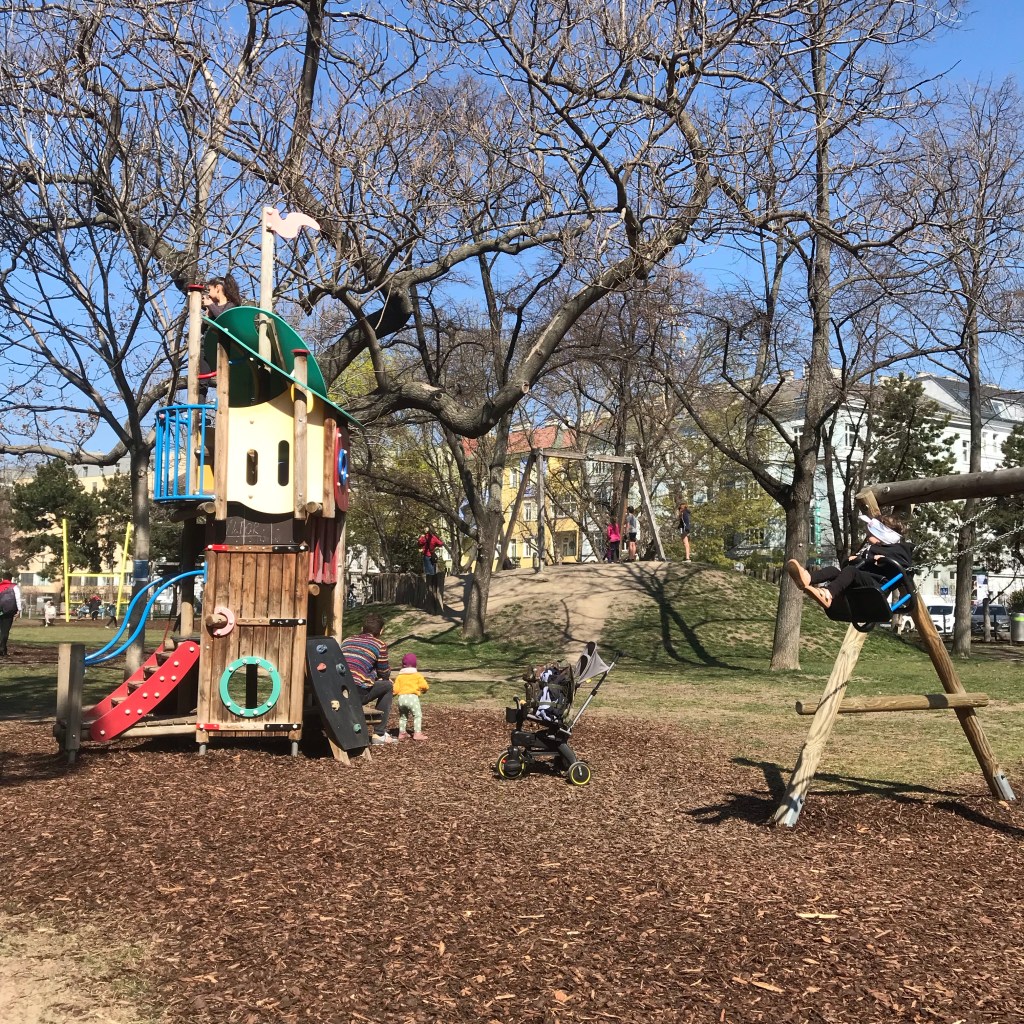
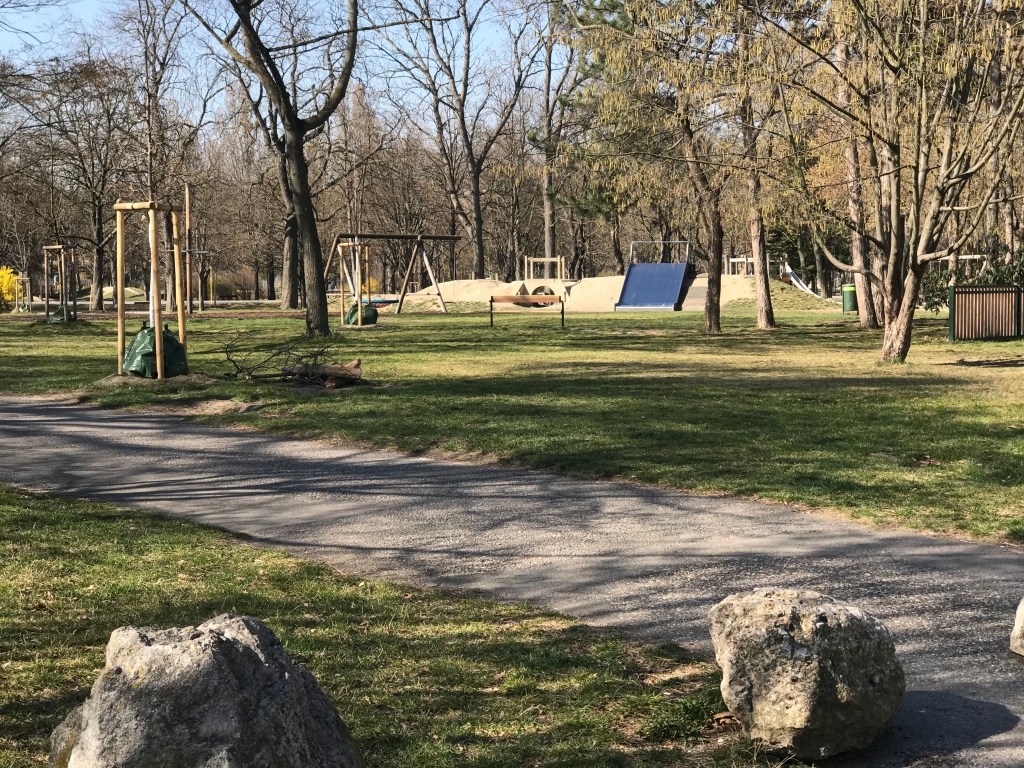
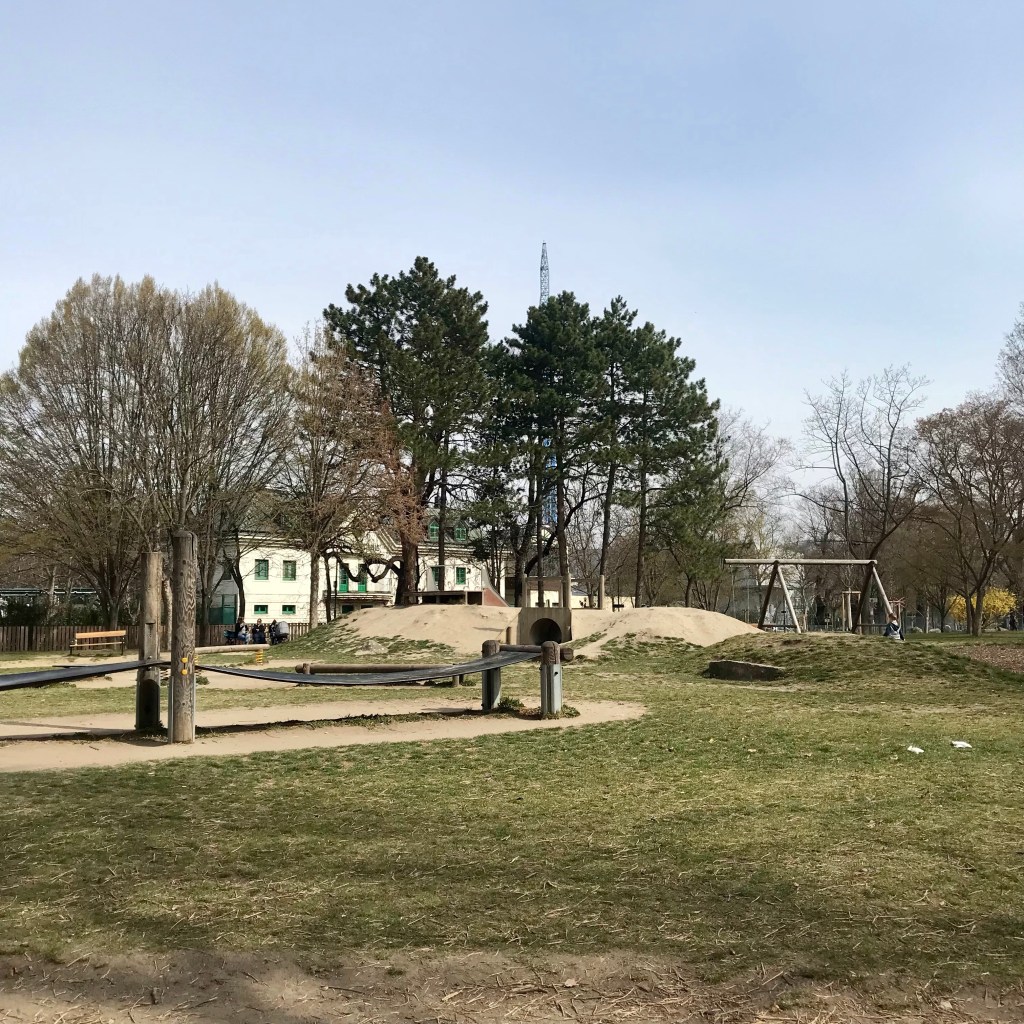
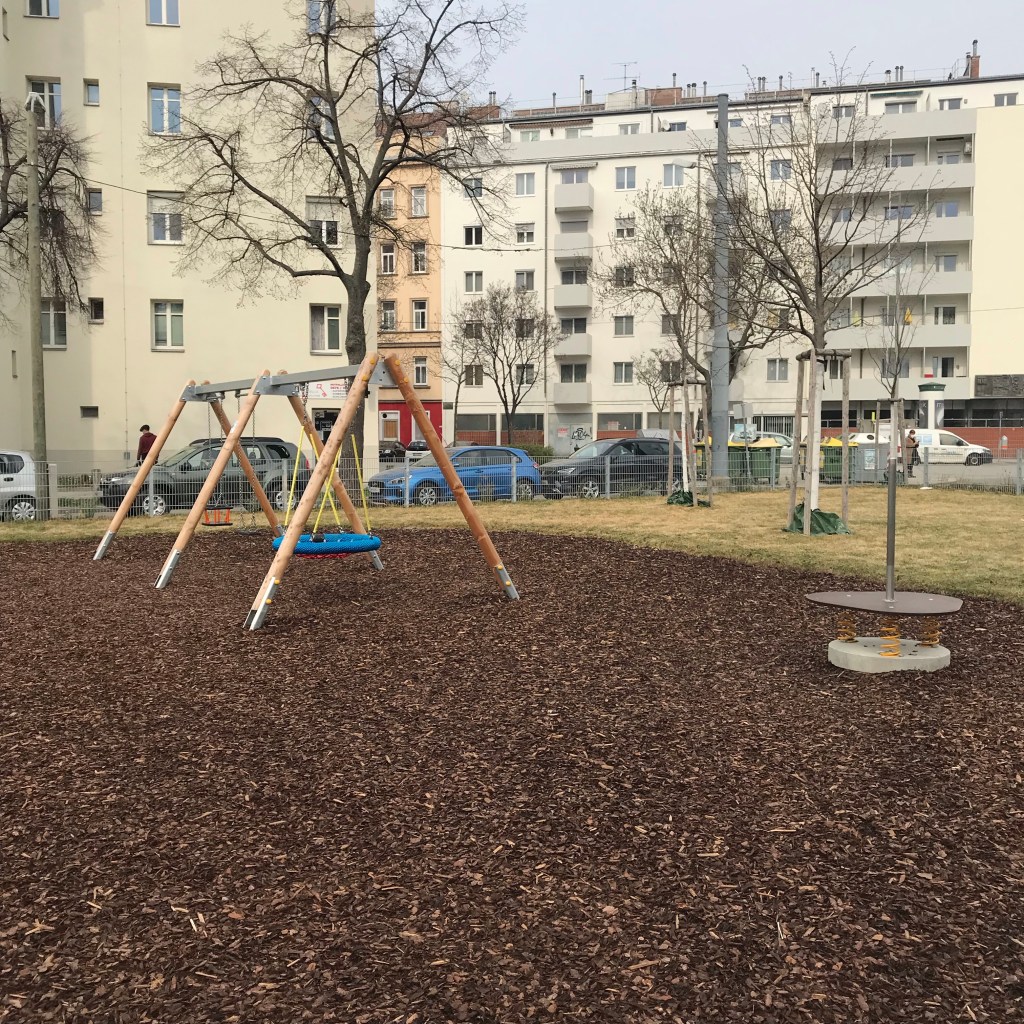
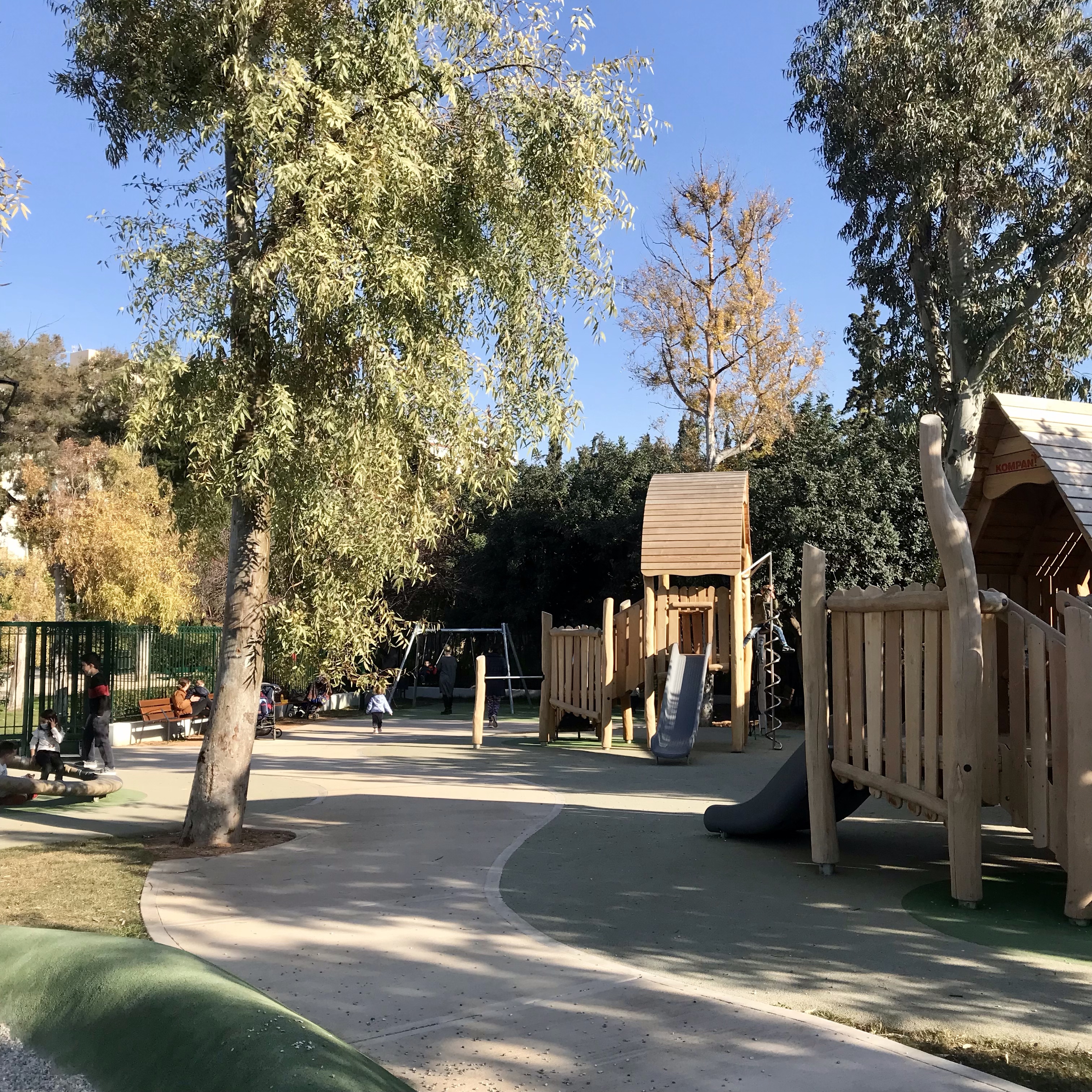
There are so many playgrounds and each one is unique:
Trampolines!Hamster wheel
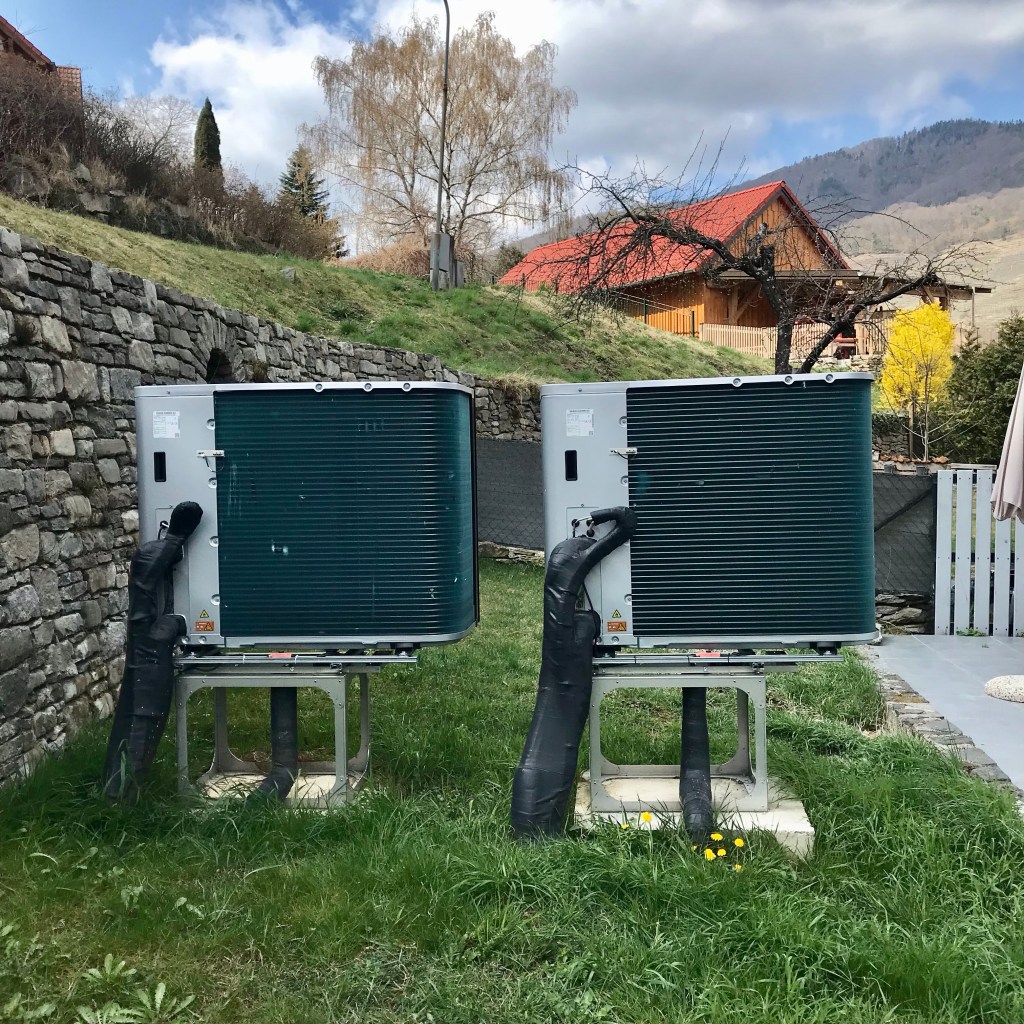
The Spitz Airbnb that I mentioned in the last post (with the bike storage room) also had what I think are ground sourced heat pumps:
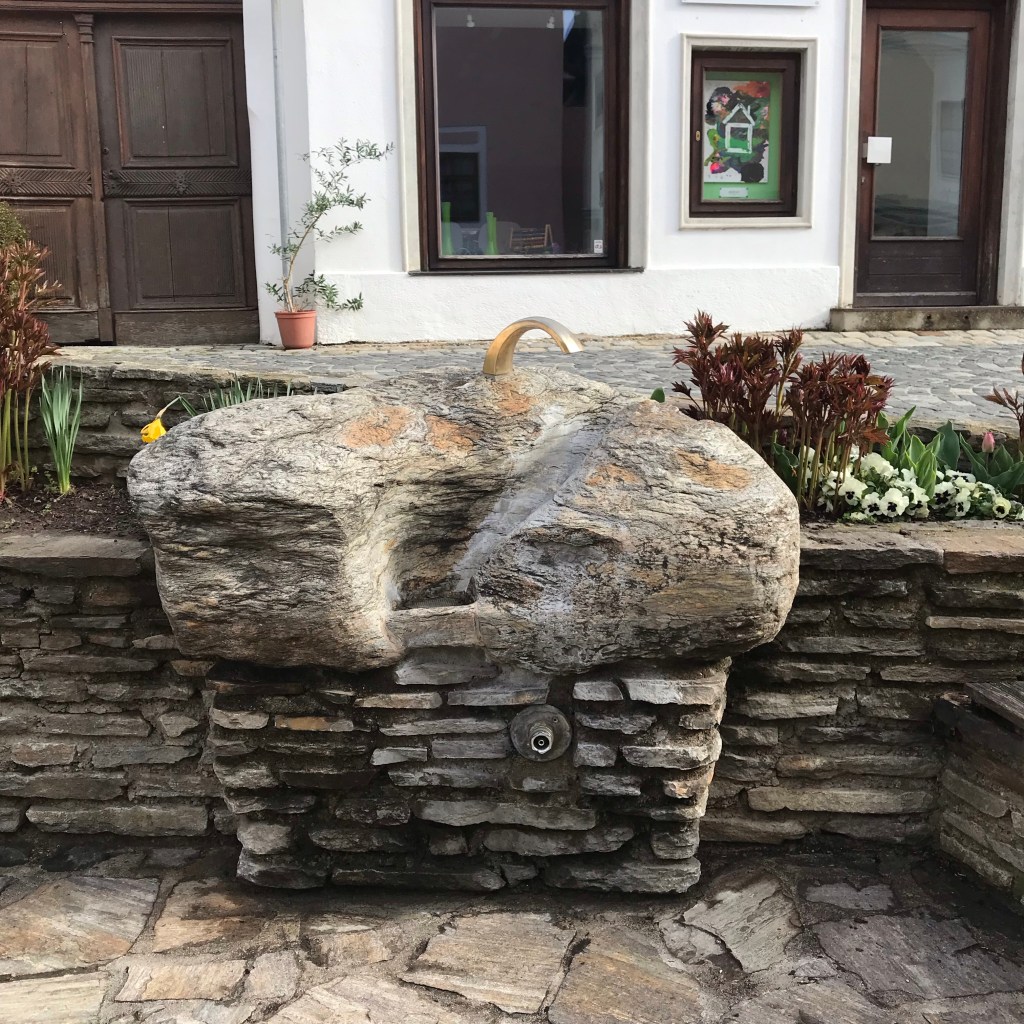
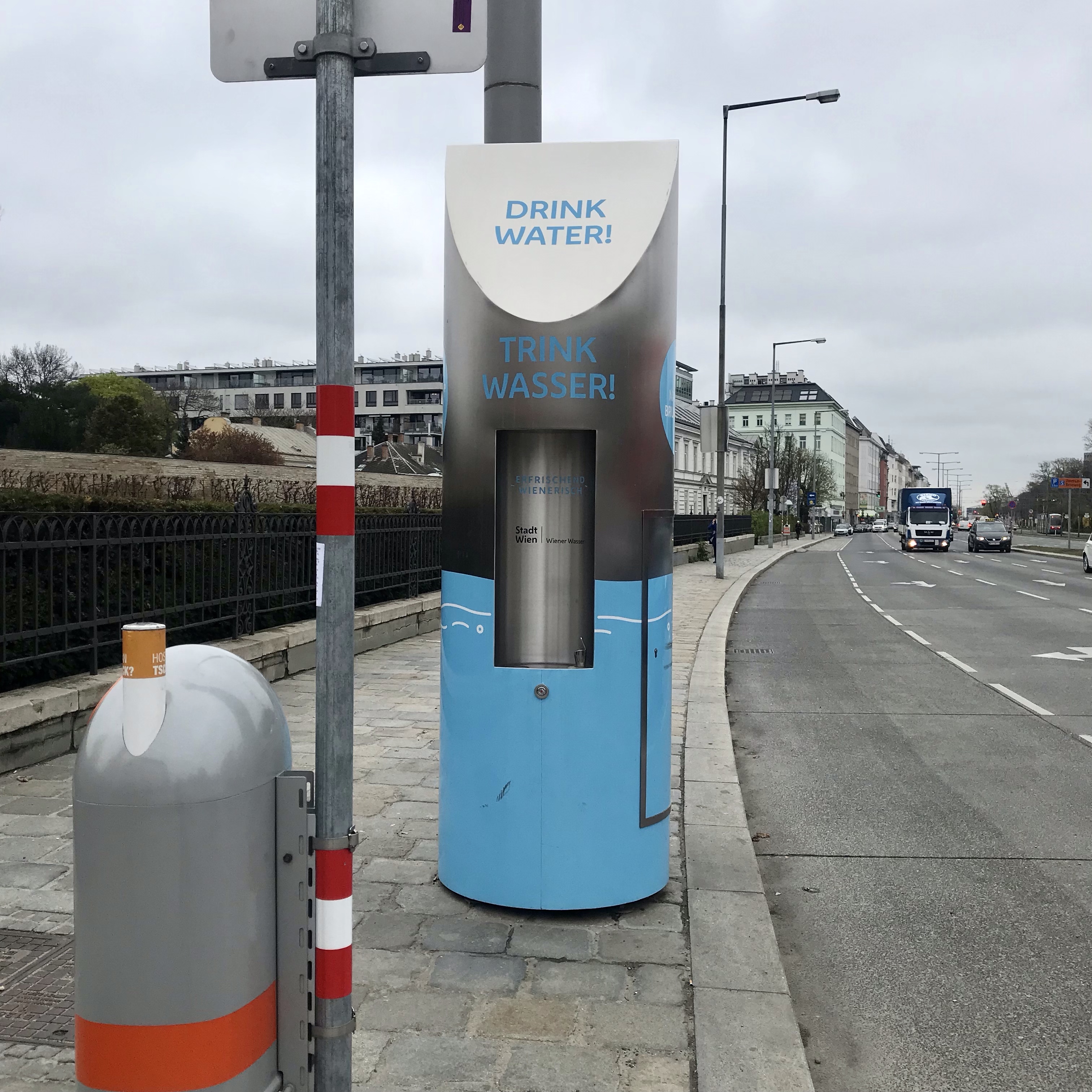
Having drinking water accessible to all is so important. Why not make it beautiful?
In Melk
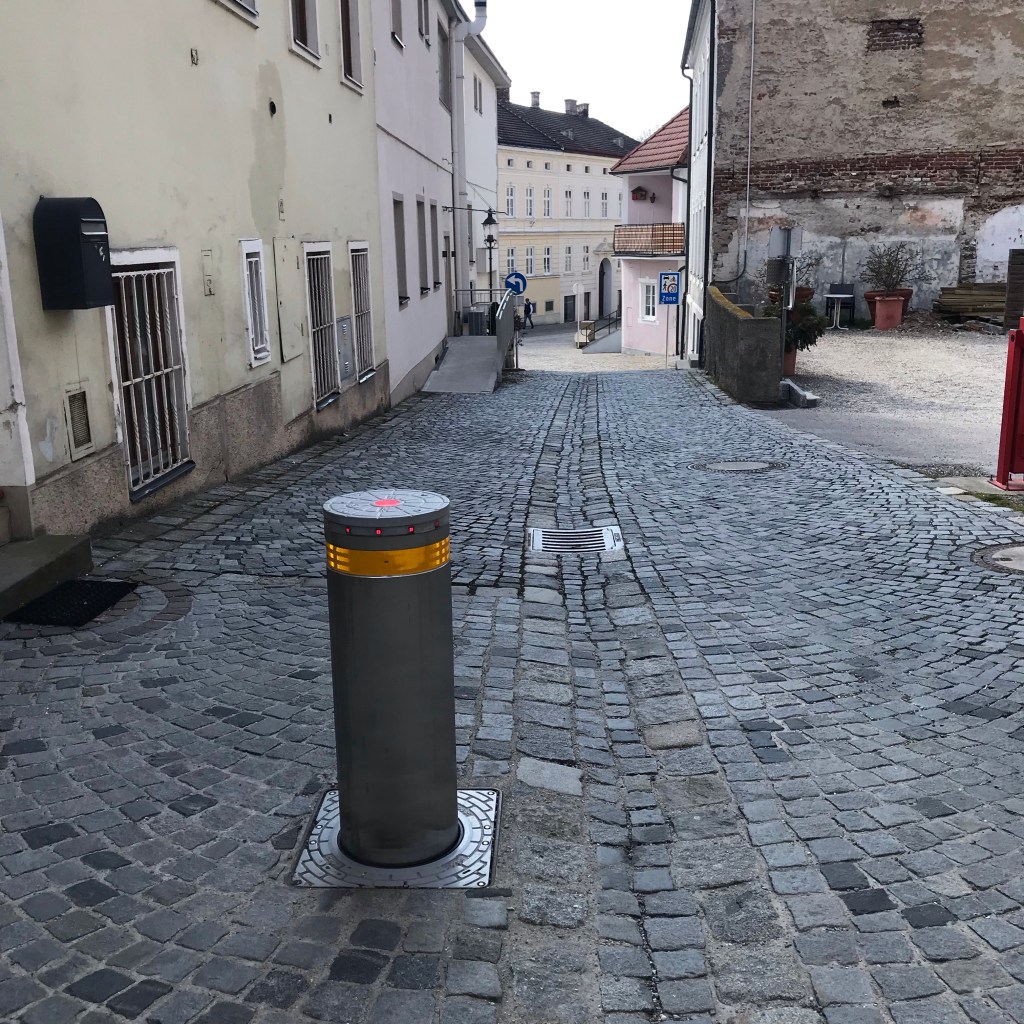
Retractable bollards allow pedestrian/rolling streets to let in vehicles when necessary.
Melk as well.
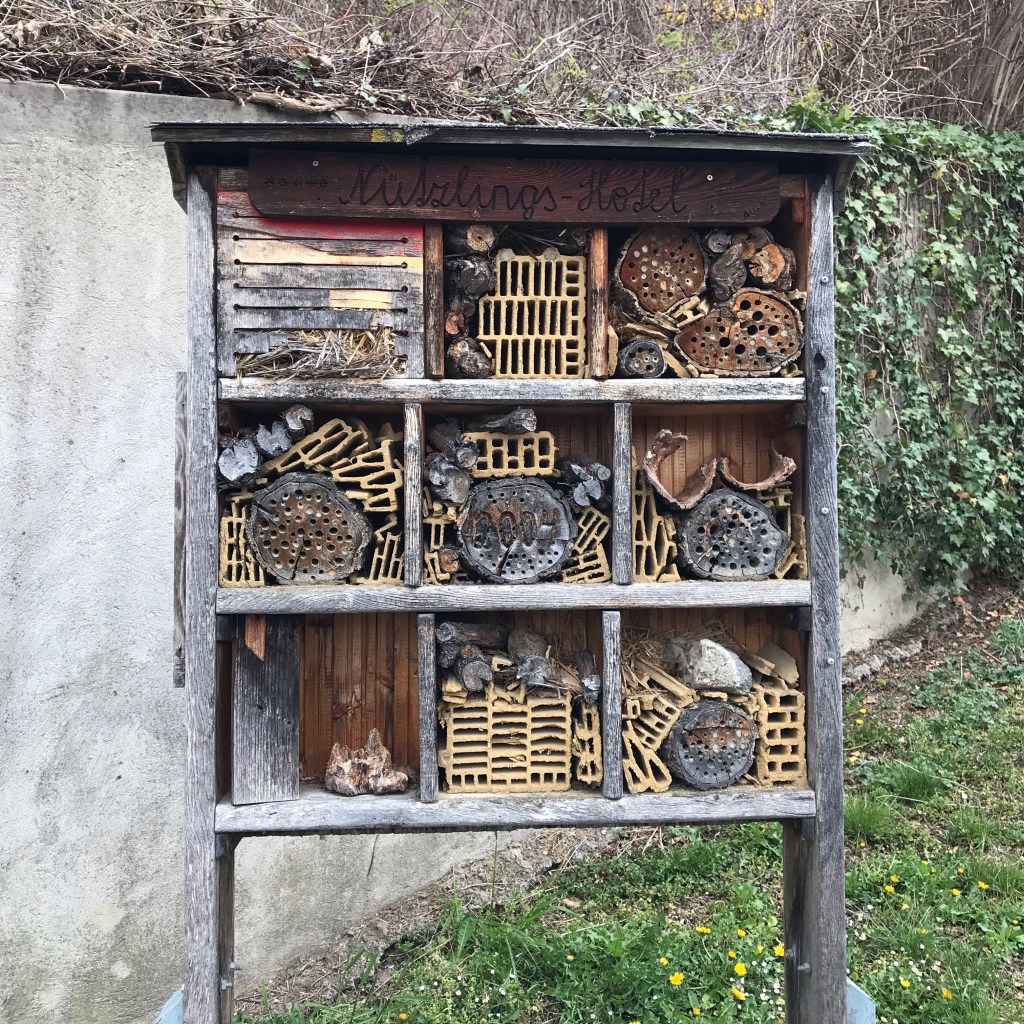
This is an insect hotel to support biodiversity. We first saw these in Toulouse, France.
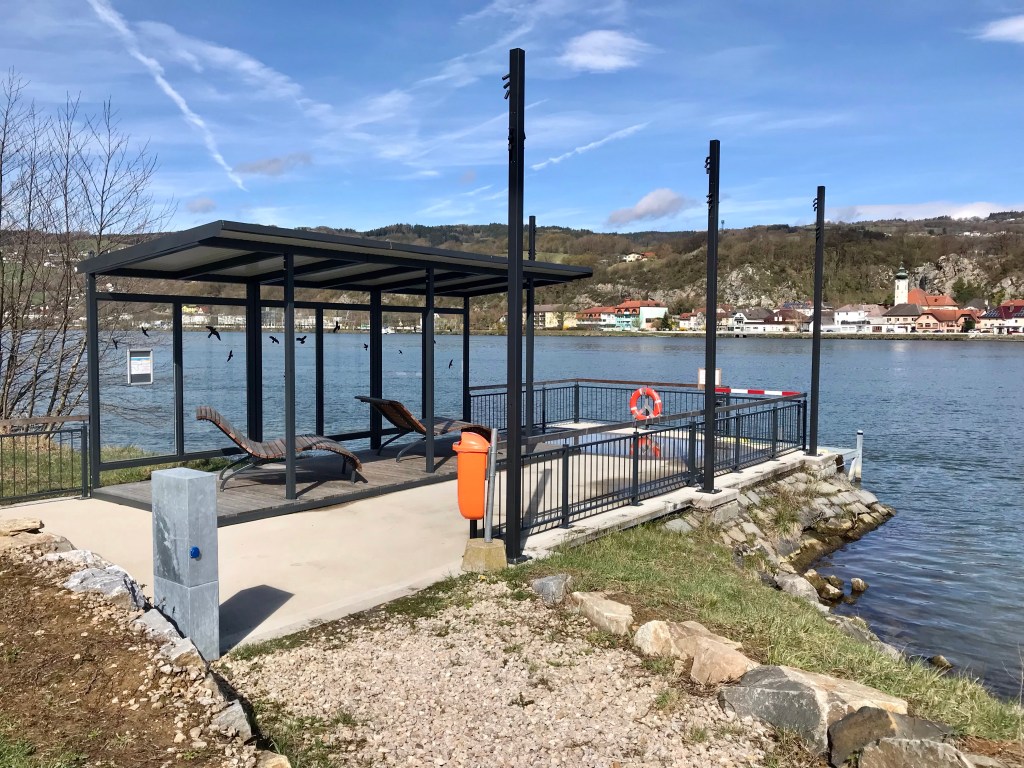
This is a waiting area to catch a shuttle across the Danube River (Donau).
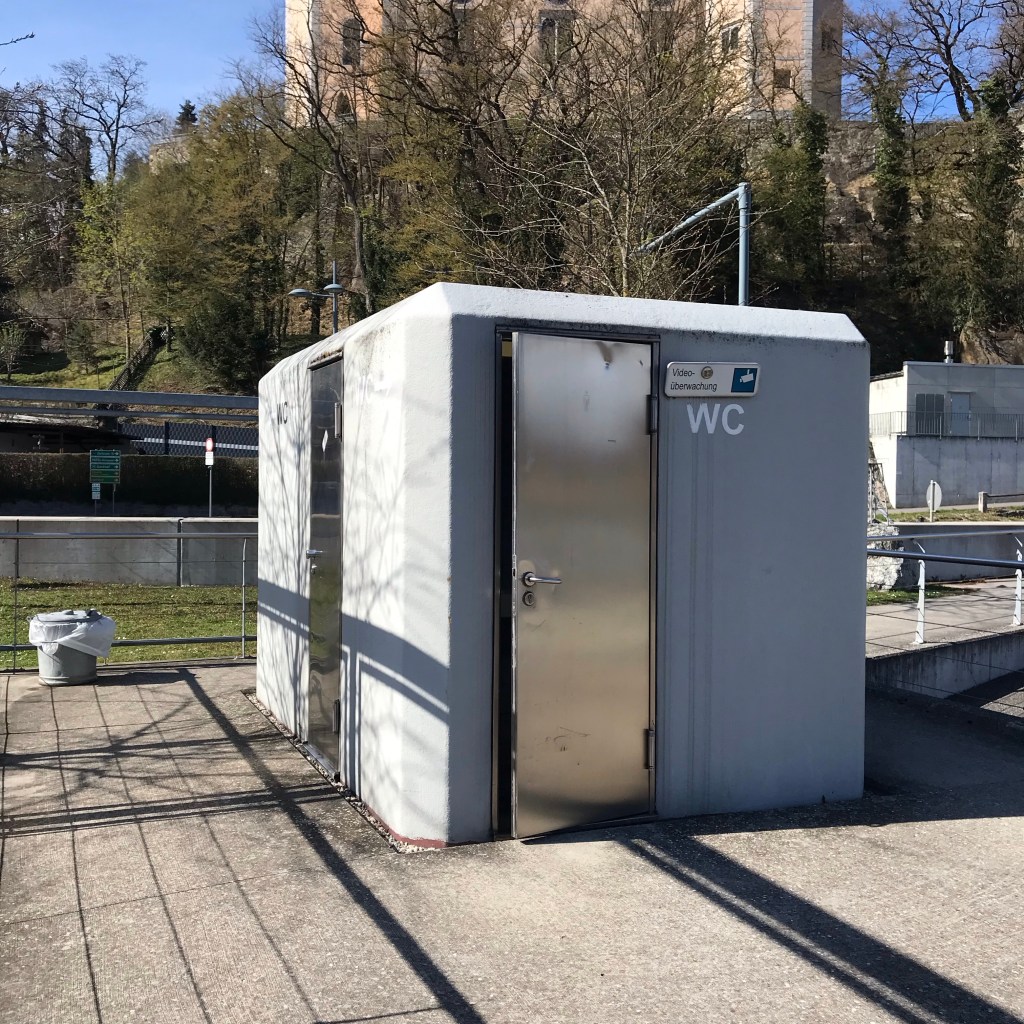
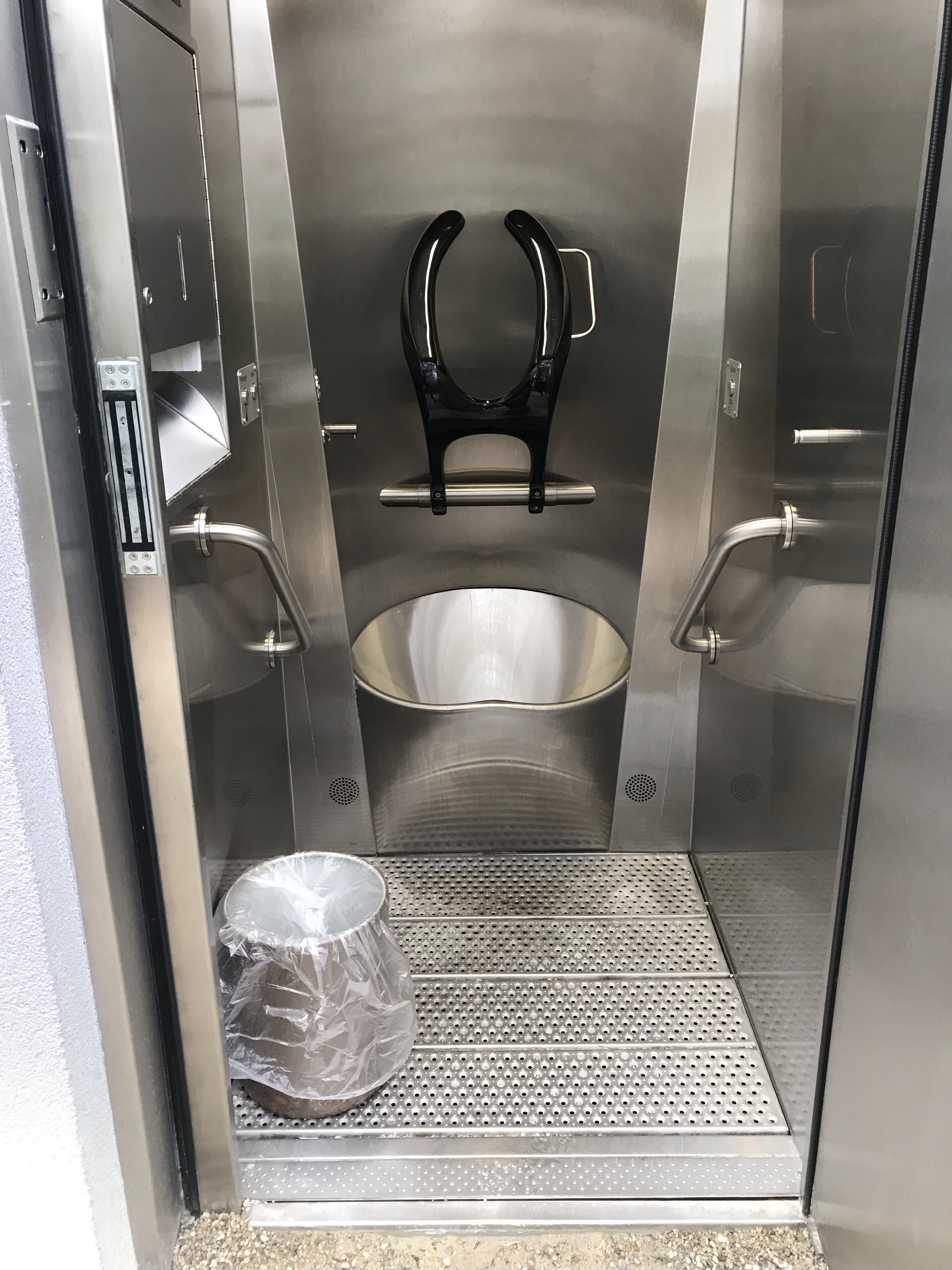
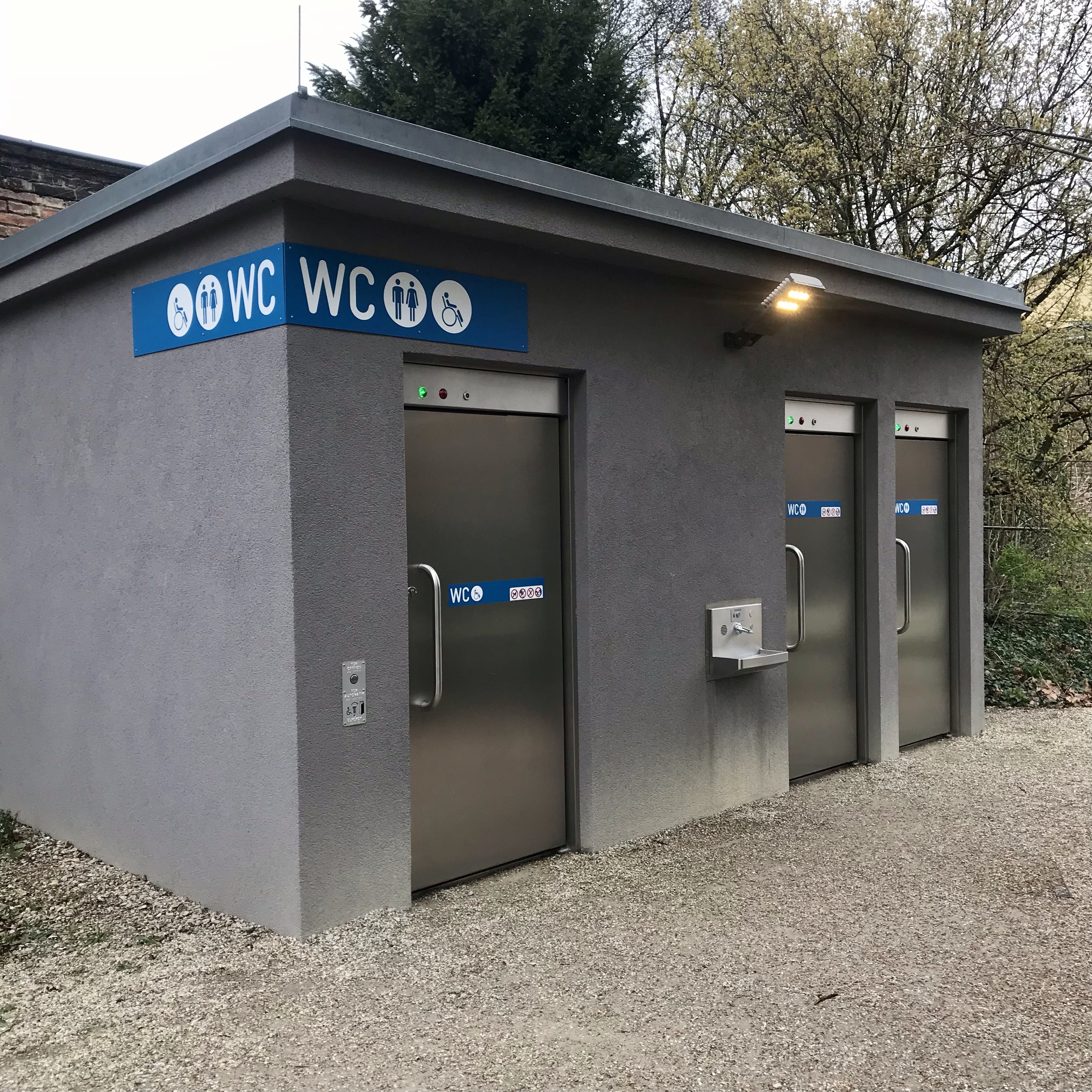
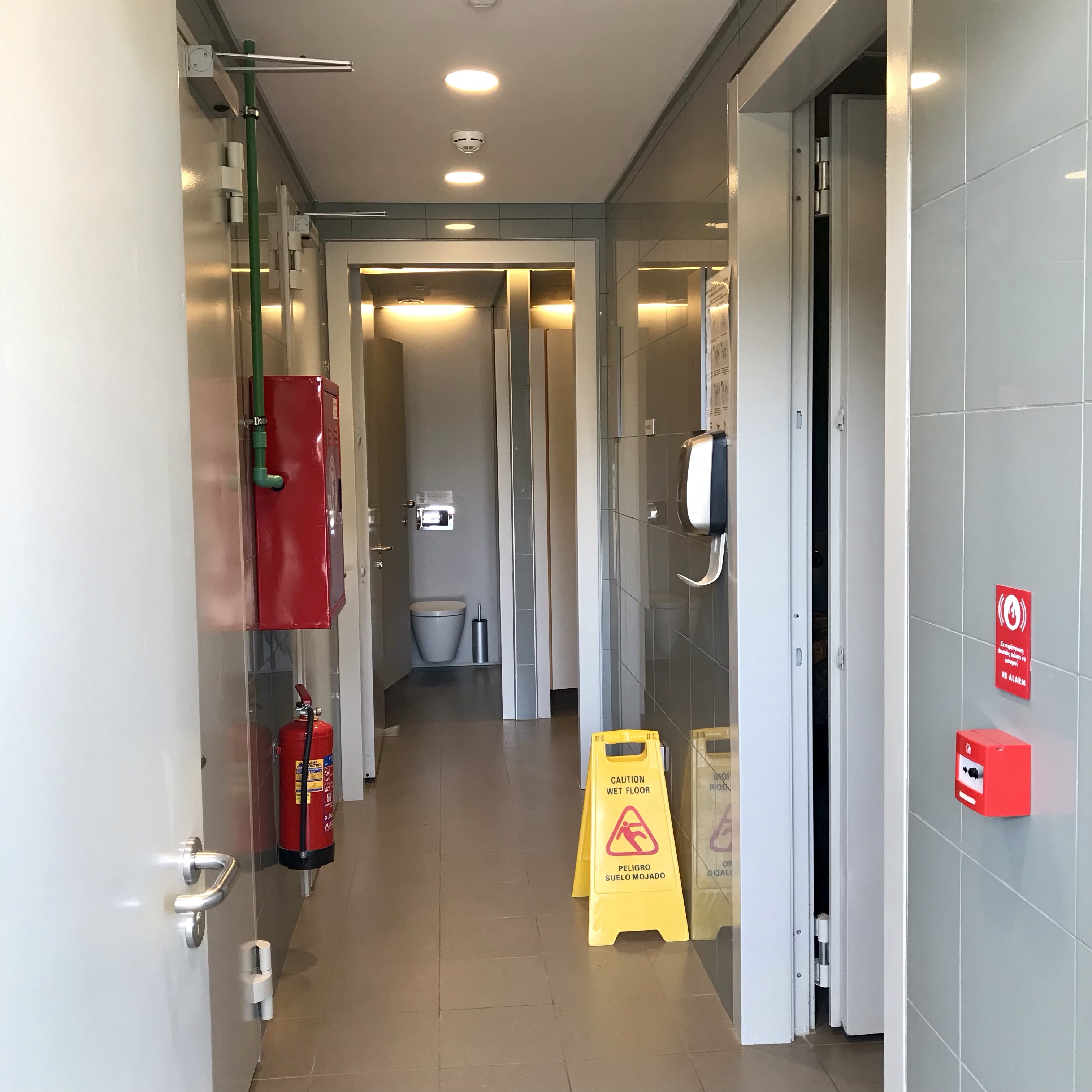
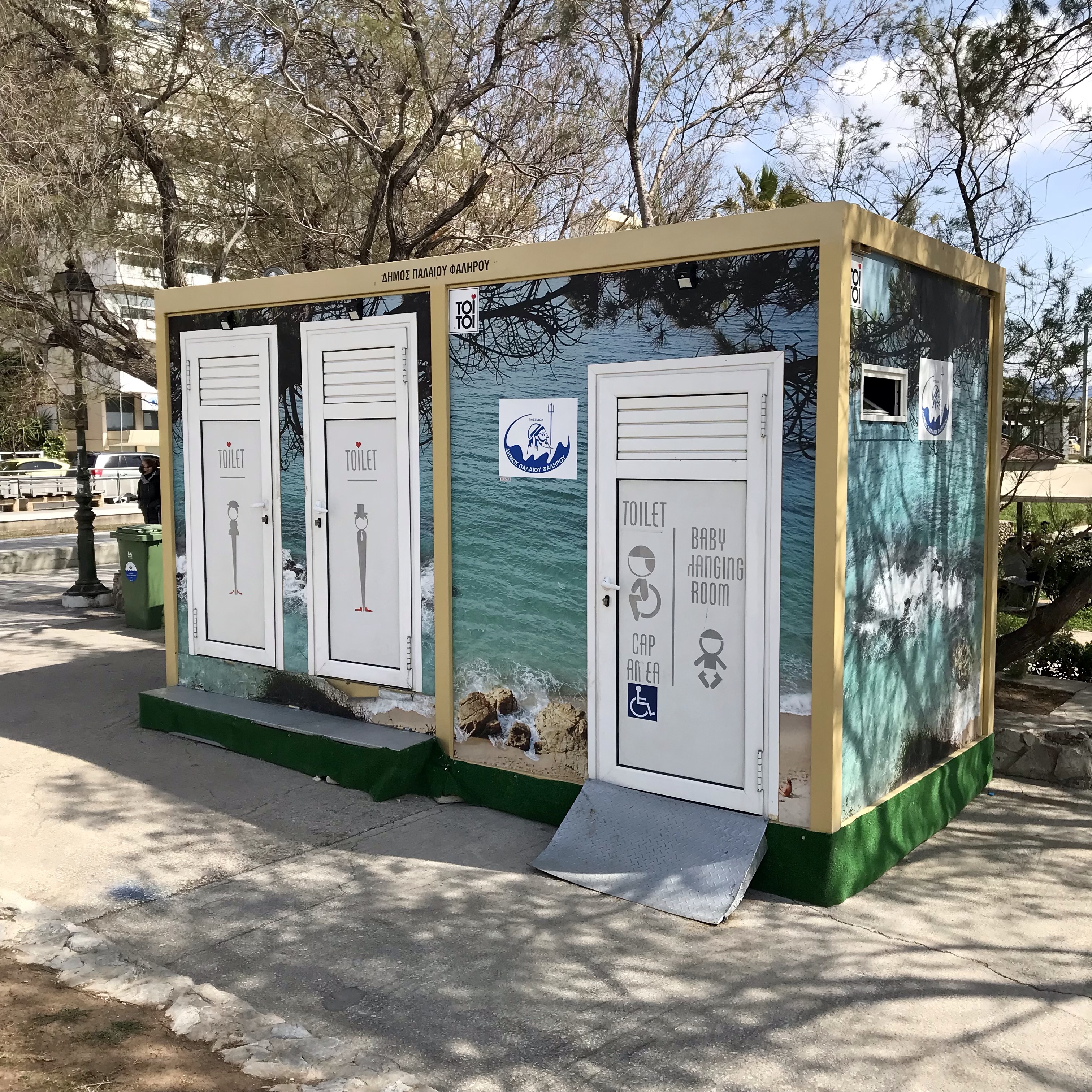
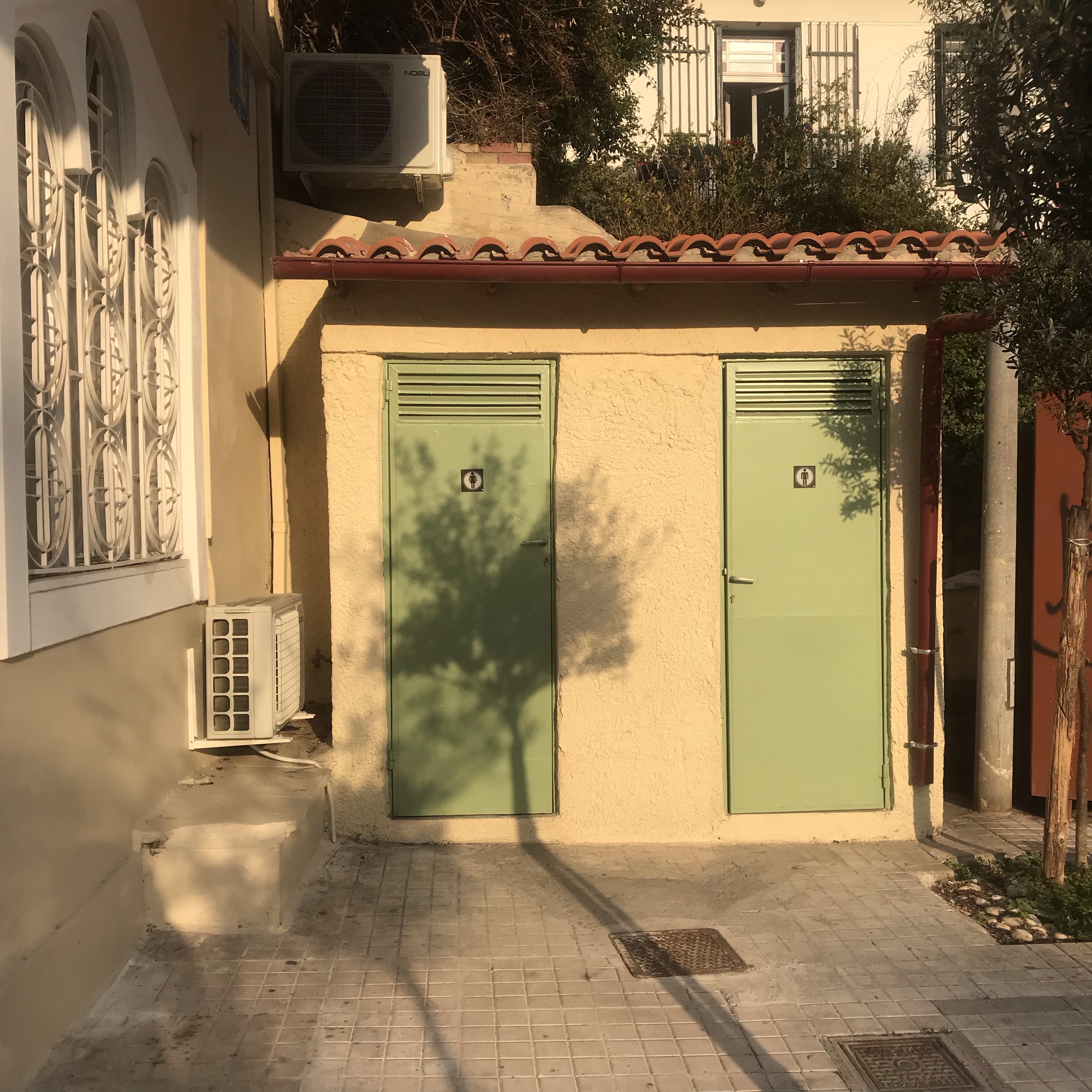
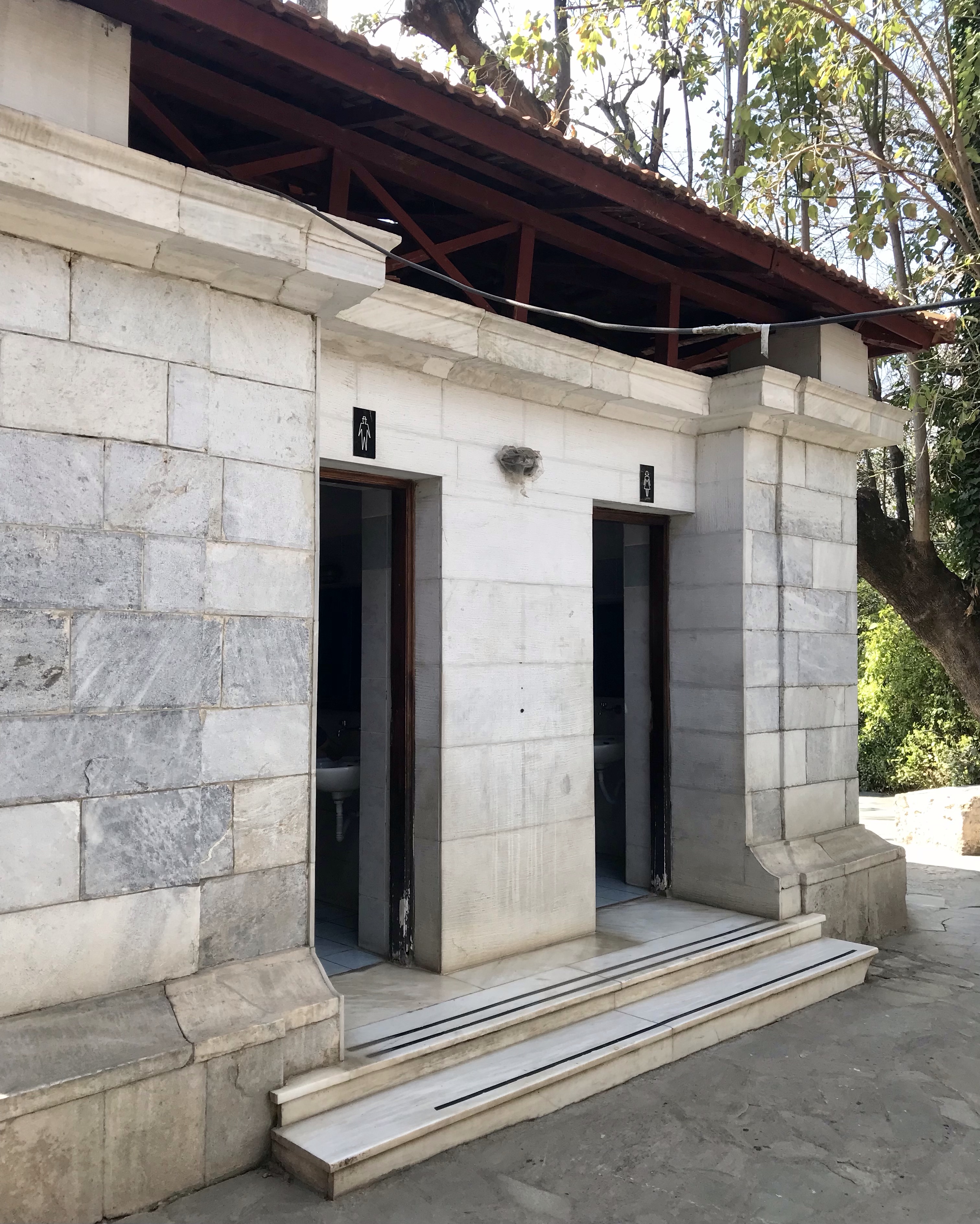
Clean and free public washrooms are vital.
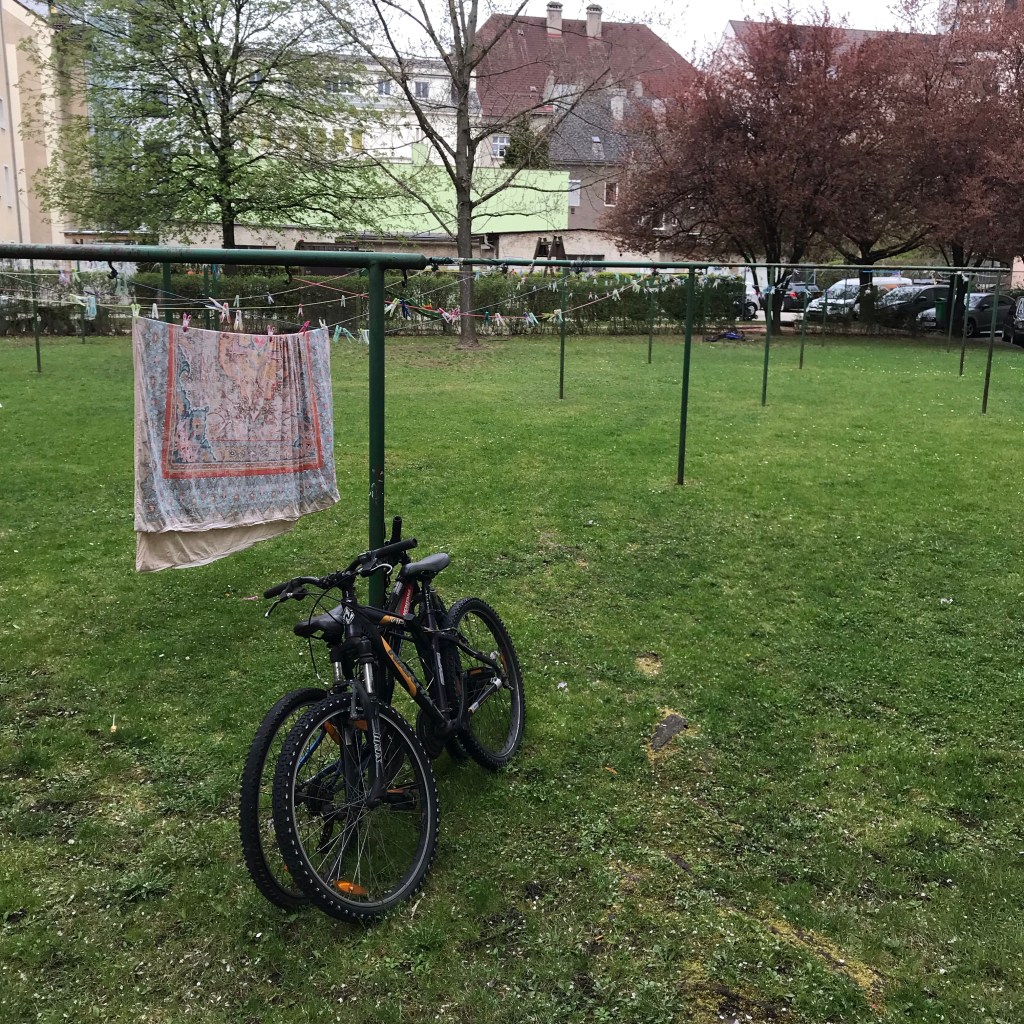
I love this apartment building courtyard in Linz. Dryers are not a thing in Europe. Tons of communal space to dry your laundry here, plus extra bike storage!
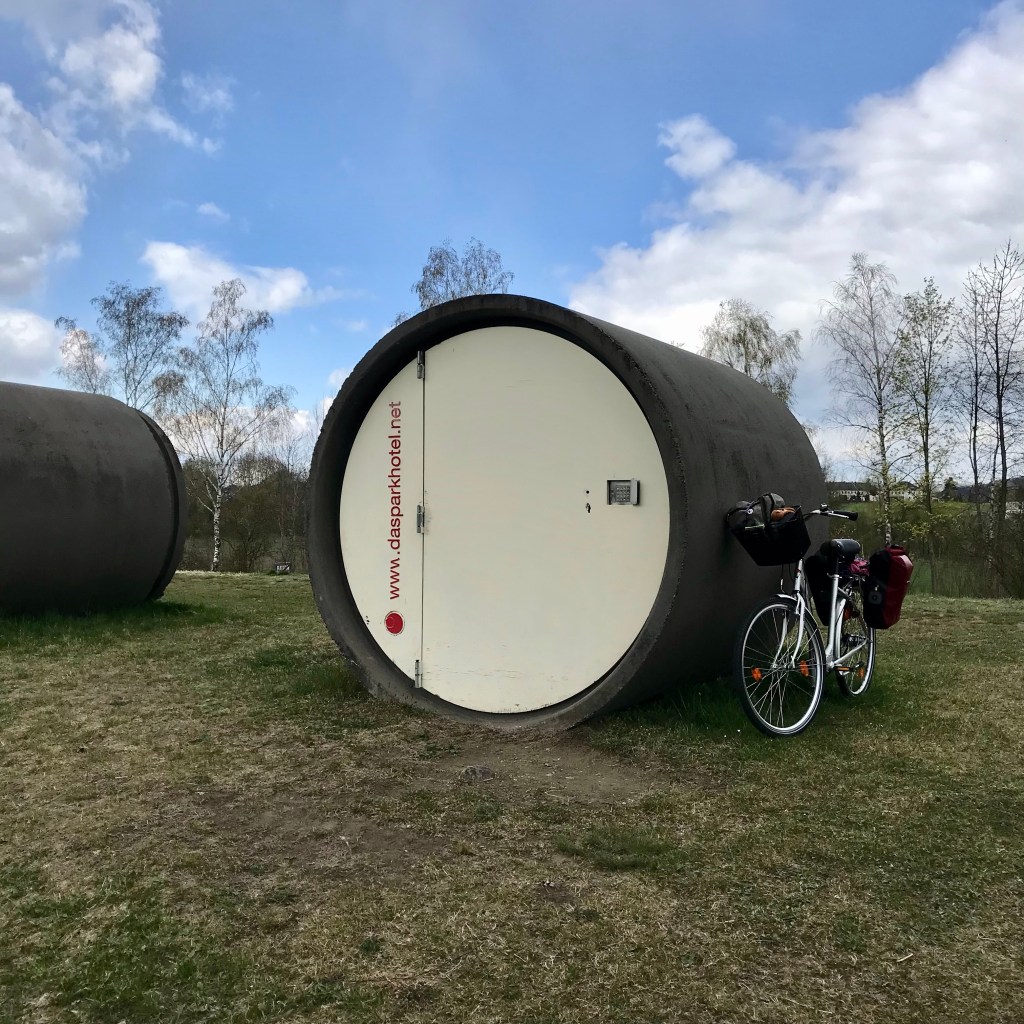
This pipe has a new life (?) as a place to sleep for the night. There were also toilet & shower rooms made using concrete pipes.
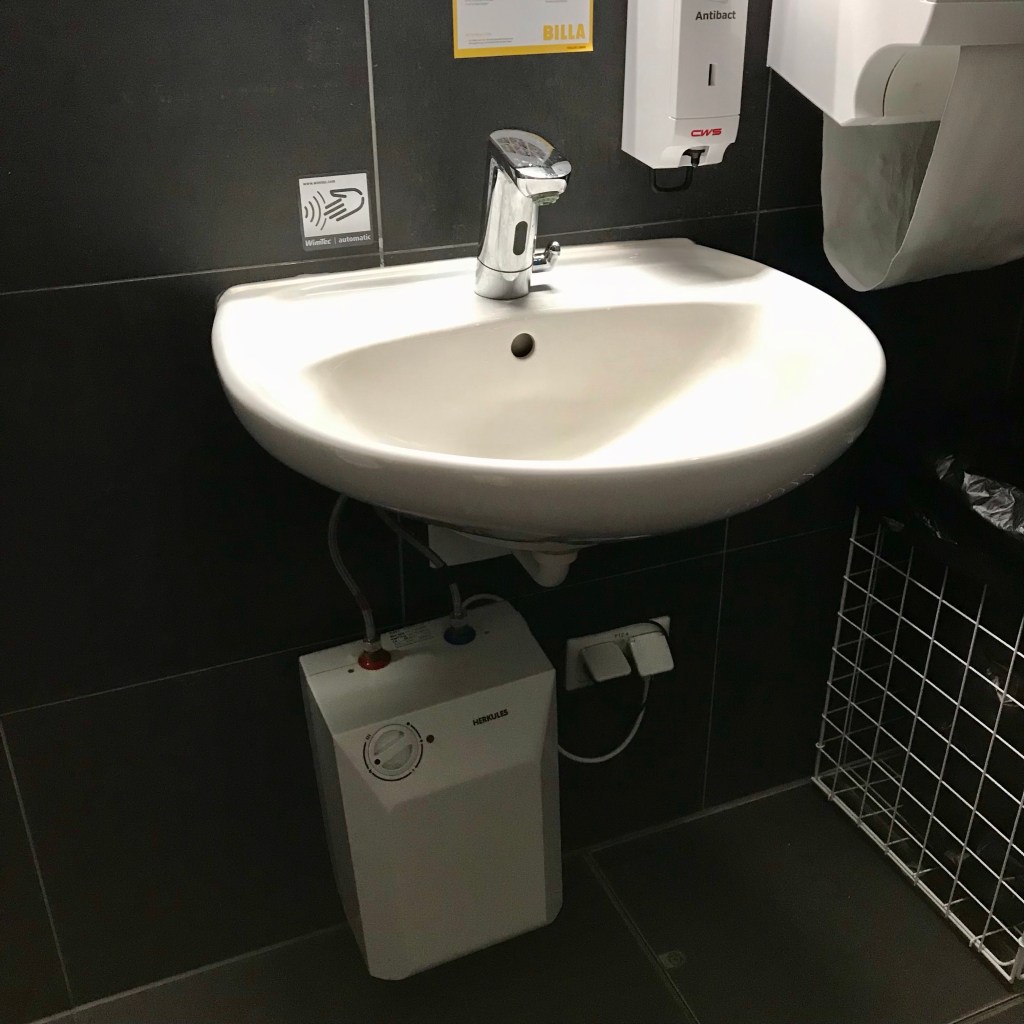
On demand electric hot water in a grocery store bathroom. Electrification of everything puts us on the path to net zero.
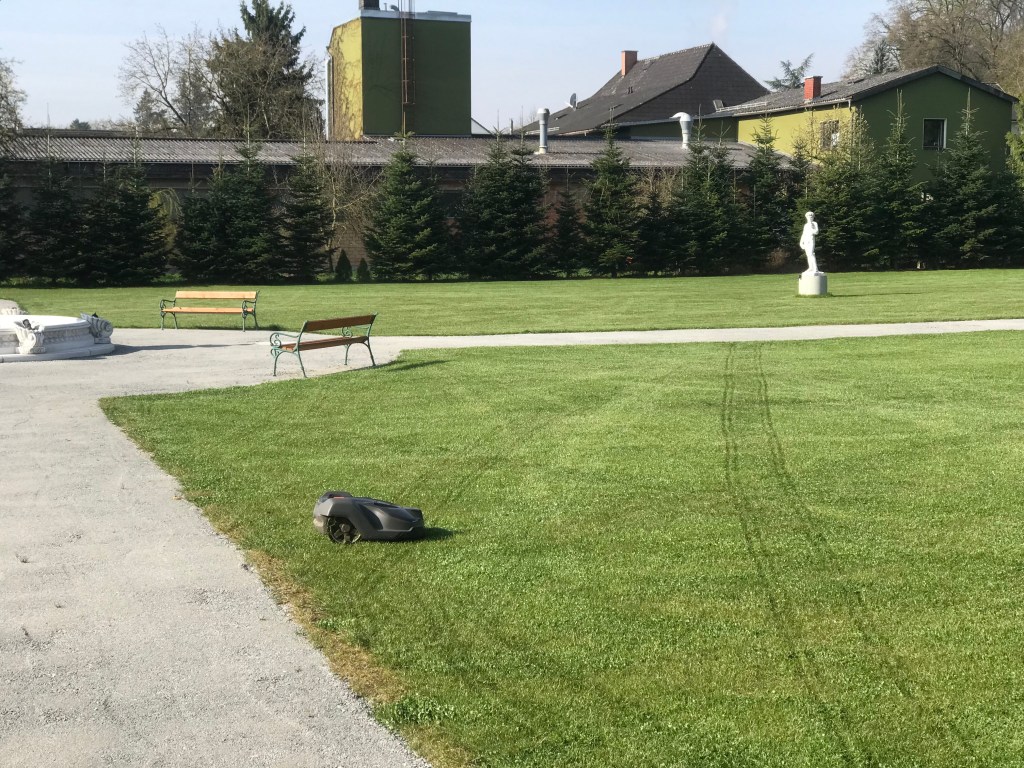
And last, but definitely not least, an electric robotic lawn mower. We saw a few of these in action.
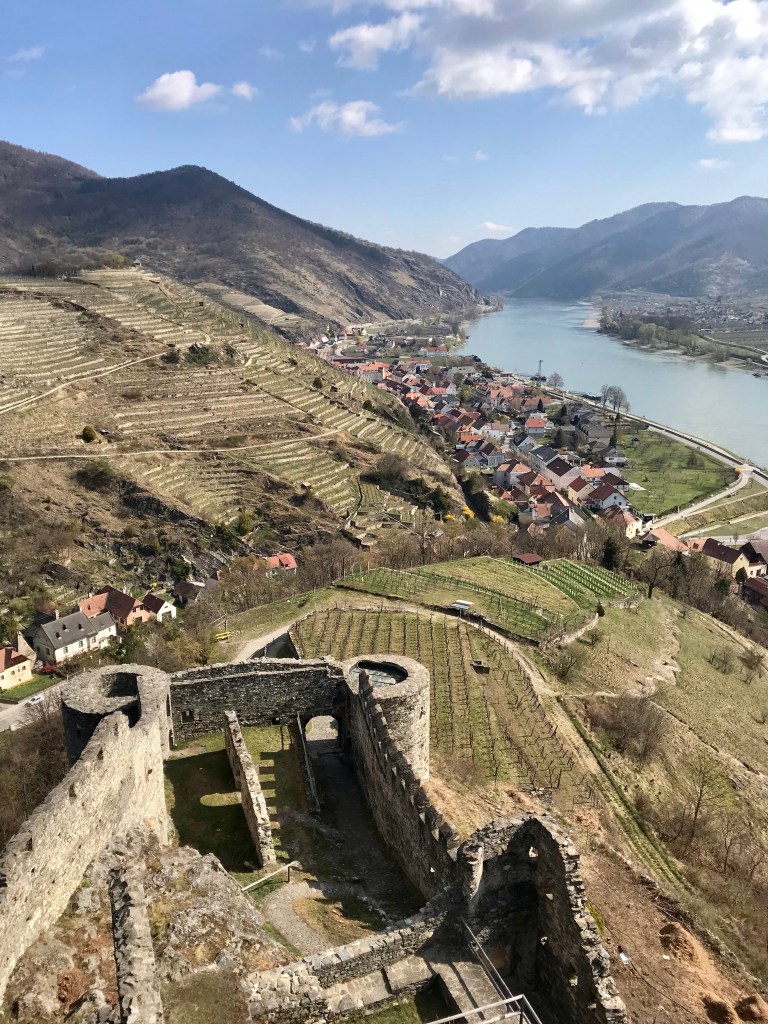
I’ll break my observations in this area into two posts; one on cycling infrastructure and one for all the other awesome public spaces we saw. I loved Austria and want to return for more cycling, sightseeing & music. This part of the EV6 is one of the highlights of all the EV routes, but I won’t focus on the scenery here.
Ok, maybe just one.
We spent 6 days in Wein (Vienna) preparing for our journey and then started our 4-month bike touring adventure on 01 April. It was COLD! With the springtime gear we had, I recommend waiting until mid April. I had problems keeping my toes warm and if we had a flat tire or whatever, we were not dressed for standing around.
More like Christmas on our second night on the trail. Good thing we weren’t camping!
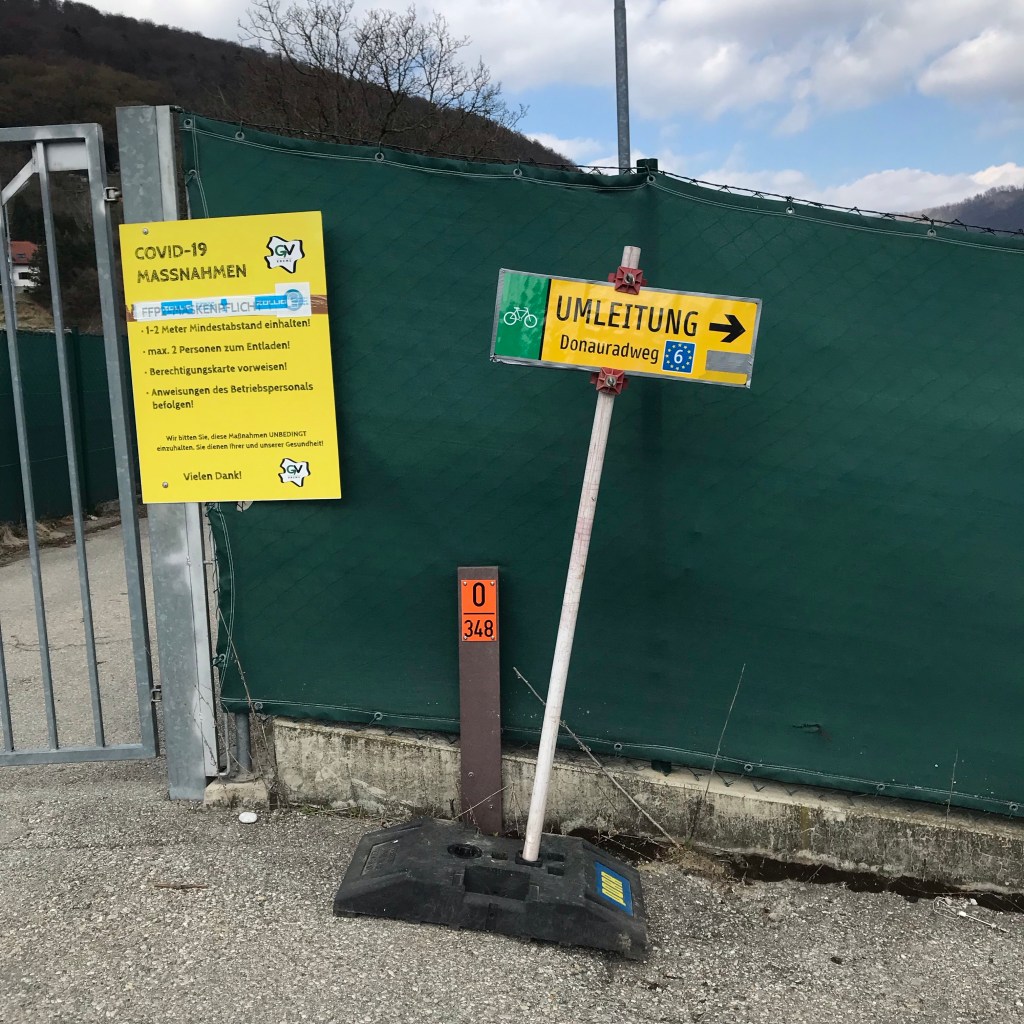
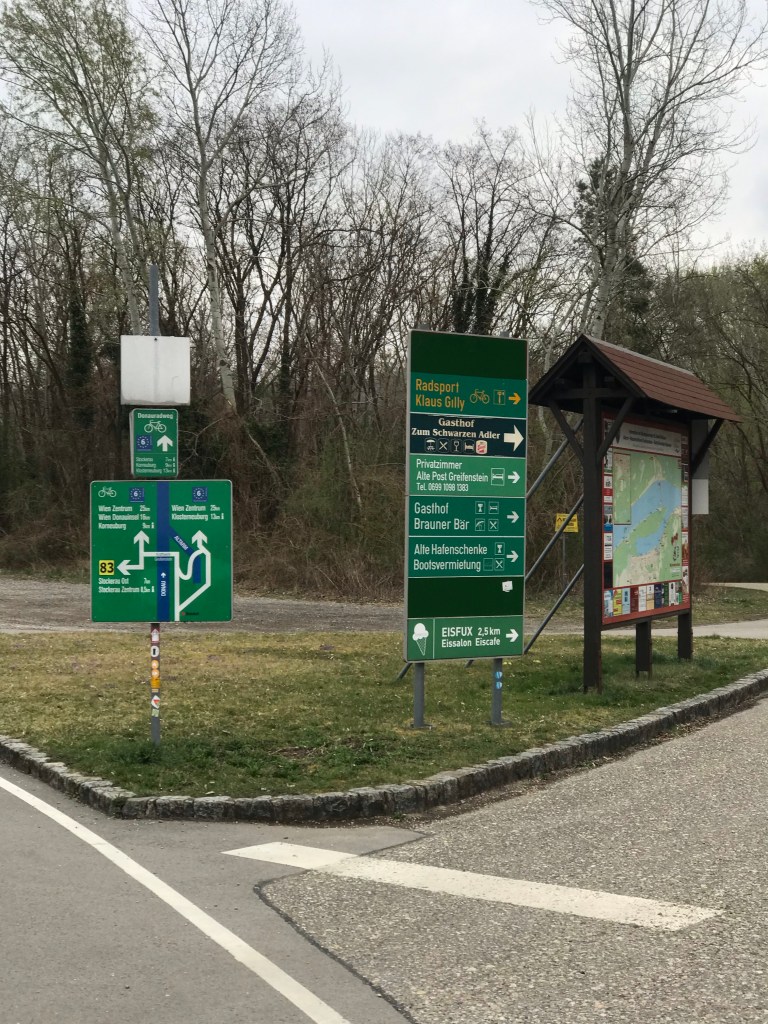
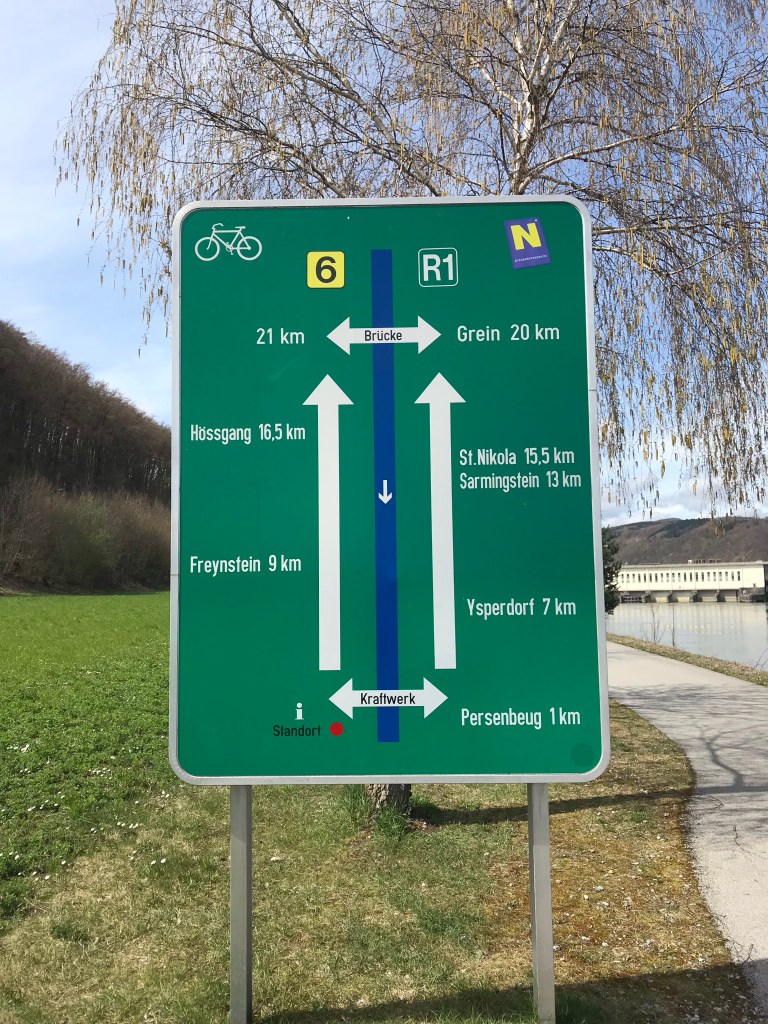
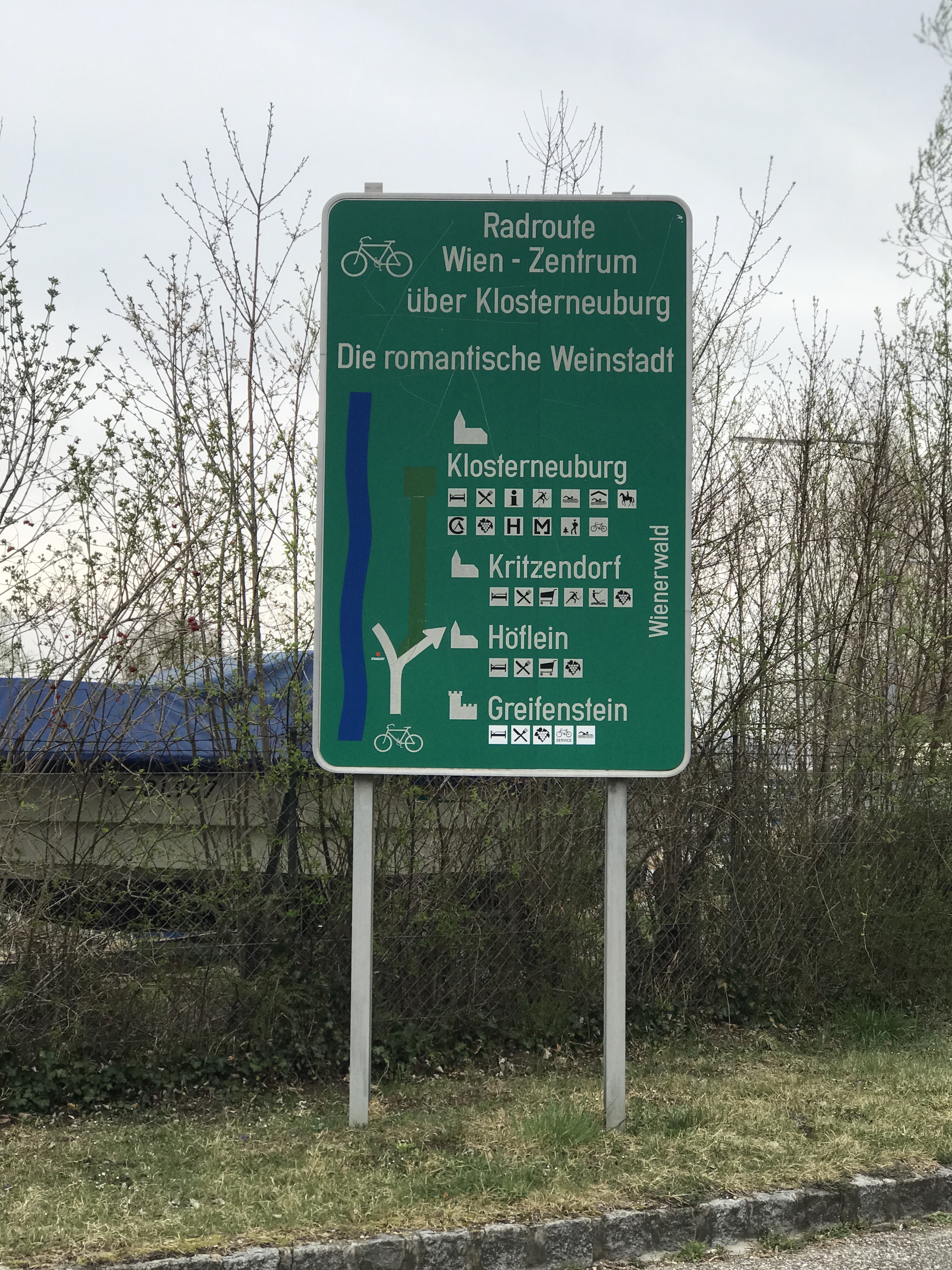
What we remember the best from cycling in Austria (I am writing this 4 months later) is how the route was so well marked. If there was a detour, signs specifically for cyclists were posted. We appreciated this even more in hindsight as no other countries we visited excelled at signage.
These signs made me smile, as they are all for cycle paths! Incredible.
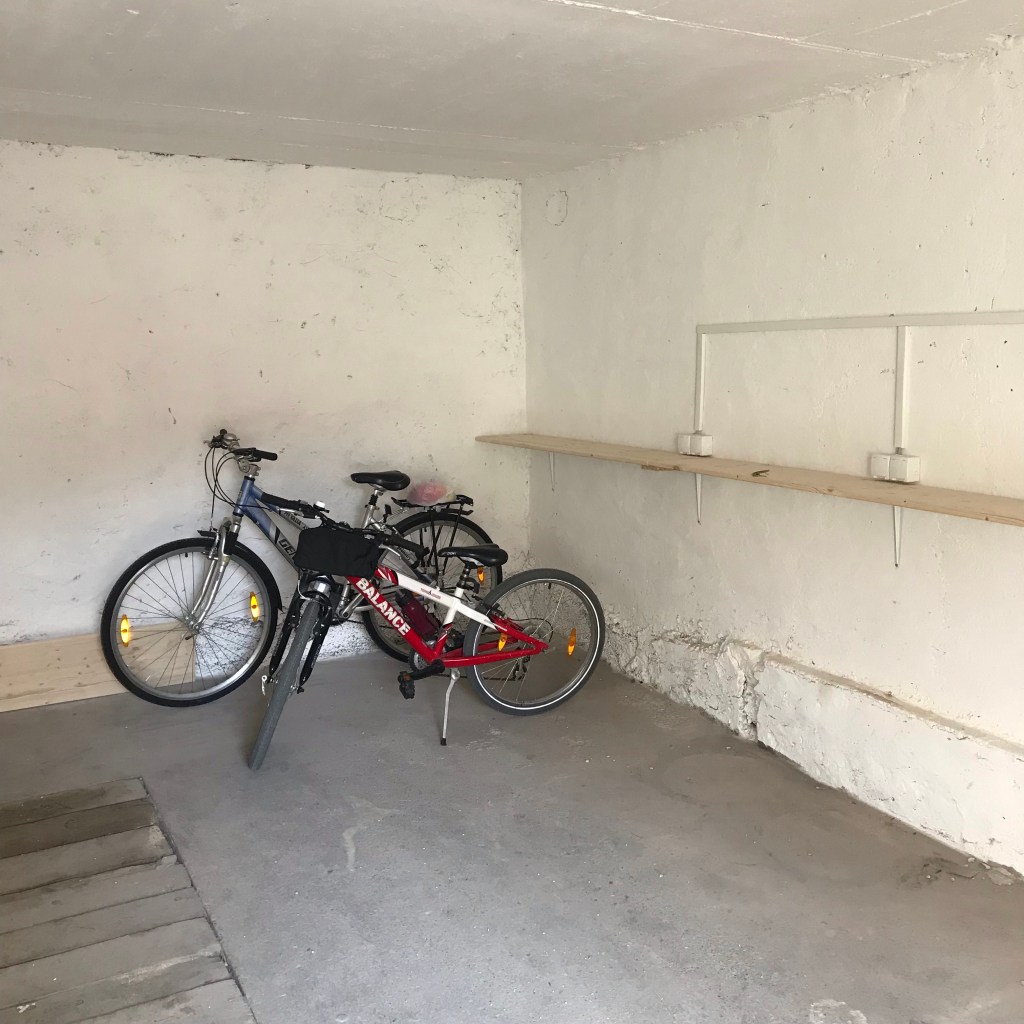
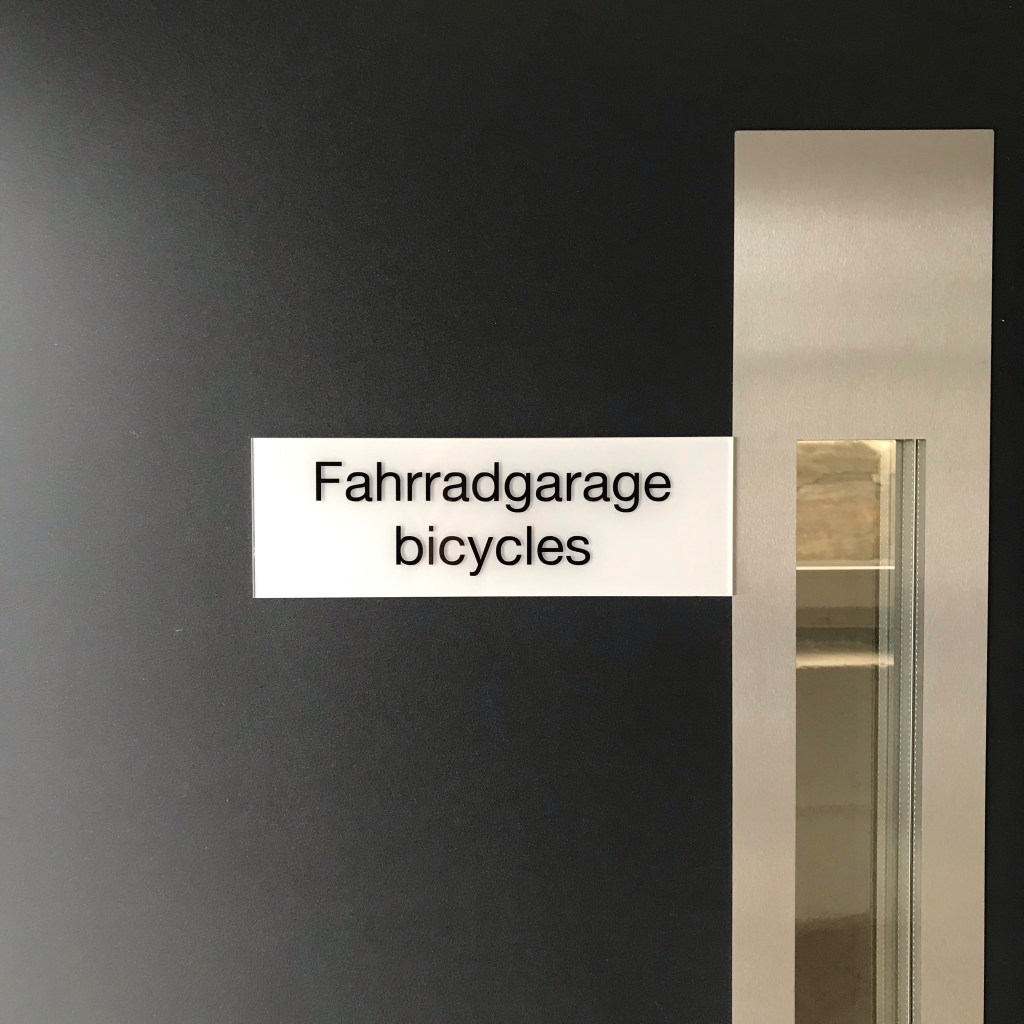
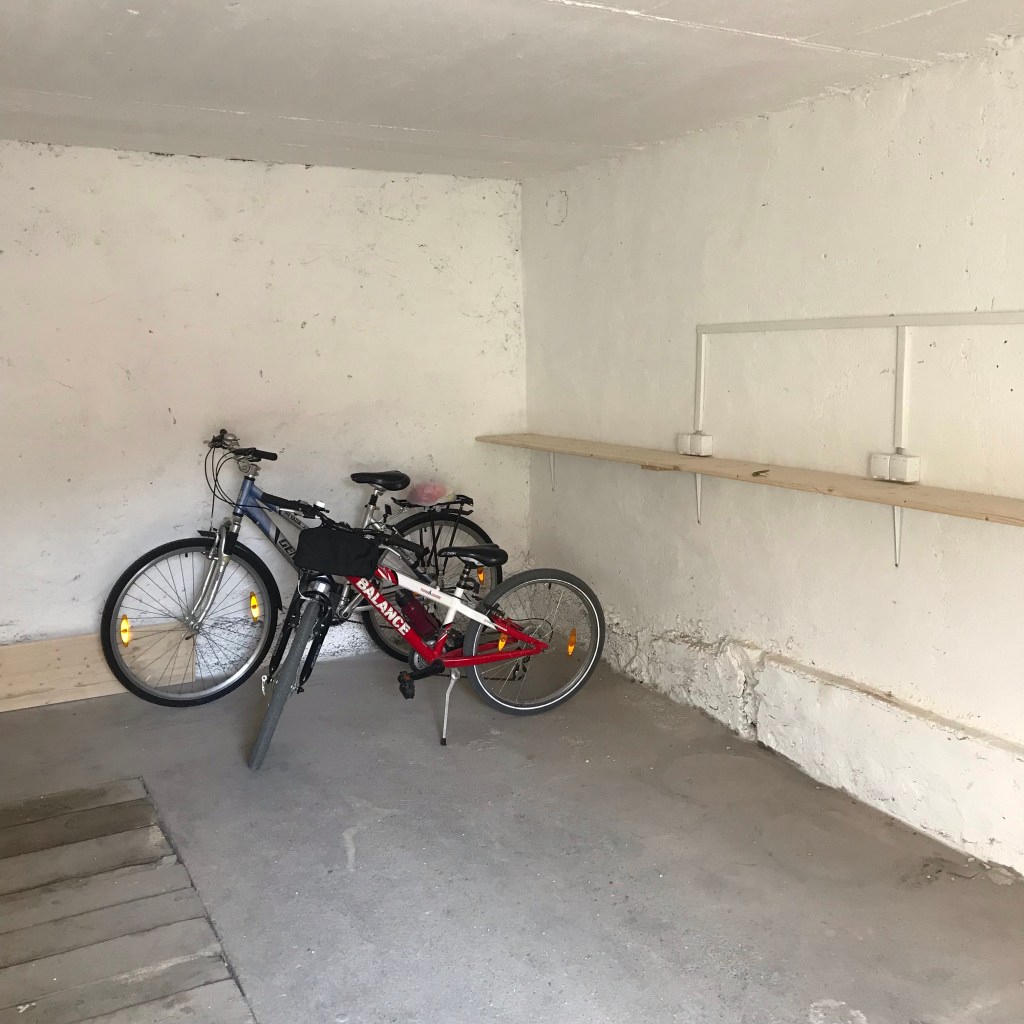
These were taken at an Airbnb we stayed at in Spitz. A huge bike storage room was available and it came with outlets and a shelf to plug in and hold e-bike batteries.
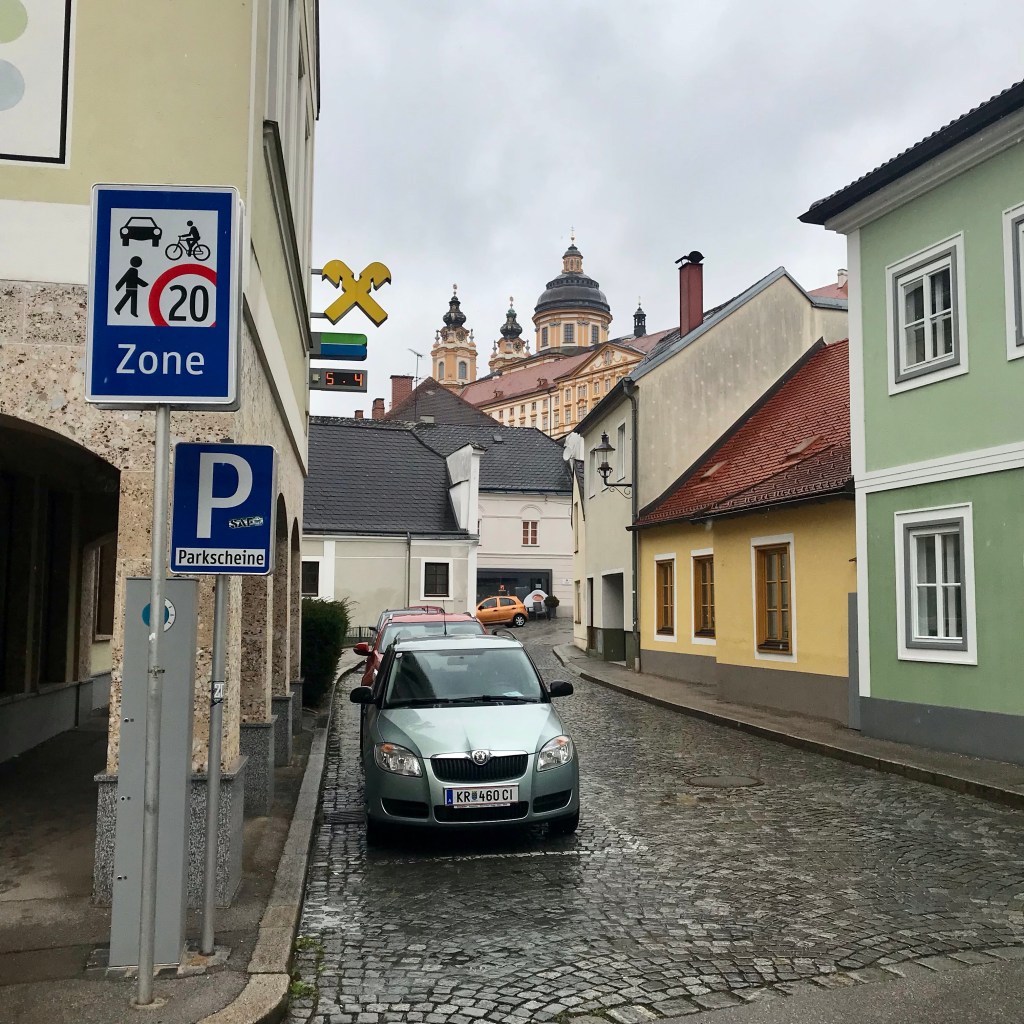
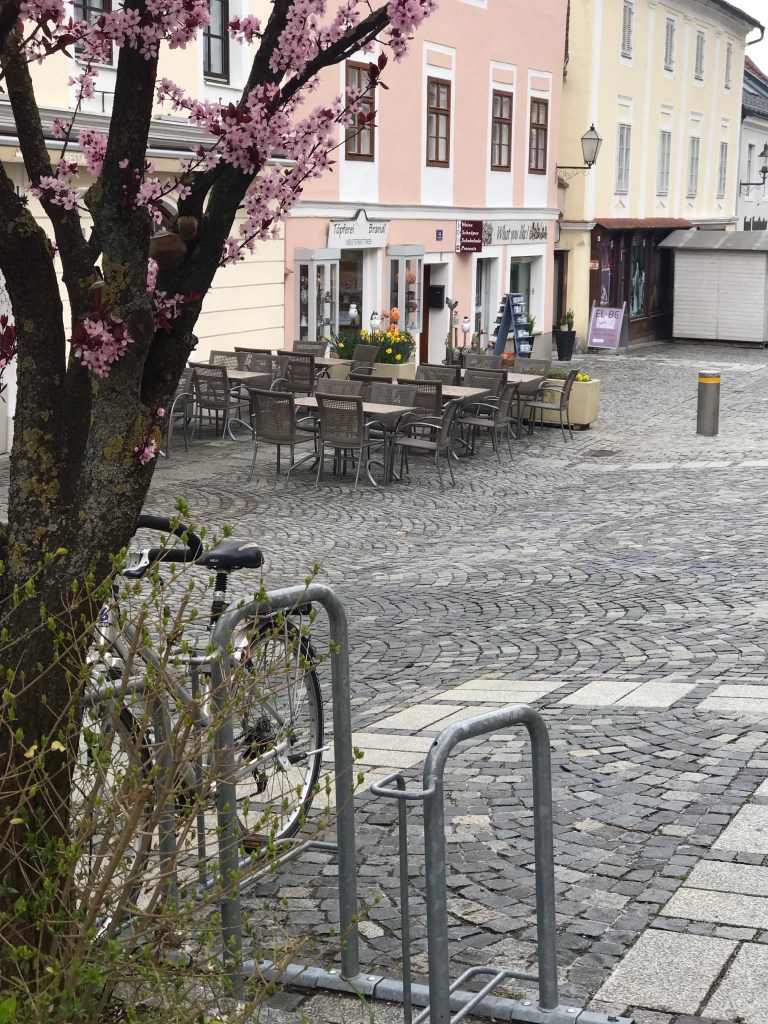
These pics are all taken in Melk where we took a rest day to avoid rain.
20 km/h streets where pedestrians, drivers & cyclists share spaceBike rackRental bikes
Along the EV6 services are provided for cyclists’ needs.
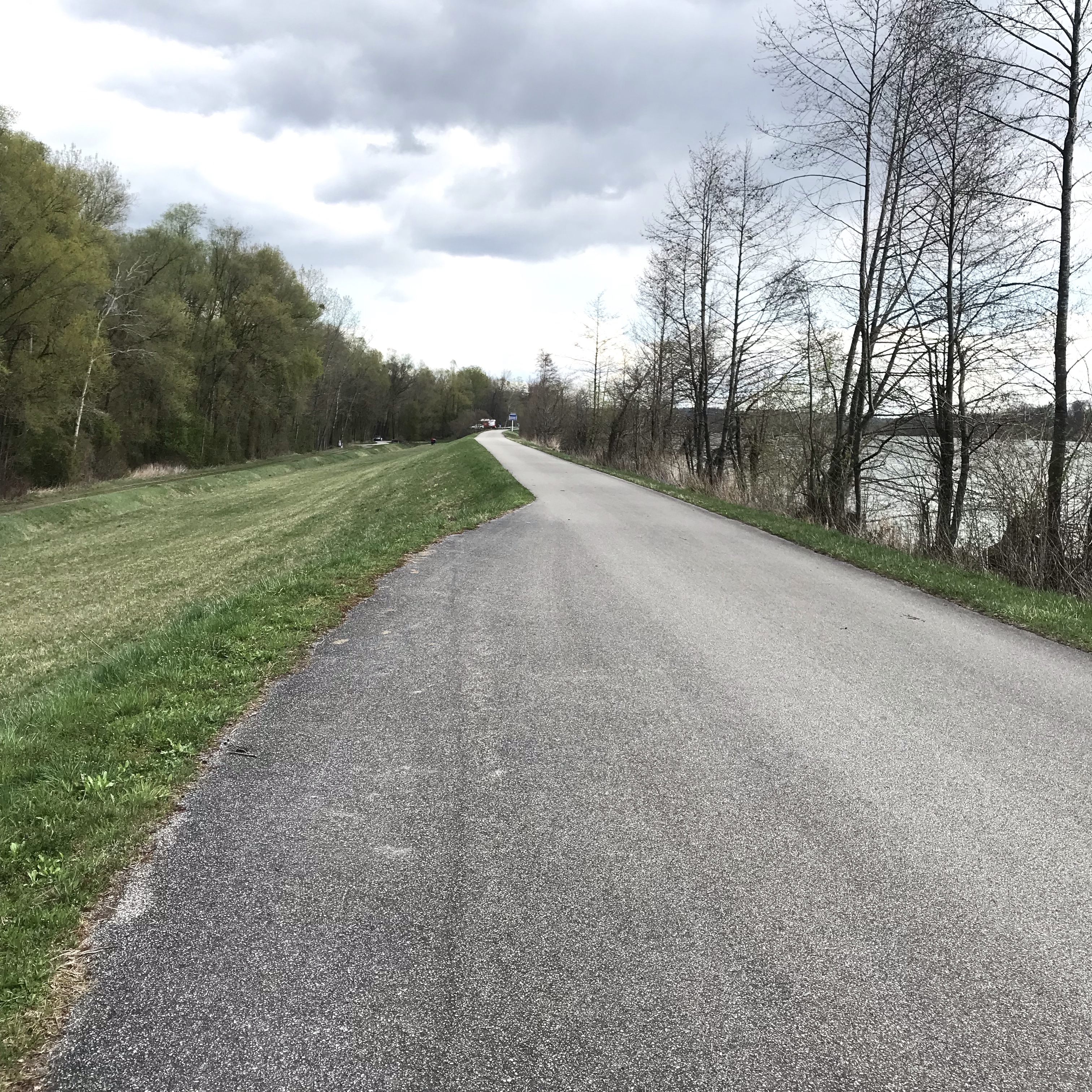
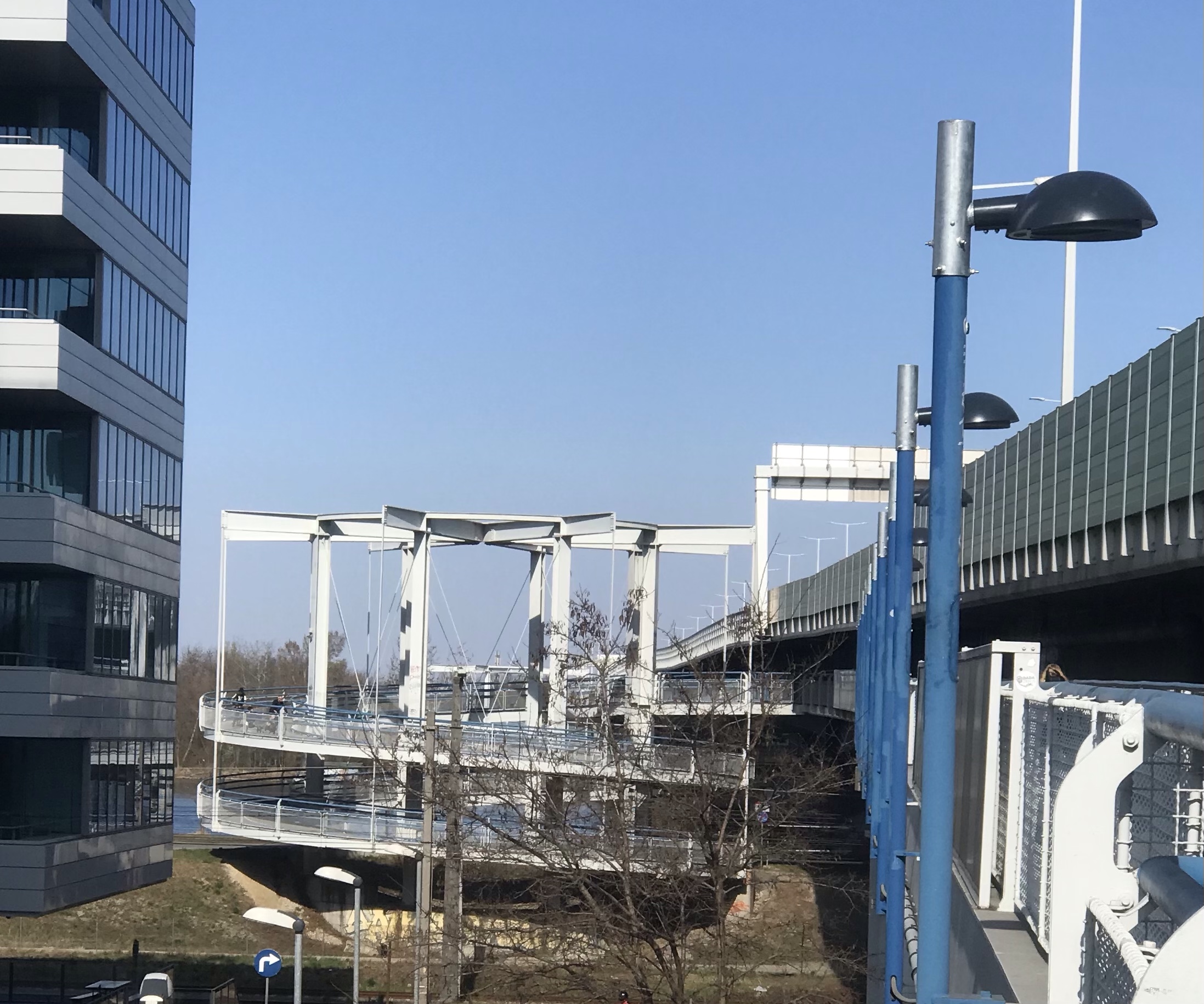
In Vienna, we could cycle anywhere we needed to go (including a big box store commercial park) on bike lanes & paths. Dreamy. This took some route planning and a willingness to go a longer distance, but it was worth it to keep our 3 kids away from vehicular traffic and enjoy the ride, stress-free.
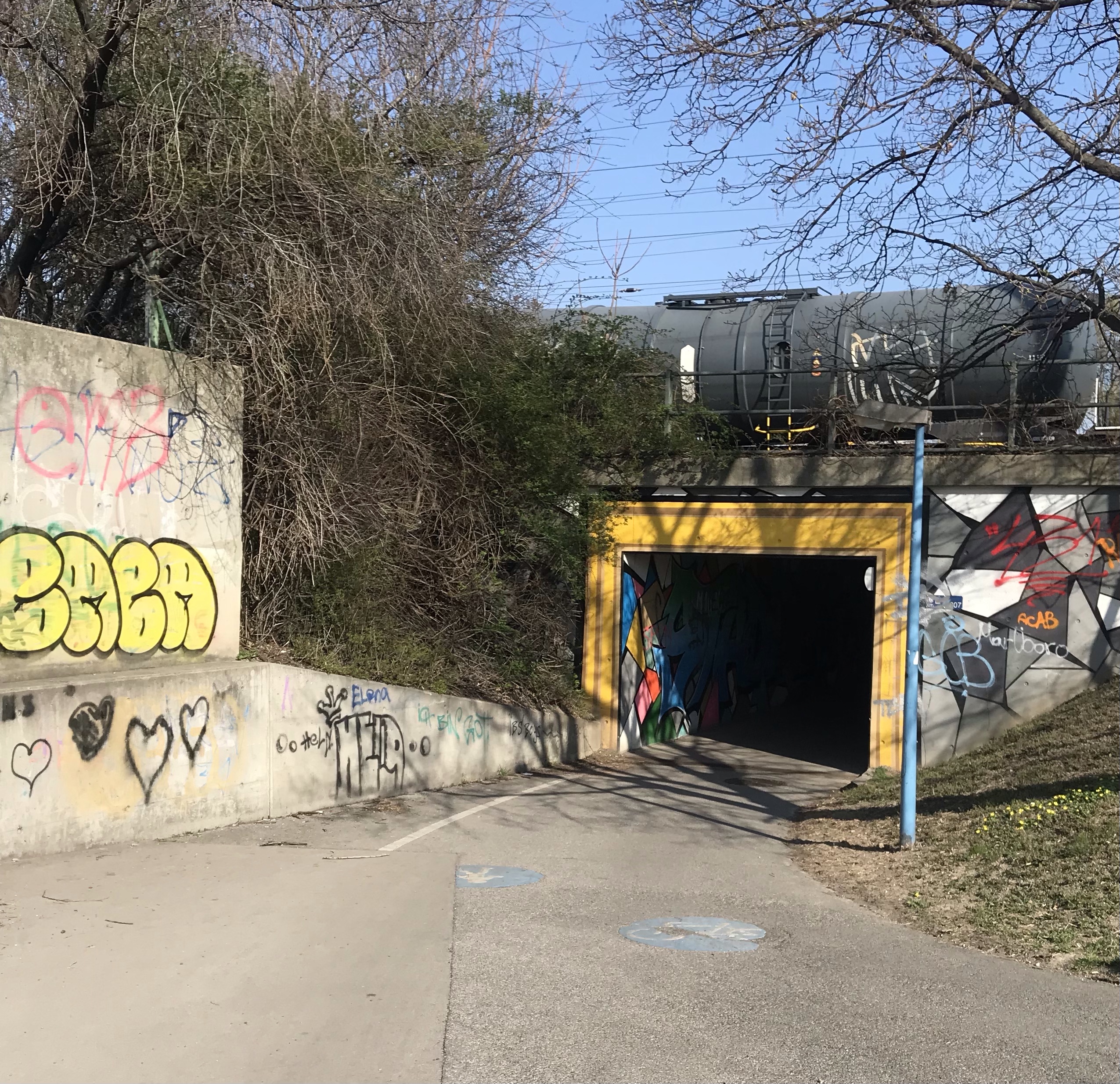
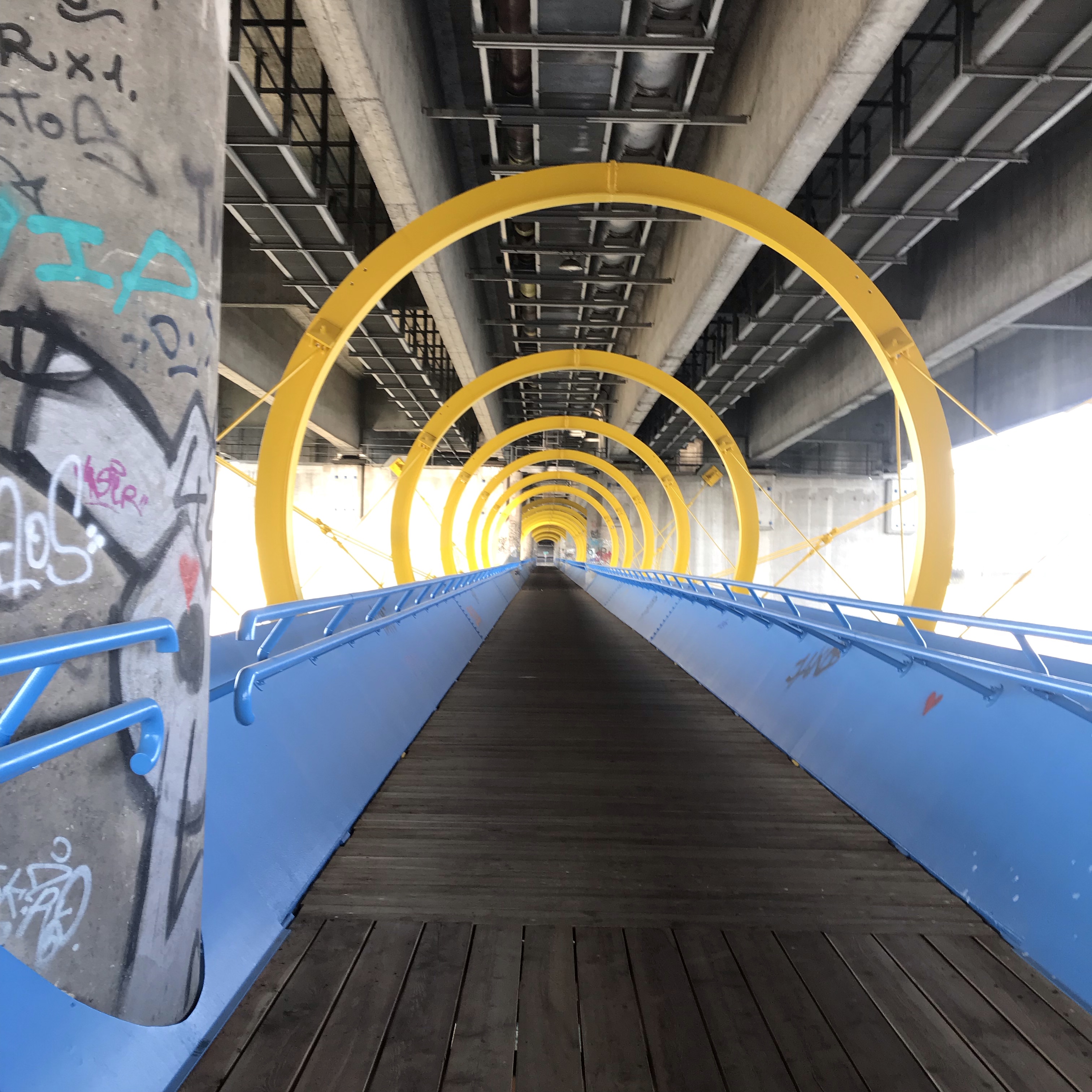
Amazing cycle ramp up to a bridgeE-bike chargers at big box store Tunnel under railway tracksBike bridge
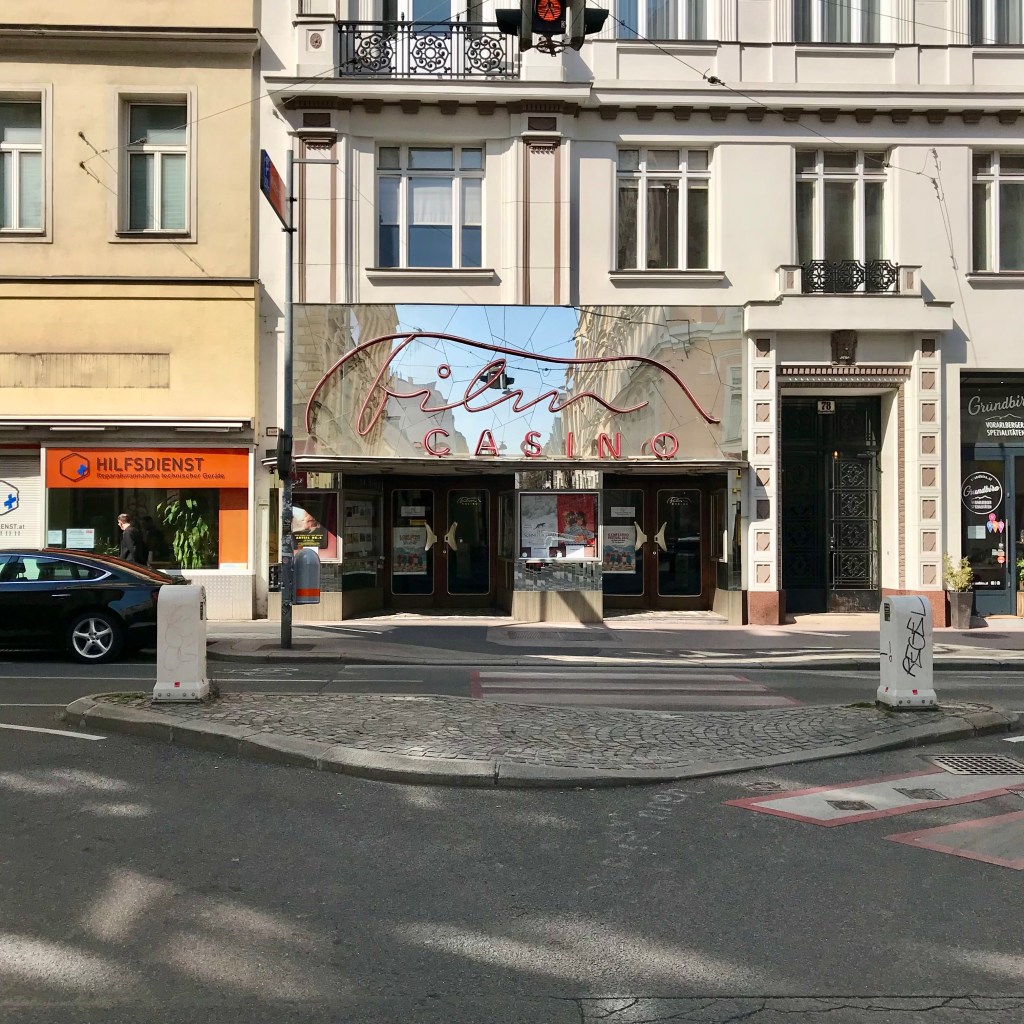
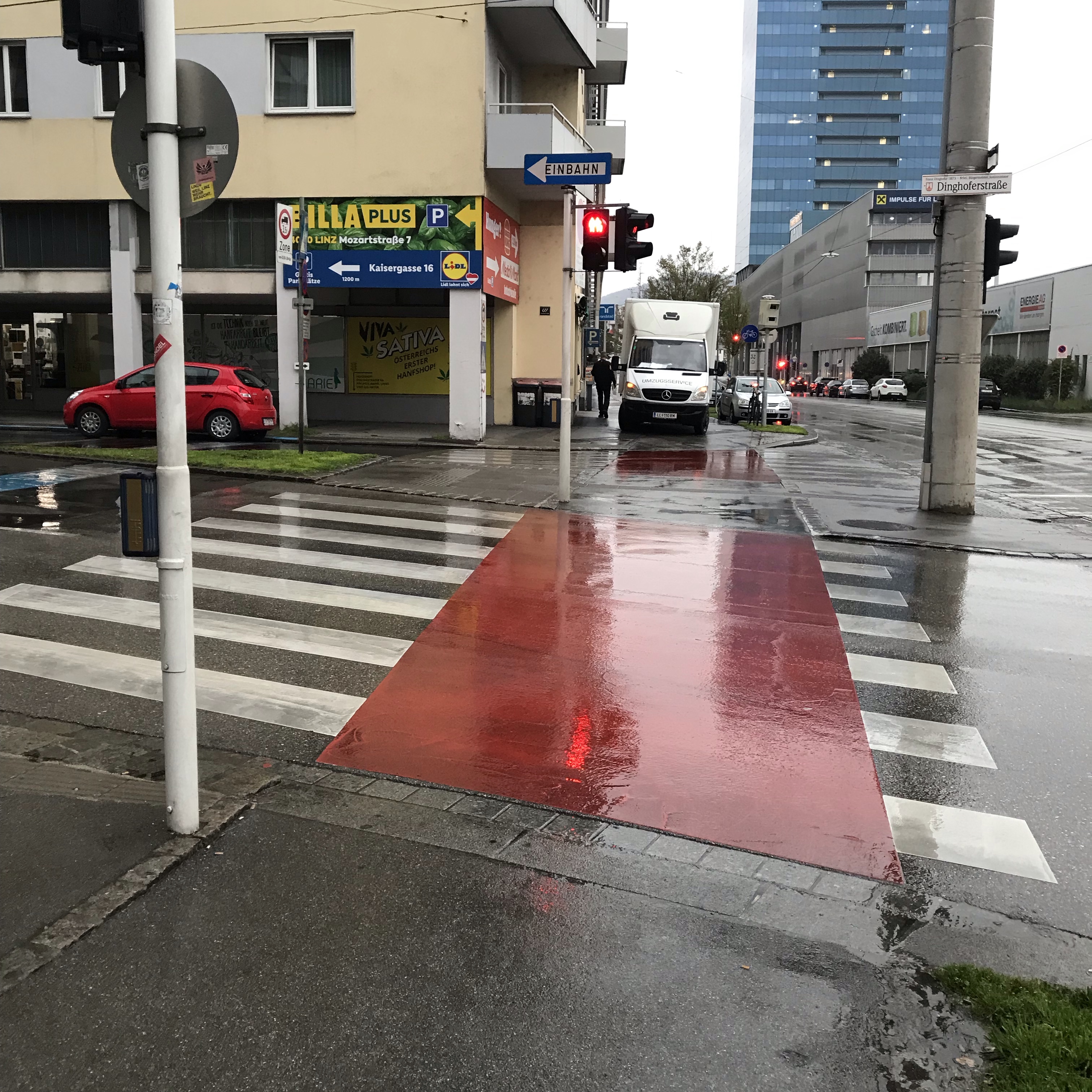
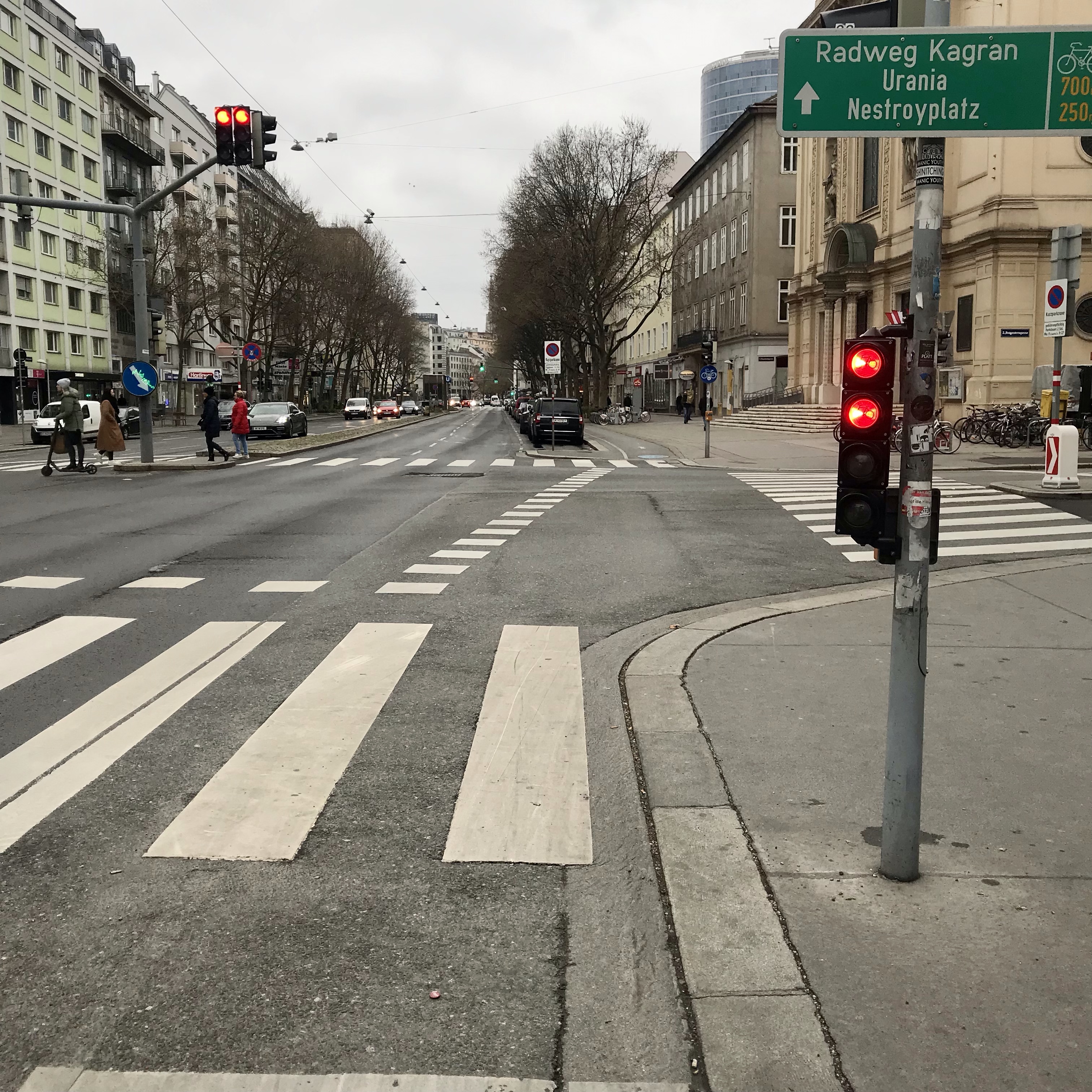
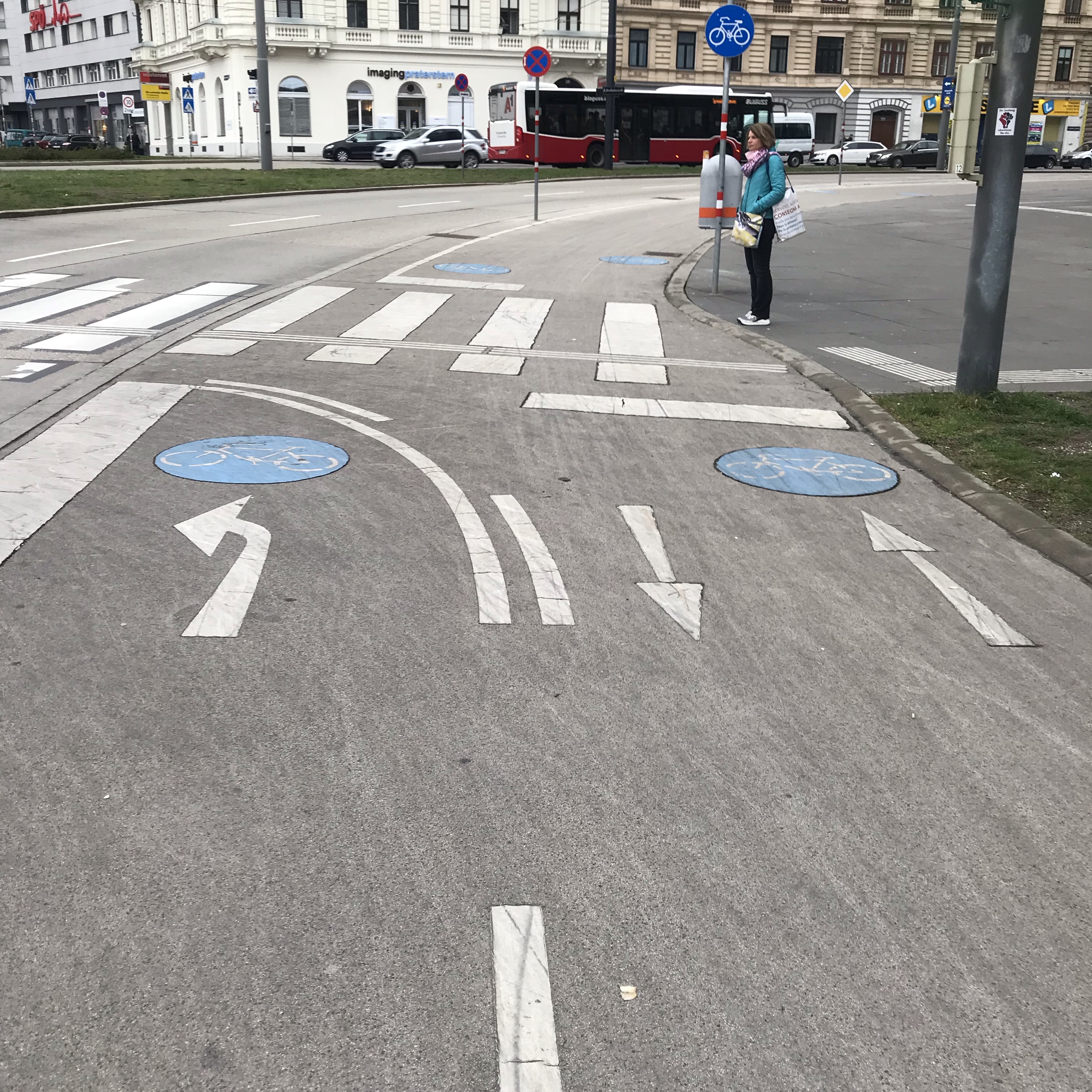
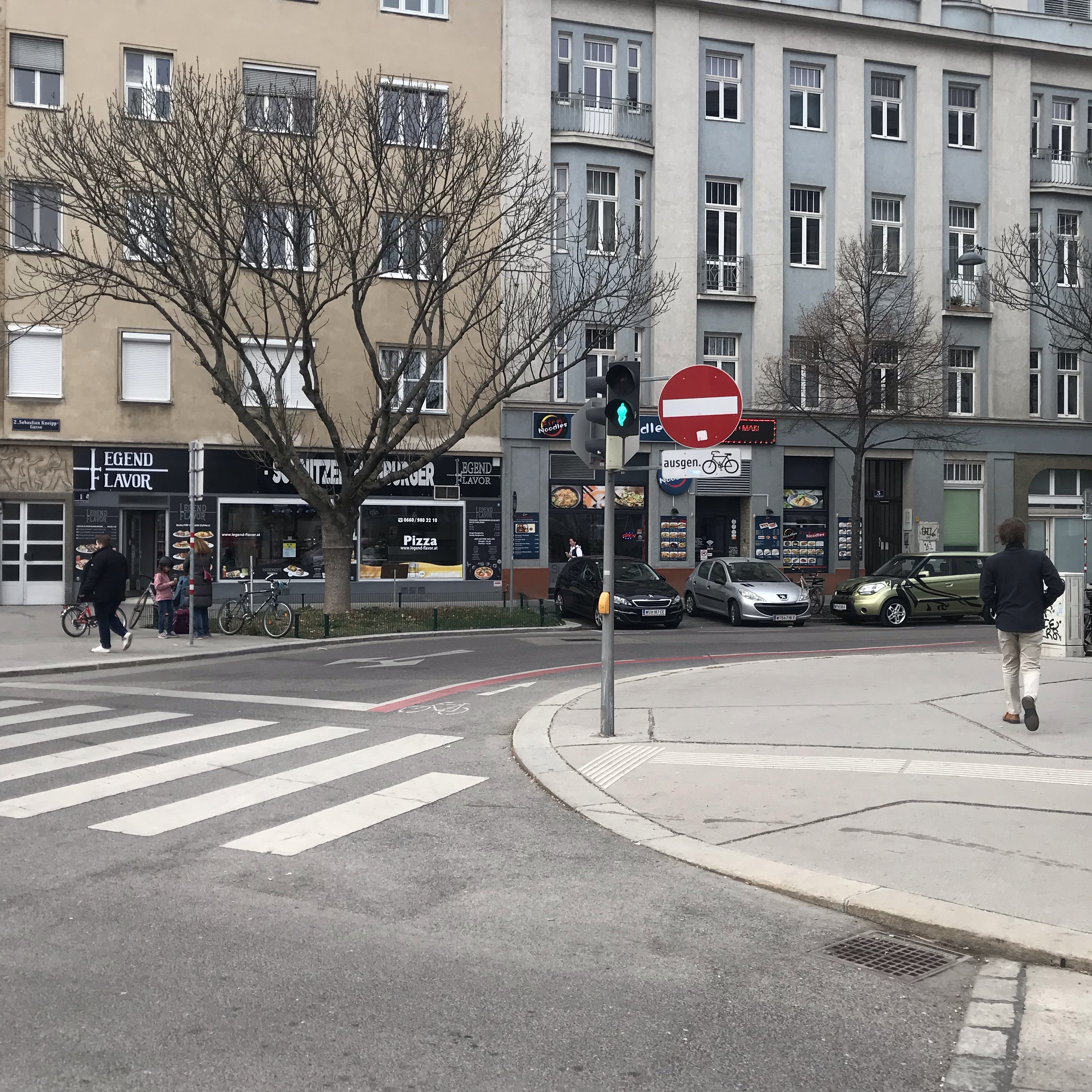
Interconnection seems to me to be the key to great cycle infrastructure. In Vienna there are intersection signals & paths just for bikes. No need to dismount and walk across pedestrian road crossings.
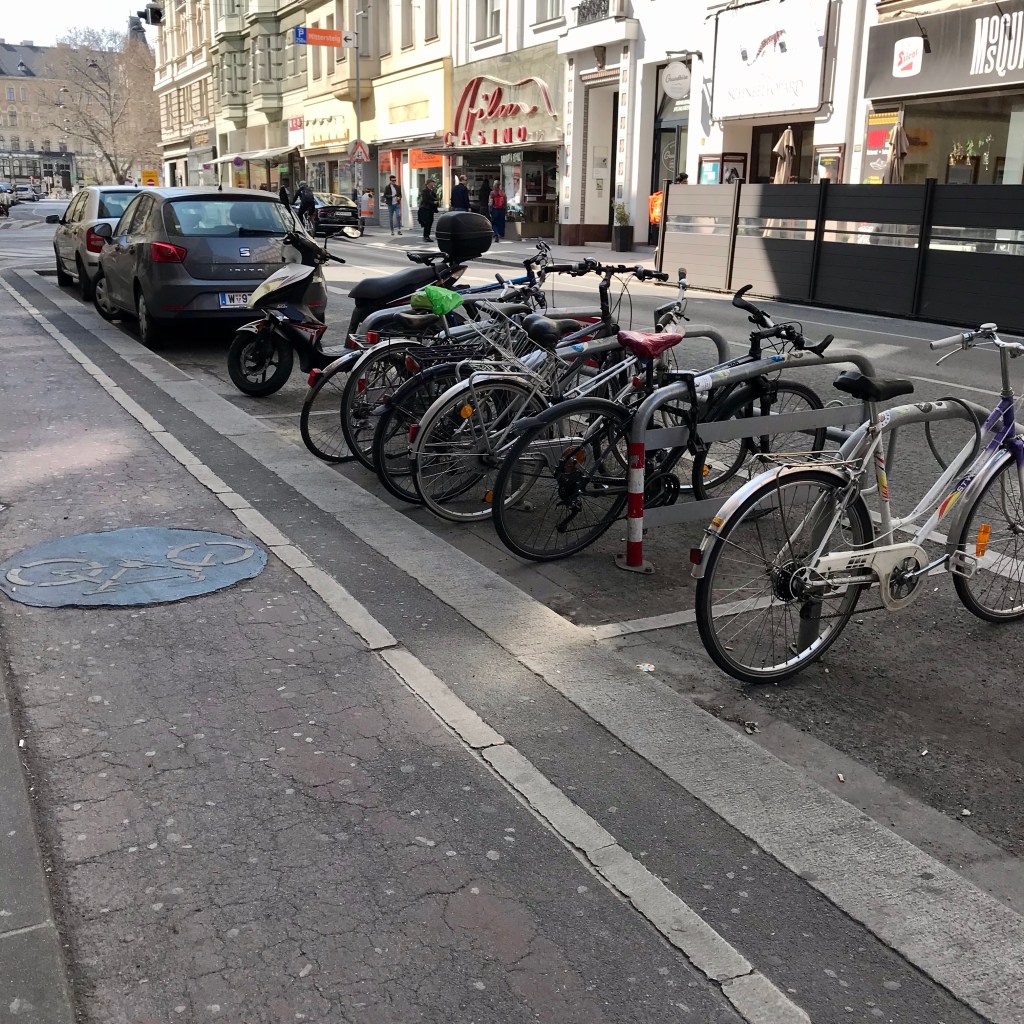
Bike signal and space to ride across the intersection and into the bike pathCycle turning and straight lanesA one-way street except for bikes that includes a painted lane & signal
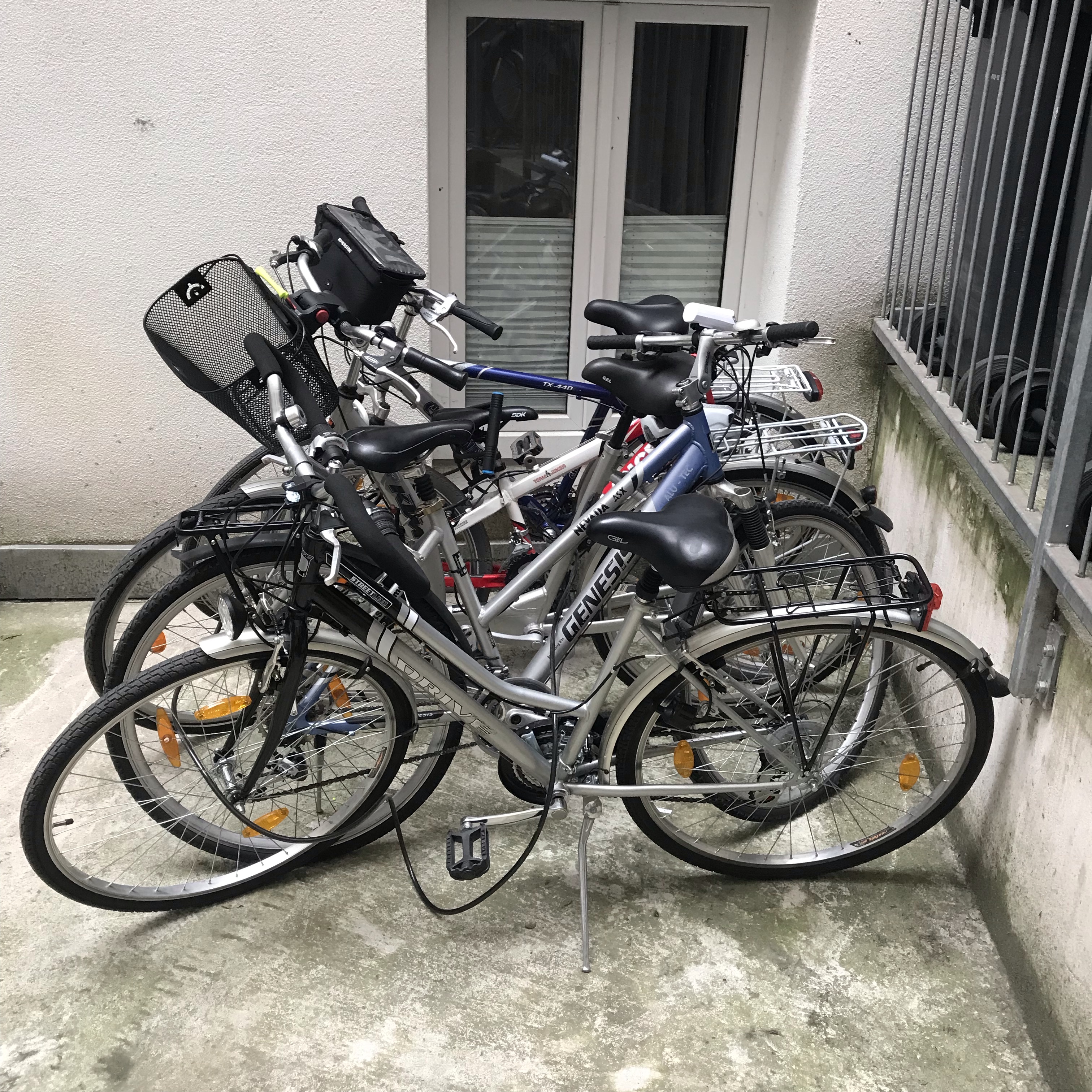
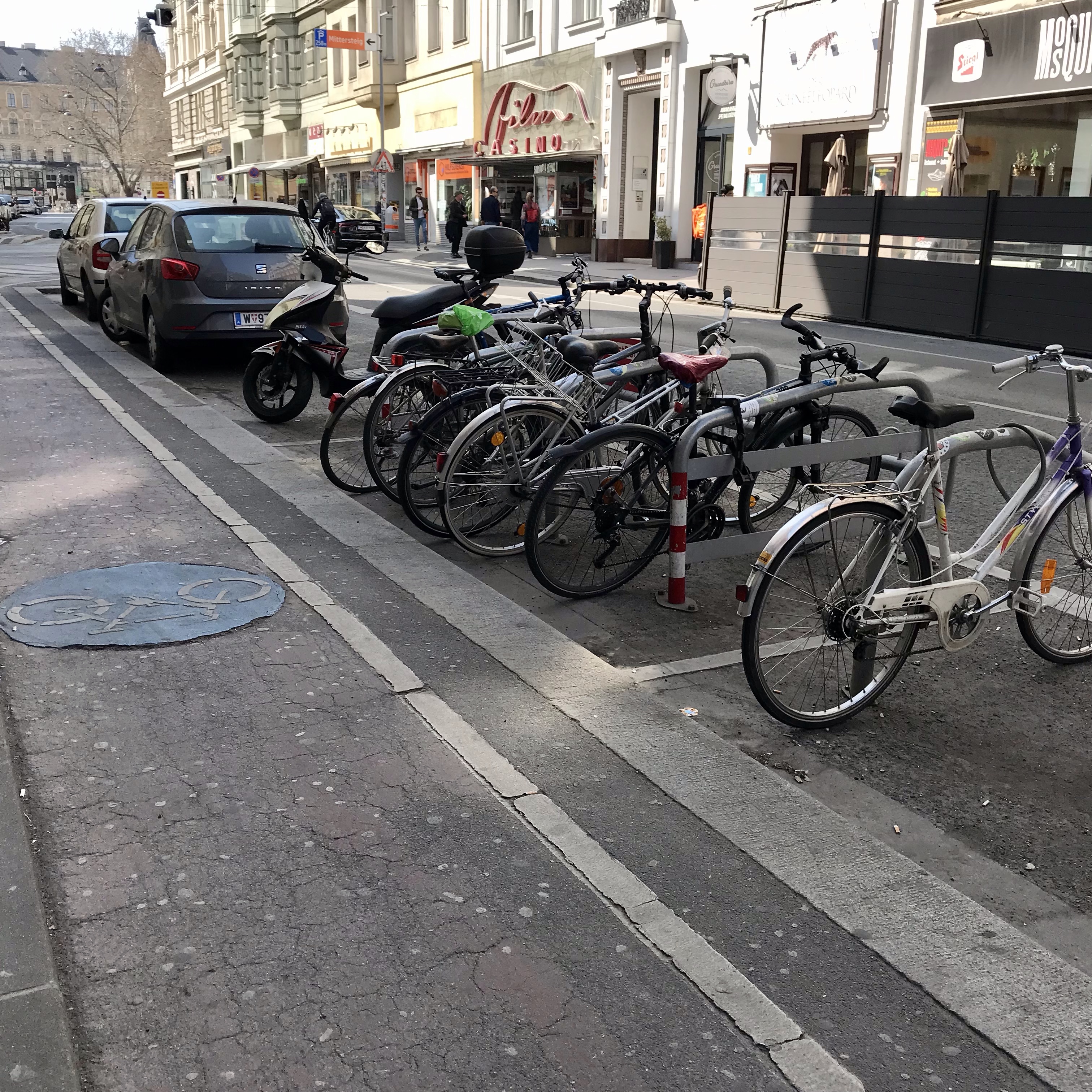
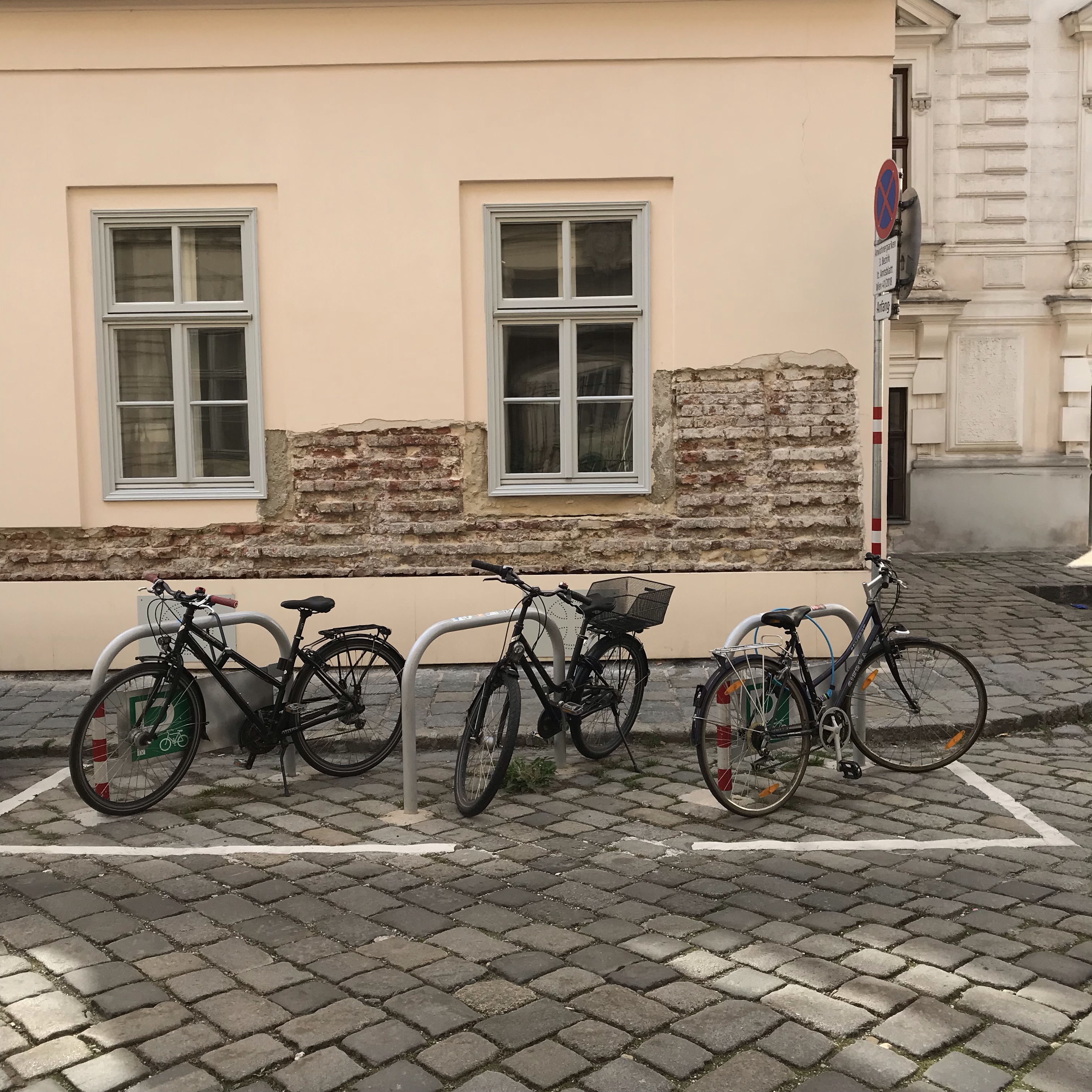
Safe & easily accessible bike parking is also very important. No one wants to take too long to get their wheels out of the “driveway”.
We were able to store our 5 new-to-us bikes in our Airbnb courtyard.5 bikes where 1 car would fitThese simple posts are great for stabilizing your bike and locking up both your frame & tires.I thought this was funny as I found the city so amazing for walking & cycling. The grass is always greener!
As I write this we are over 3 months into our adventure of using bicycles as our primary mode of transportation. We are now in England having cycled here from Vienna except for a train journey from Passau to Frankfurt in Germany (and the ferry across the Strait of Dover).
We flew to Vienna from Athens, as our research indicated that it would be a good city to purchase used bicycles in, it is on the EuroVelo 6 route, and the price was right. (Unfortunately, the logistics of getting through Eastern Europe safety overland proved to be too difficult/expensive, so we chose to fly to the safe biking routes.)
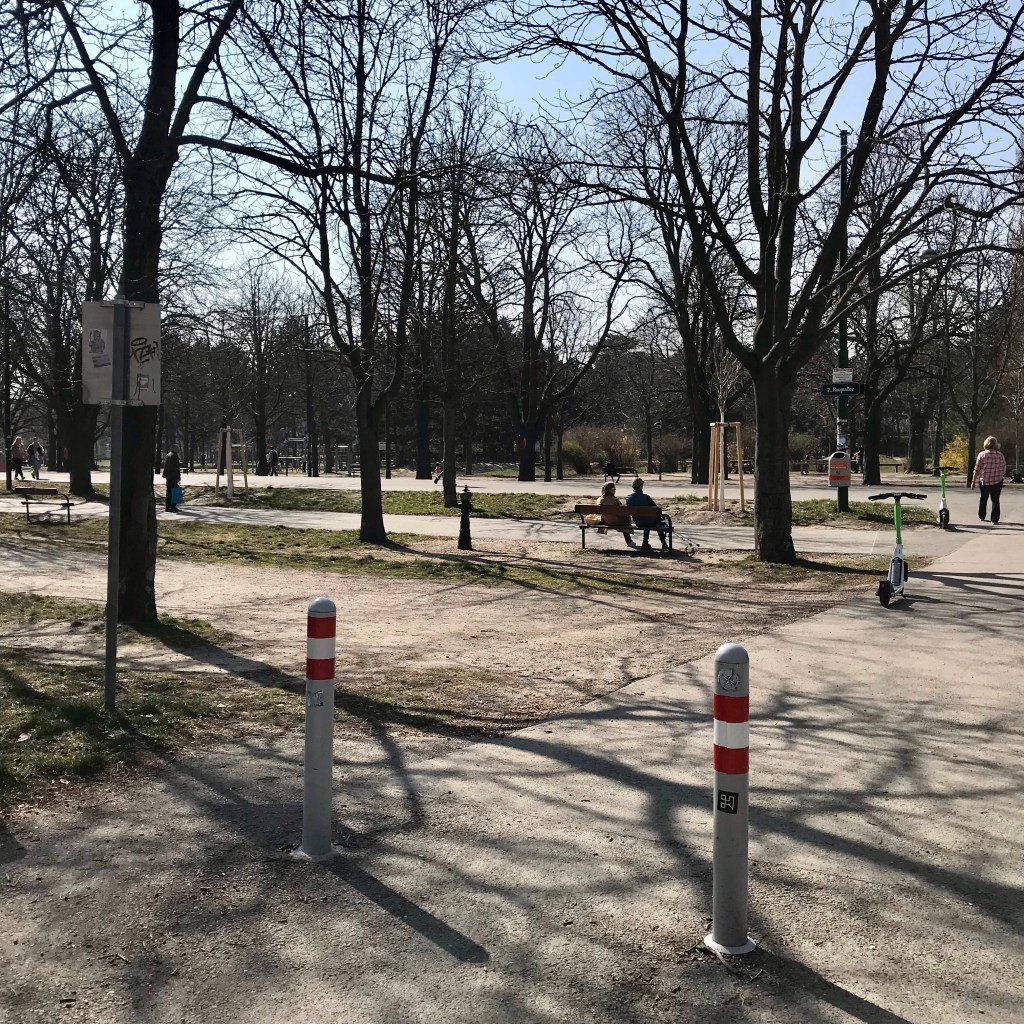
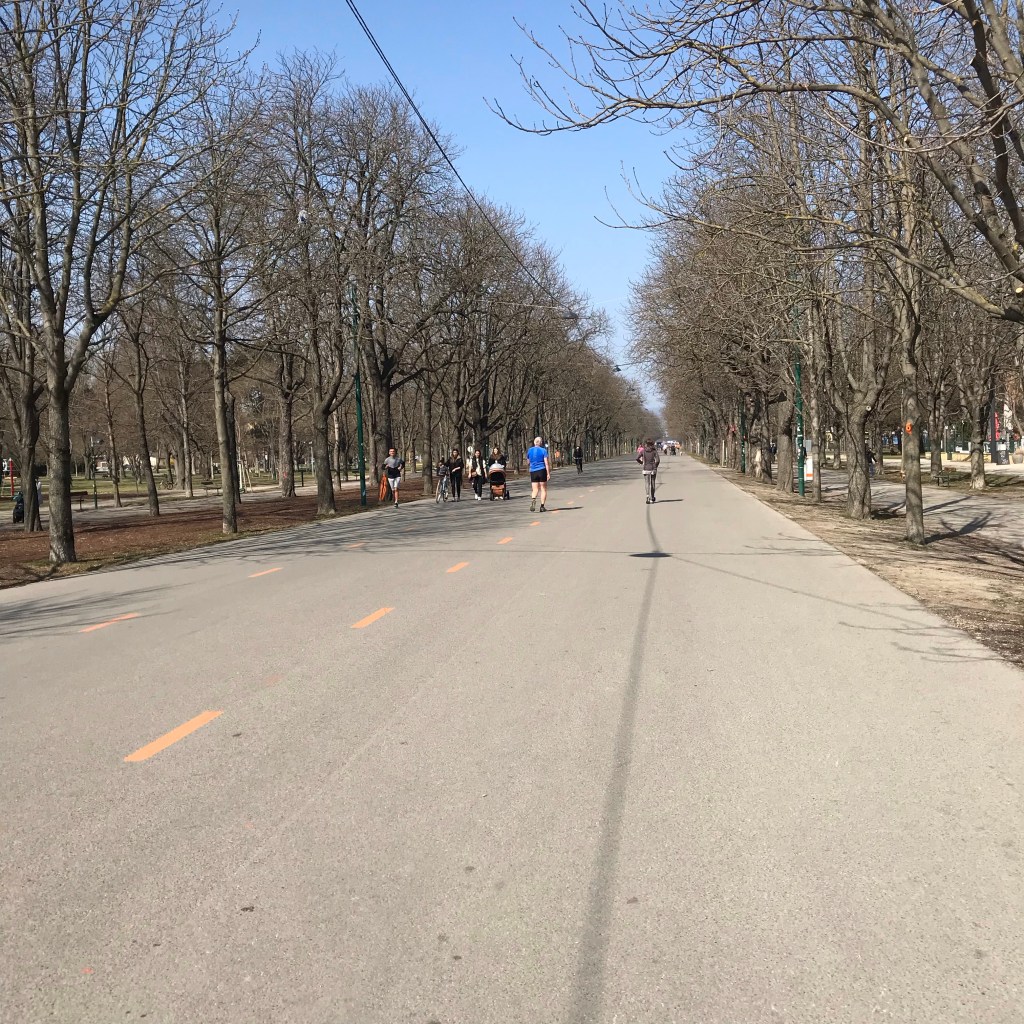
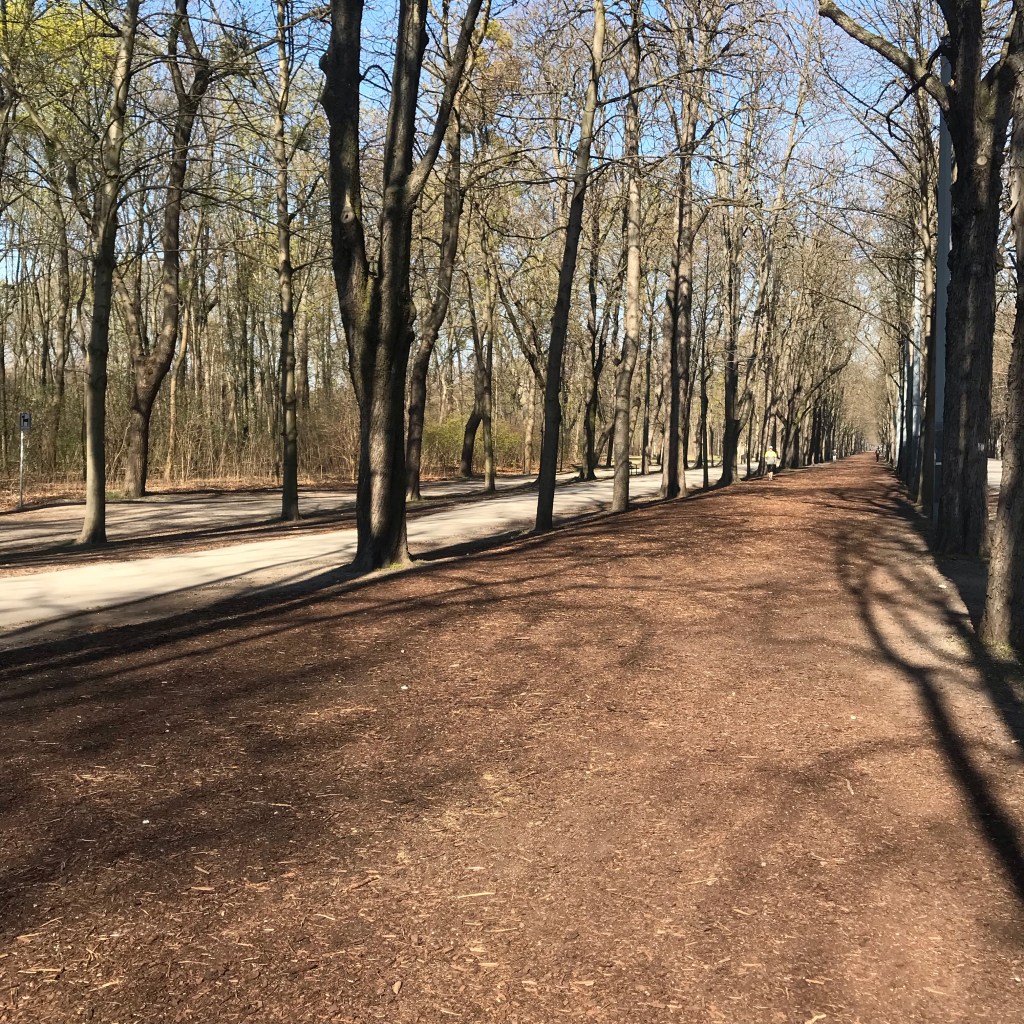
How lucky were we?! Right away Vienna felt like an oasis. Bike paths and pedestrian infrastructure & playgrounds everywhere. We stayed near the Prater amusement park, so not even in the downtown core. These first few photos are from the huge Prater park.
Paths for walking, cycling & horses Super wide road, no cars I ran on the horse trail, so soft.
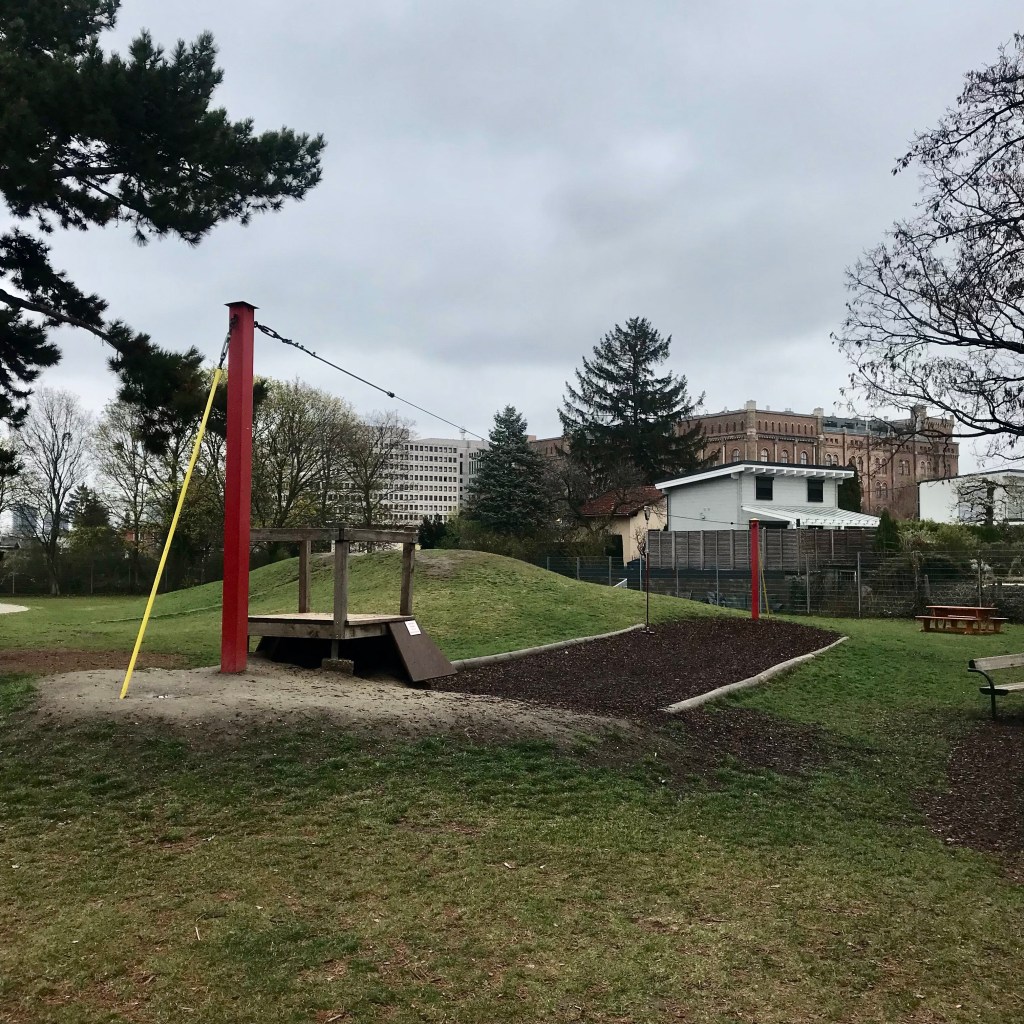
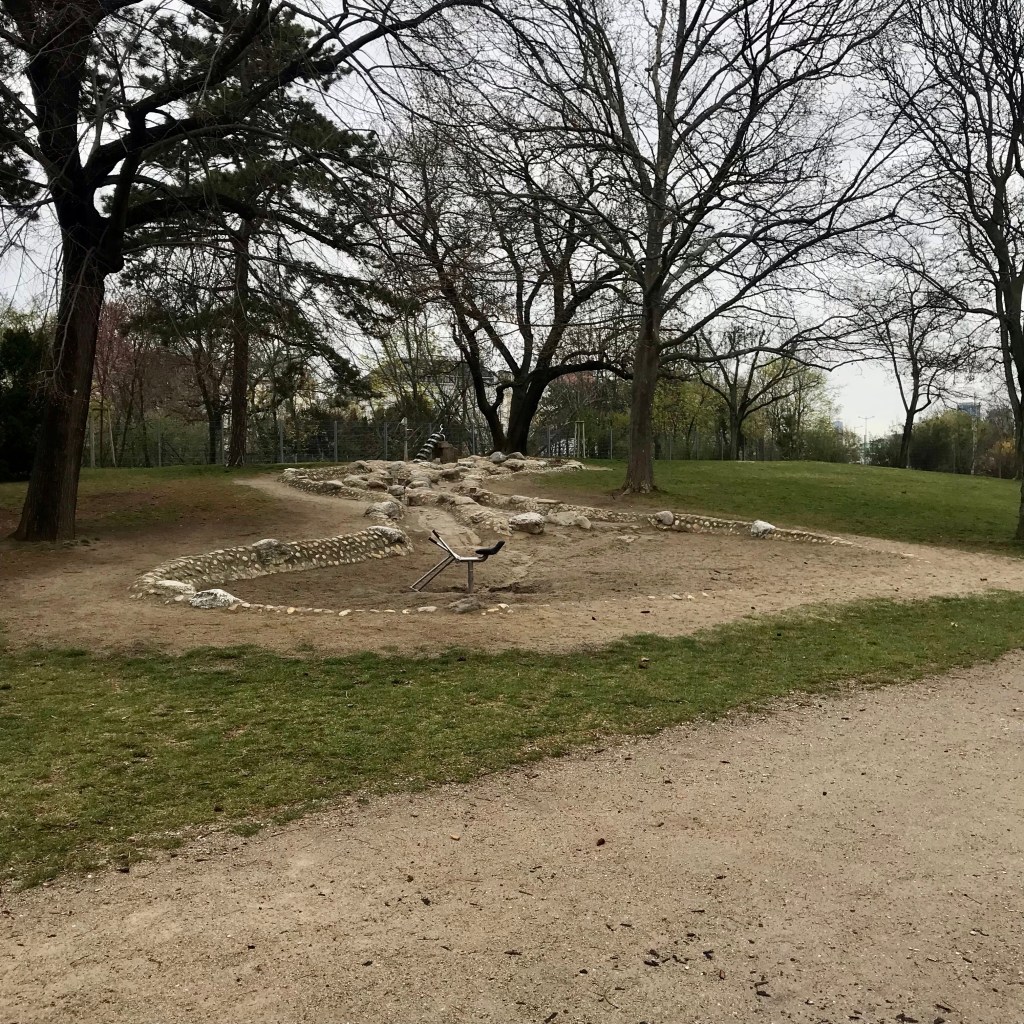
We saw so many great playgrounds around Vienna, and later along the EV6.
Well usedAccessible by bikeUnique play structures Accessible swingZip lineWater play
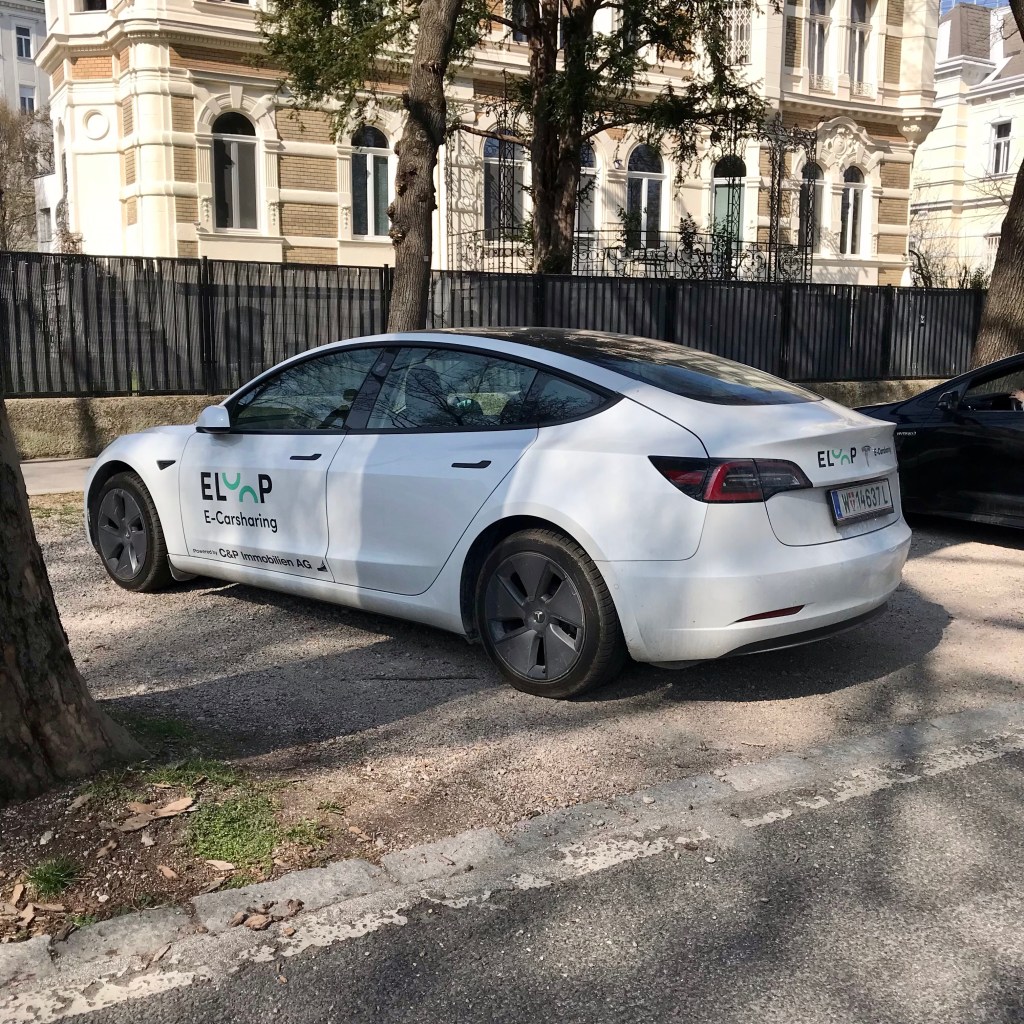
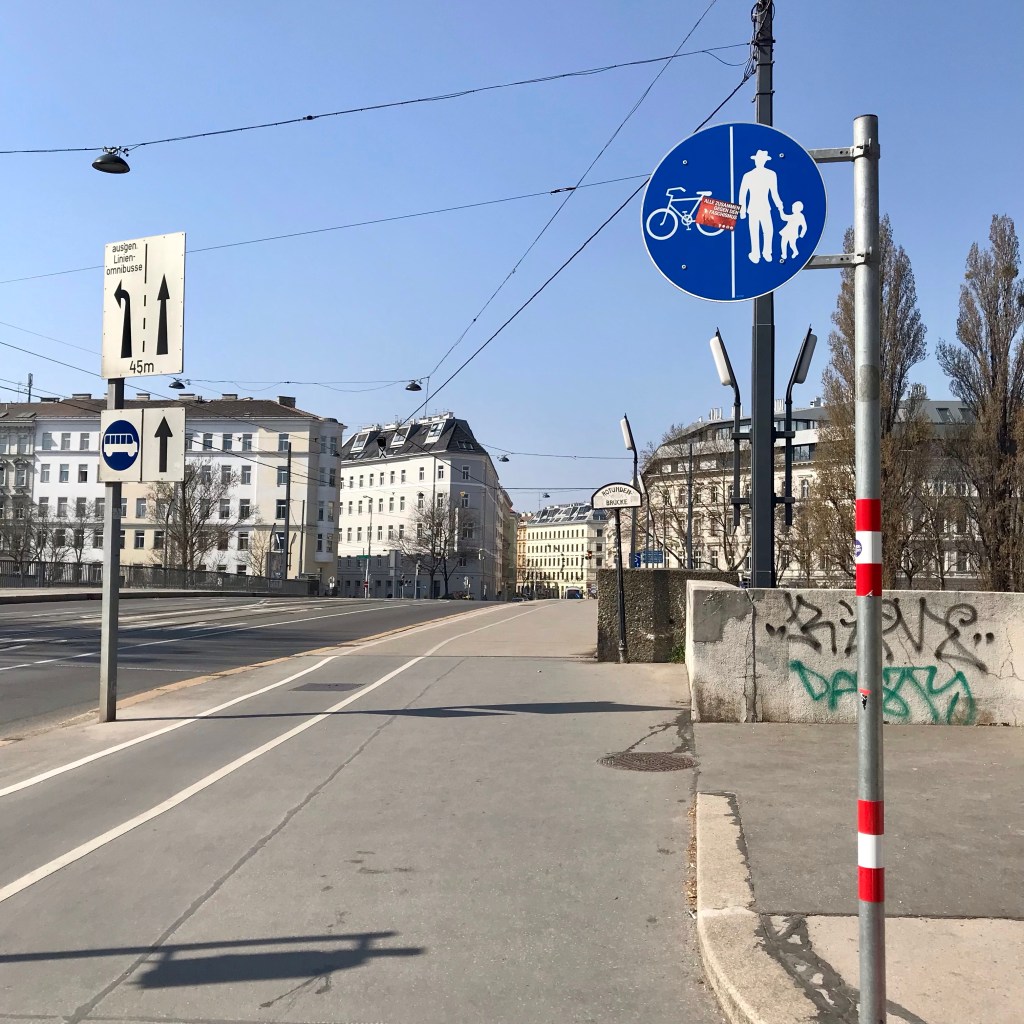
We walked ~6 km to get to the used bike store that we ended up purchasing 5 bikes, 5 helmets and 2 locks from. Once we were on the bikes, it was a lot harder for me to take pictures. Here are a few cool things I was able to snap photos of while walking that day, 26 March.
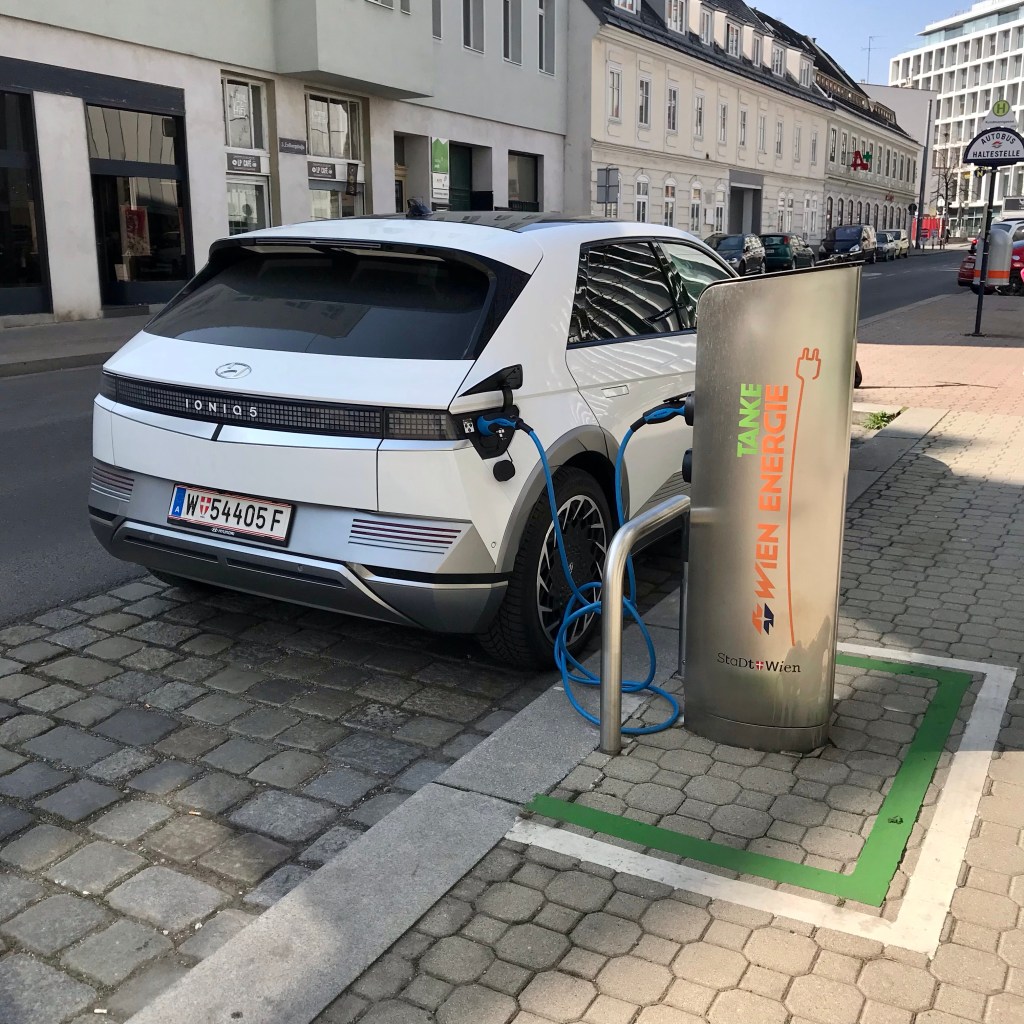
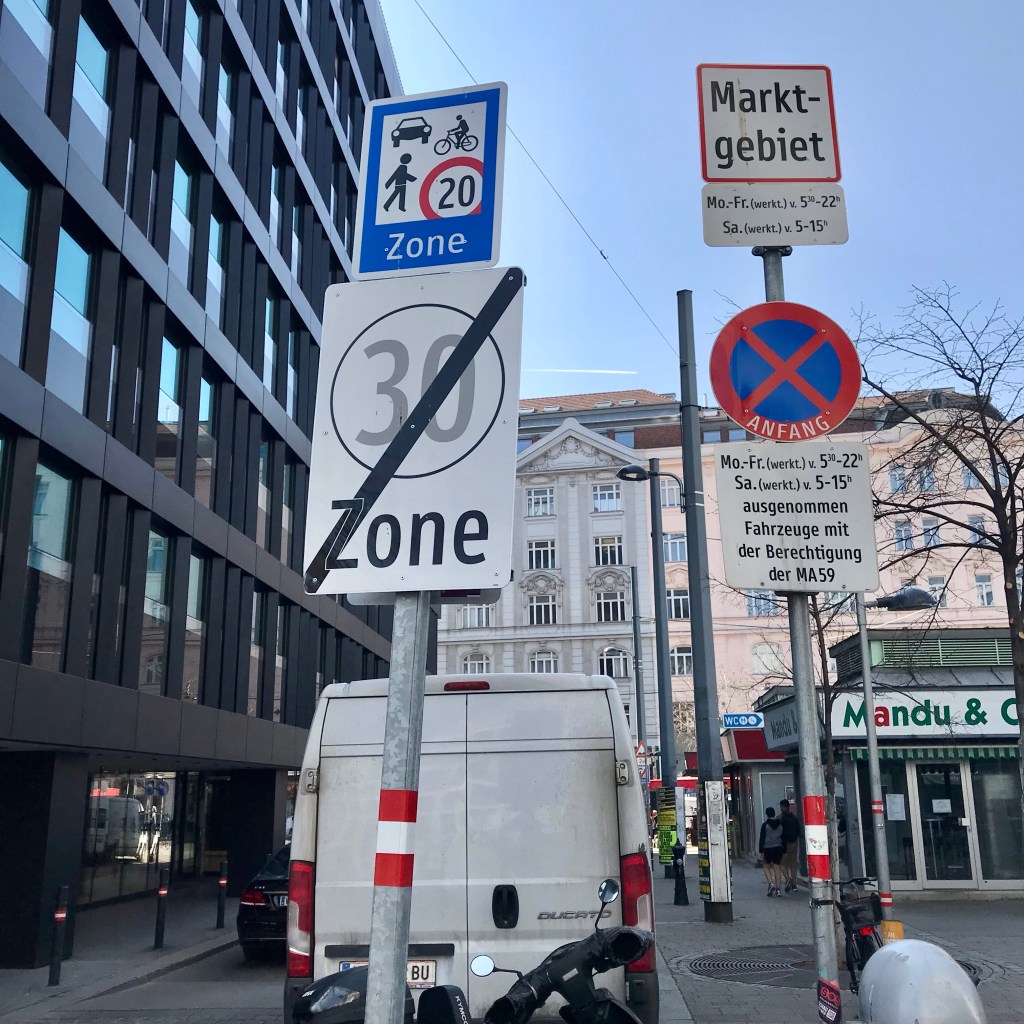
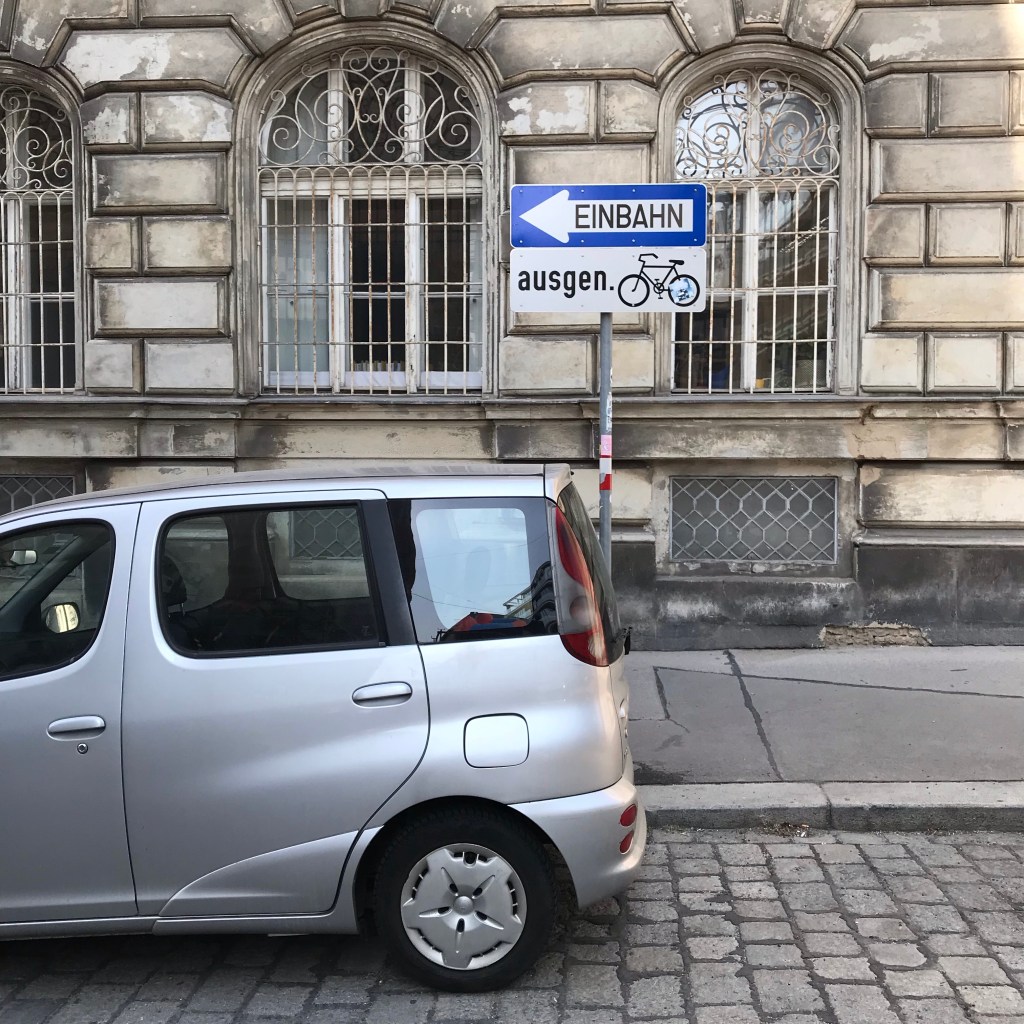
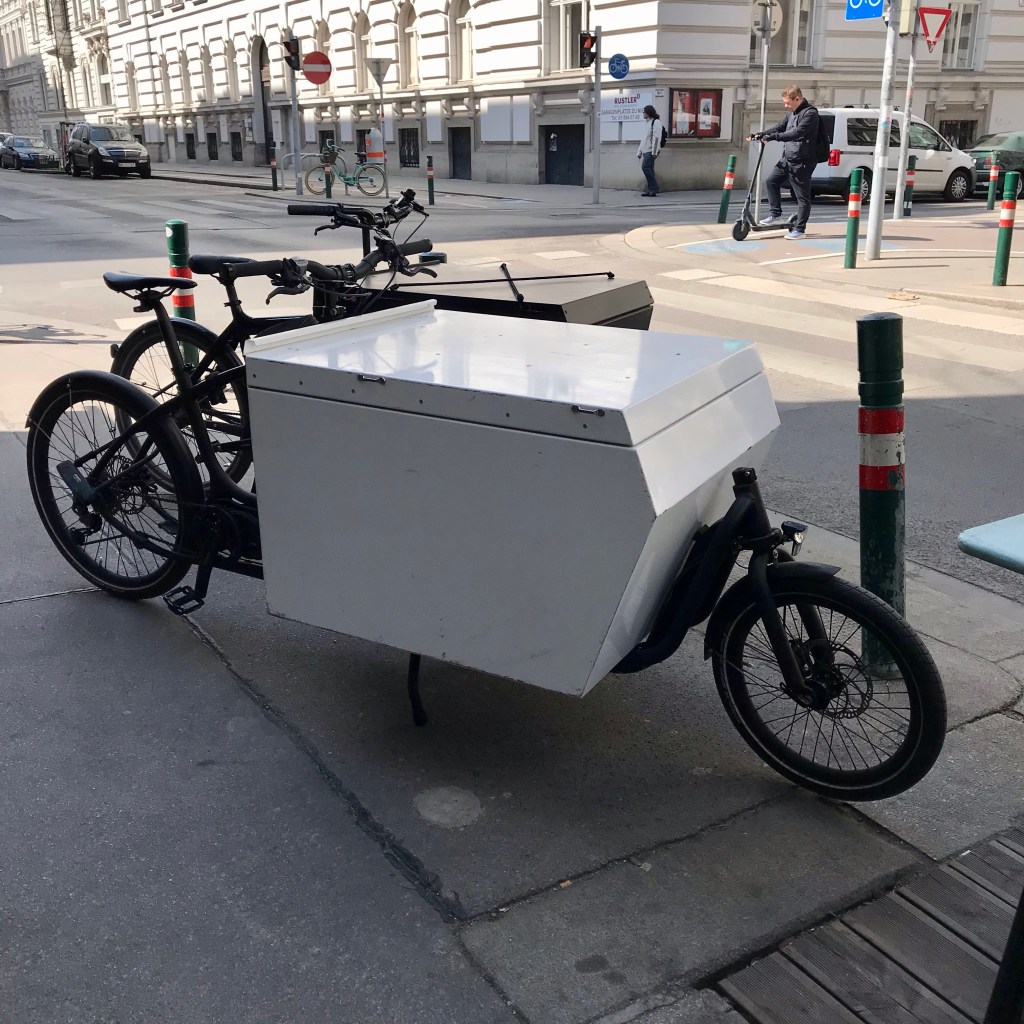
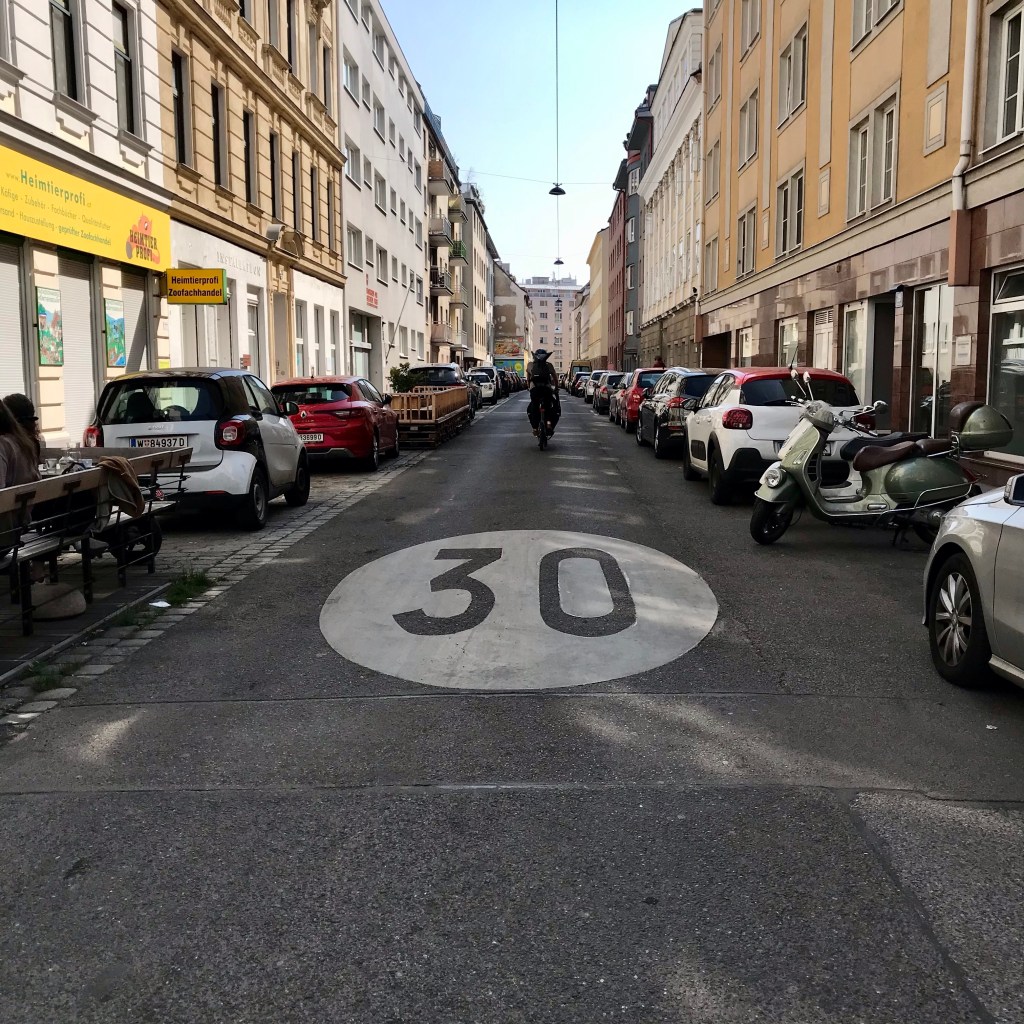
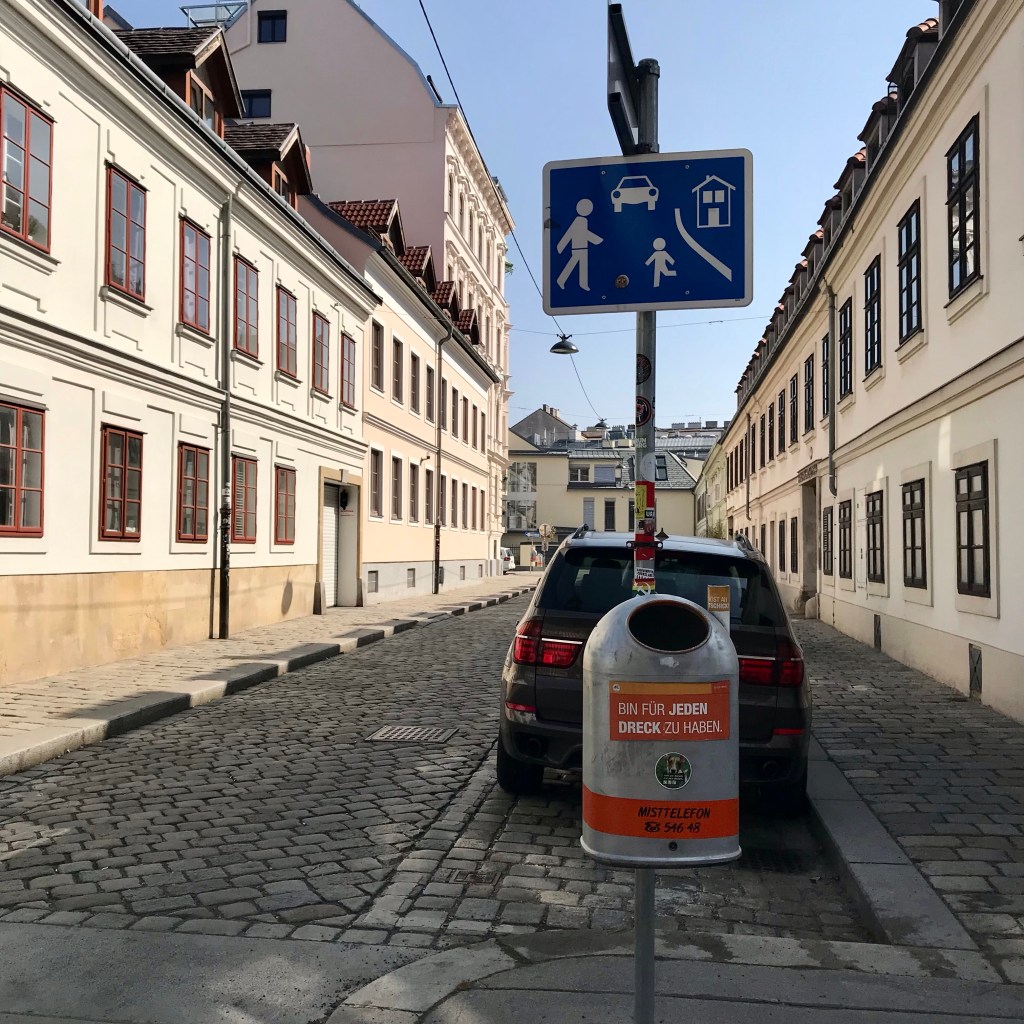
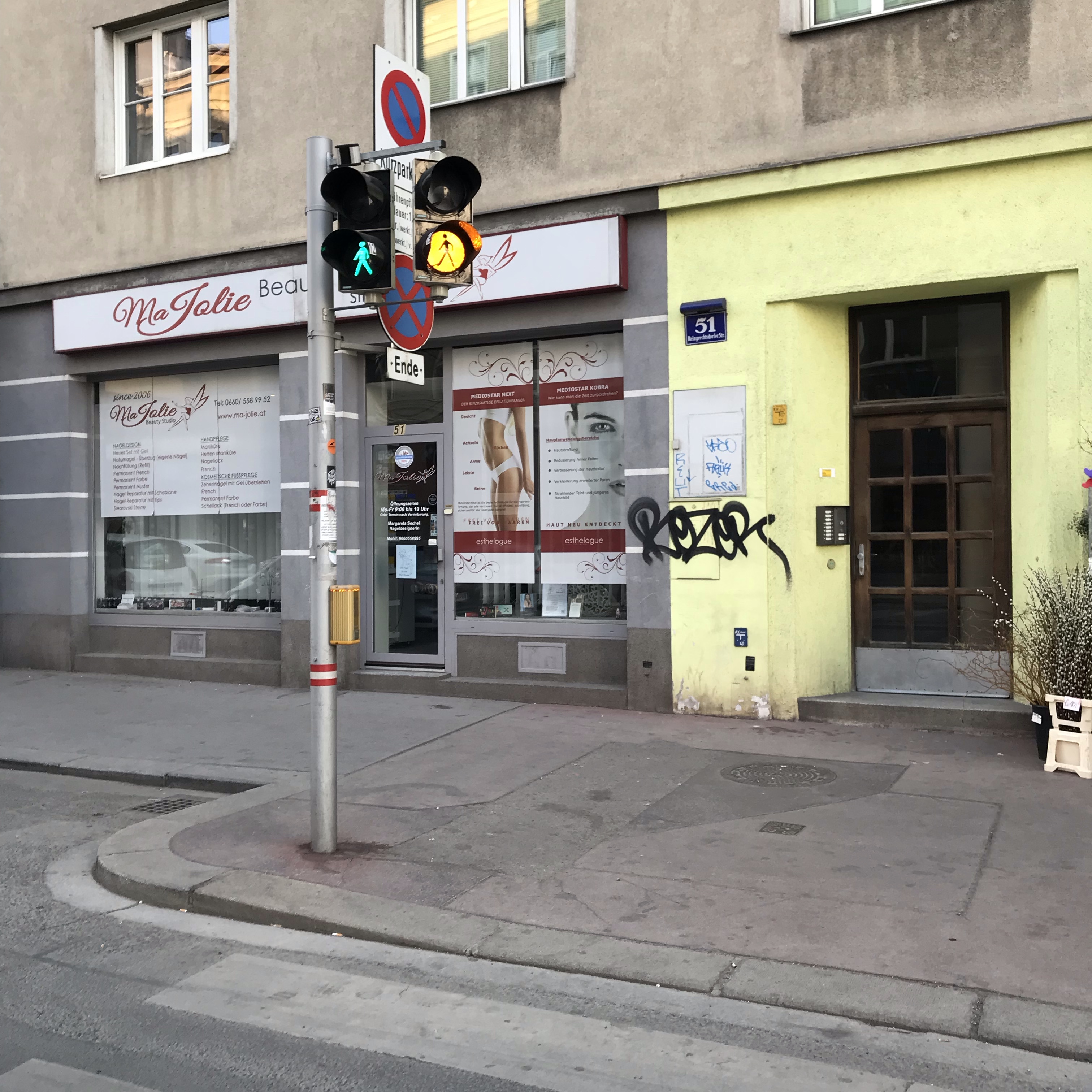
Car share TeslaWide shared path, clearly markedLevel 2 street EV charger20 km/hr speed limit in high pedestrian traffic zonesMaking it clear that bikes can go the opposite direction on one way streetsCargo bikesAED30 km/hr maxRed cycle path separated from car trafficInvitation to play in the street ❤️Free public washrooms by a playground Residential area pedestrian streetA flashing warning signal to drivers indicating that they are about to cross a crosswalk with a green signal
Too much good stuff to talk about. I’m going to have to do a second post on the bike infrastructure specifically. Here are more pics of miscellaneous good ideas in Vienna:
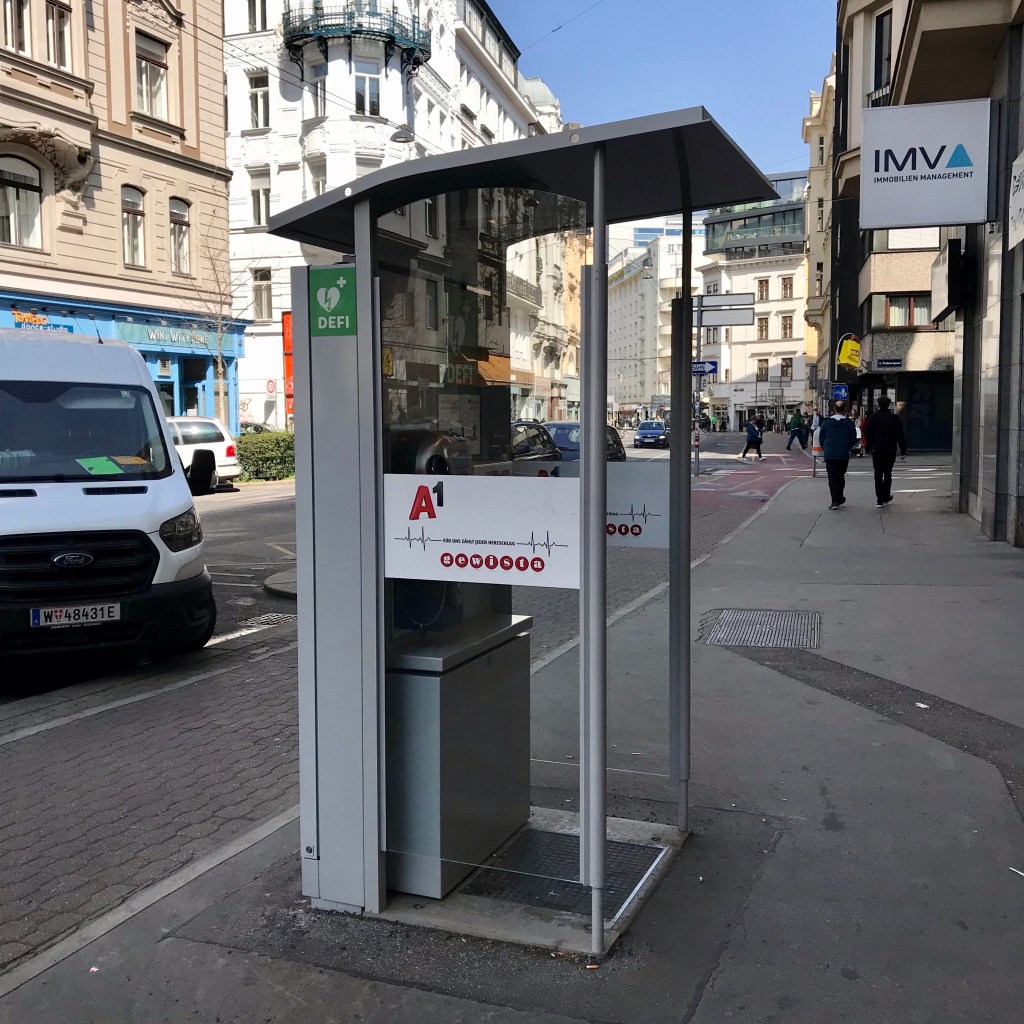
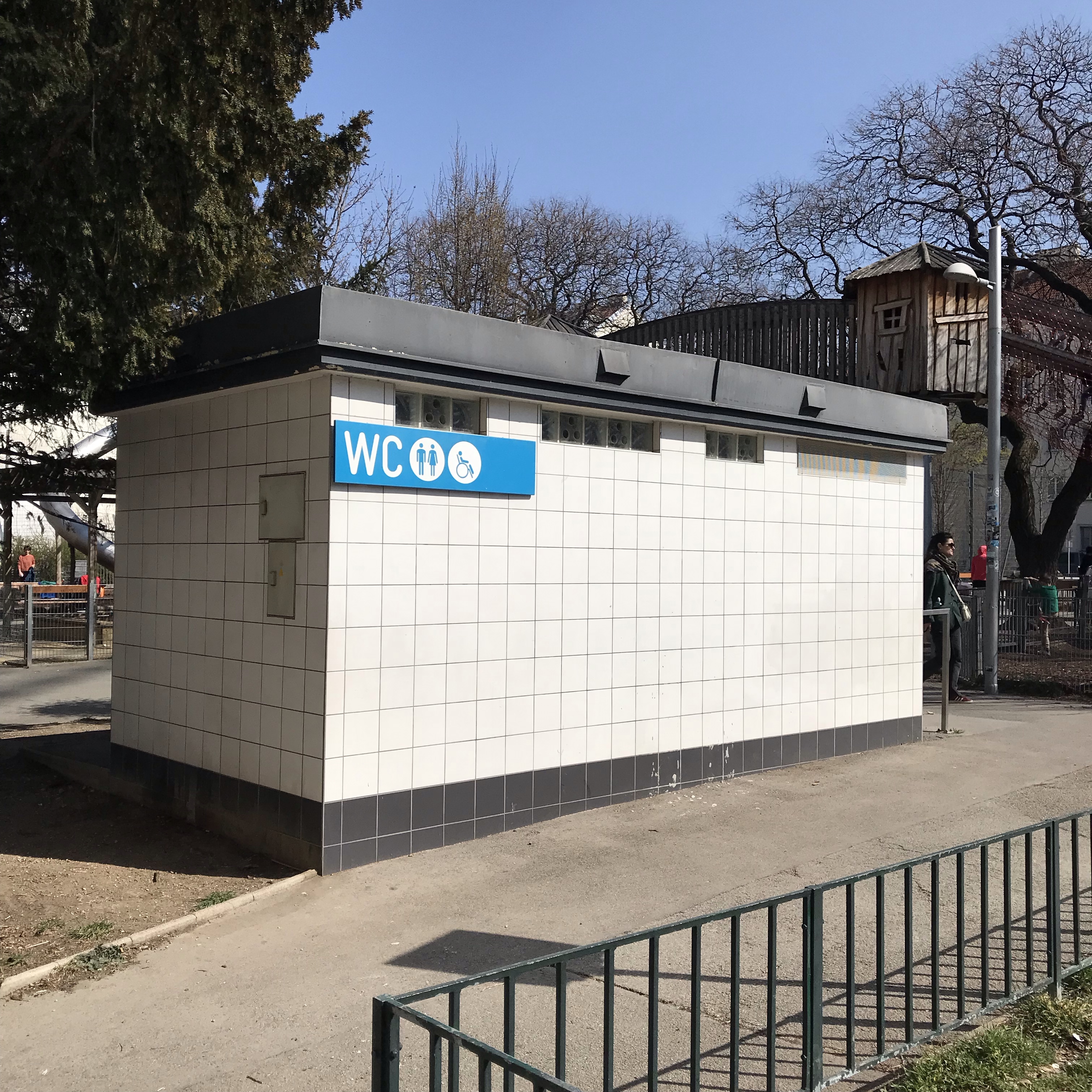
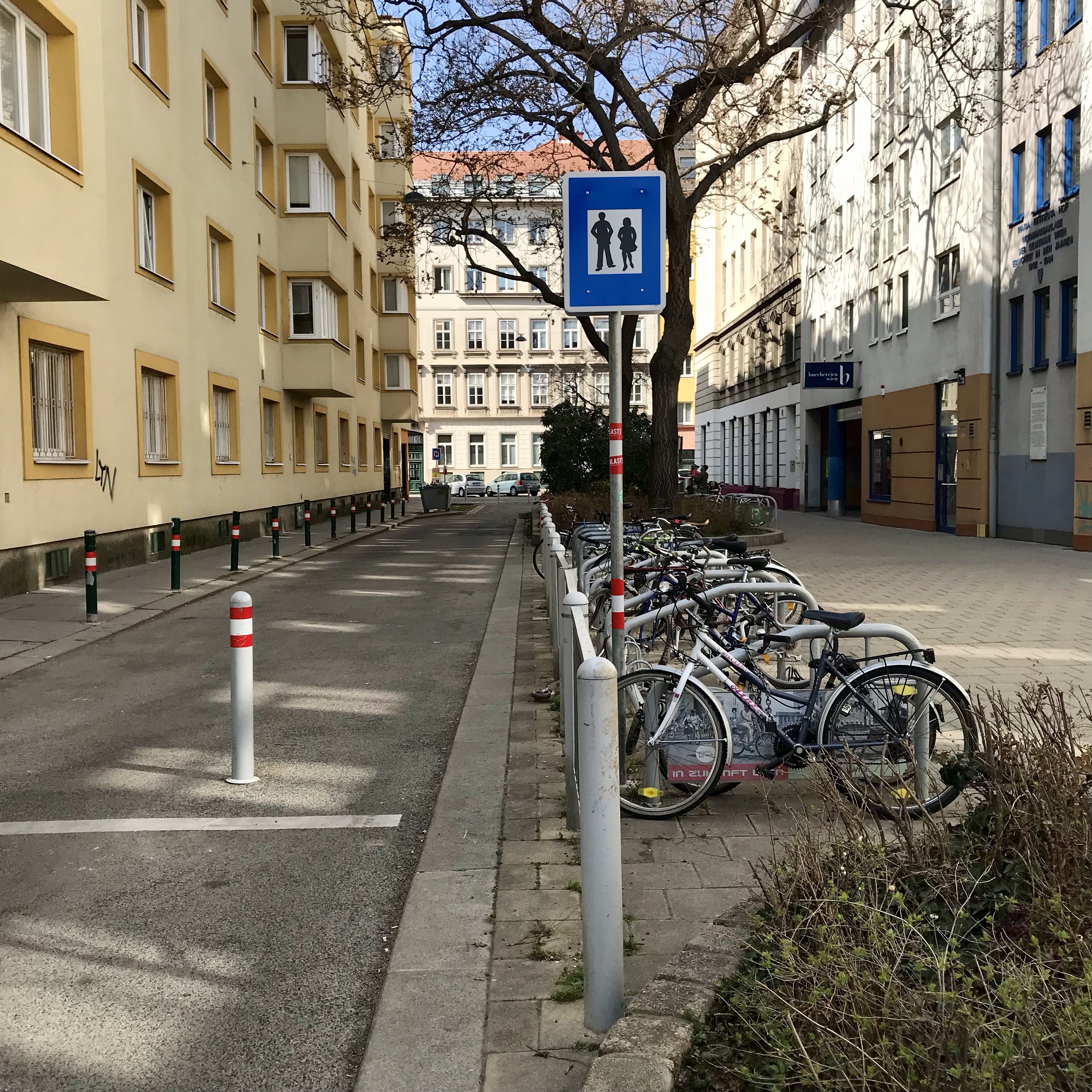
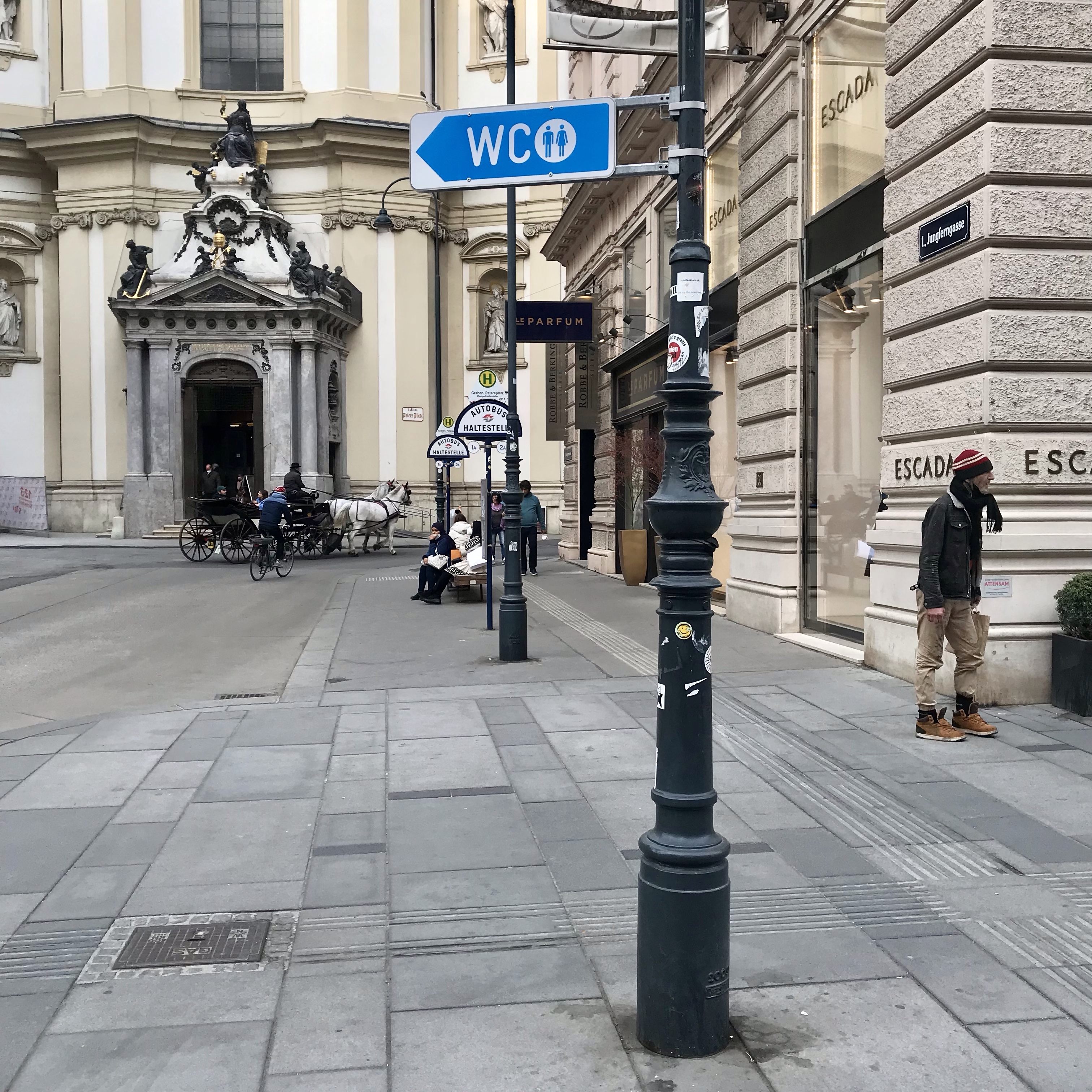
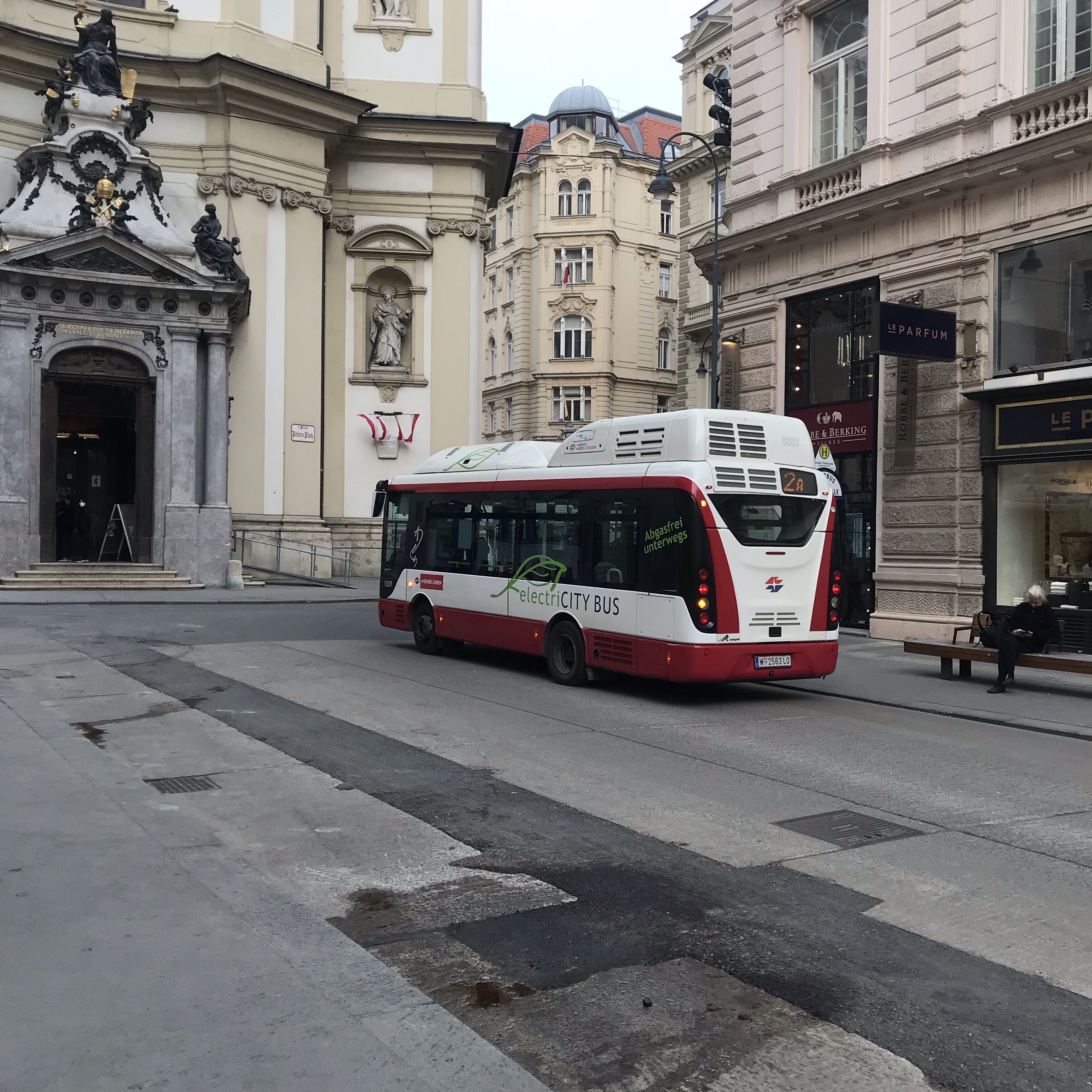
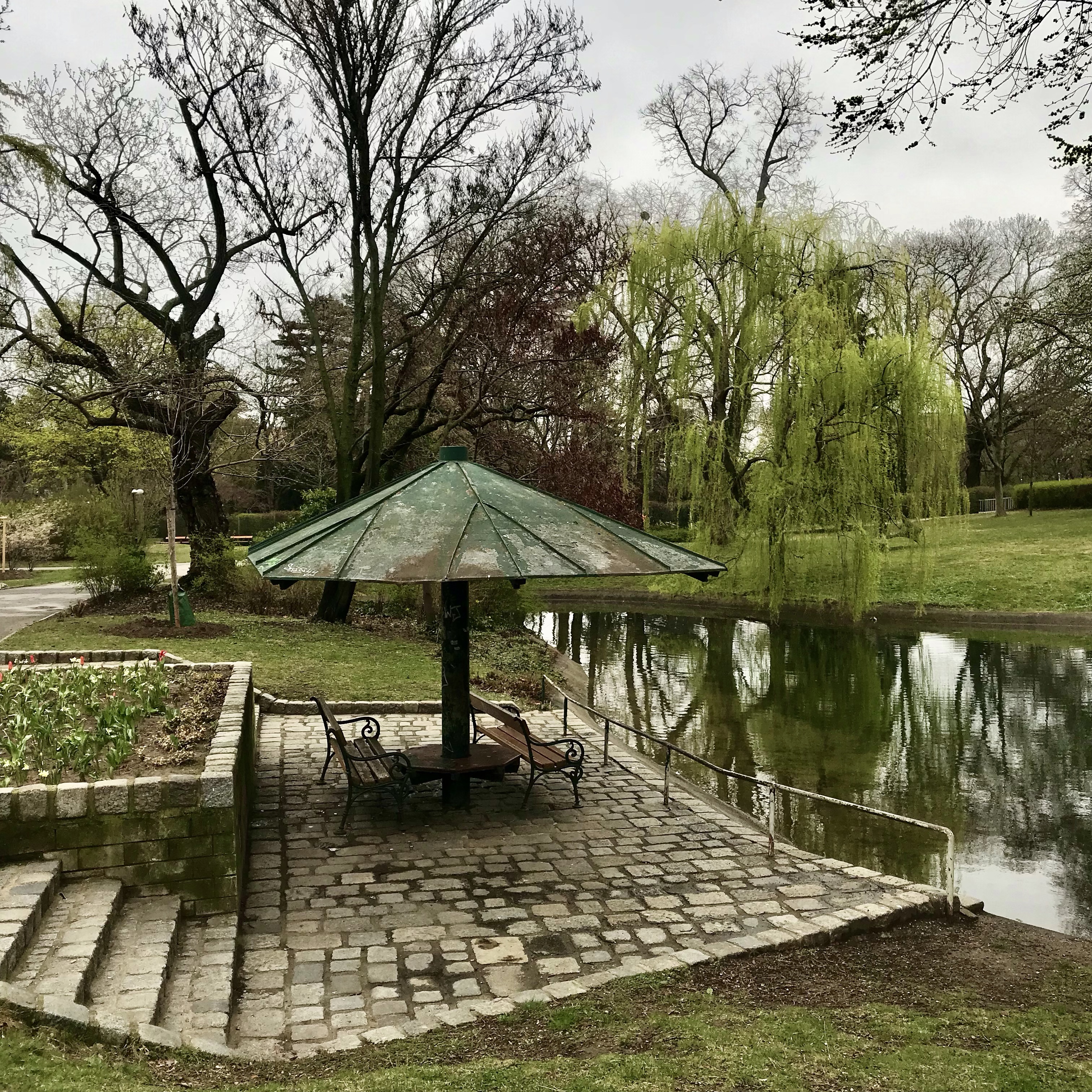
Signs directing people to public toilets (though not always free)Electric busWater bottle fill stationSchweitzer GartenPublic compost binPublic recycling and donation binSuper clean and free toilet Located in the Botanischer Garten der Universität Wien
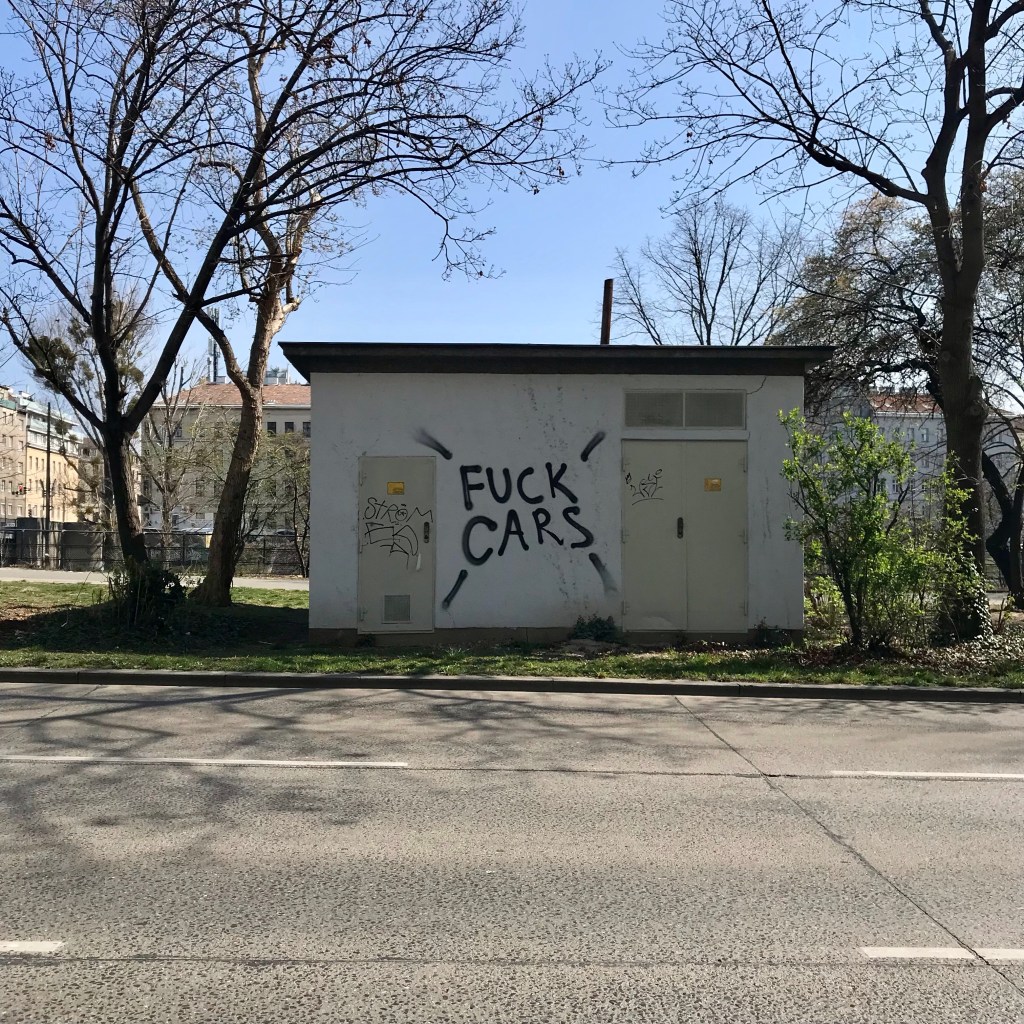
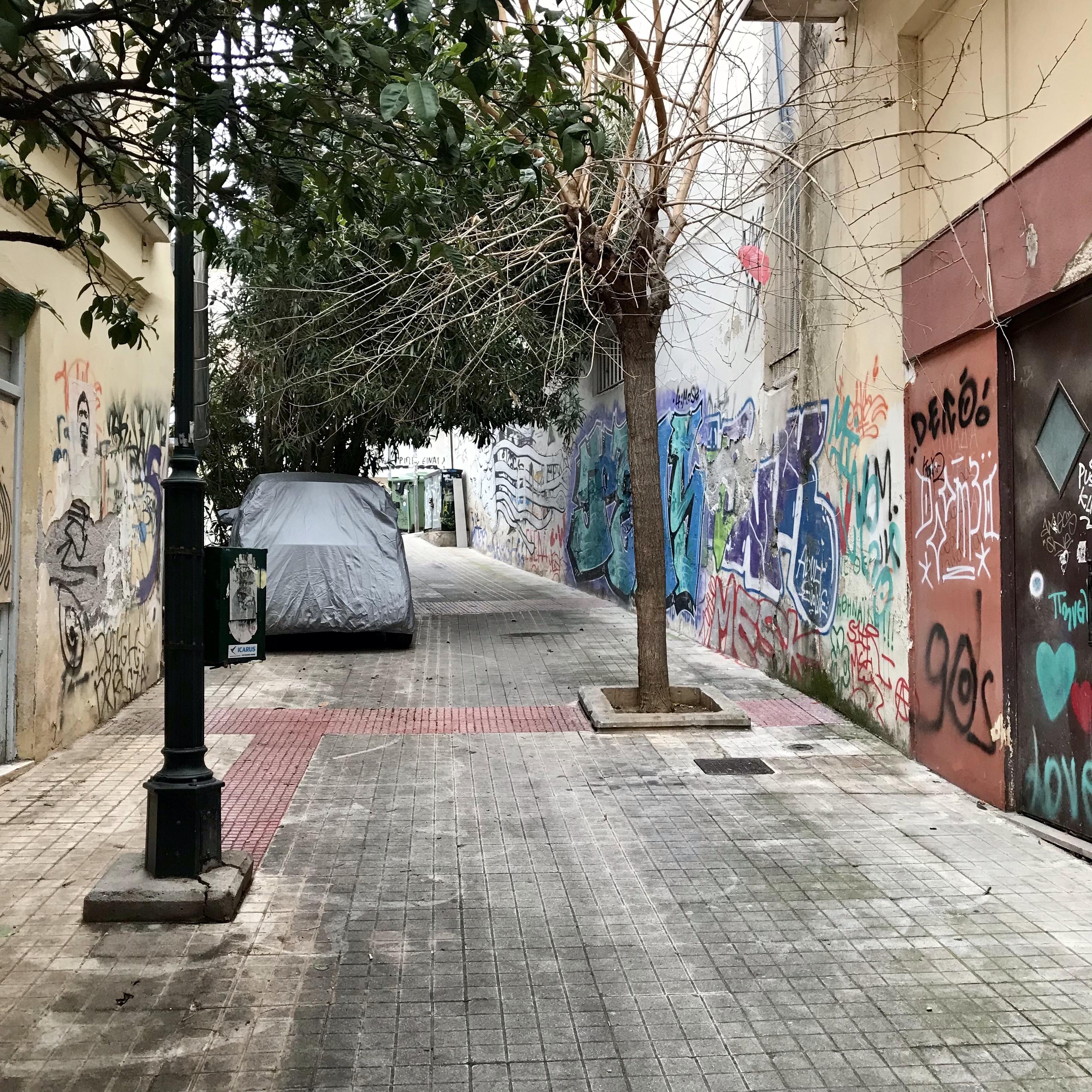
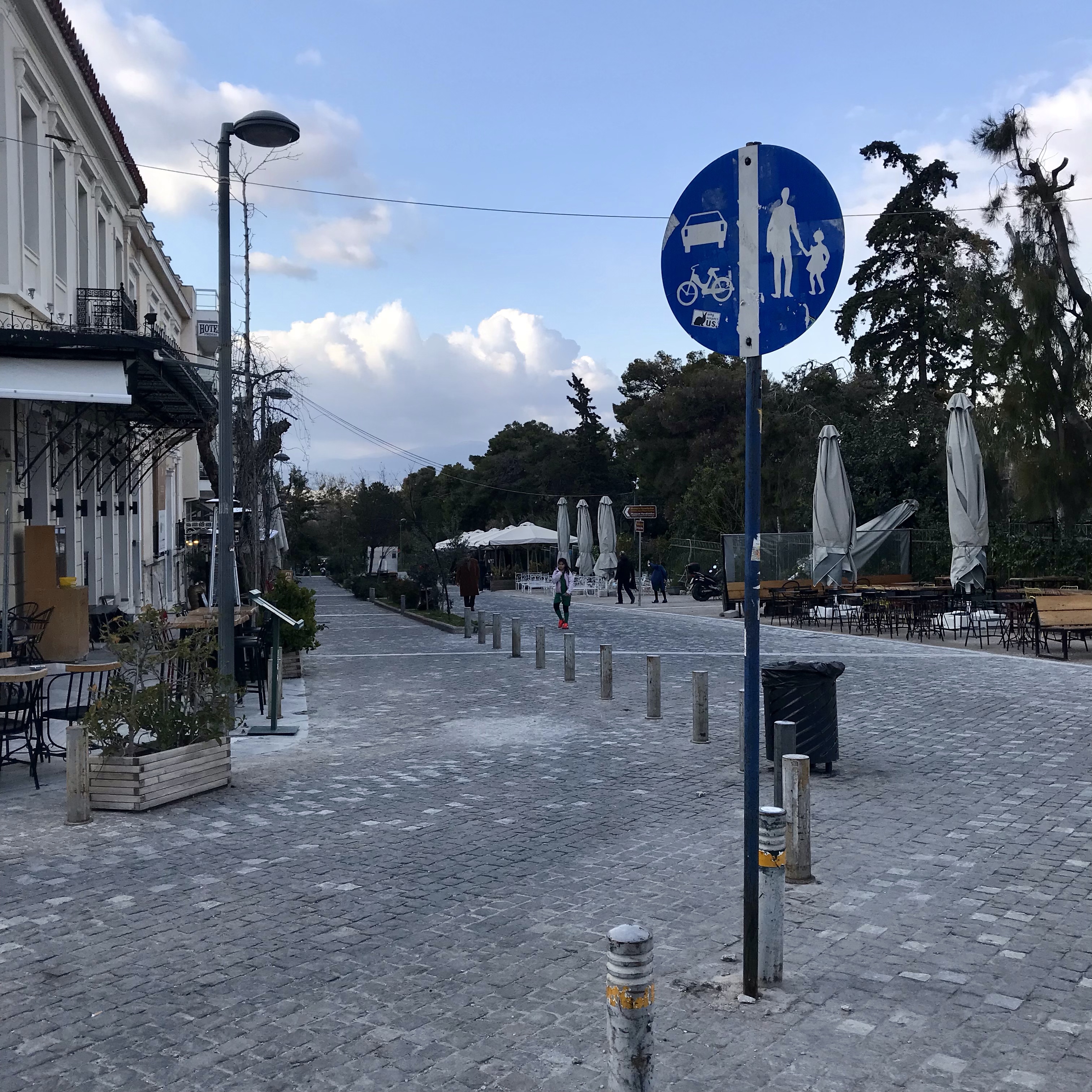
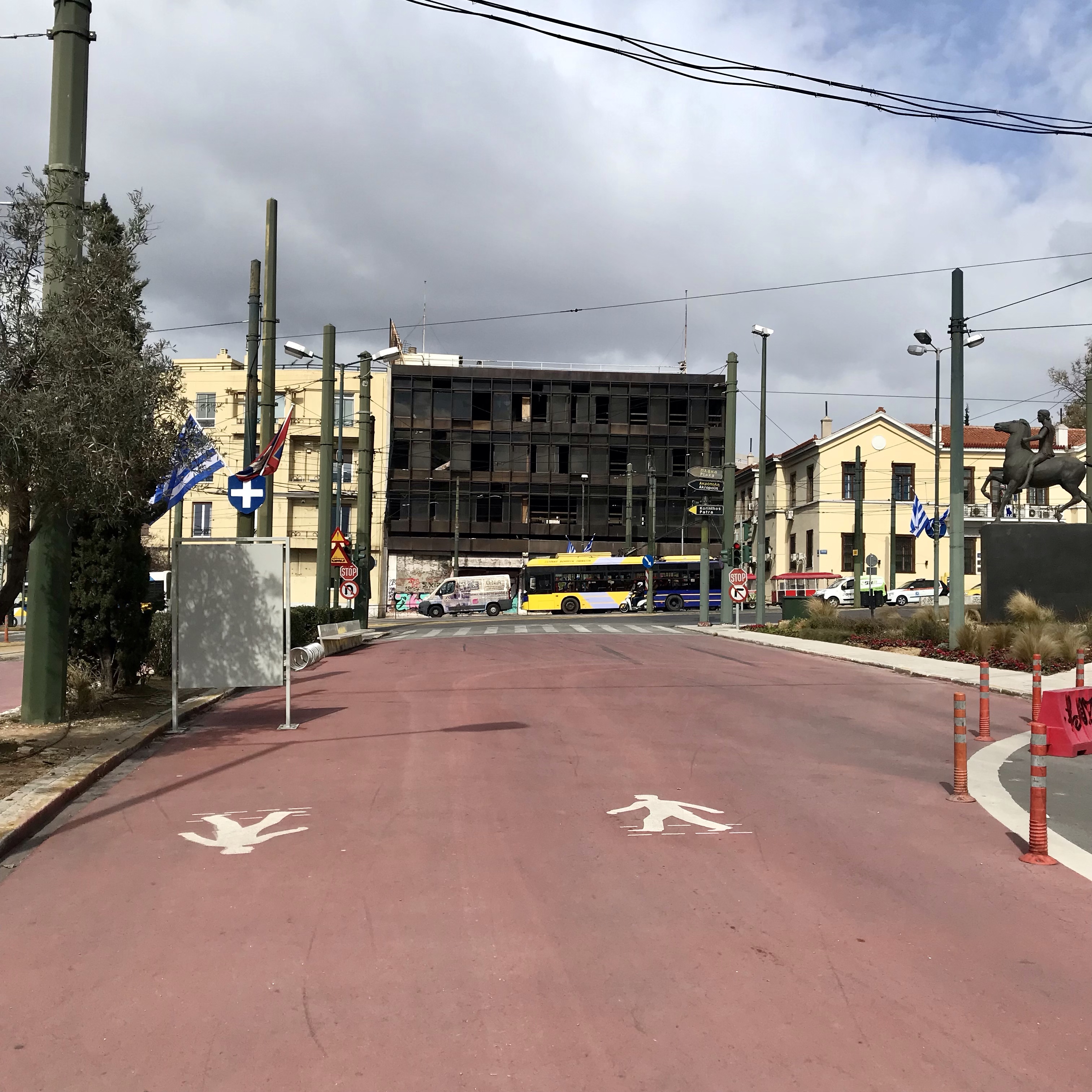
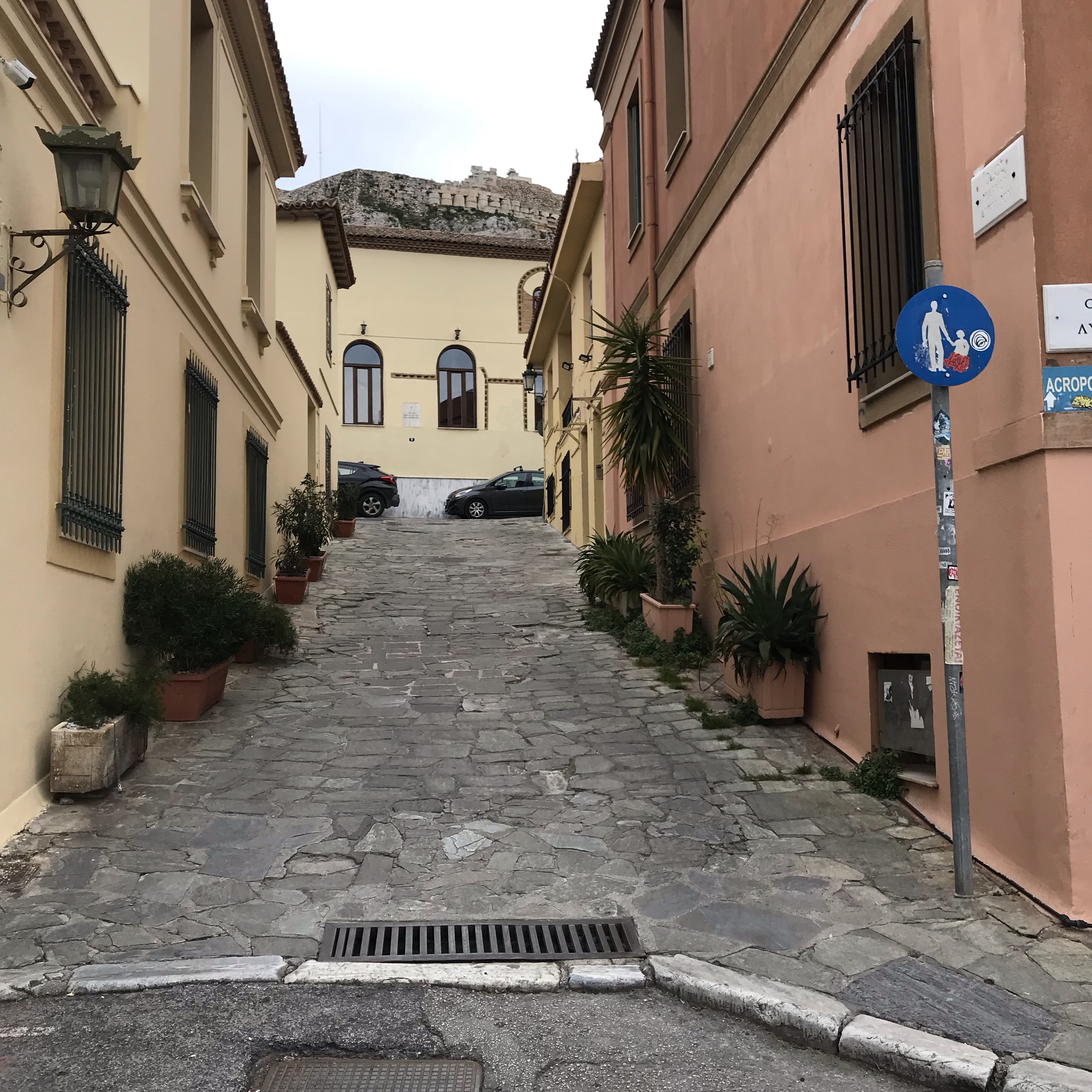
There are cars everywhere (parked & driving) in Athens, so walking and cycling around the city isn’t awesome. There are other positive things about the city to highlight (and even some great walking streets).
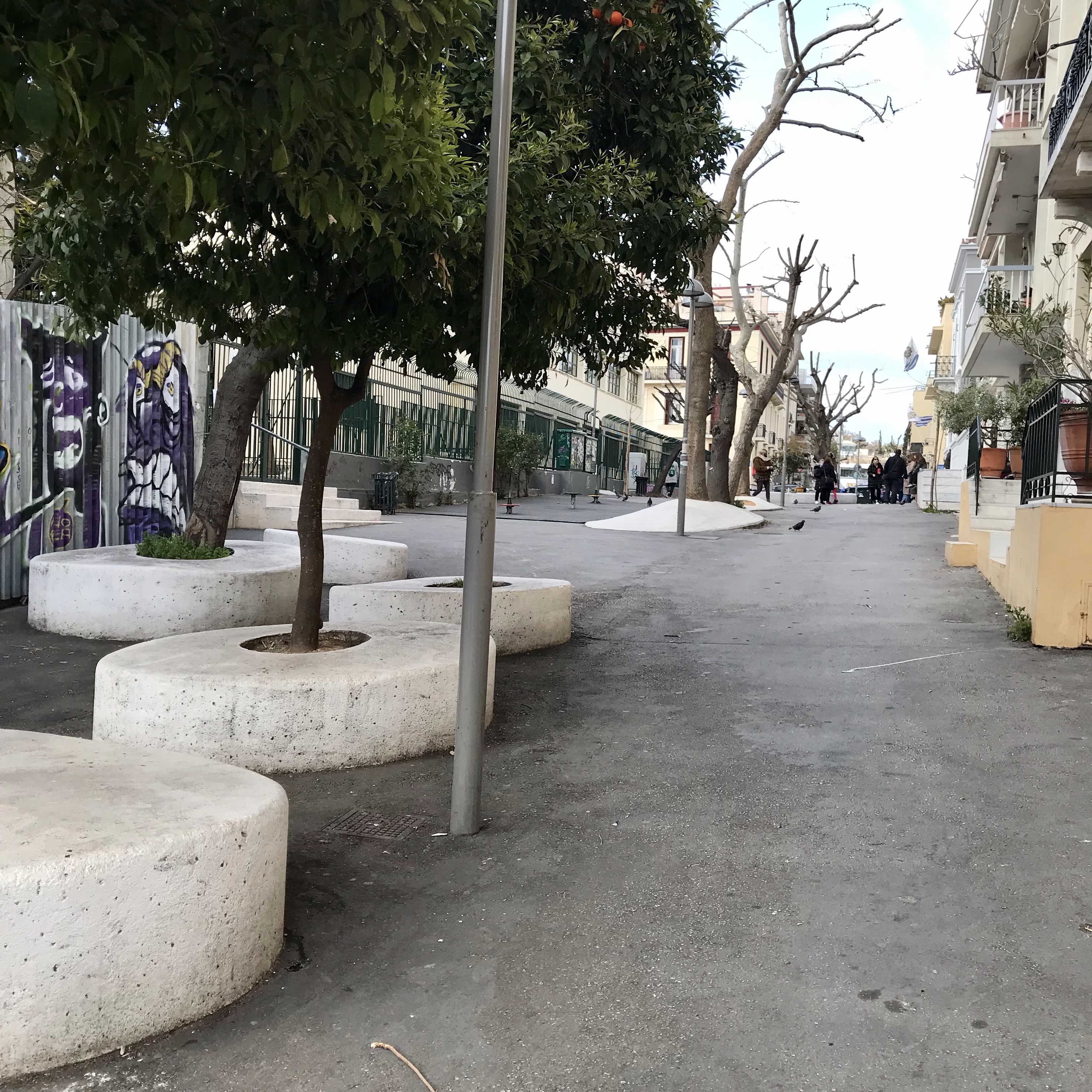
This one is in front of a school ❤️
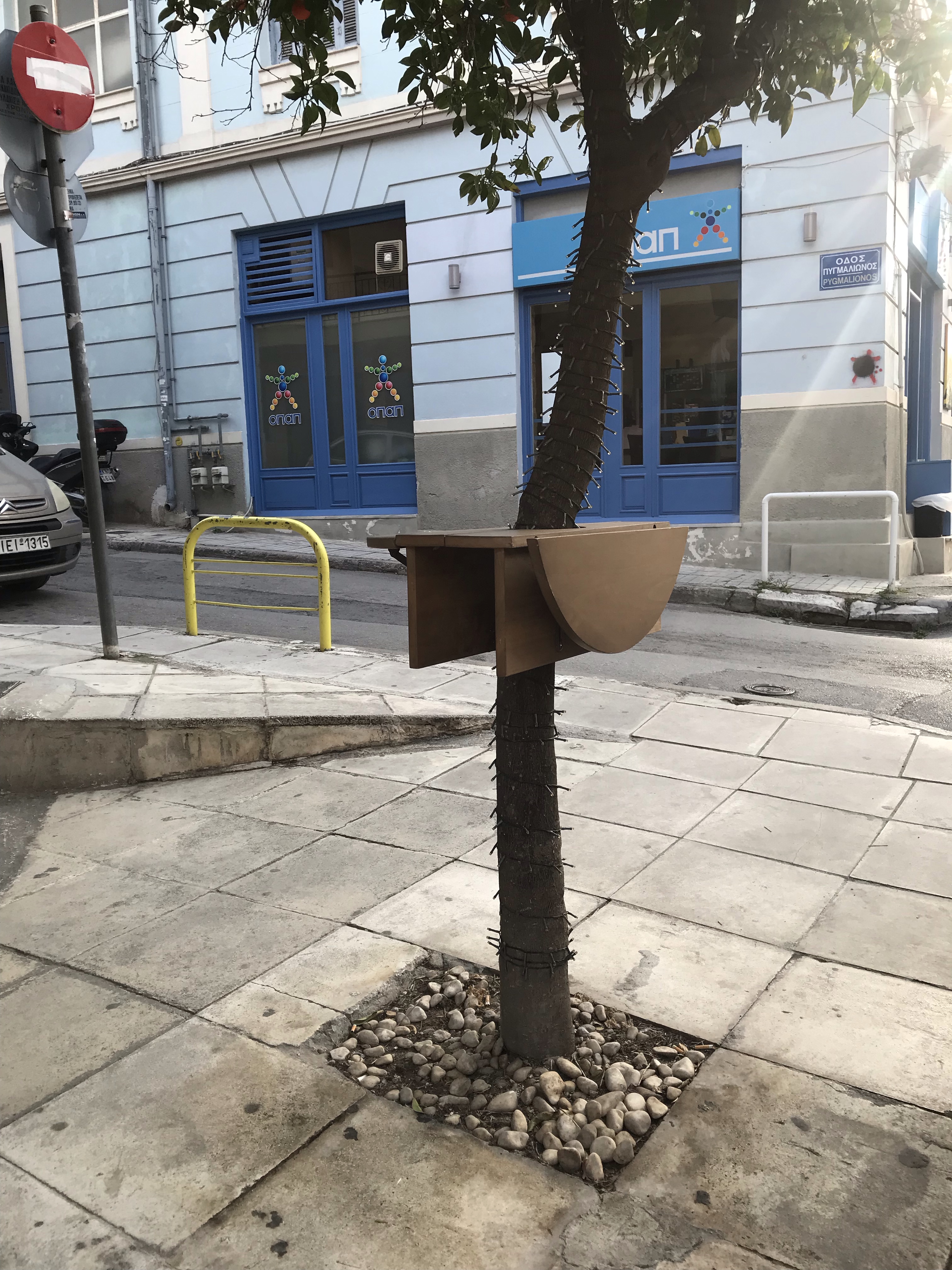
As cars are parked in every available curb side space, these parkettes offer a welcome reprieve.
My fave.
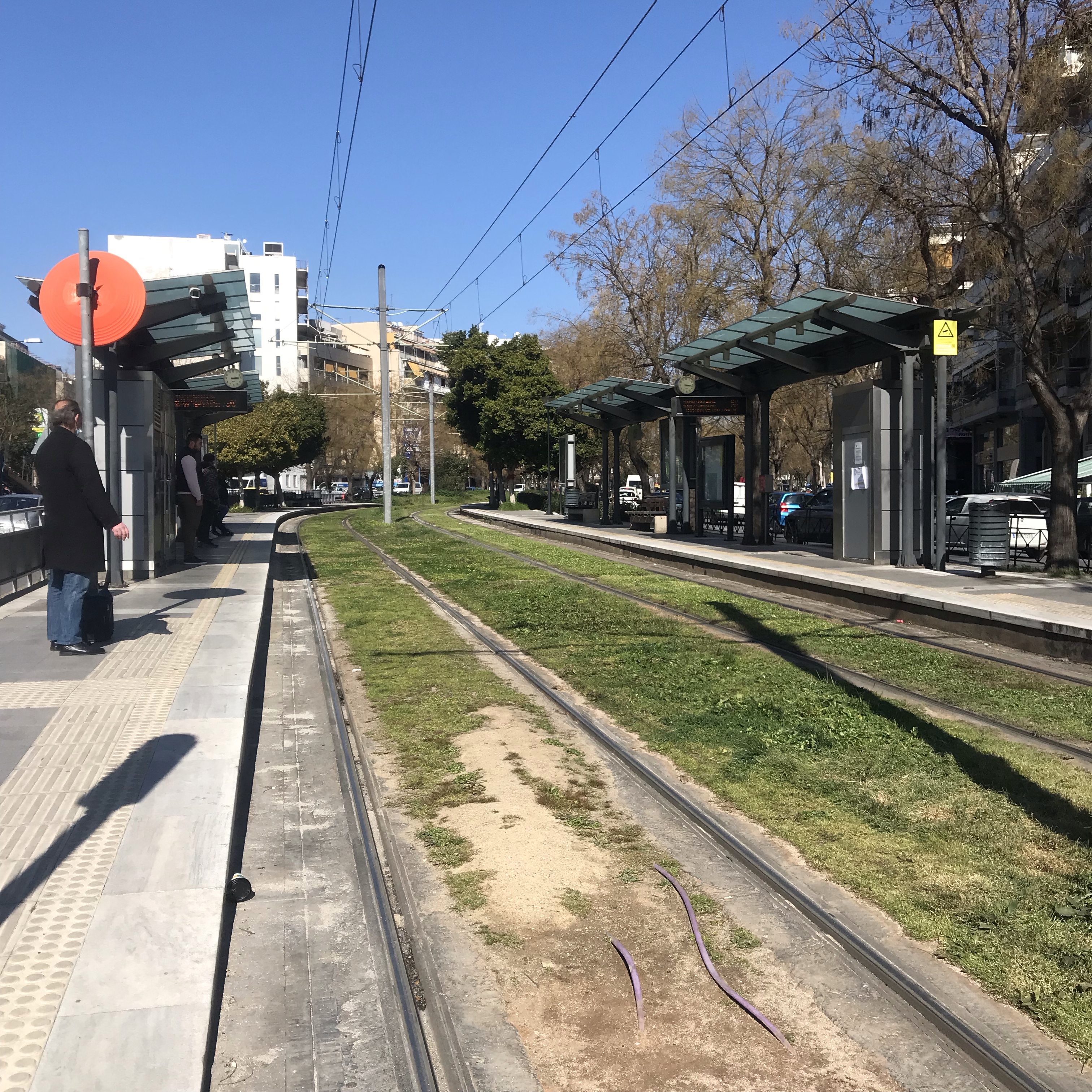
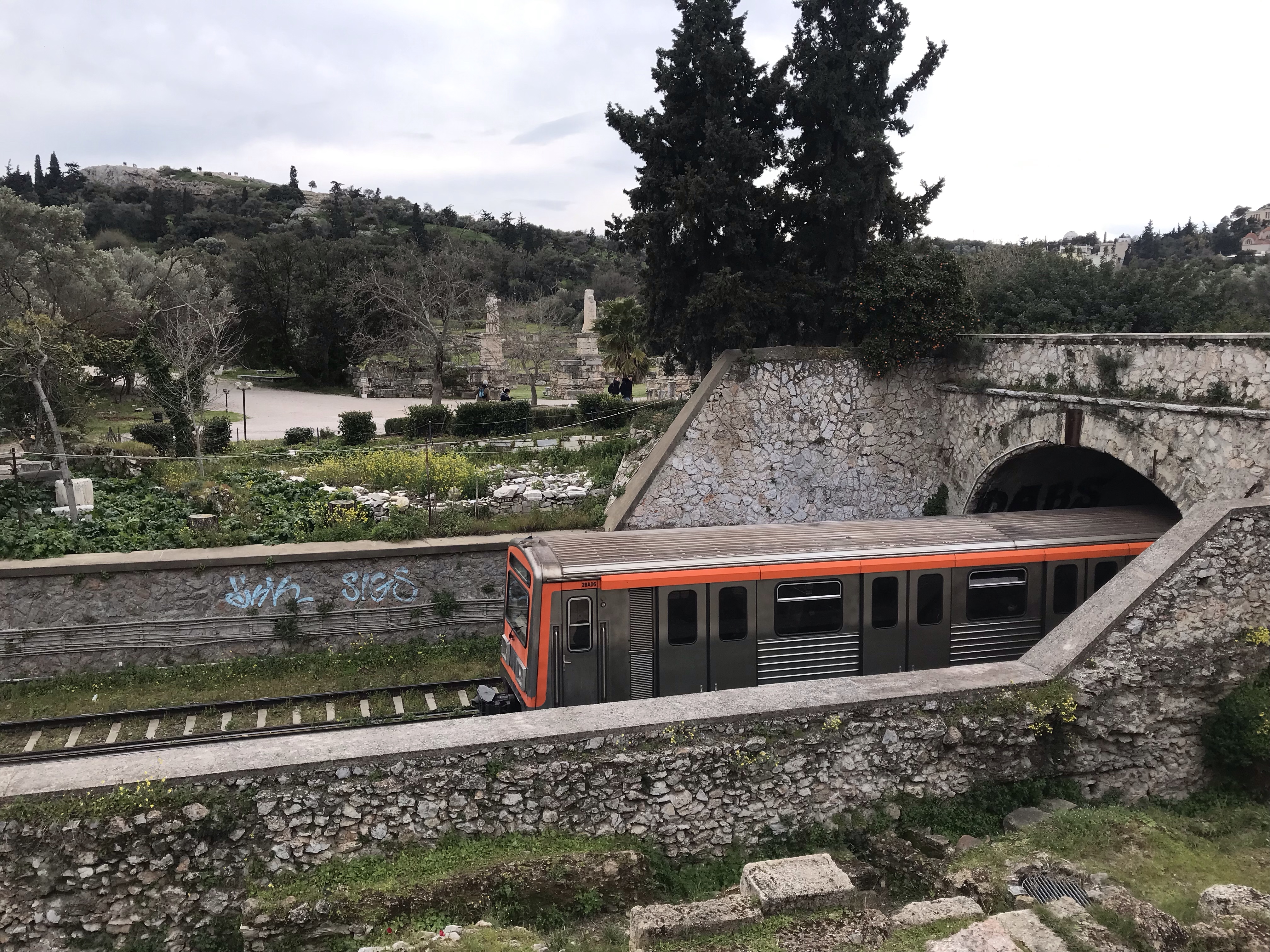
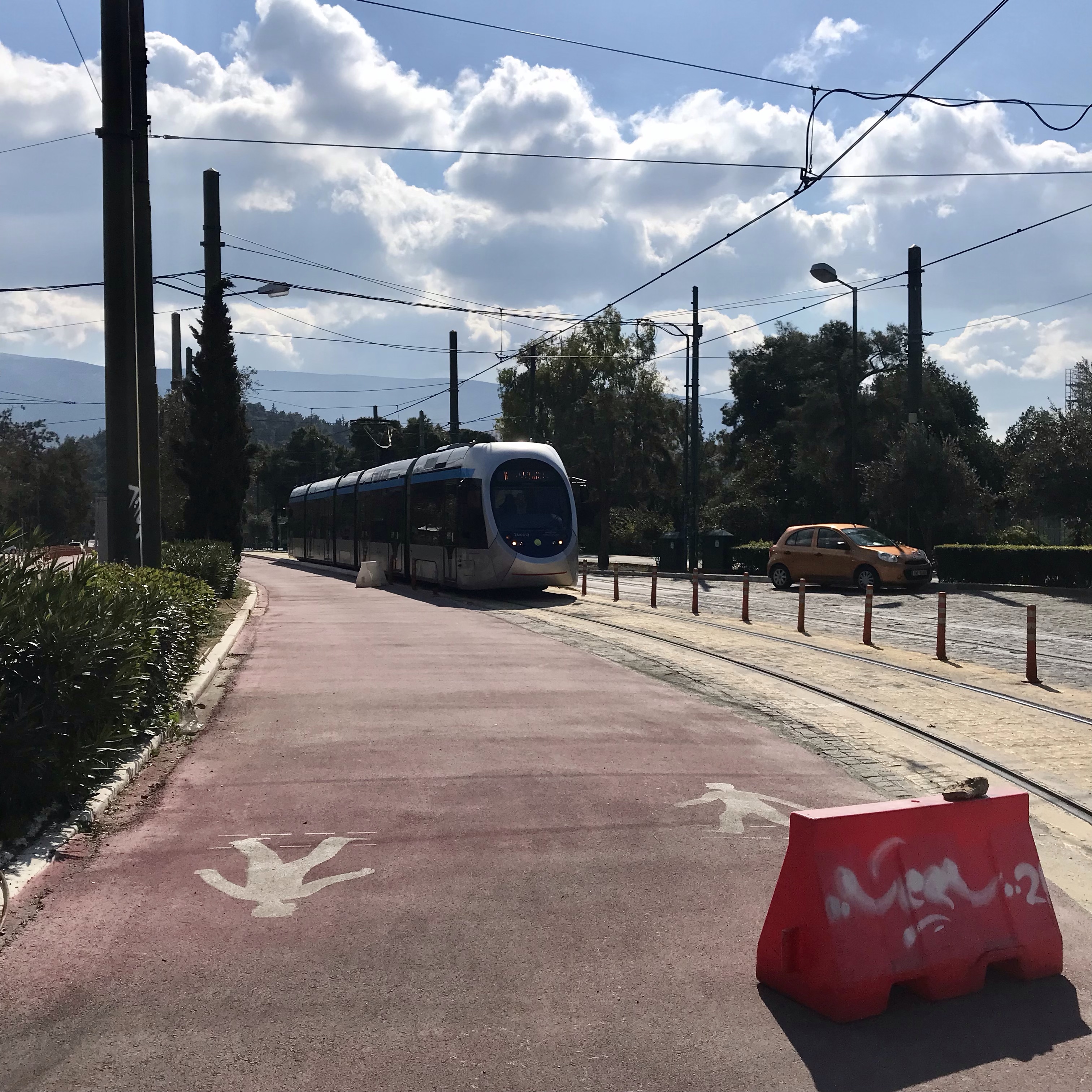
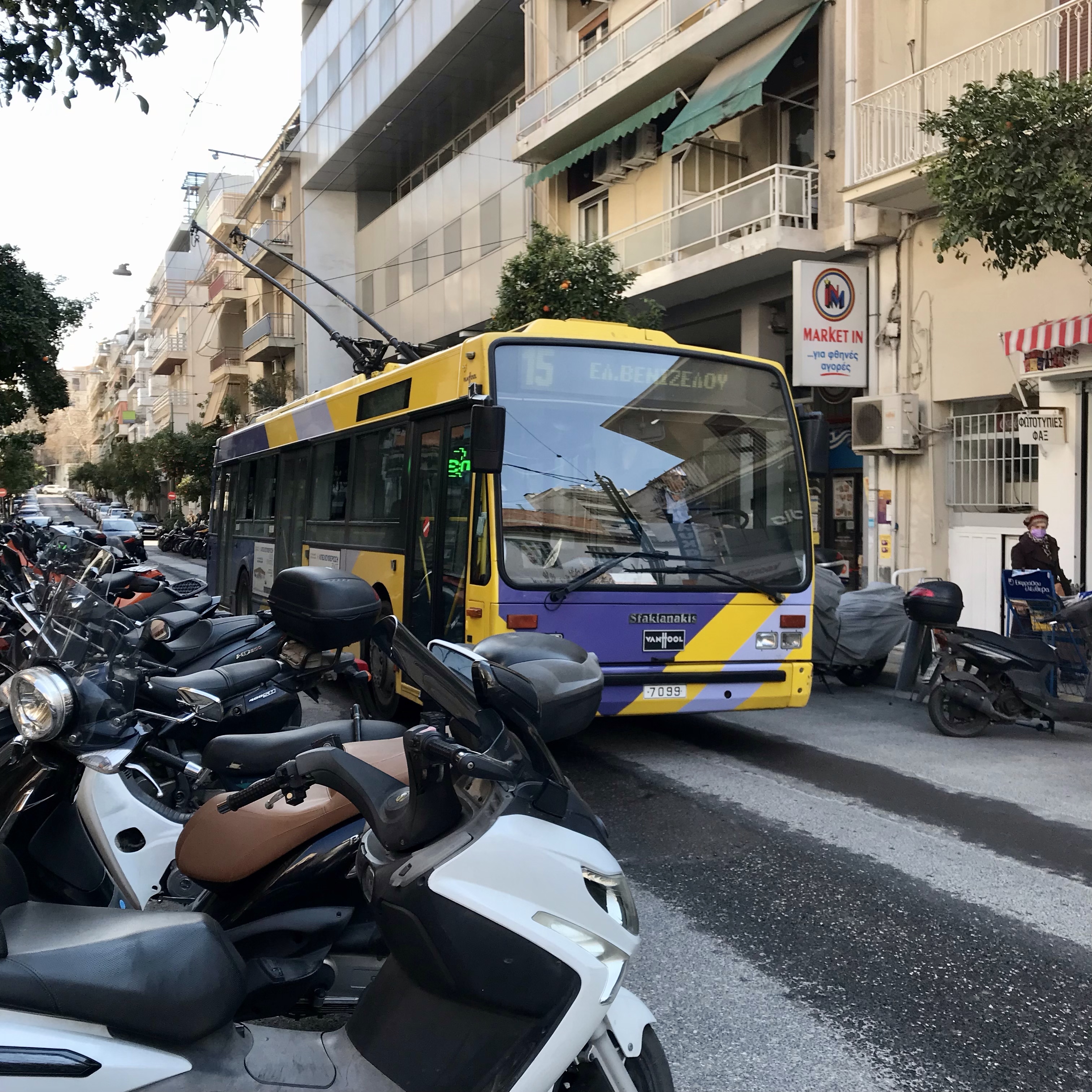
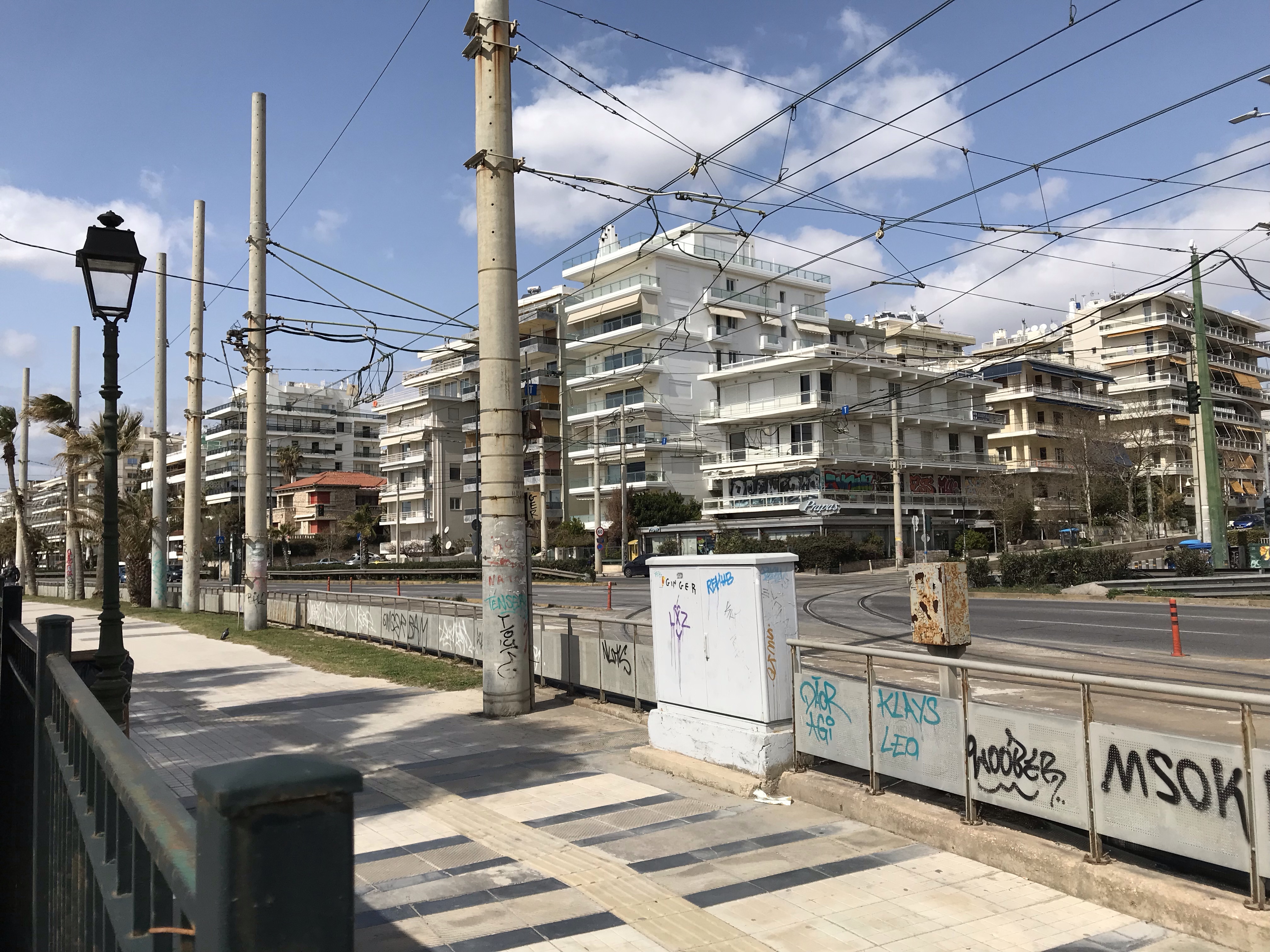
The transit system is electric (busses, subways & trams).
There are free public toilets available.
Super clean
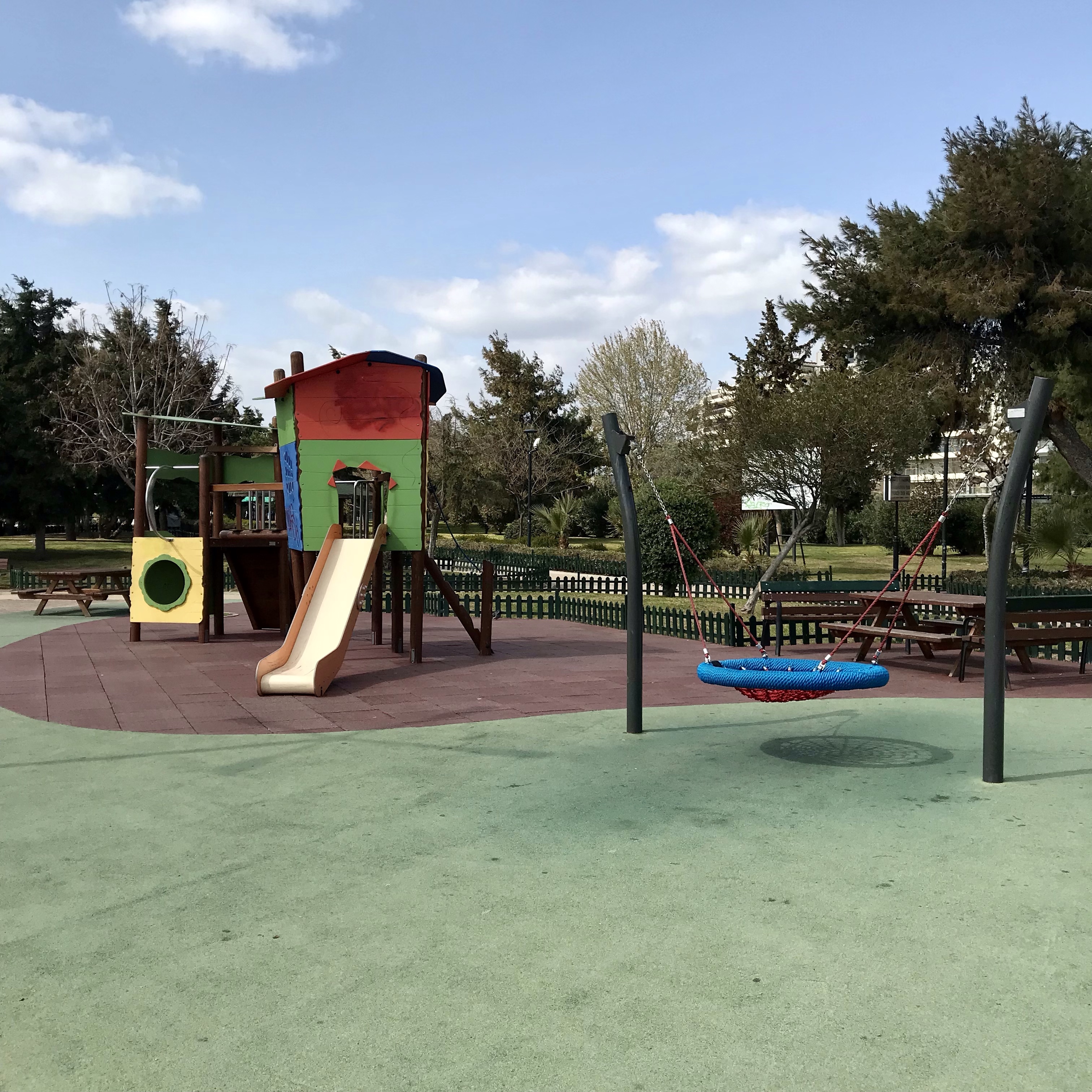
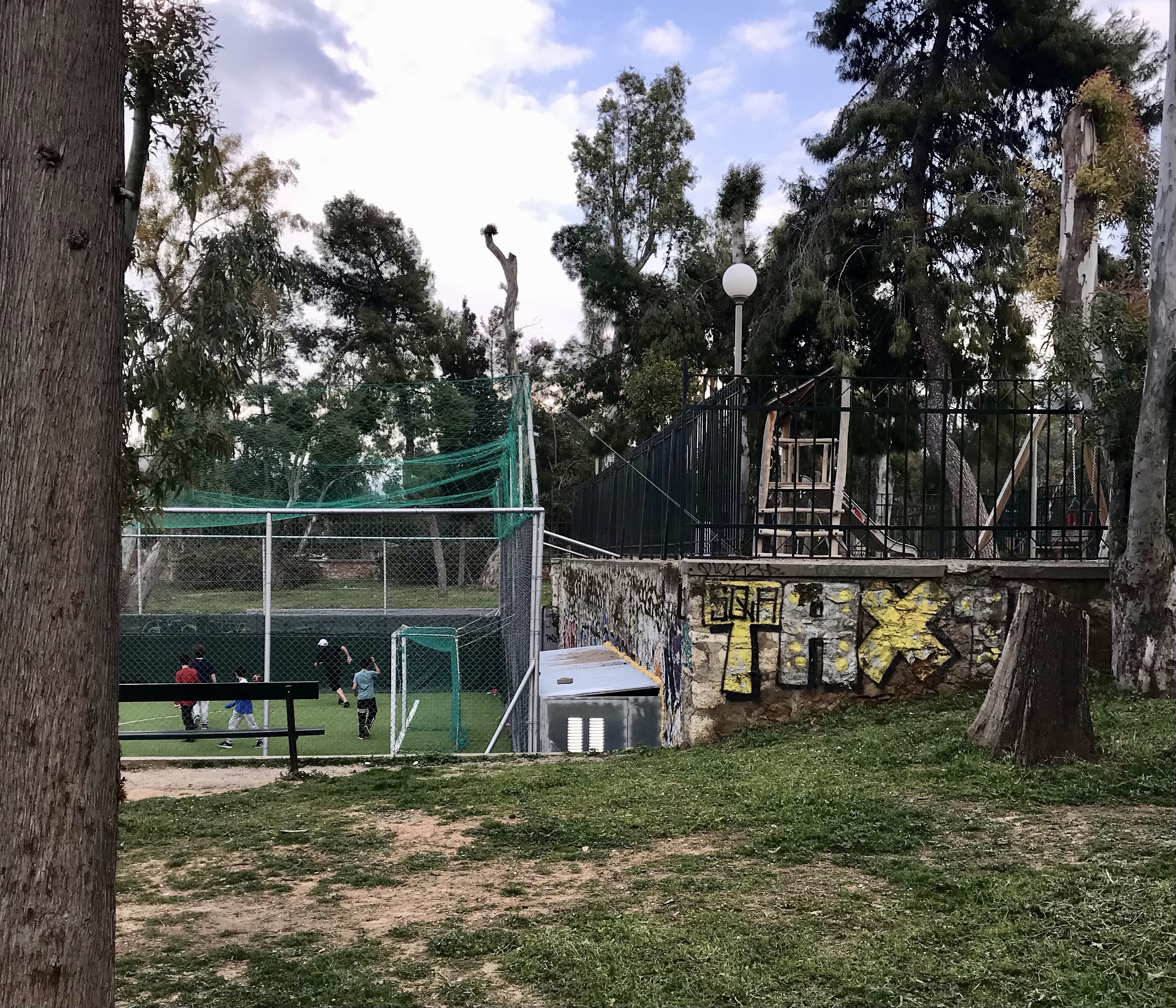
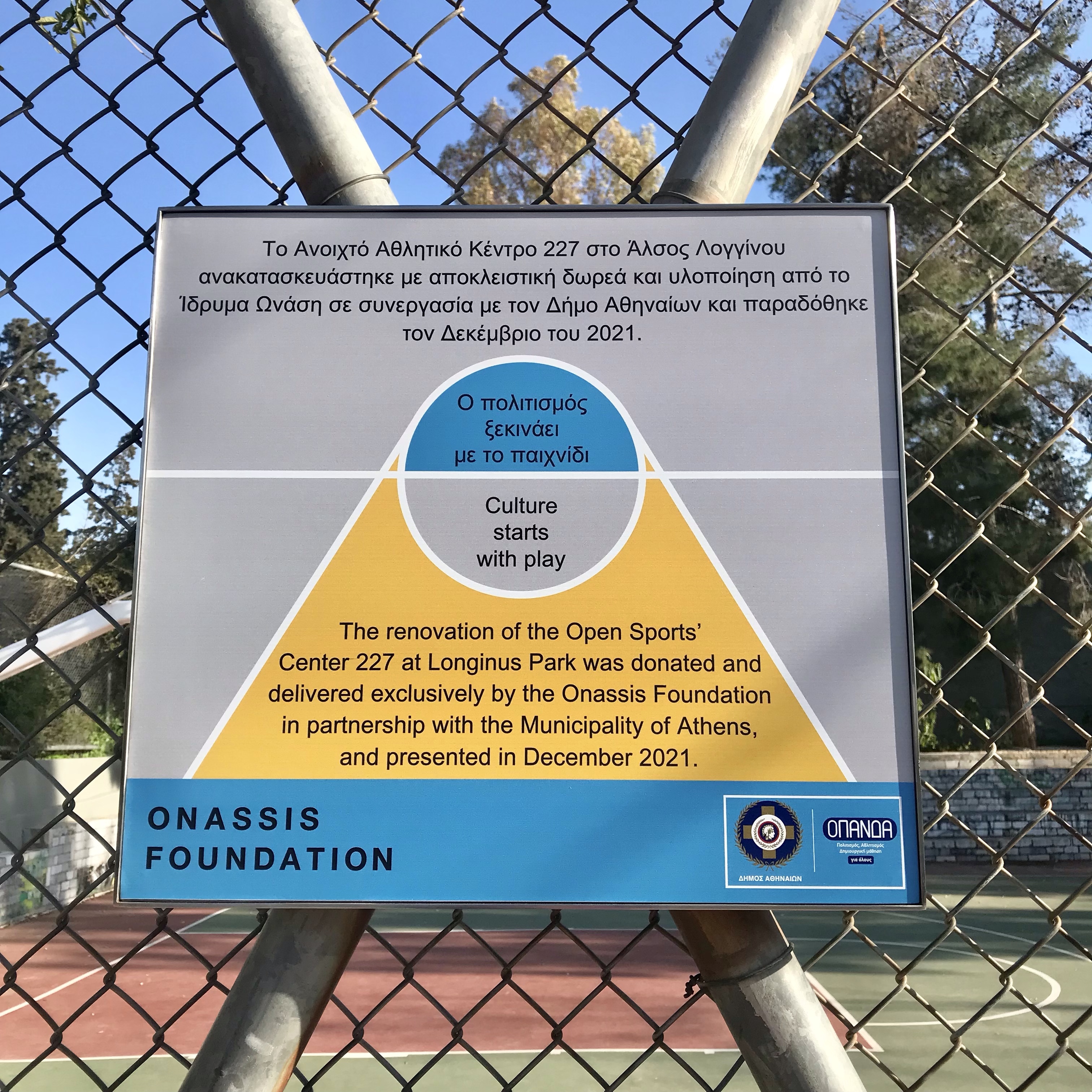
Playgrounds & recreation facilities are privately & publicly funded.
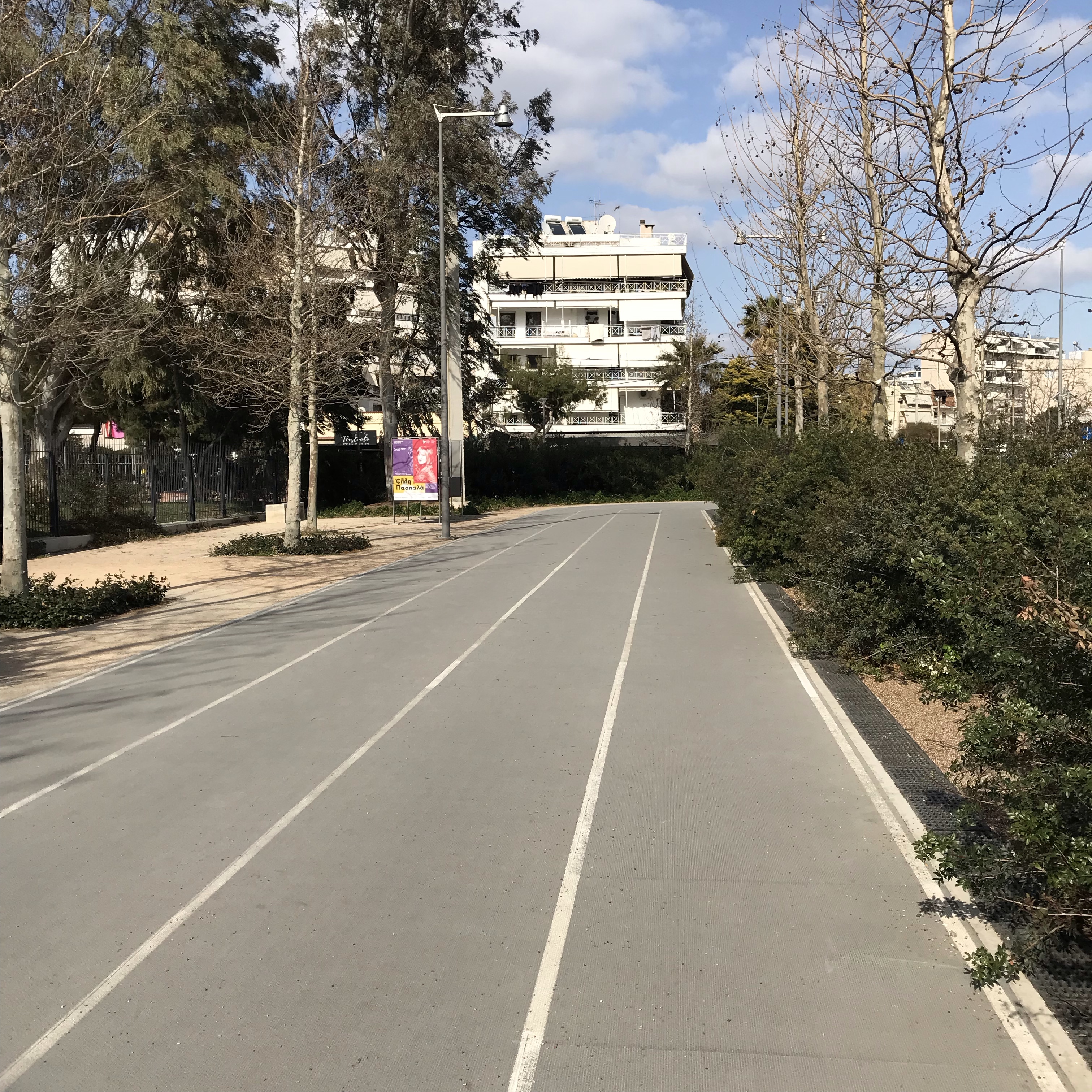
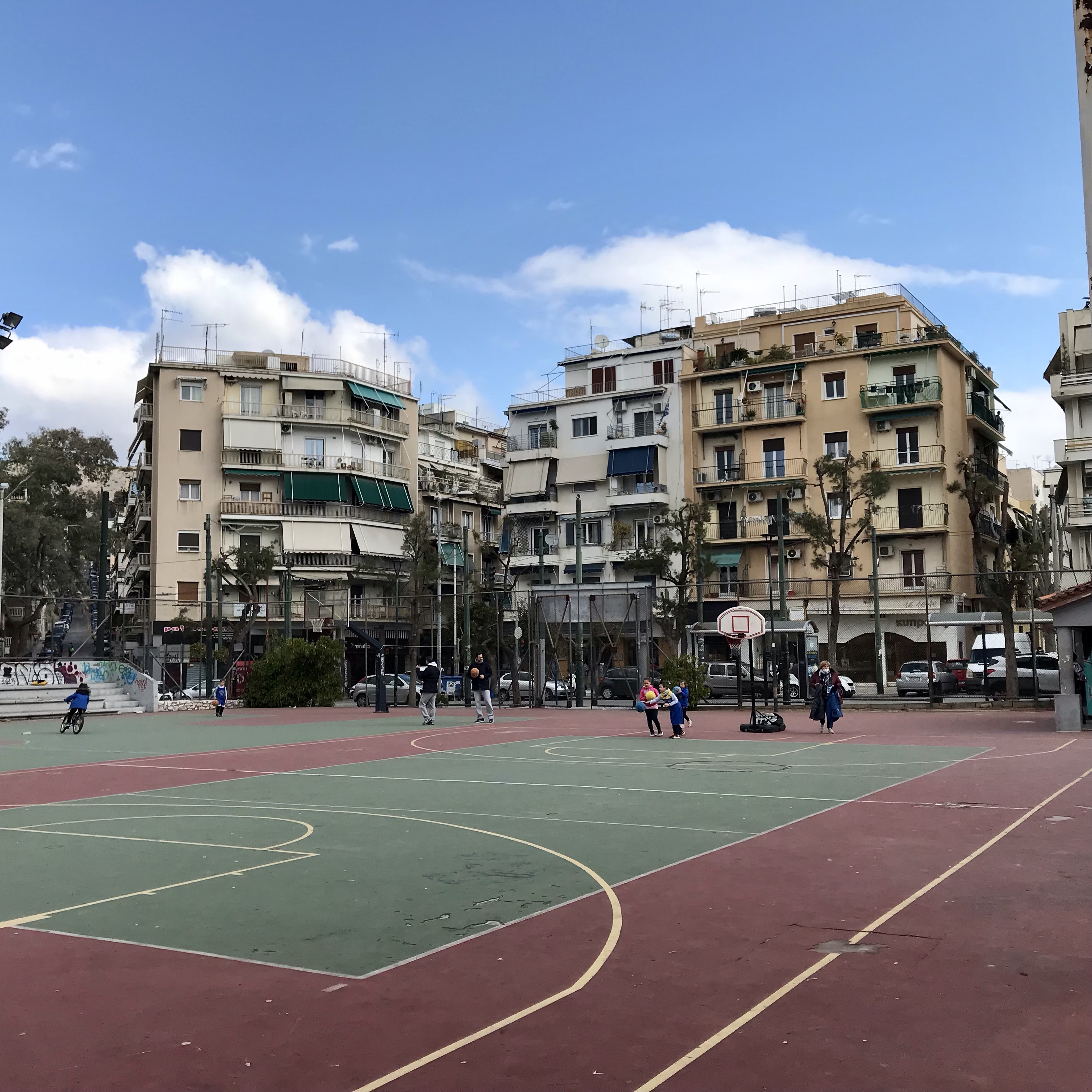
A trackSoccer & playground Onassis Foundation fundedMy fave, near our Airbnb. Such a vital space.
I’m going to do a separate post on public art. To wrap this one up, here are a few more miscellaneous highlights.
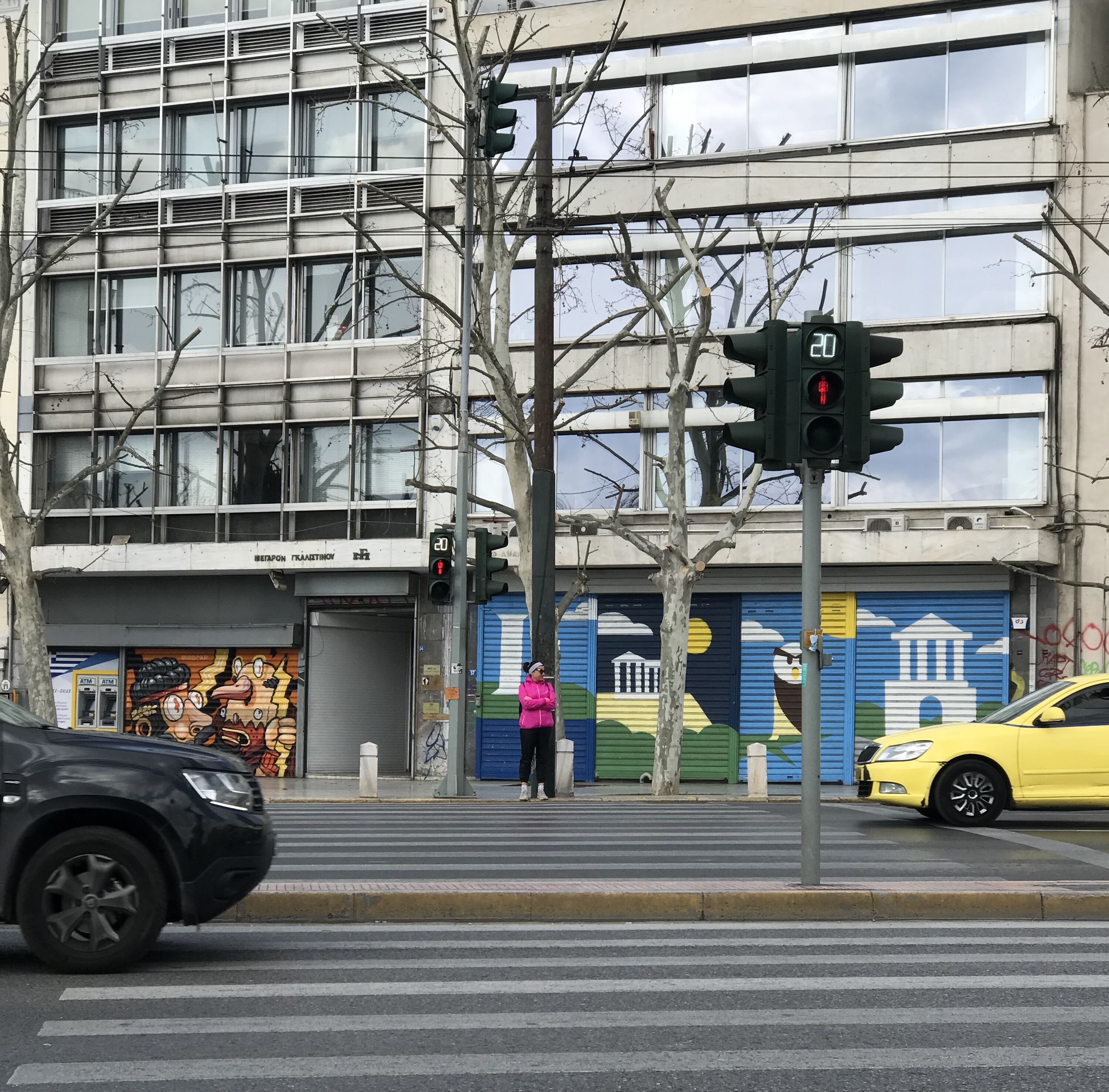
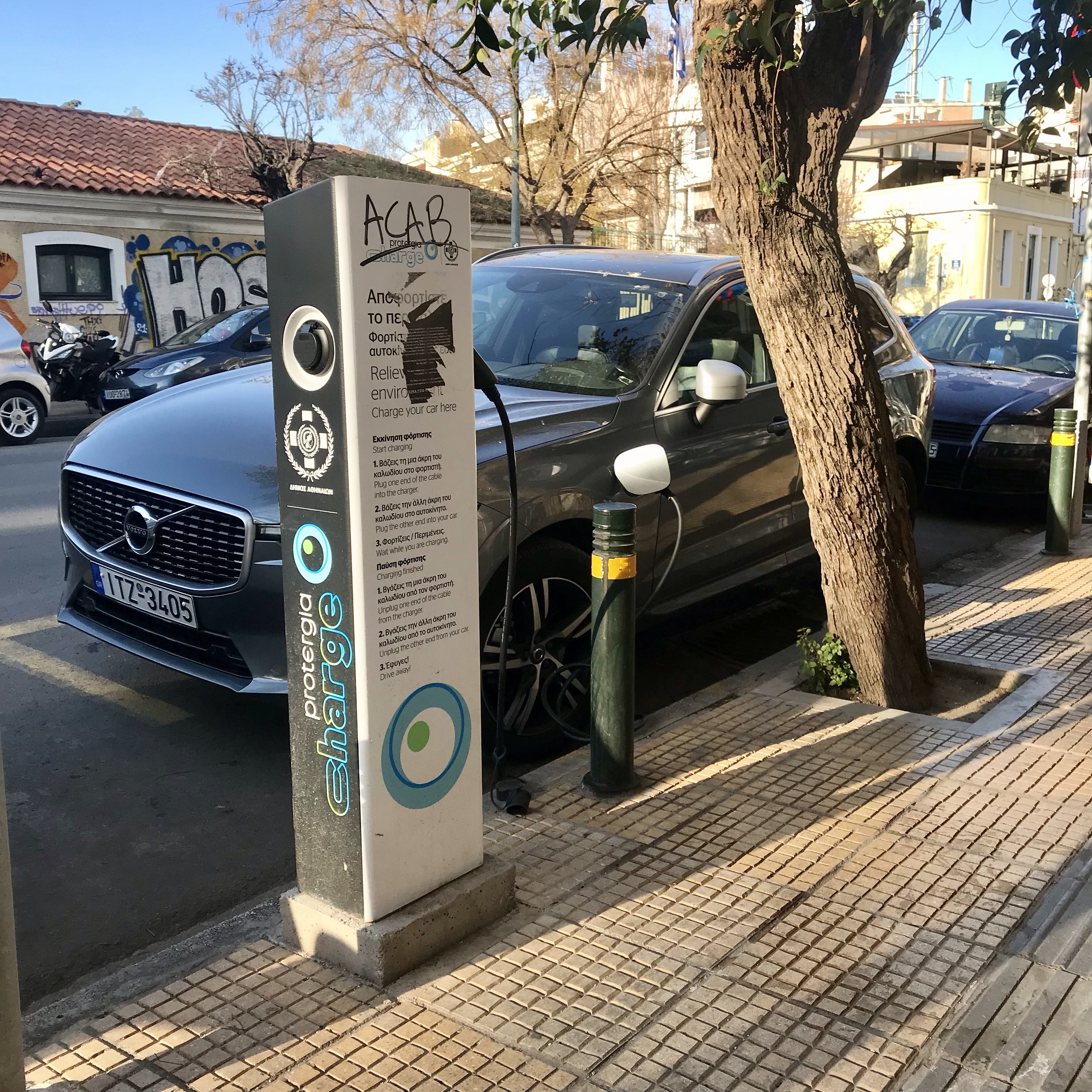
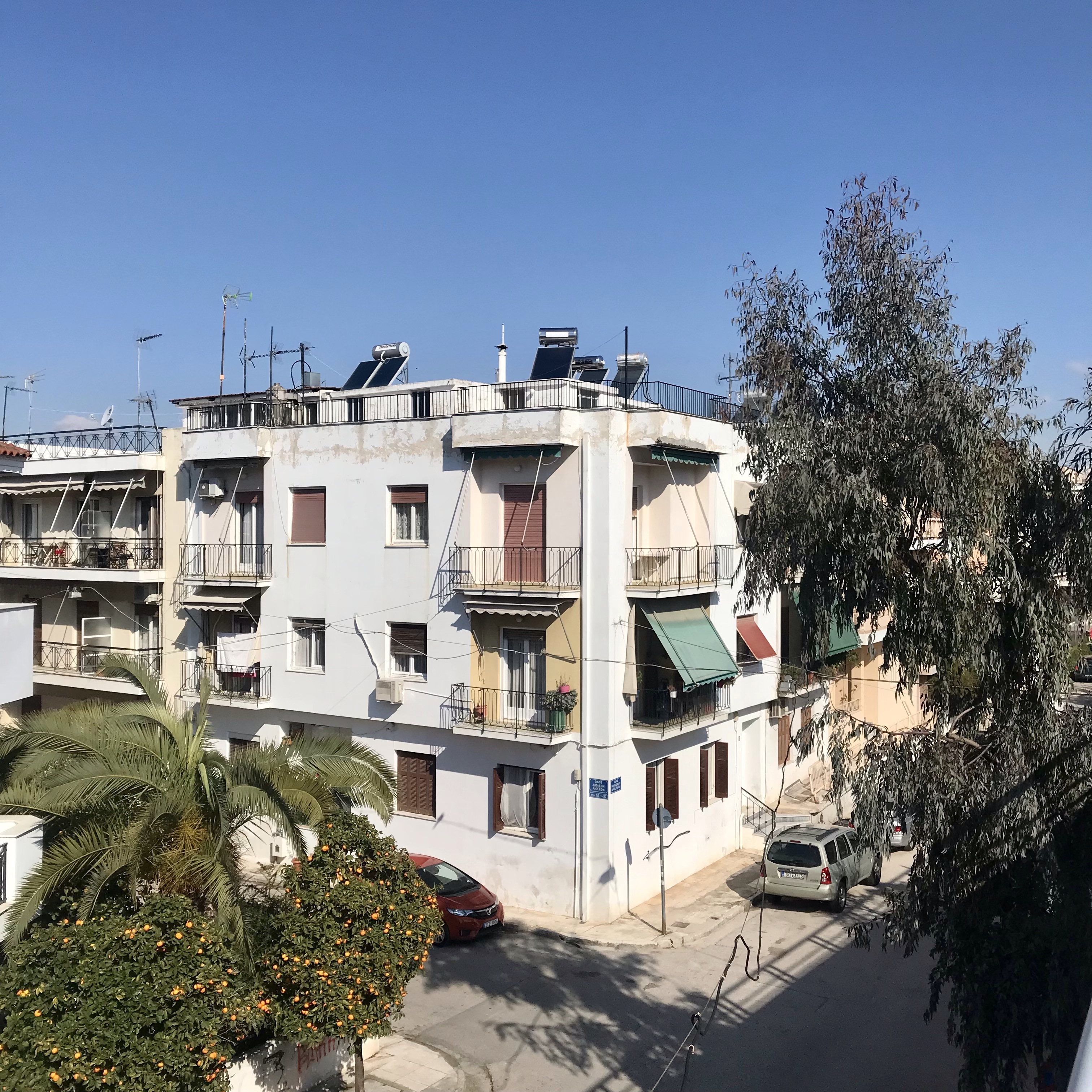
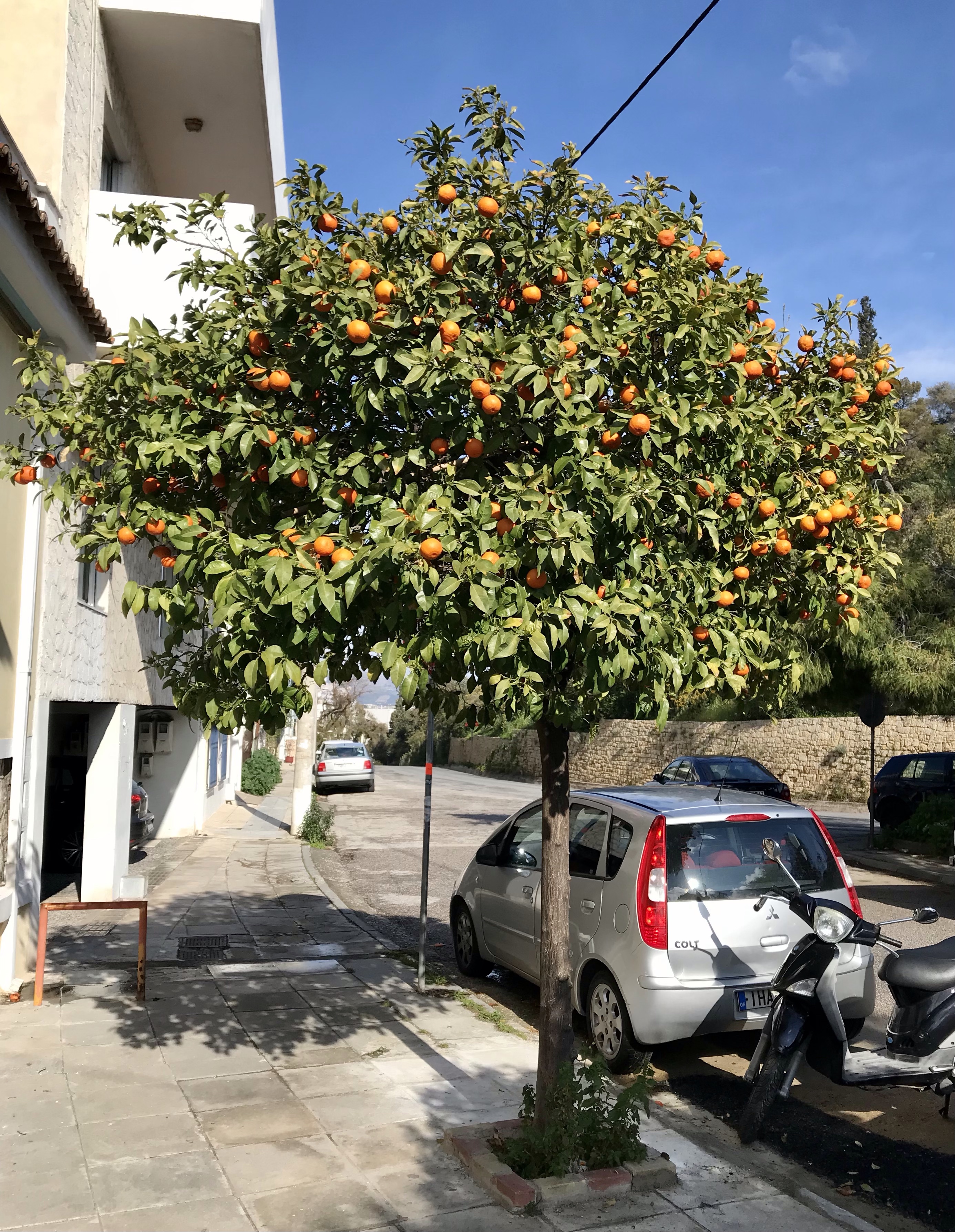
Athens is full of low rise residential buildings, some with retail space at street levelCountdown to walk lightGreat use of space!Level 2 EV chargingSolar hot water is ubiquitous Orange trees provide colour & shadeGarbage & recycling are collected communally rather than door to door.
I am writing this post 2.5 months after leaving Thailand for Western Europe, where the infrastructure is often amazing. The things I will highlight in this post may be taken for granted in Europe, but I do not see all of these examples yet at home in Nova Scotia.
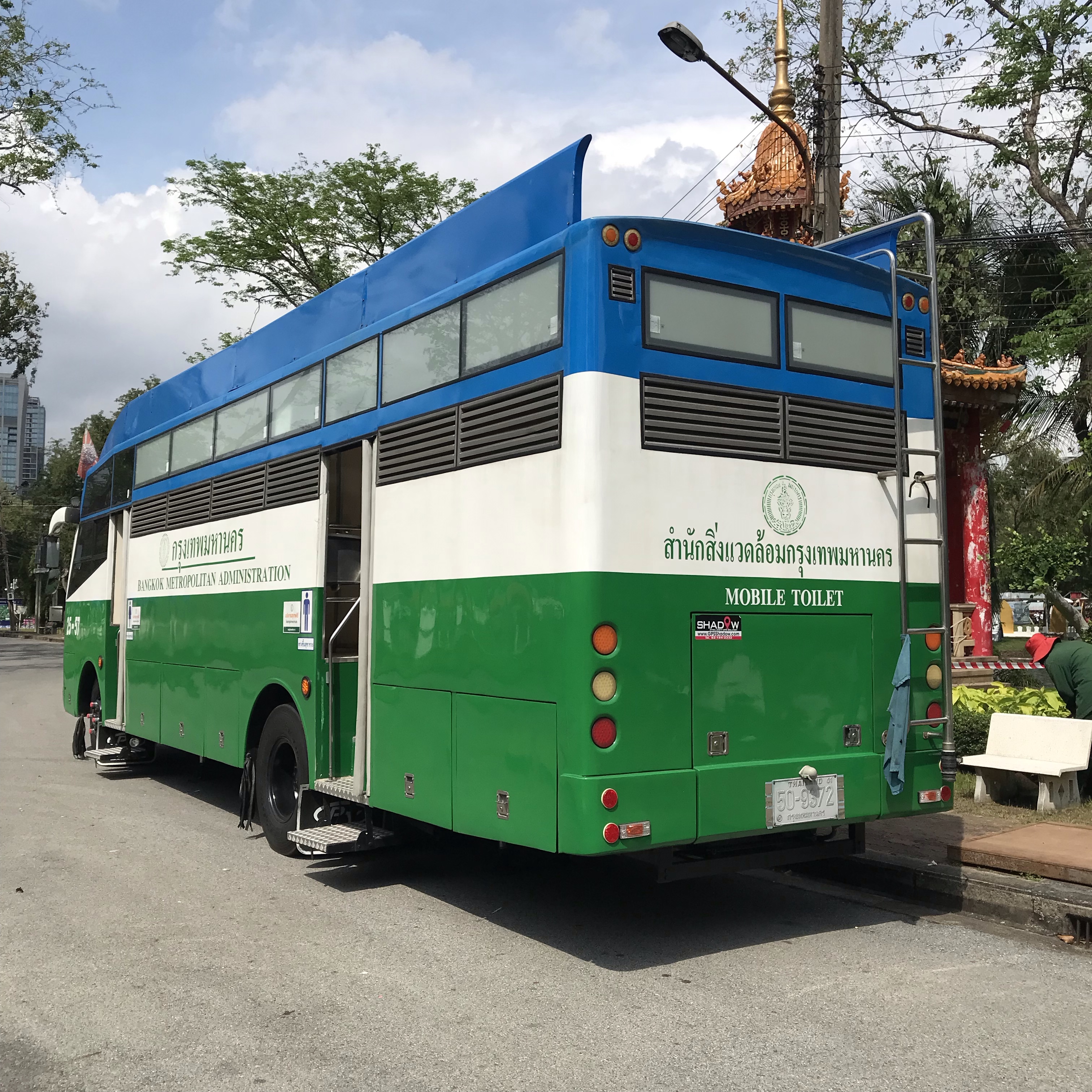
We were in Bangkok, a city of 10+ million people, from 18-25 February and 6-9 March 2022.
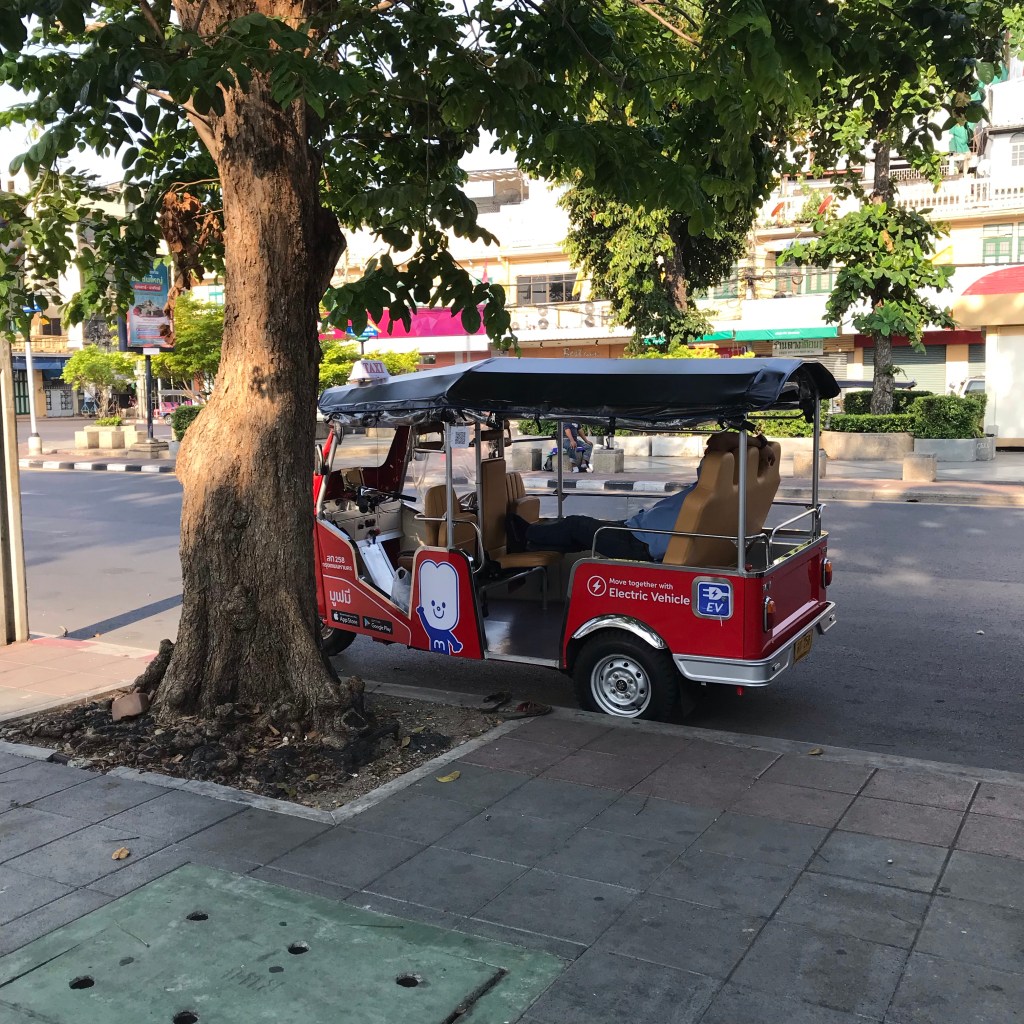
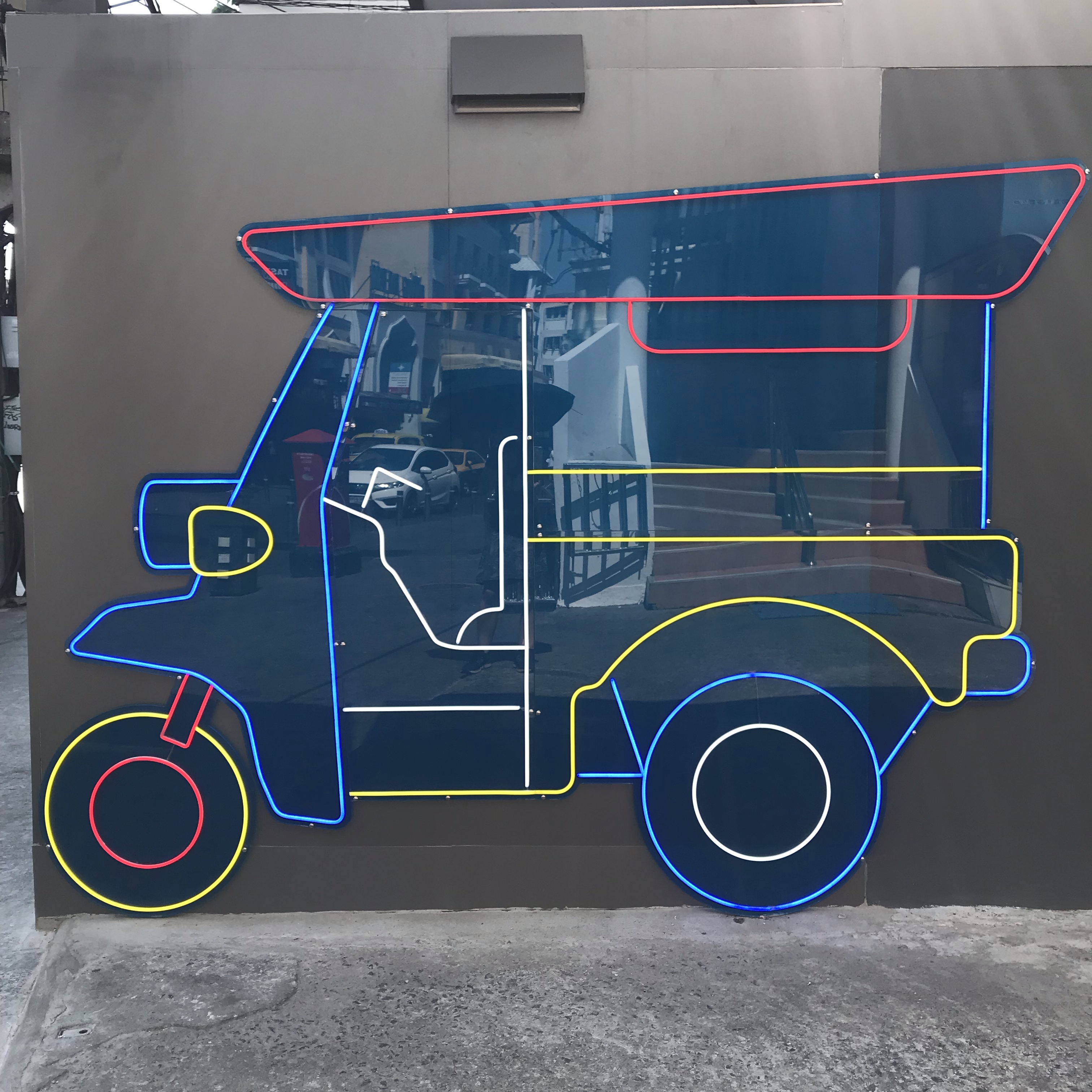
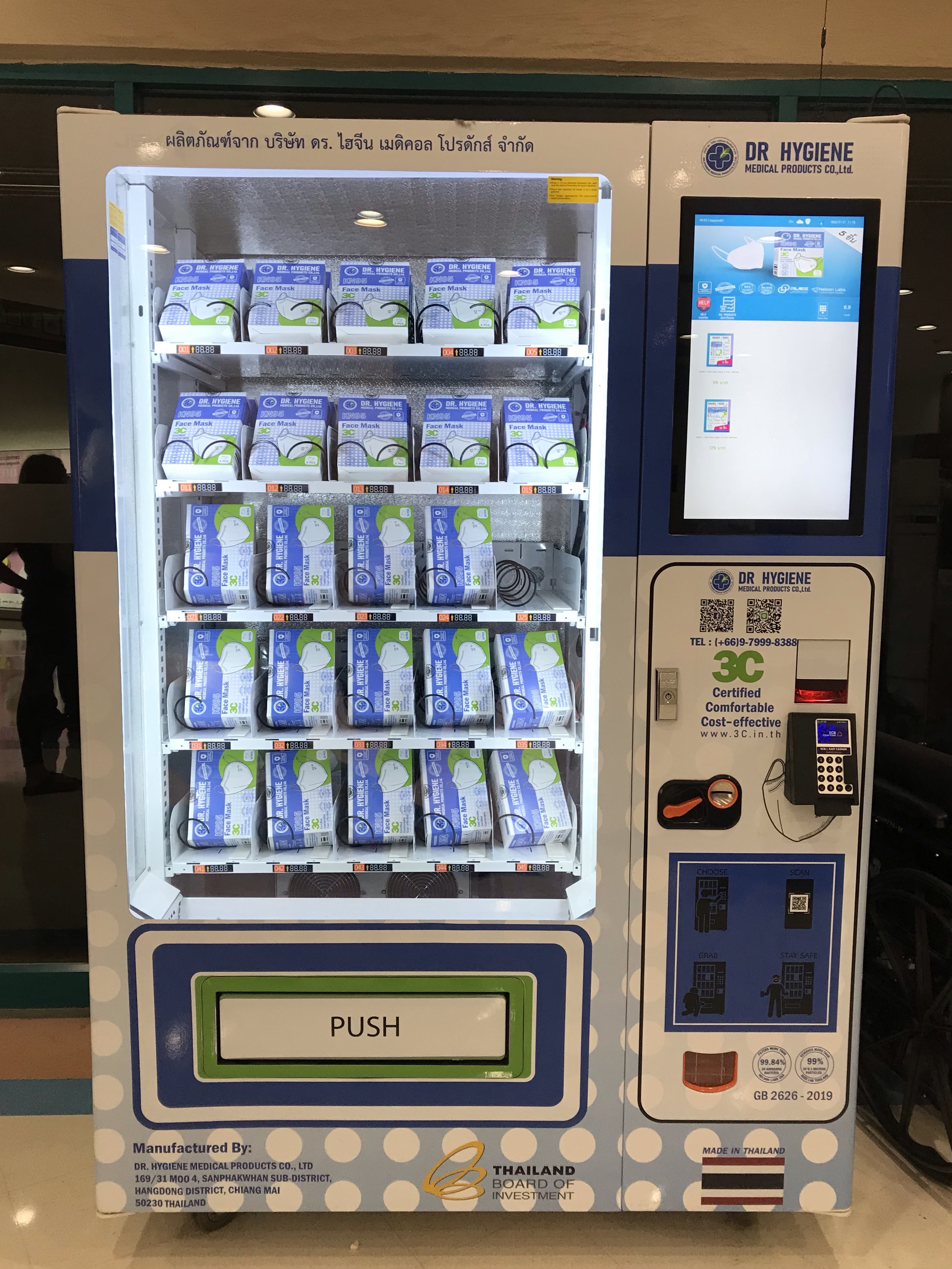
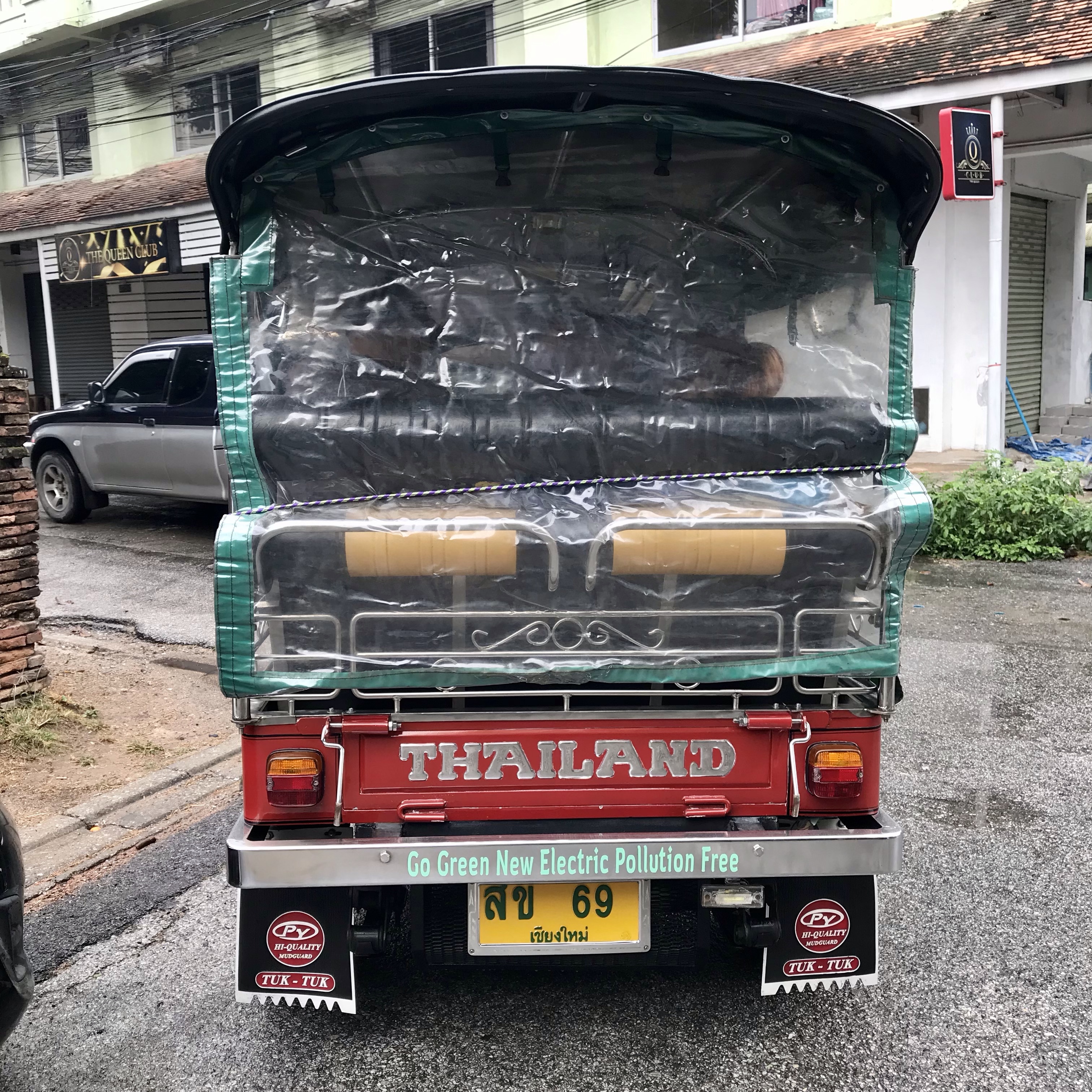
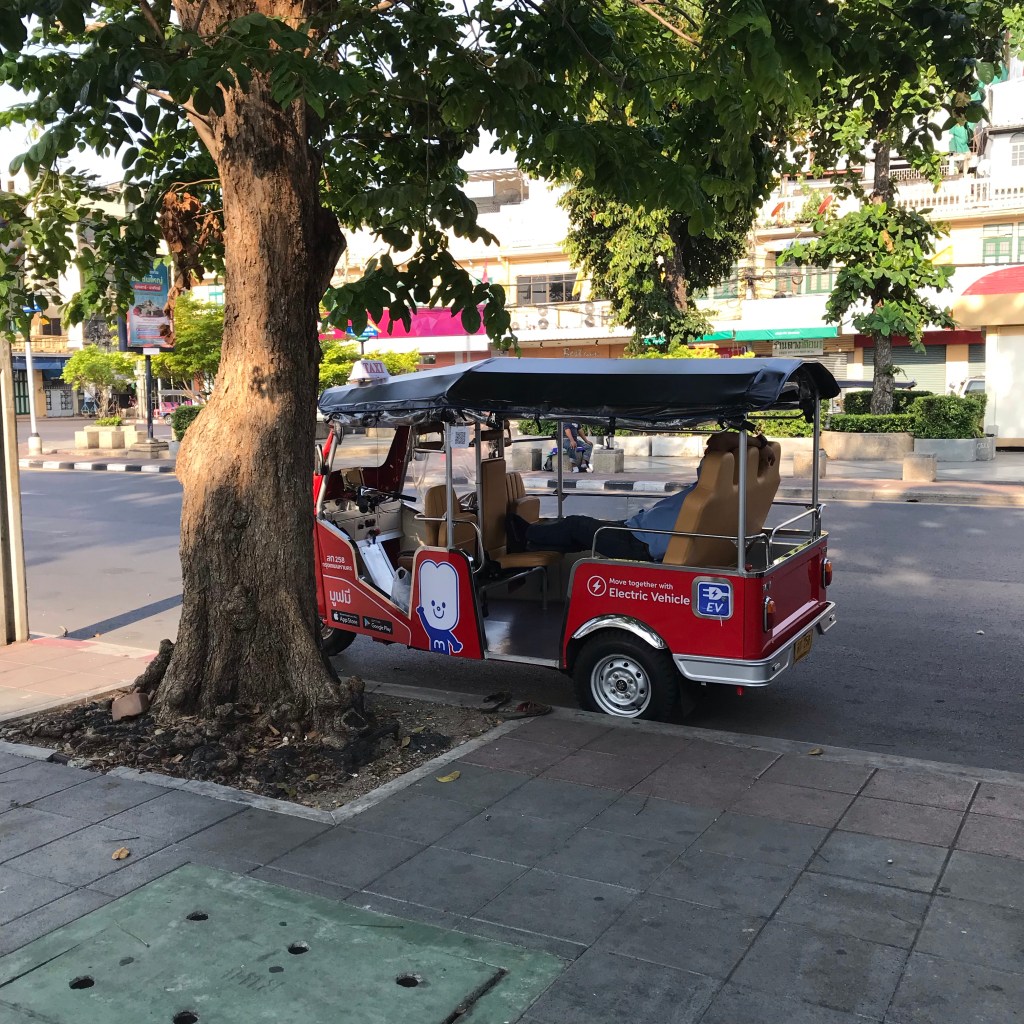
Bangkok has a network of e-tuks available for hire through the MuvMi app. I tried to use the service, but it didn’t seem to be available for the 5 or 6 km journeys that we needed to cover (designed for shorter trips).
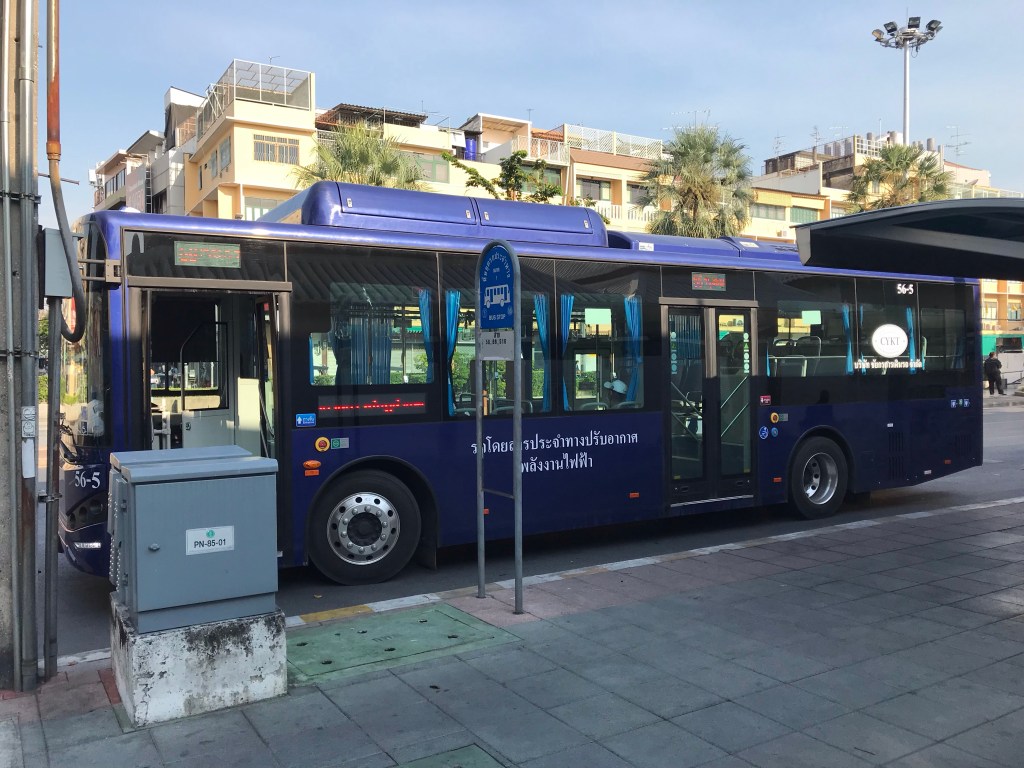
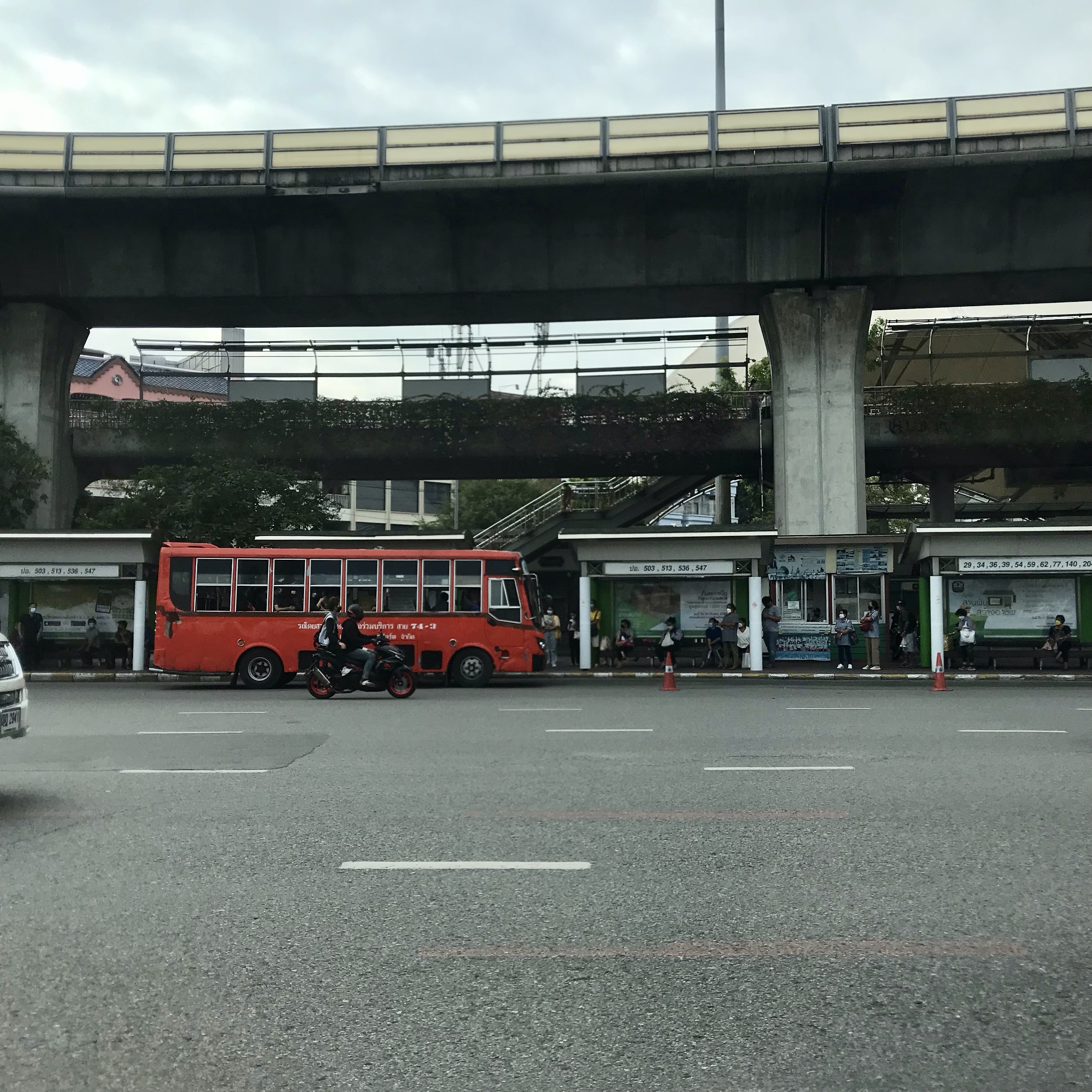
E-tukElectric busses are not the norm yet.
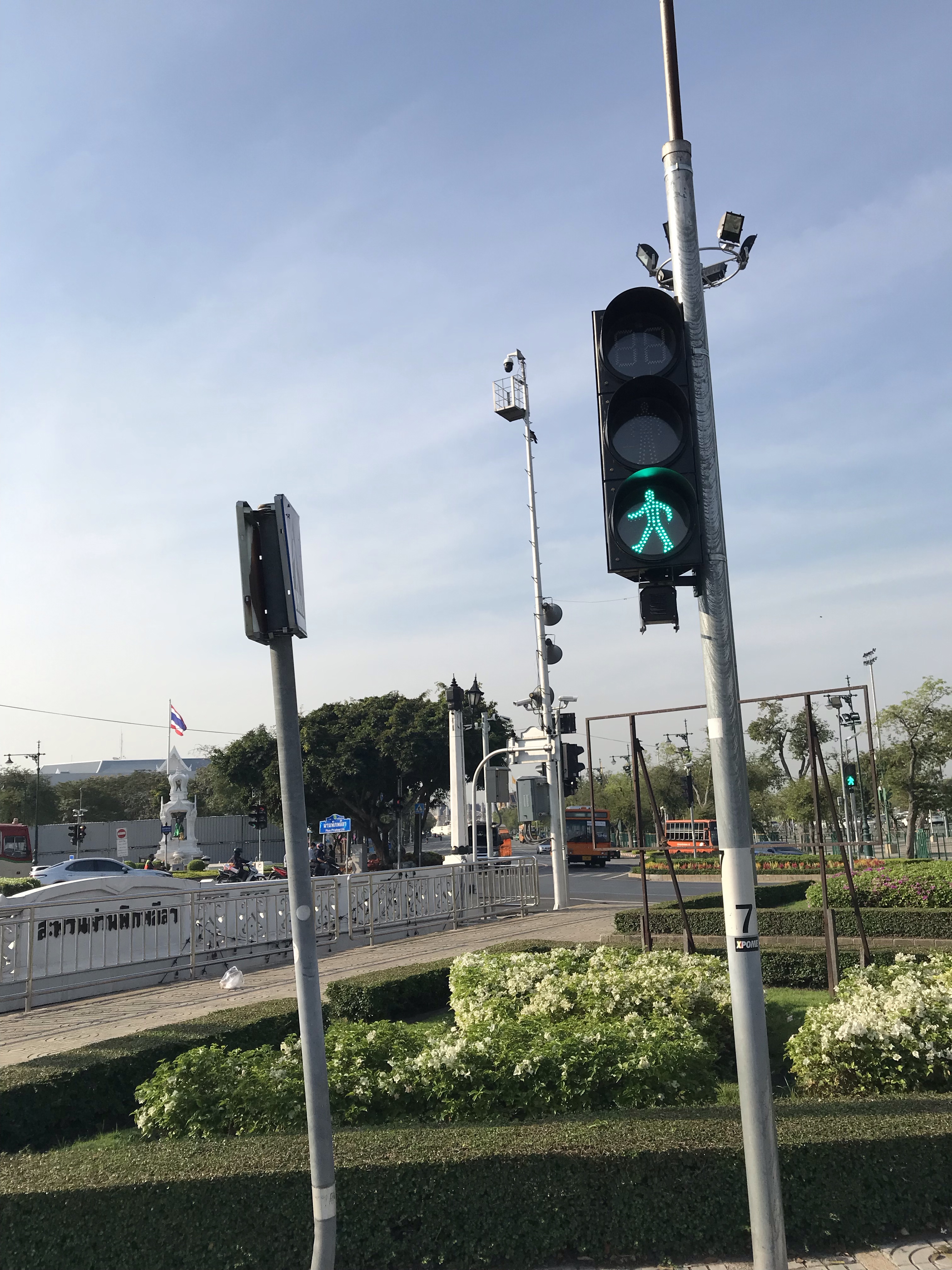
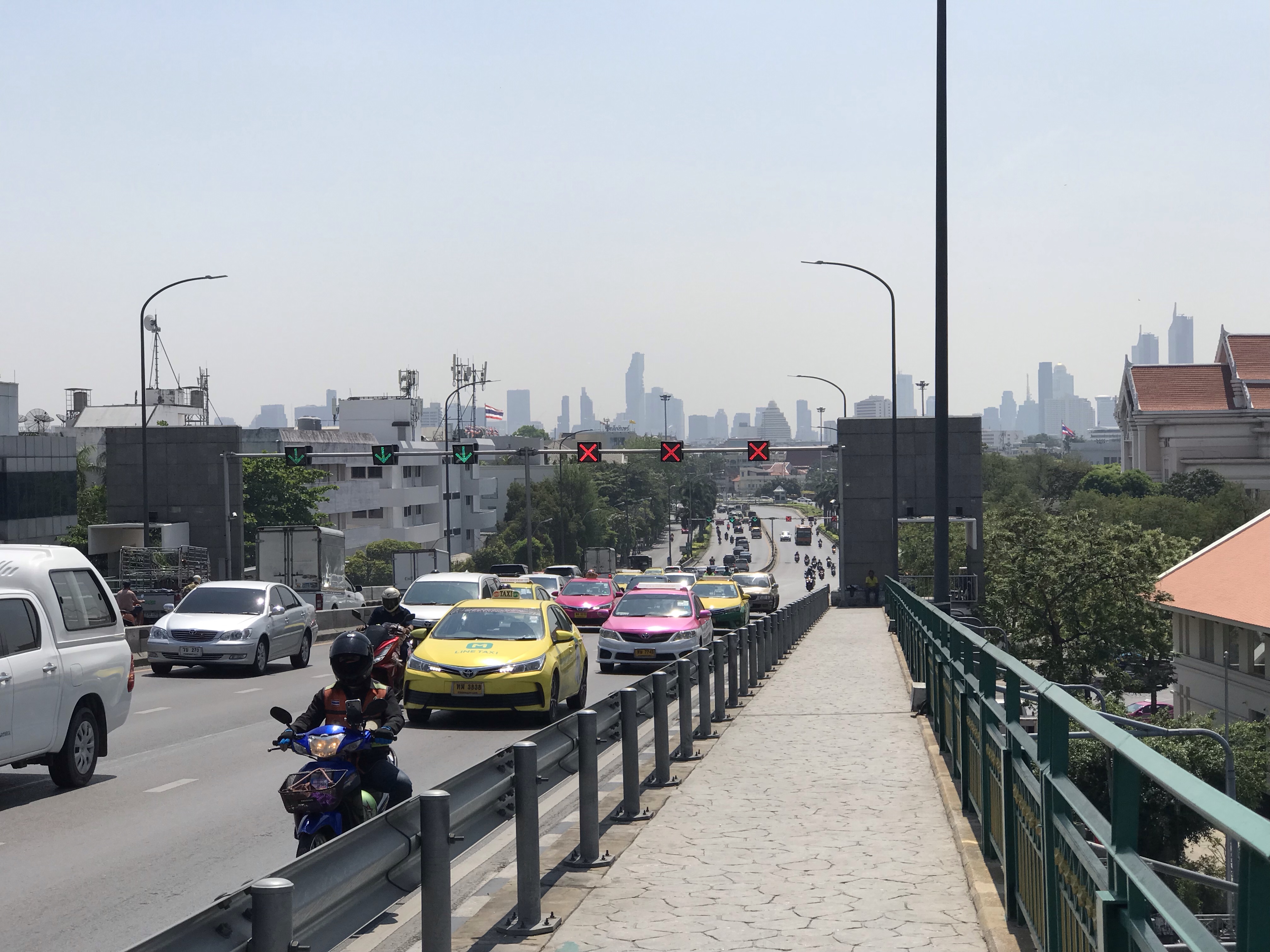
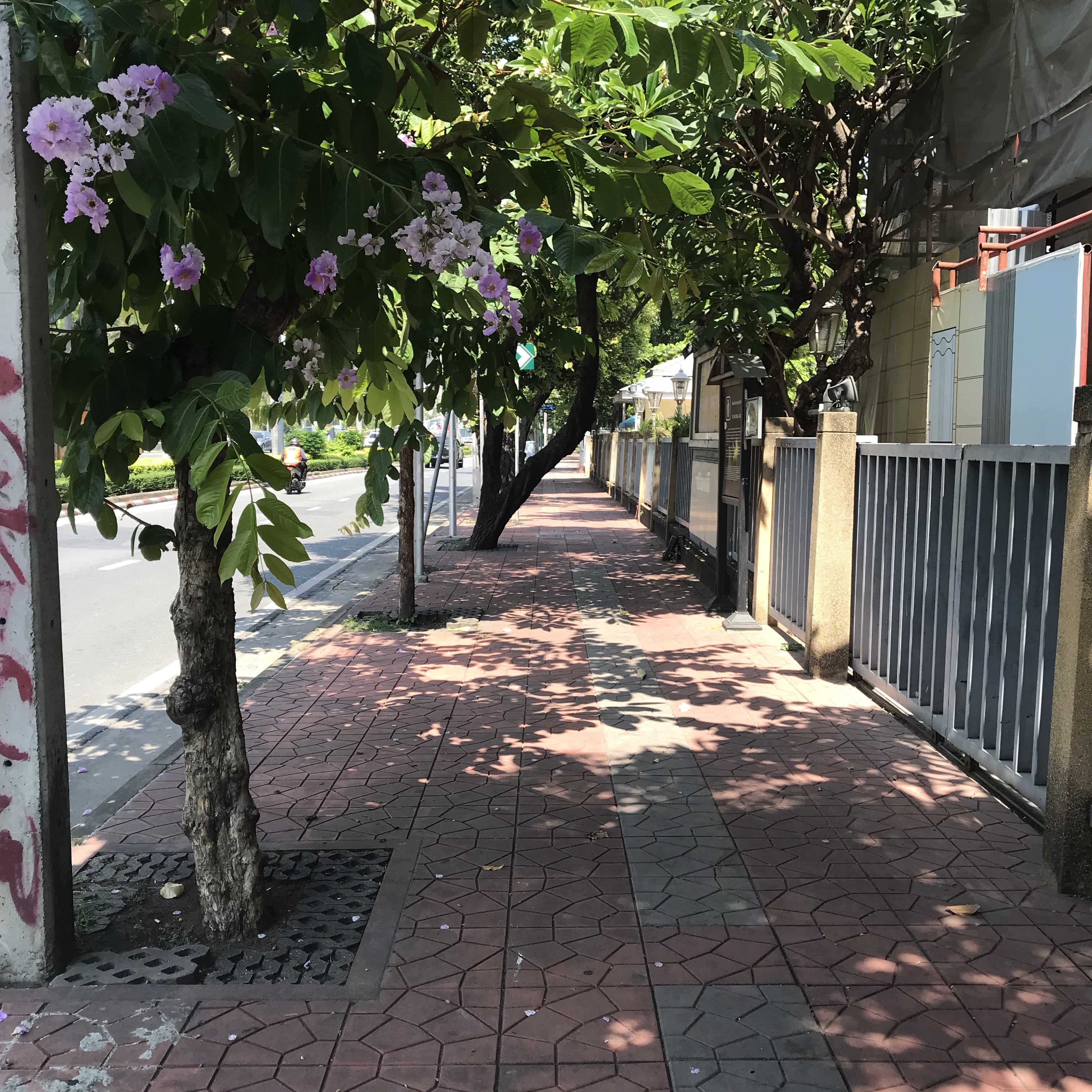
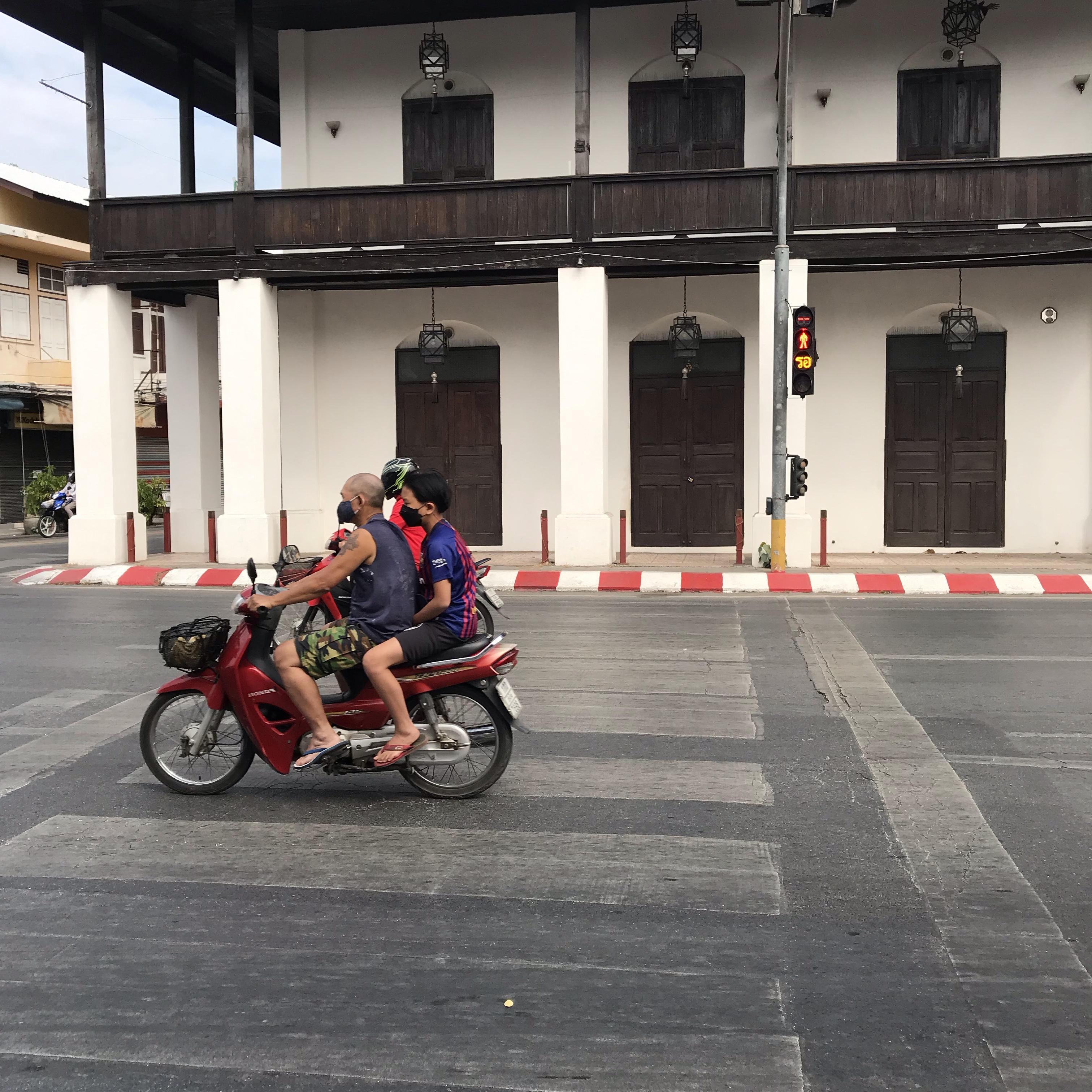
Walking can be tricky in the city, as sidewalks are often narrow or non existent, and crossing the street can feel impossible. The good news is that once you decided to step onto the roadway (at a crosswalk at least) I felt like most drivers were paying attention and would stop. 🤞🏻🤞🏻🤞🏻
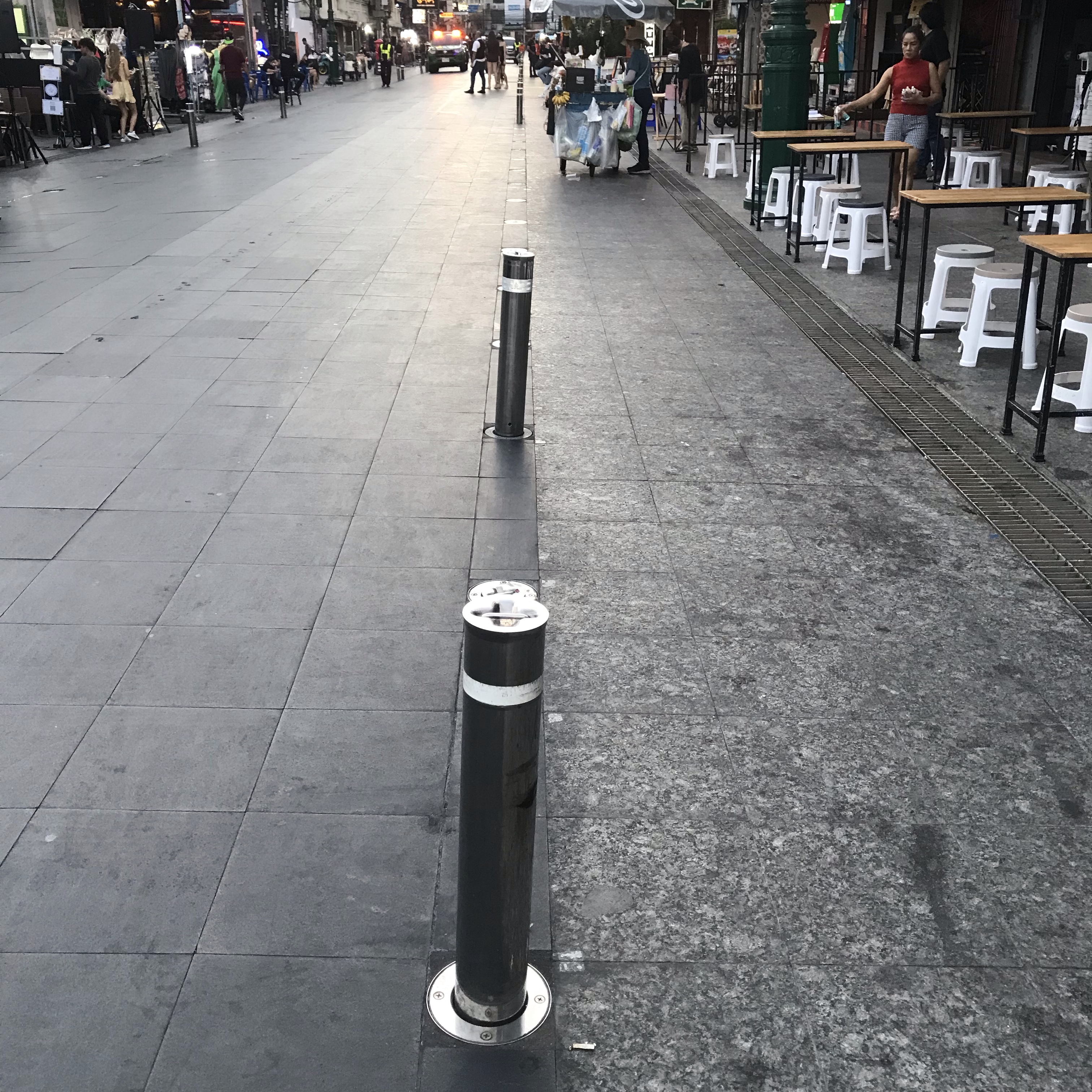
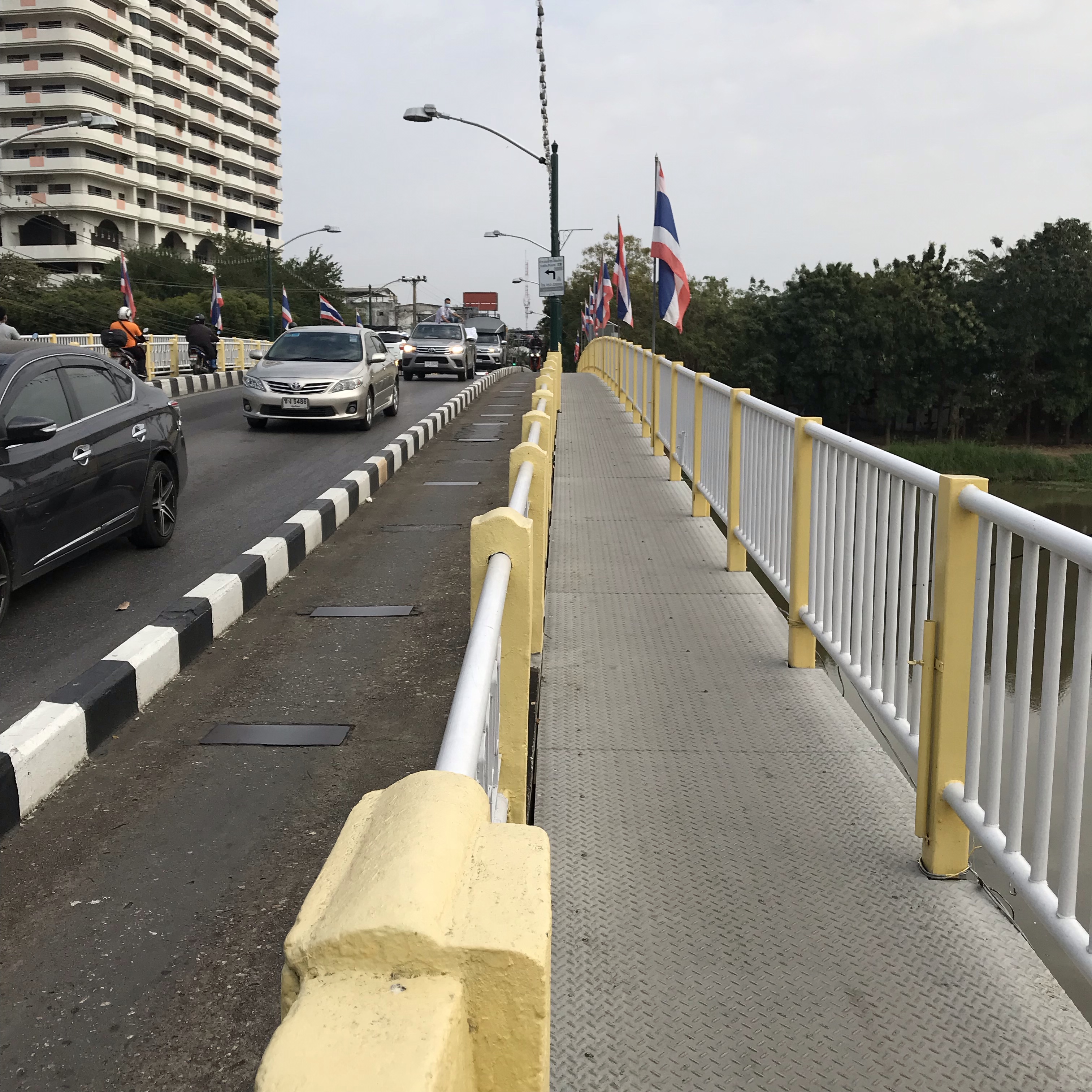
Very useful! Time available to cross is tight.Bridge sidewalk Wide sidewalk near the National GalleryThe lower overpass is a pedestrian walkwayManually retractable bollards on Khao San RoadQueen Sirikit Park is a great escape from the busy streetsDIY speed bump? These were not uncommon in the neighbourhood we stayed in.
I would not cycle in Bangkok (nor would I drive), as I am not familiar with the rules of the road nor the particular cultural driving behaviours, and separate bike paths are not common. I was happy to see some infrastructure for bicycles around though.
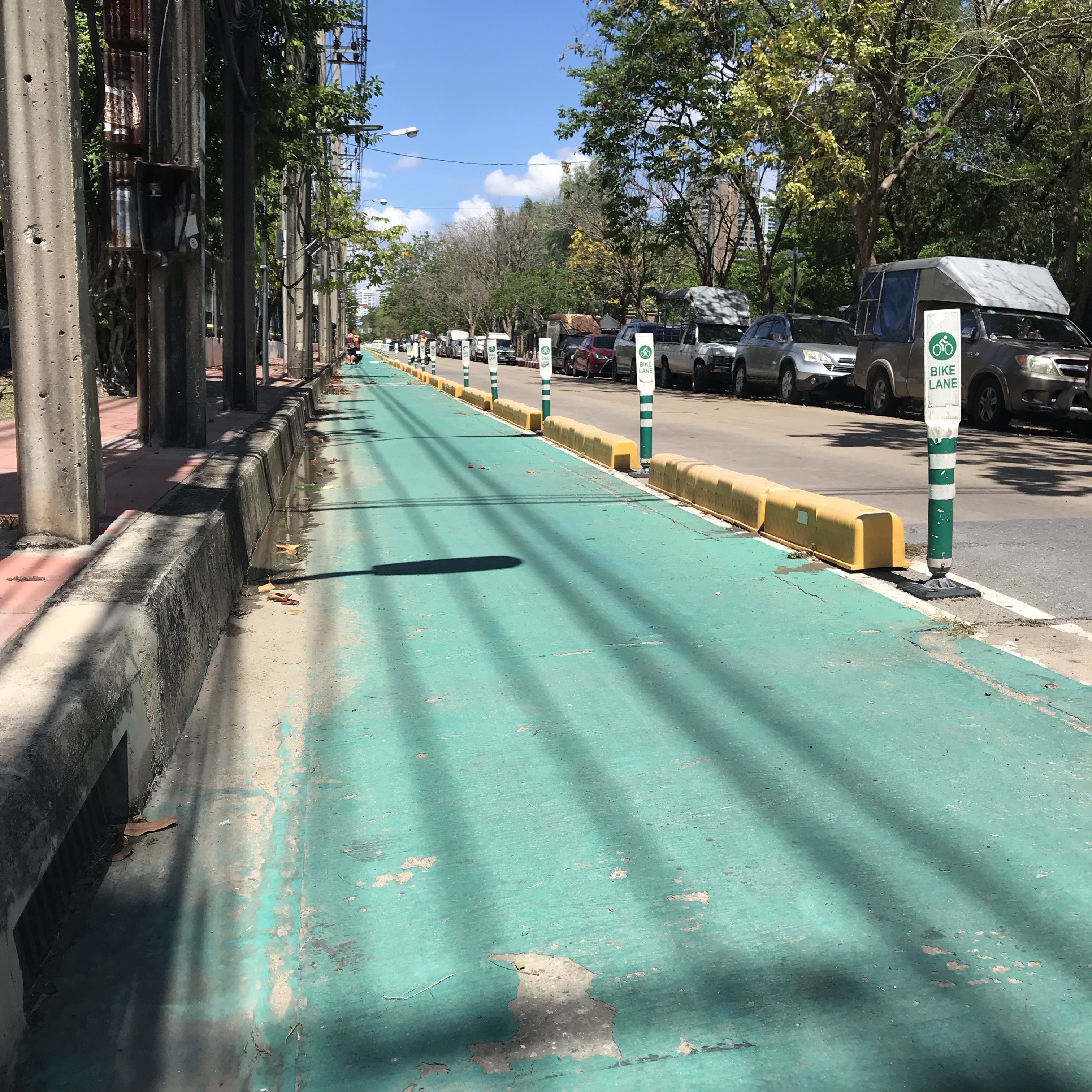
Up to the bridge sidewalk above.Separated bike lane!
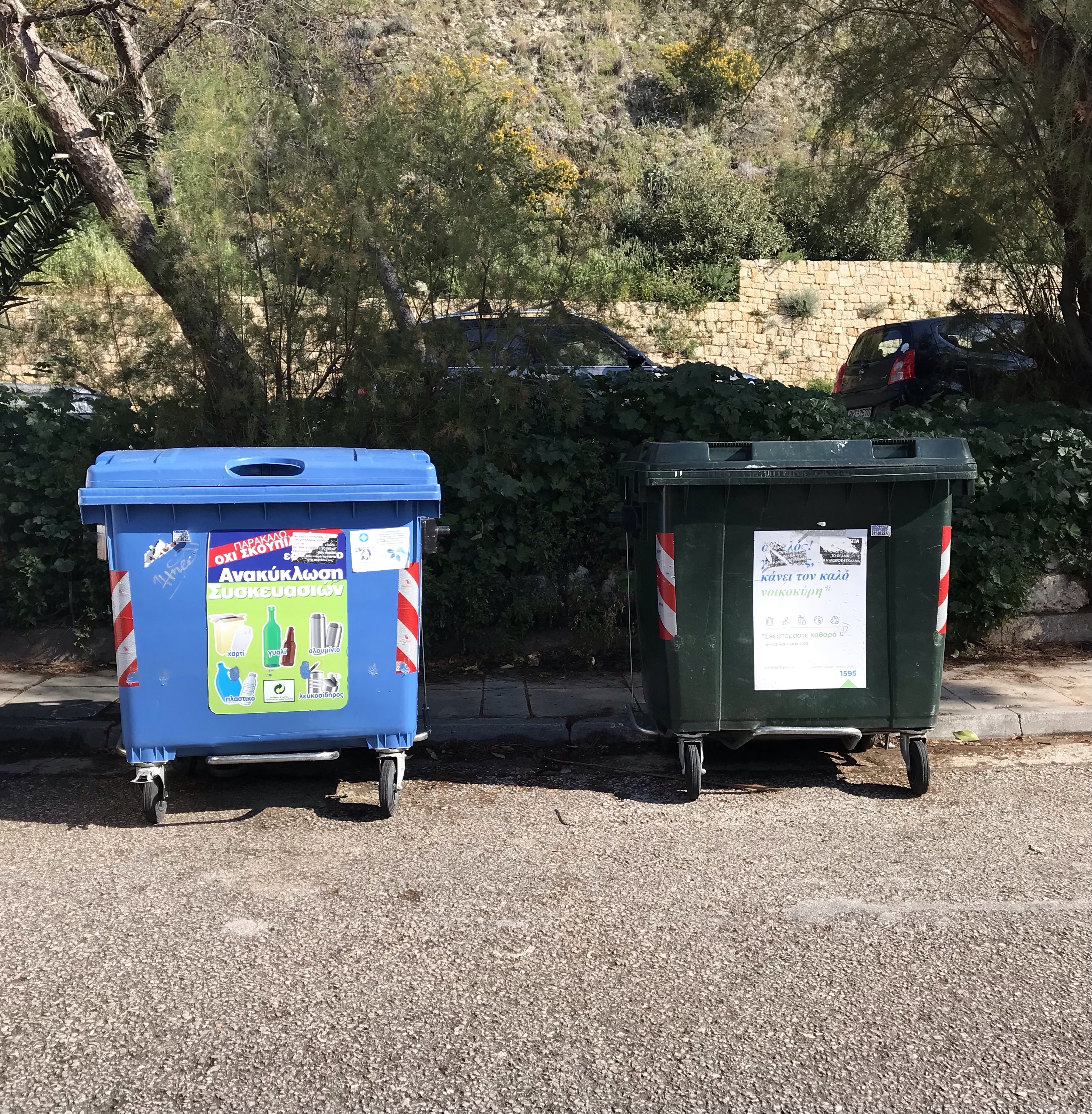
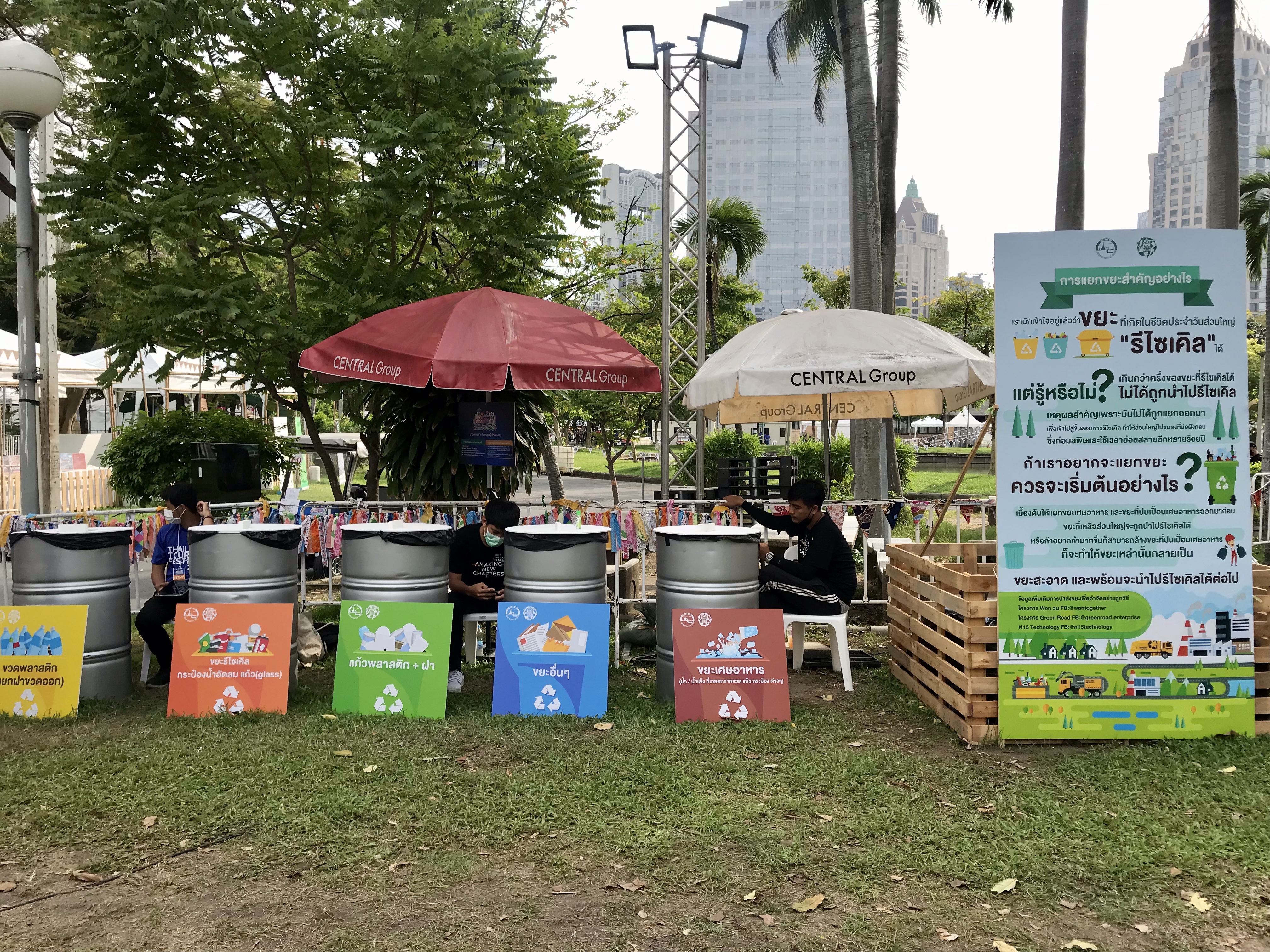
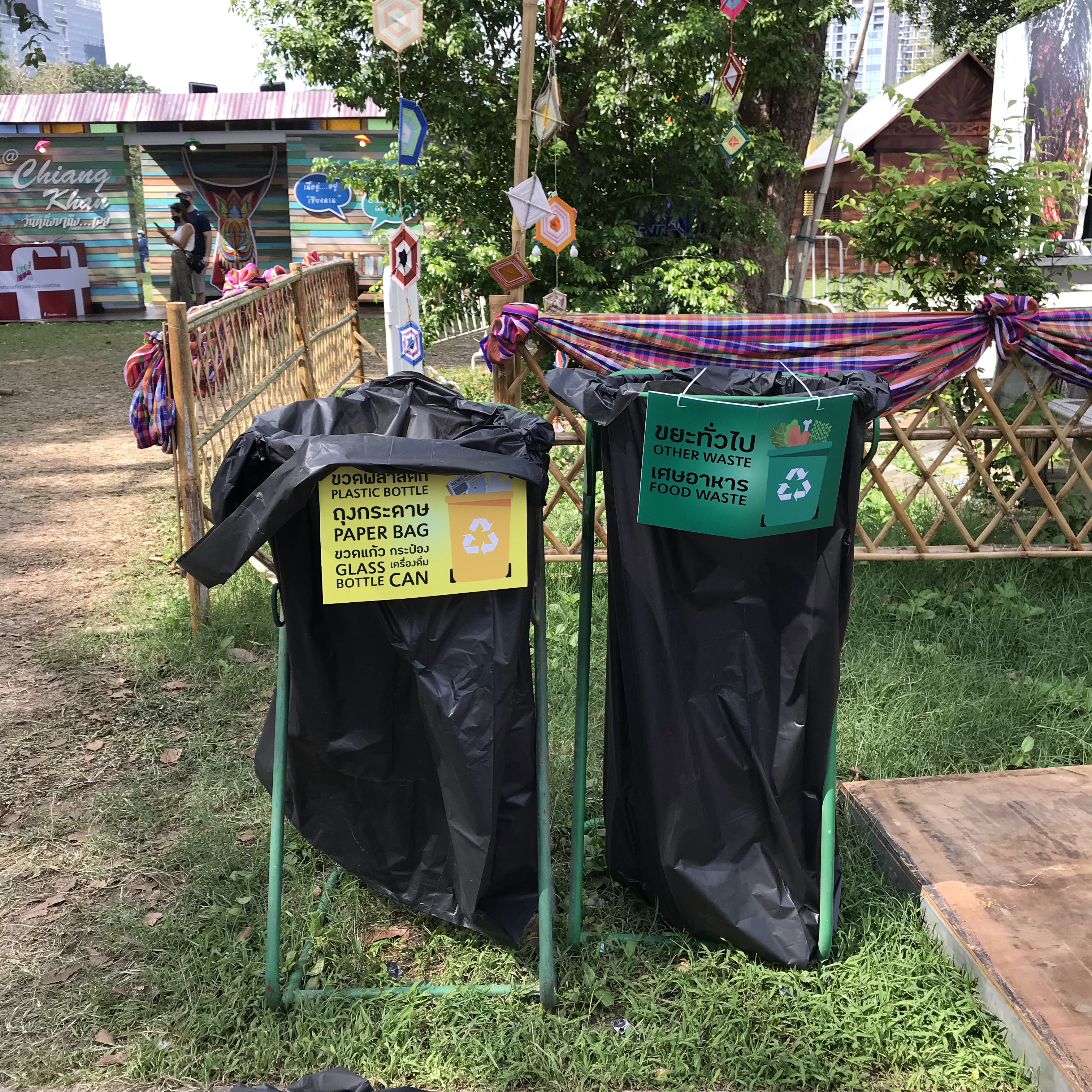
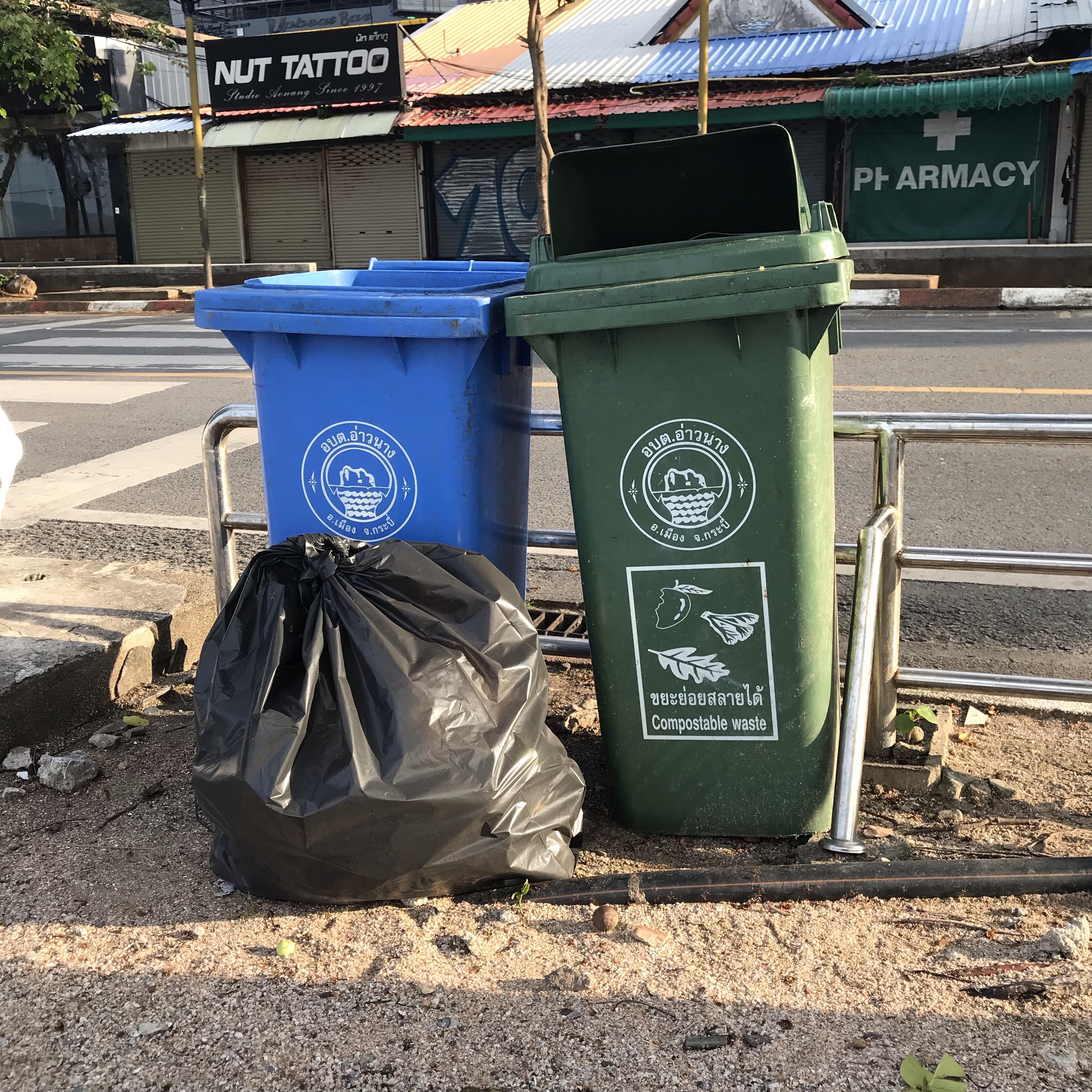
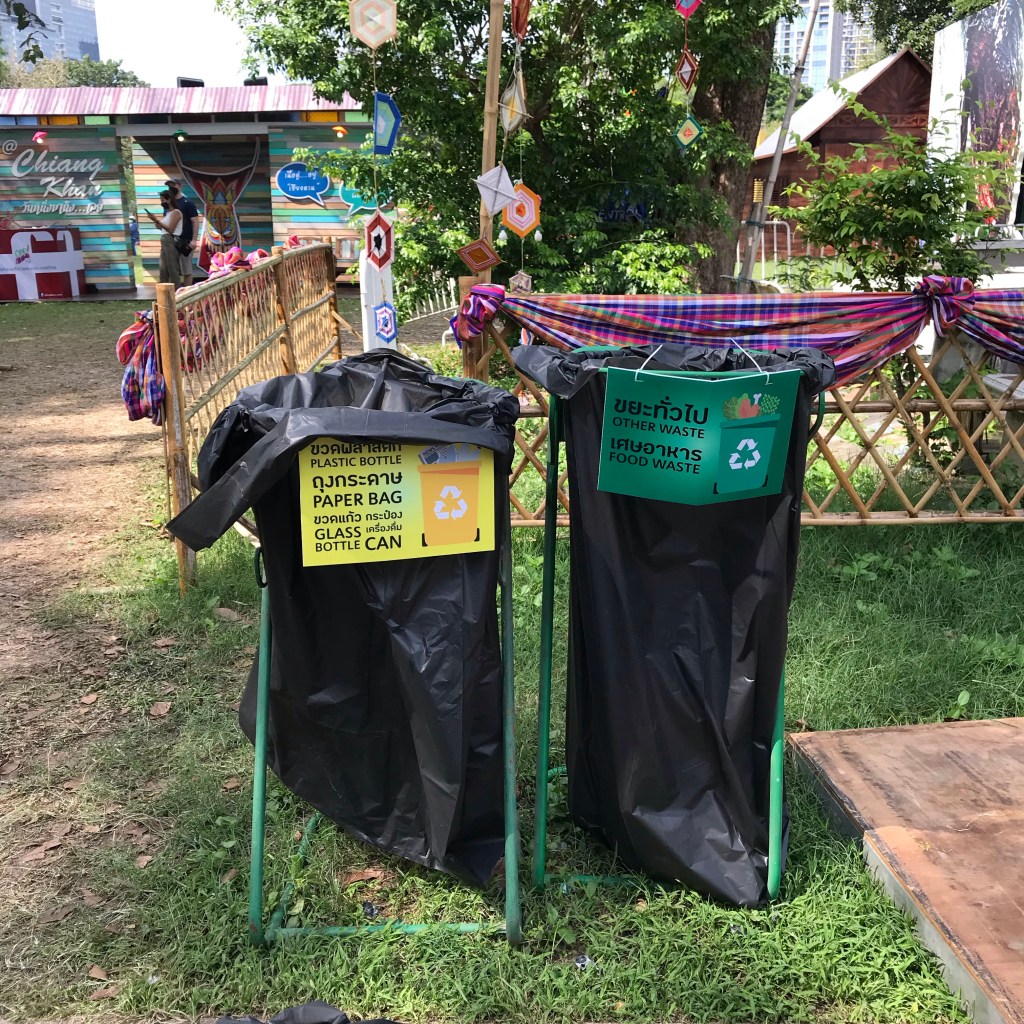
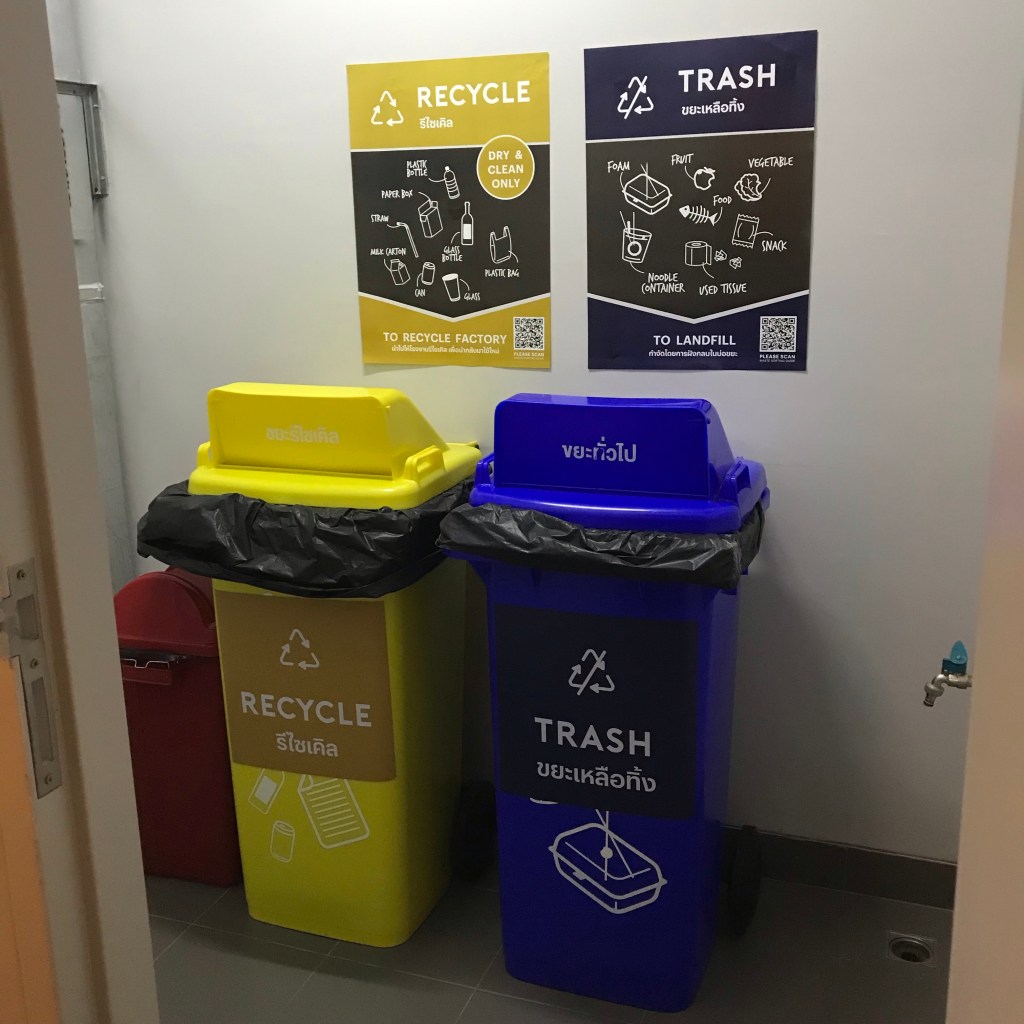
Recycling was not often possible at the hotels we stayed at (beyond water bottles). Perhaps the waste from our rooms was separated later? Clearly the city has the facilities to recycle and compost (but public bins were uncommon).
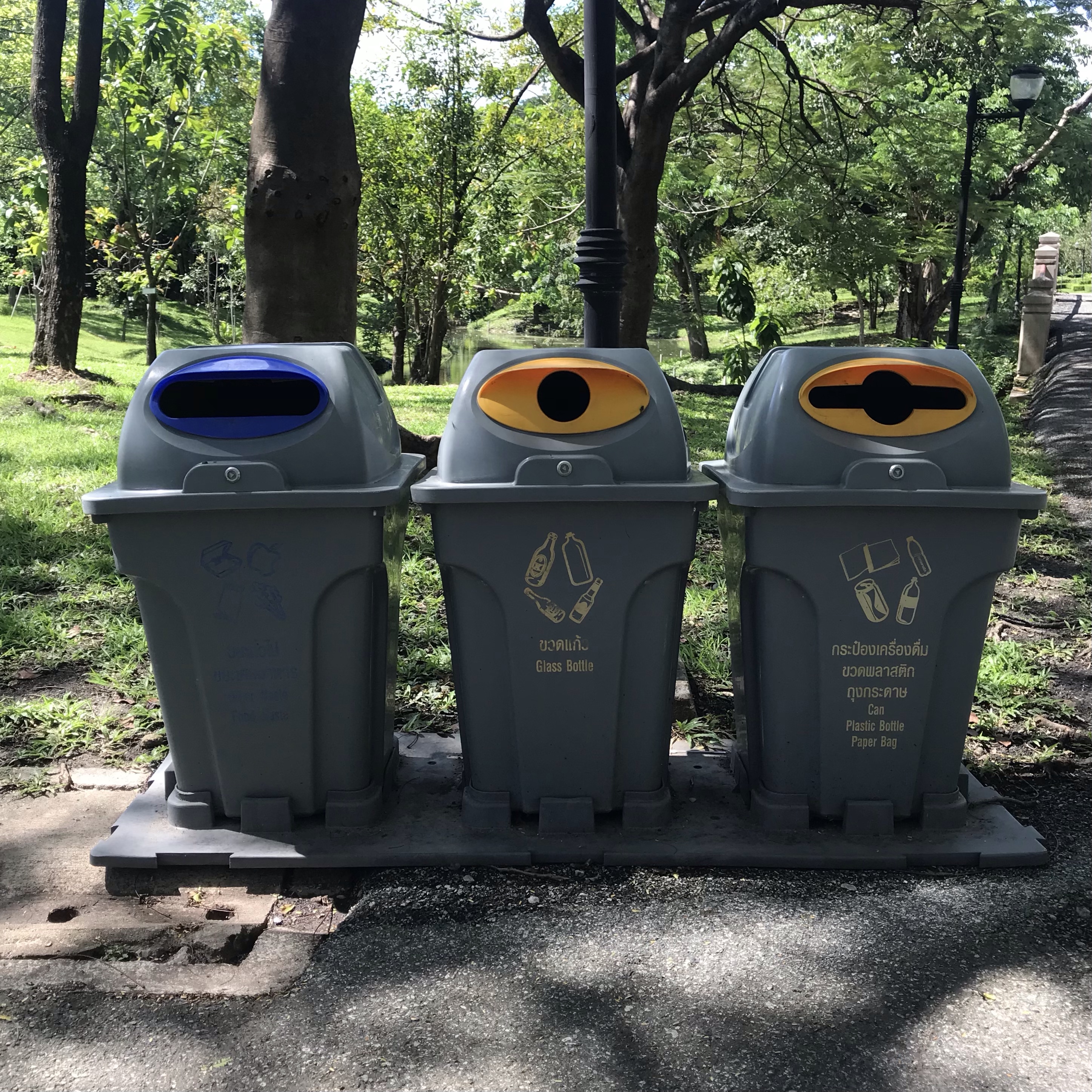
They had a place for every type of waste at the tourism festival at Lumphini ParkQueen Sirikit Park (compost, glass, plastic, paper, cans)
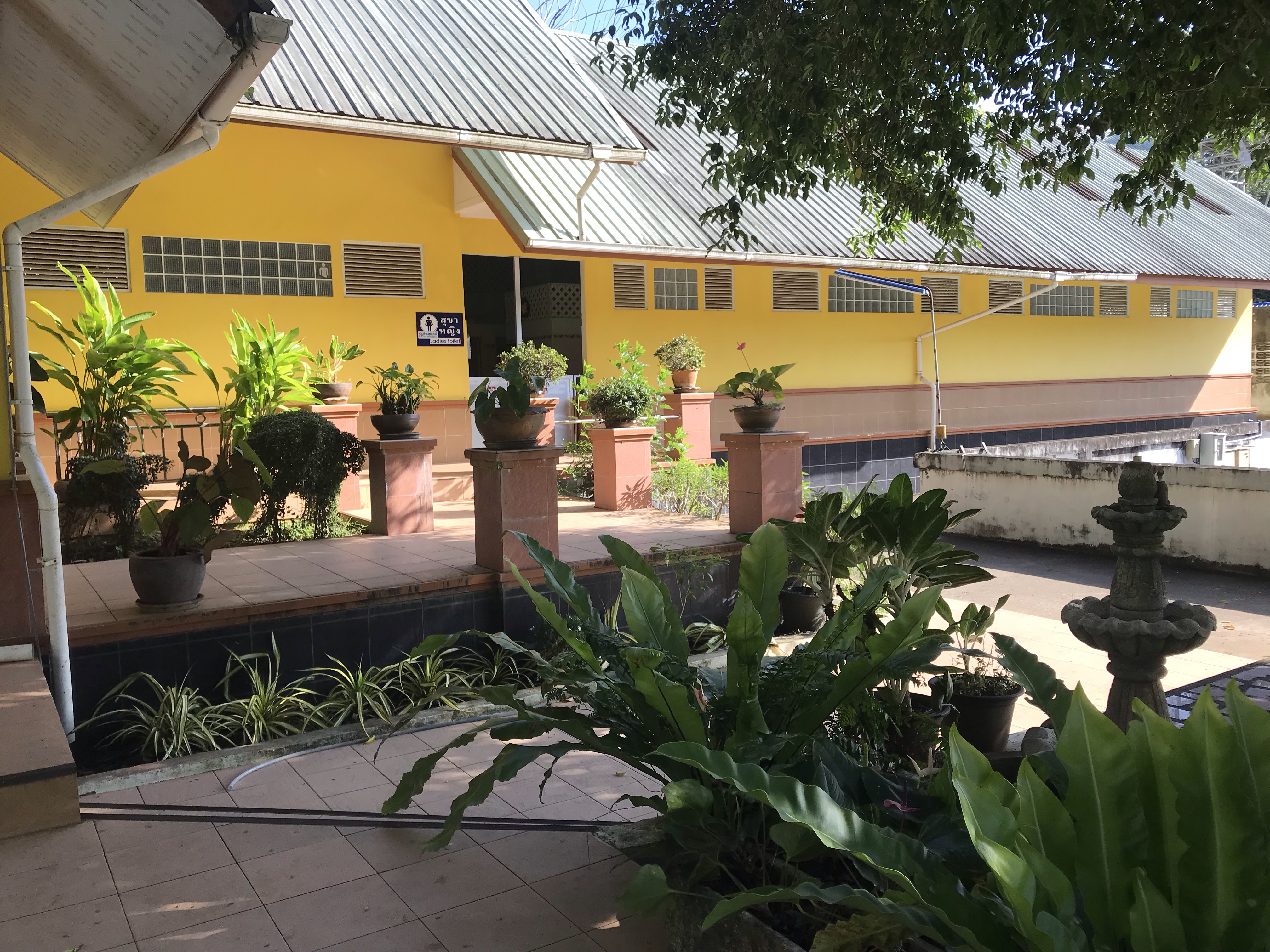
I found finding a free public washroom much easier in Thailand in general than in Europe. (I did have to pay a small fee at Queen Sirikit Park.)
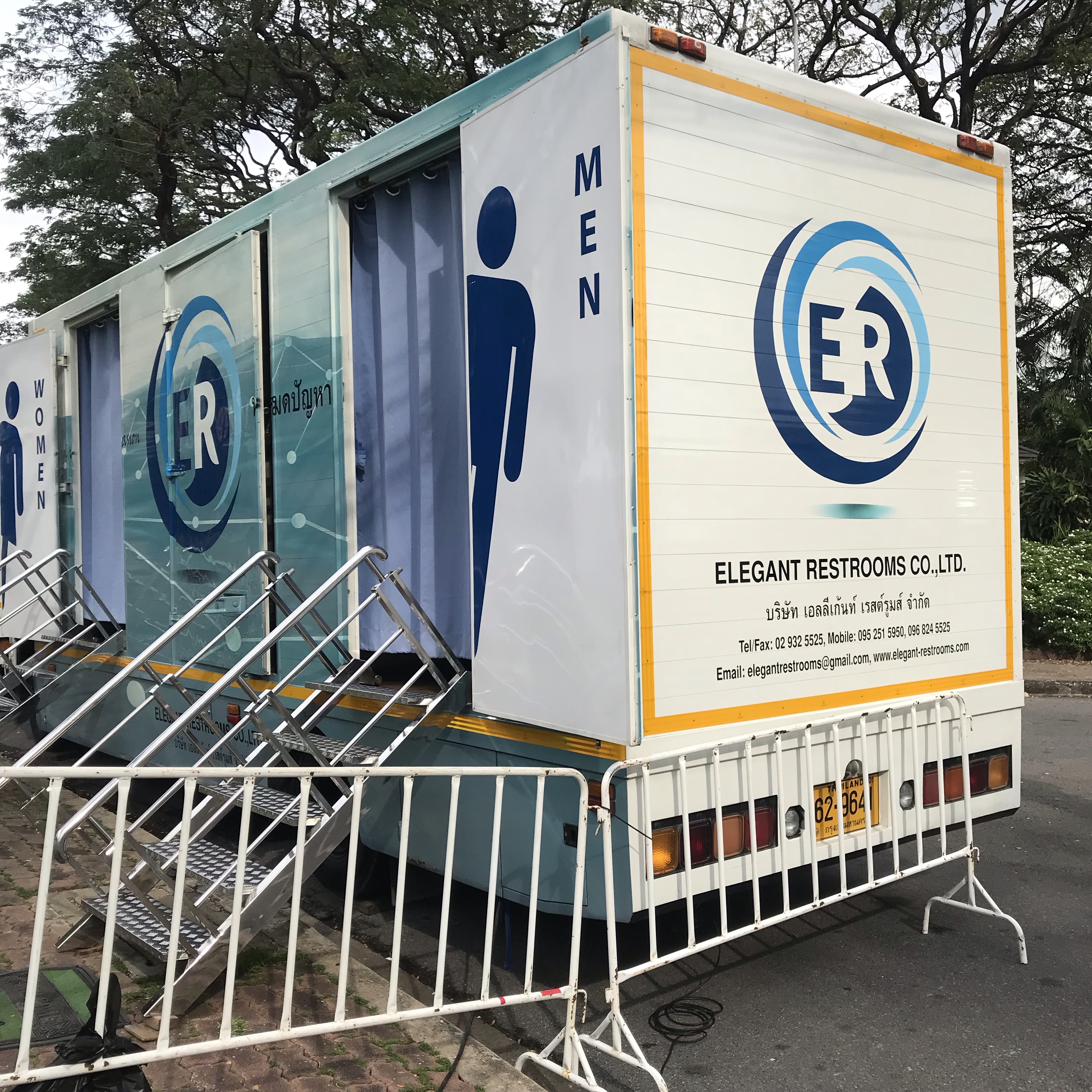
Additional washrooms for tourism festival at Lumphini park.
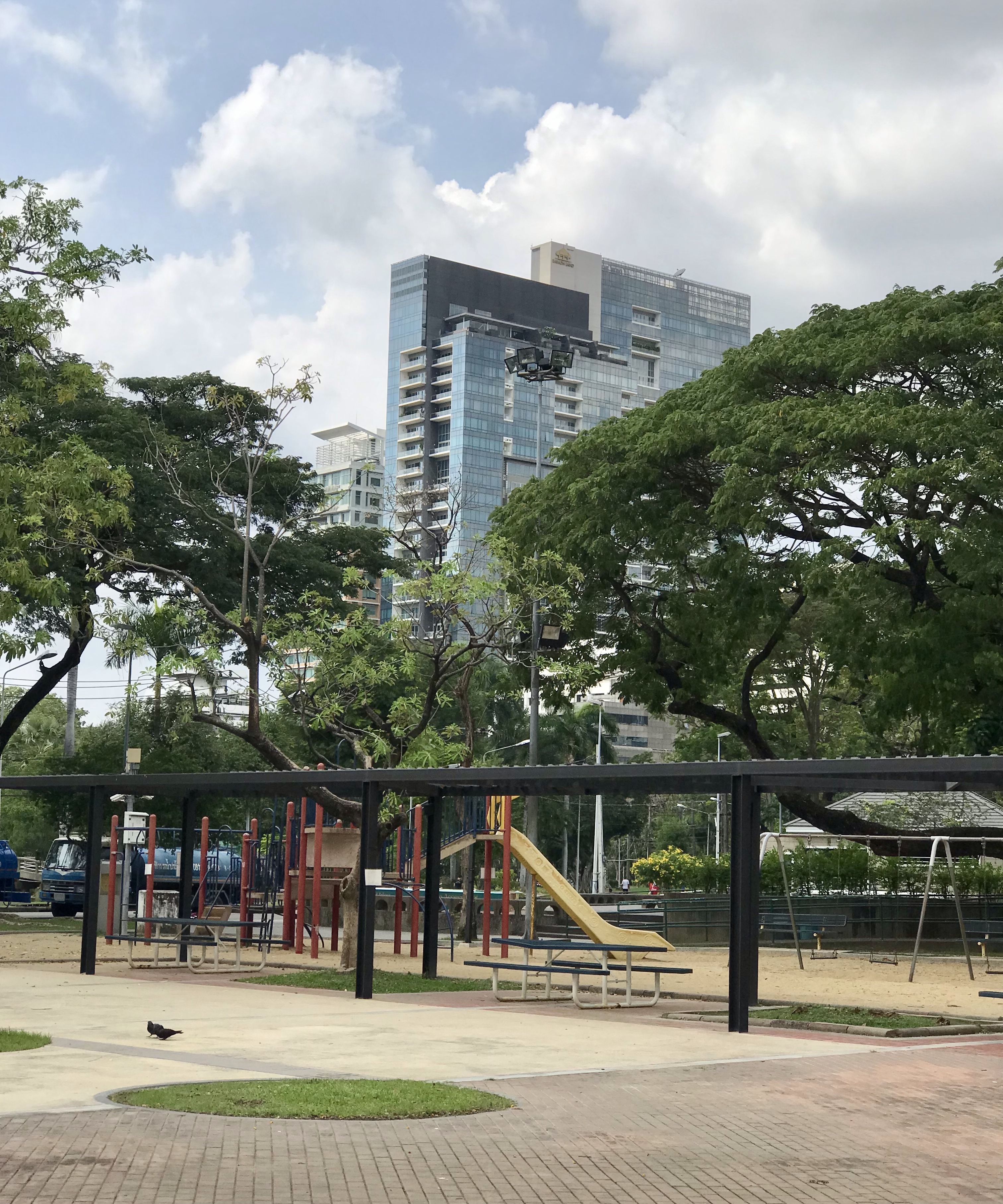
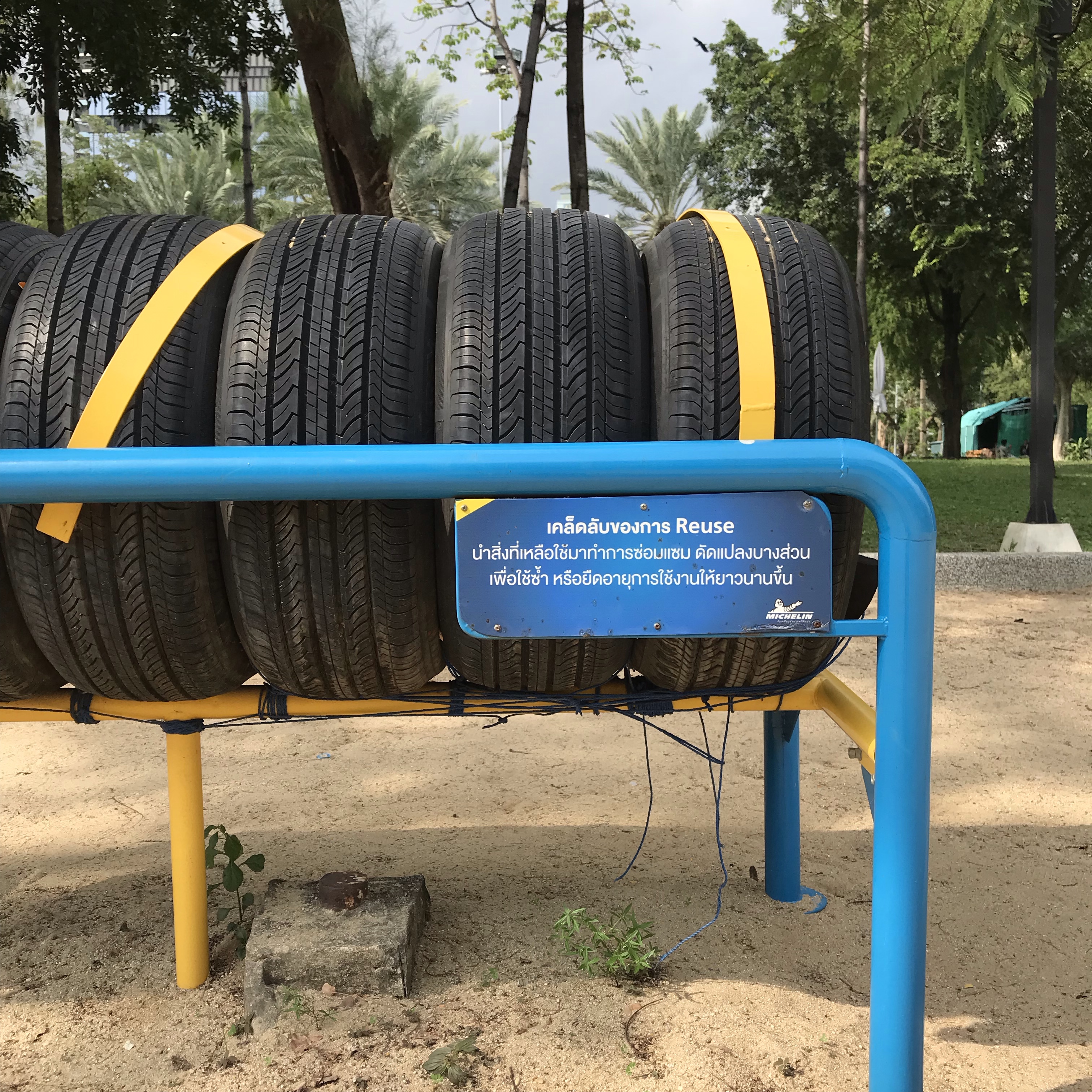
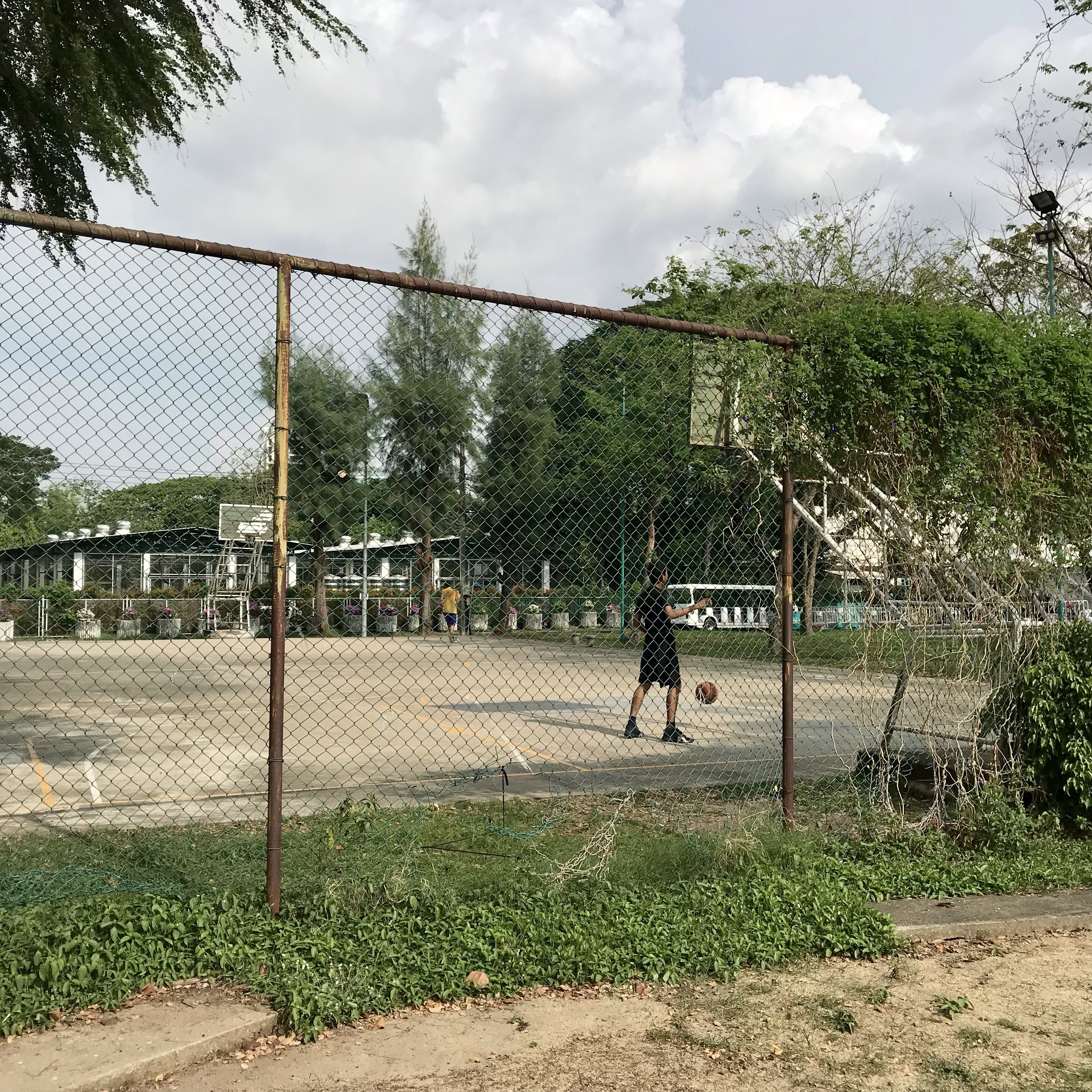
Lumphini Park has a playground (albeit sponsored by Michelin), a bball court, a gym and of course, free public toilets.
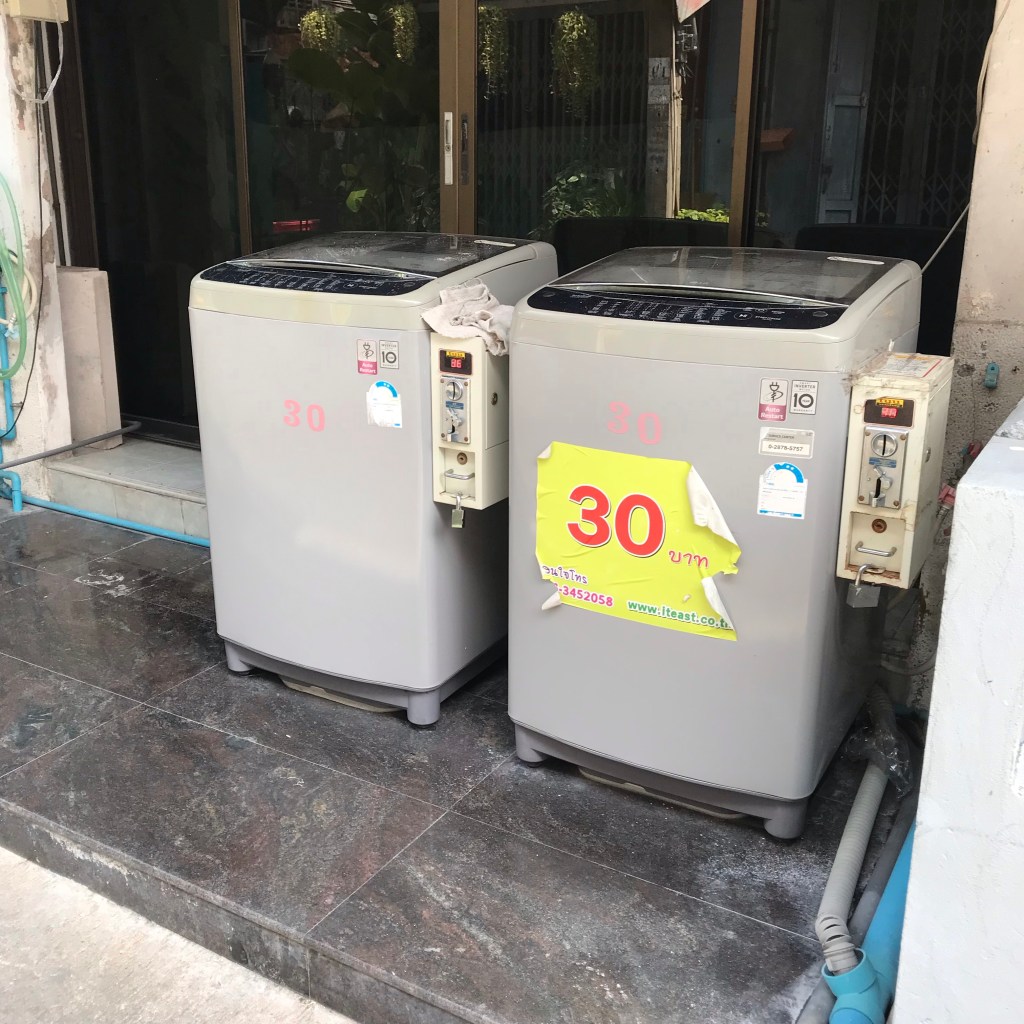
I love public laundry facilities and am now used to hanging our clothes to dry. I’ll be investing in a good indoor drying rack (in addition to our clothes line) so we can use our dryer less often when we get home.
About $1 to per load (30 THB).
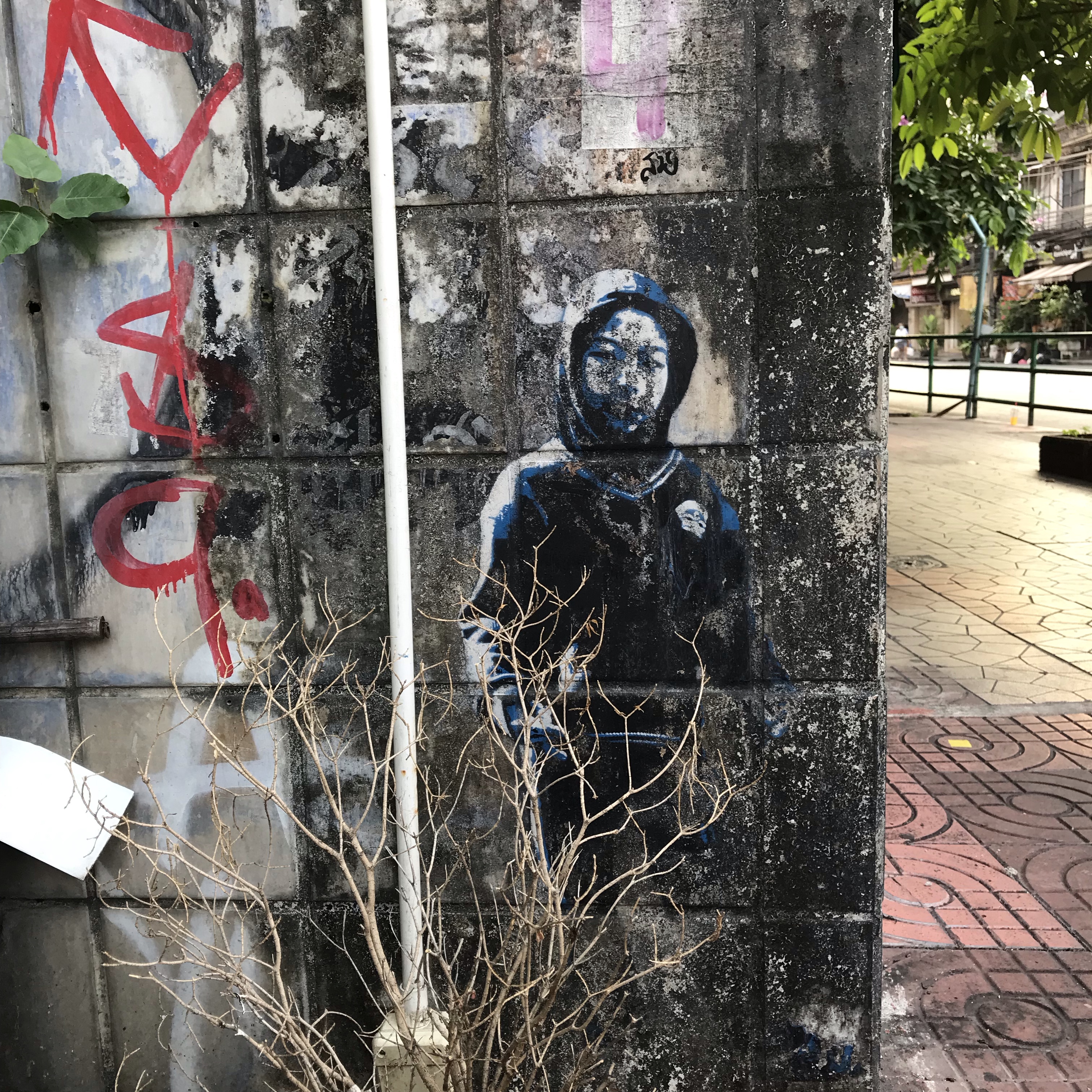
And finally, a few examples of public art. We saw the same picture of this boy in Chiang Mai.
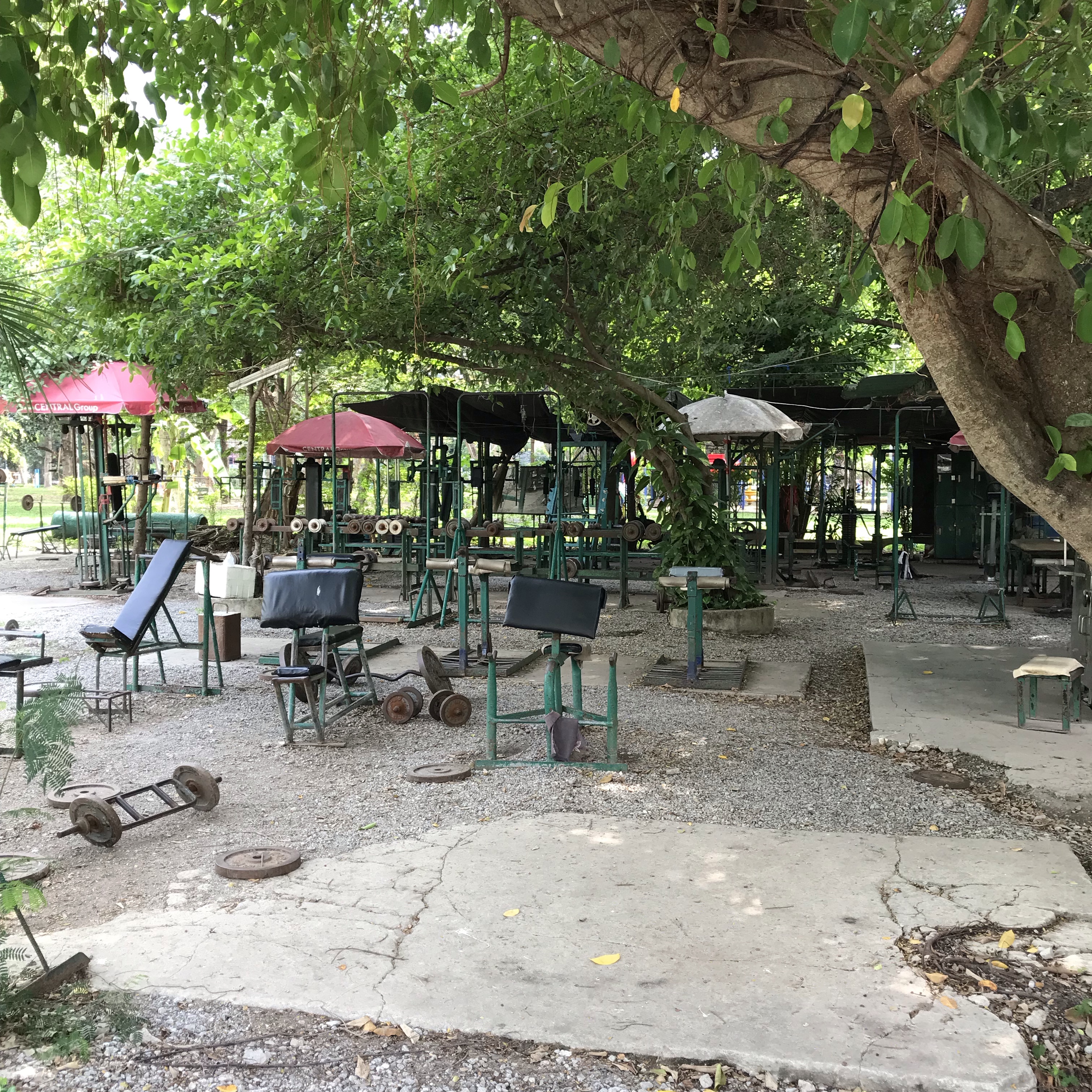
We spent nearly 3 weeks in Chiang Mai. In general I found the city a bit restrictive because there are very few parks and sidewalks are crowded. Here are the highlights from the parks we did spend some time in:
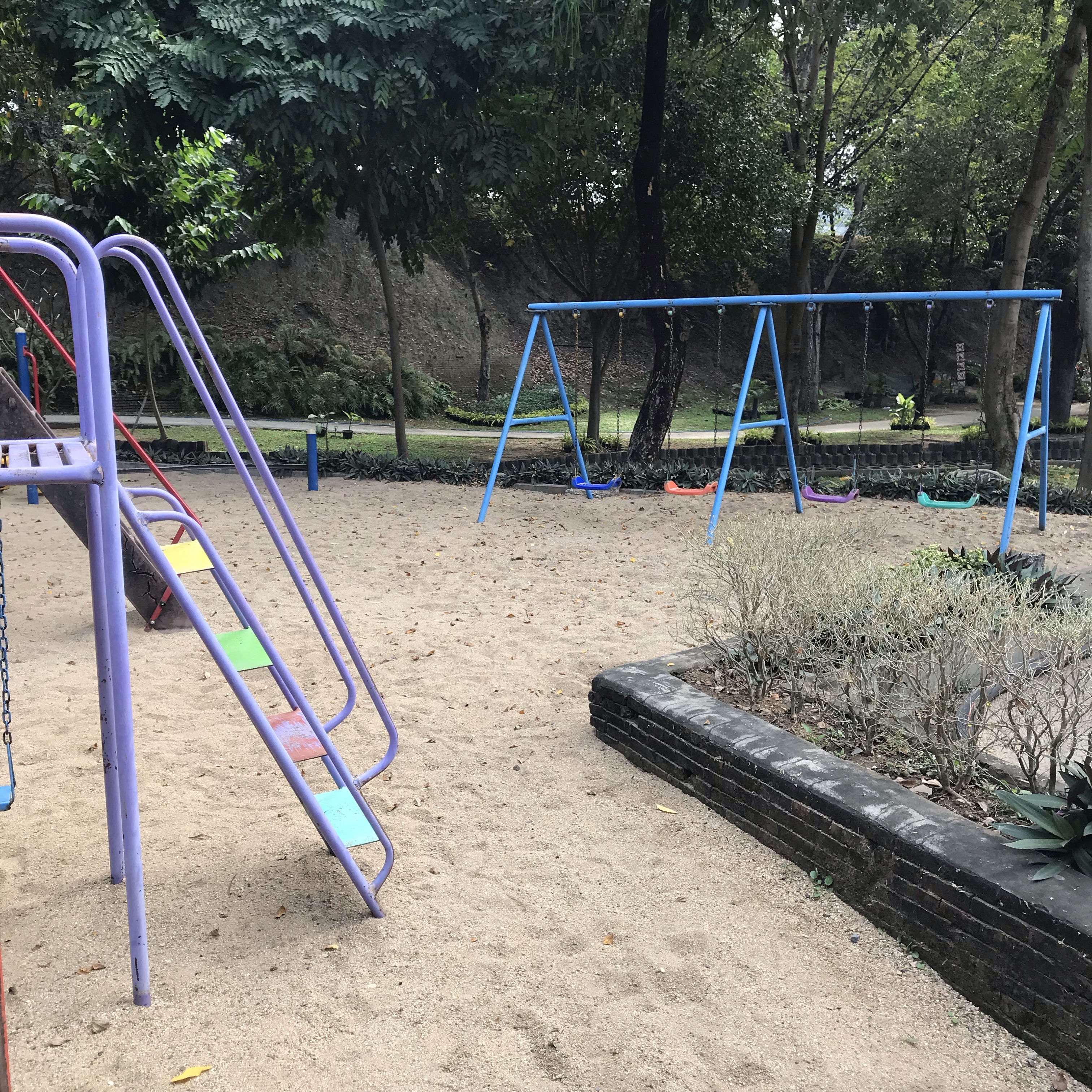
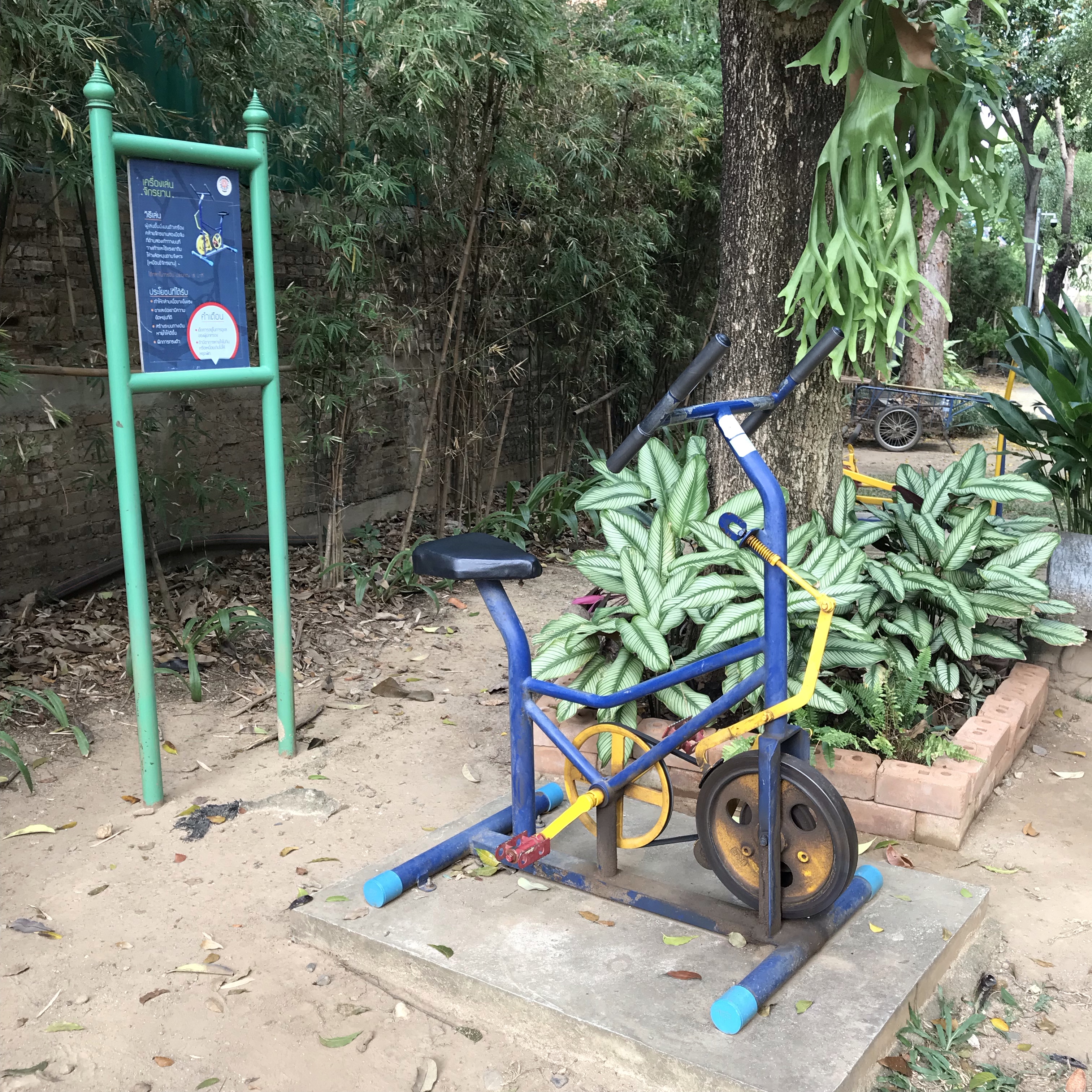
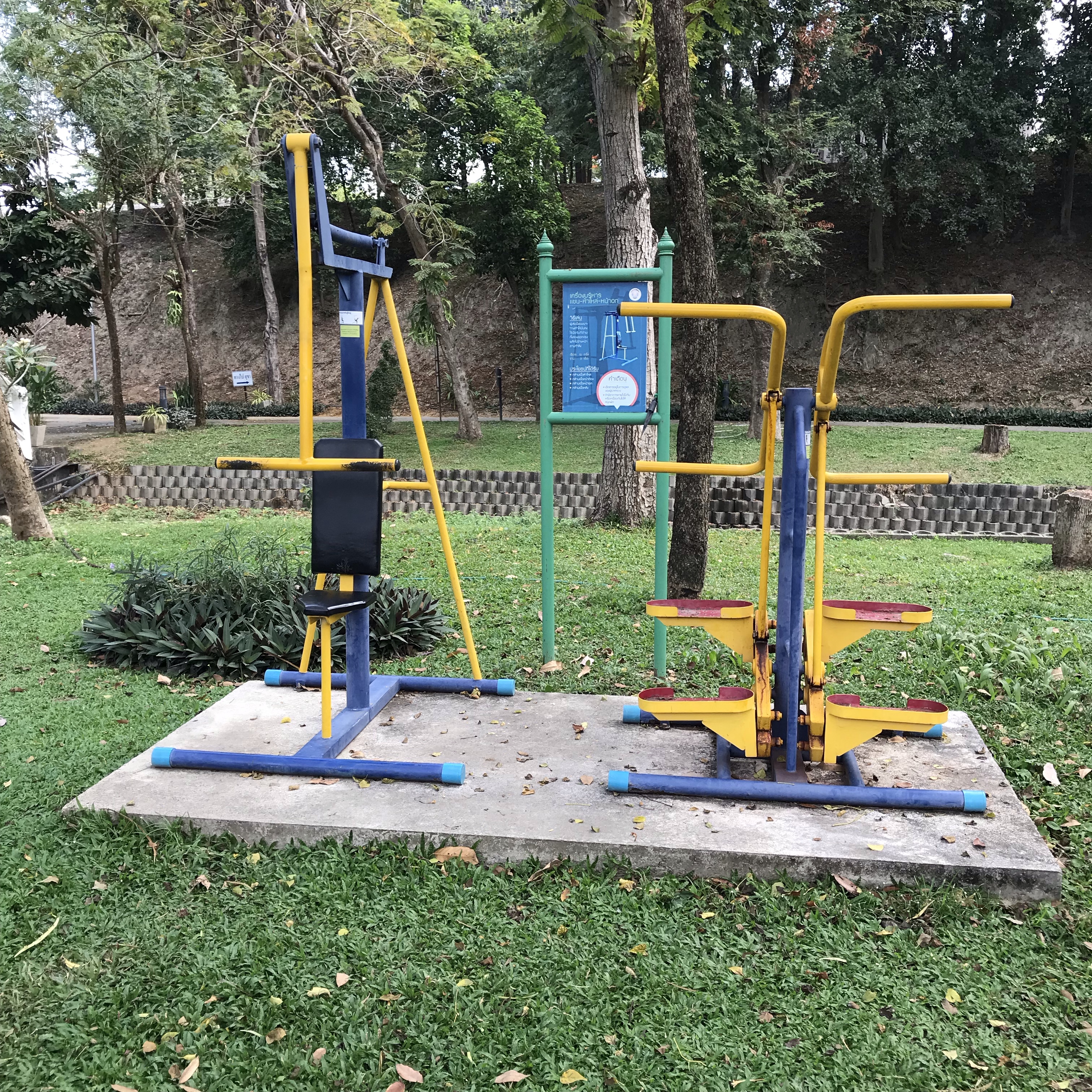
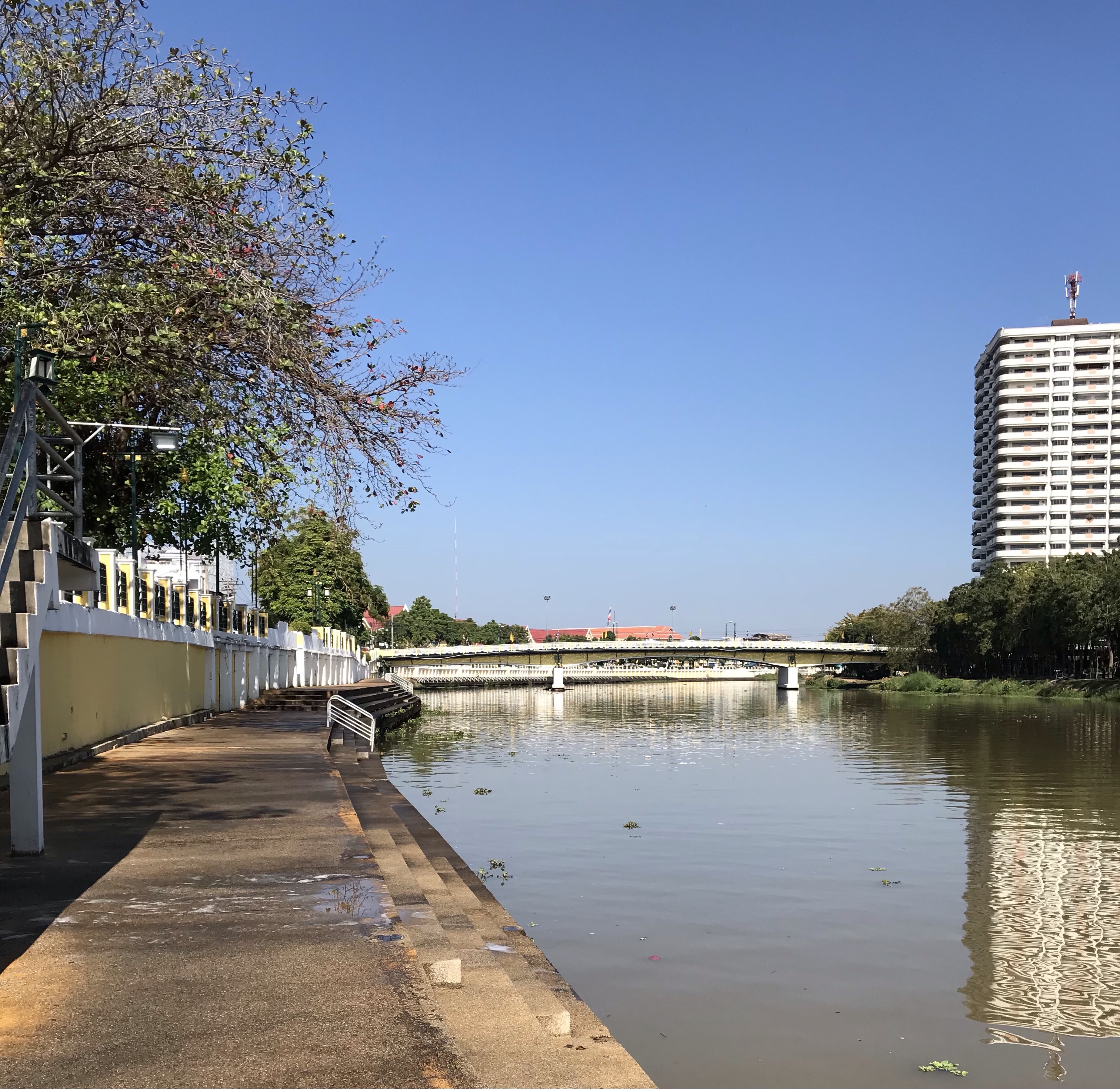
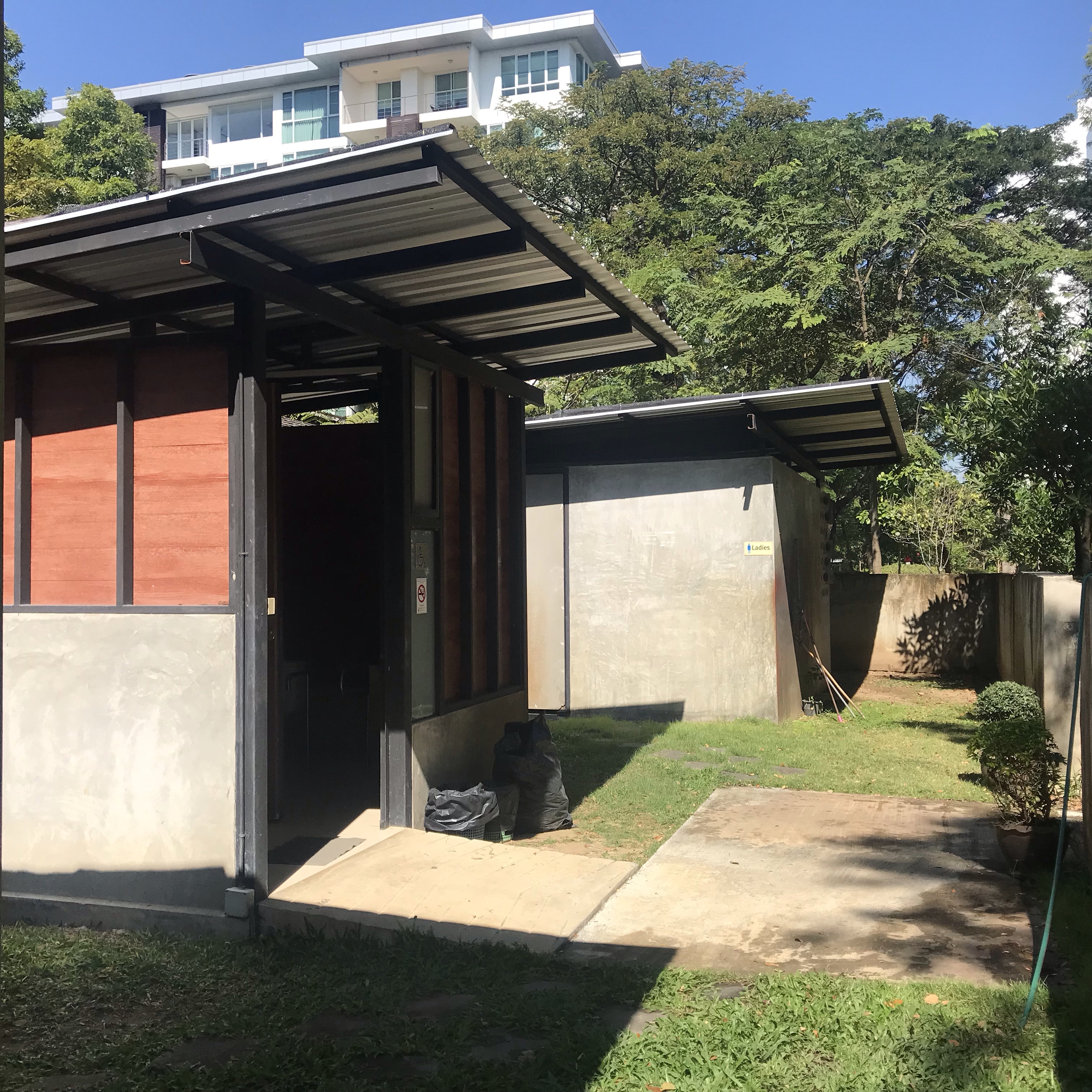
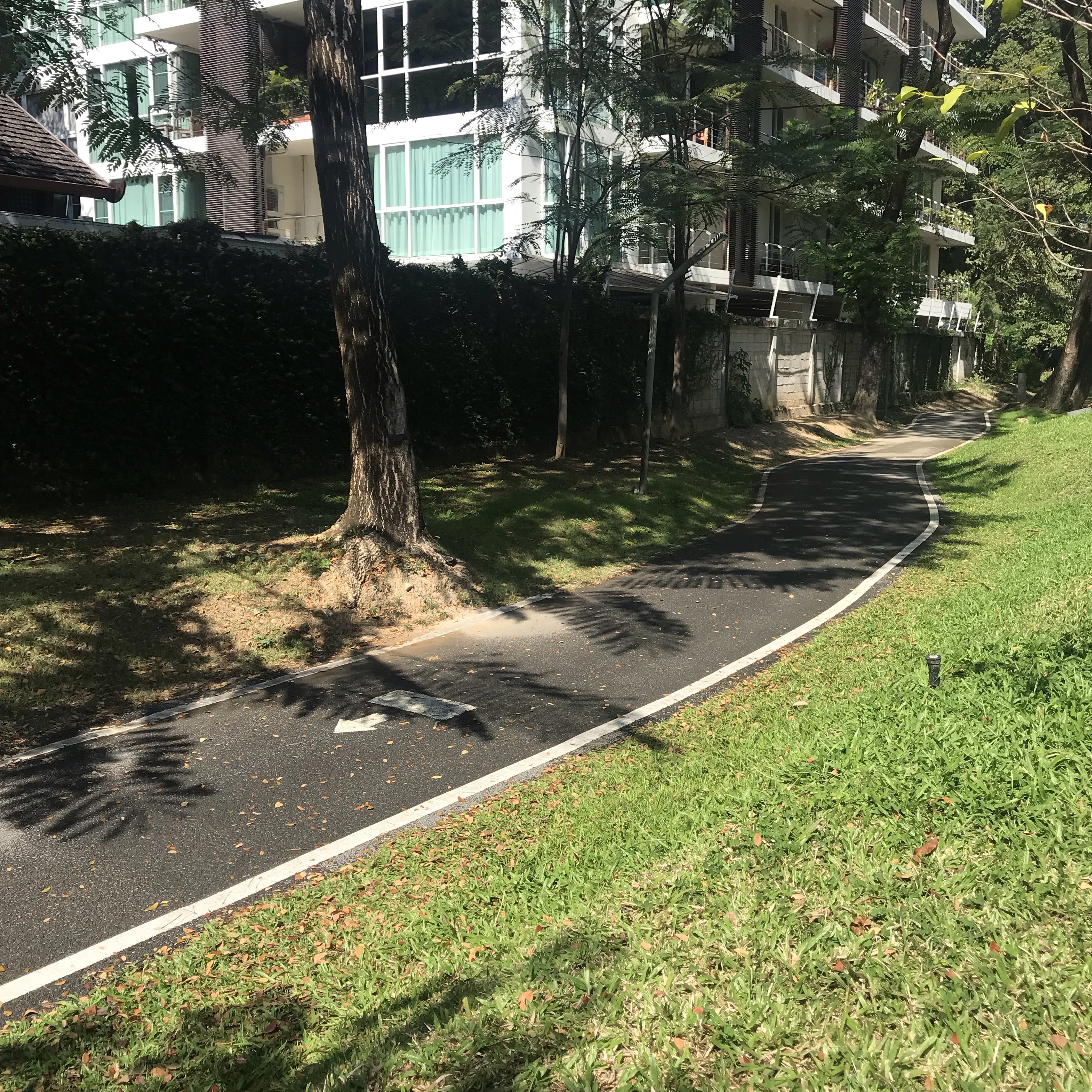
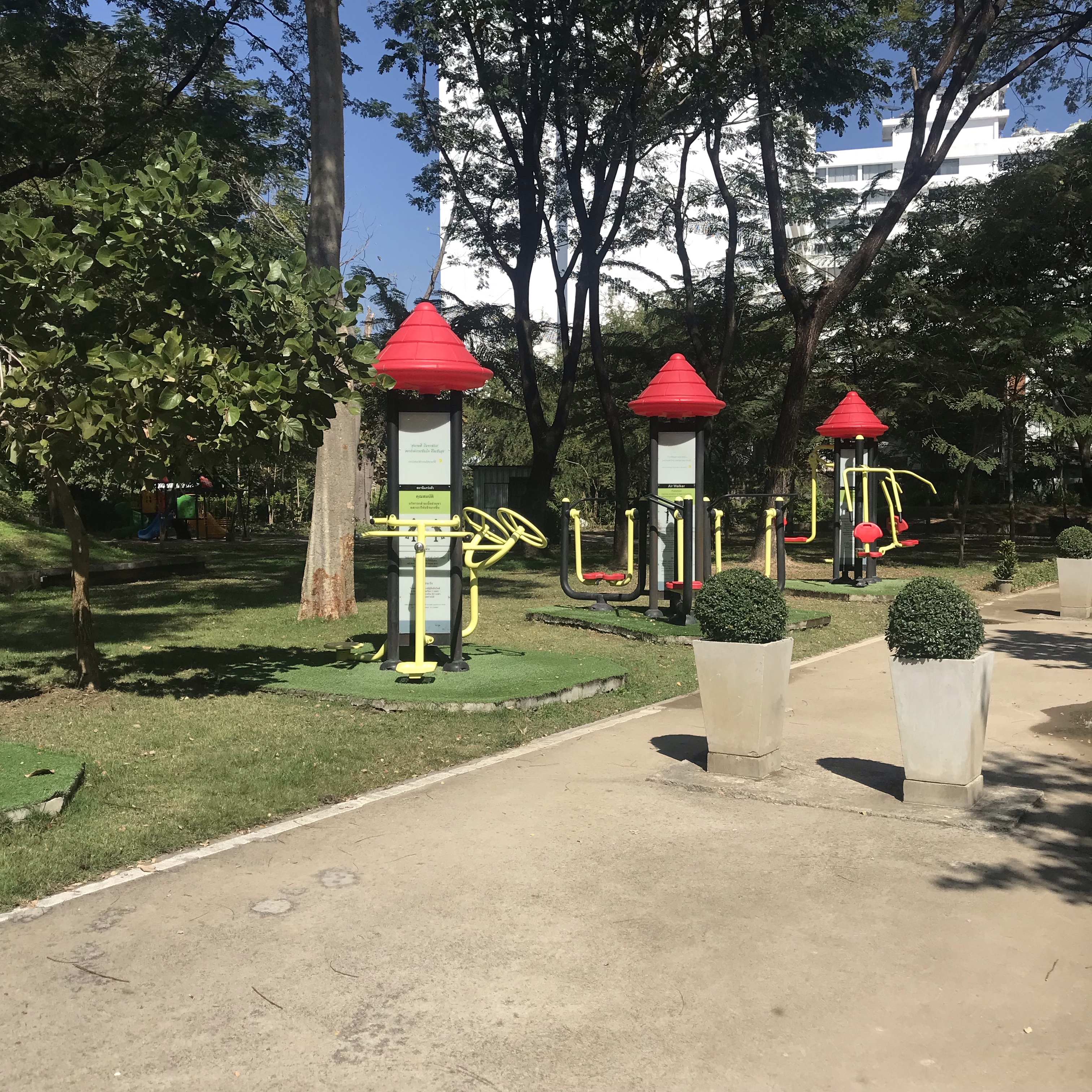
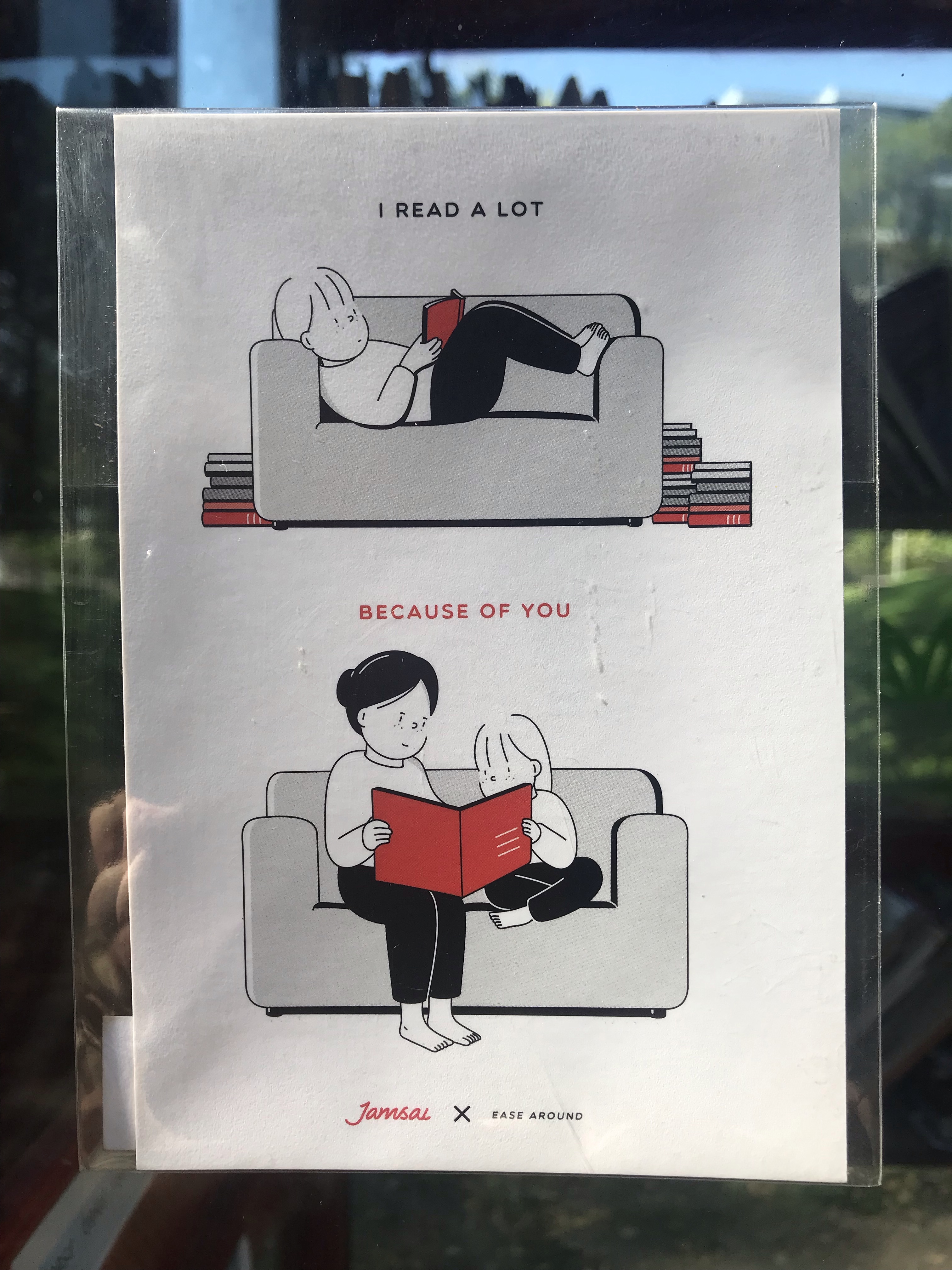
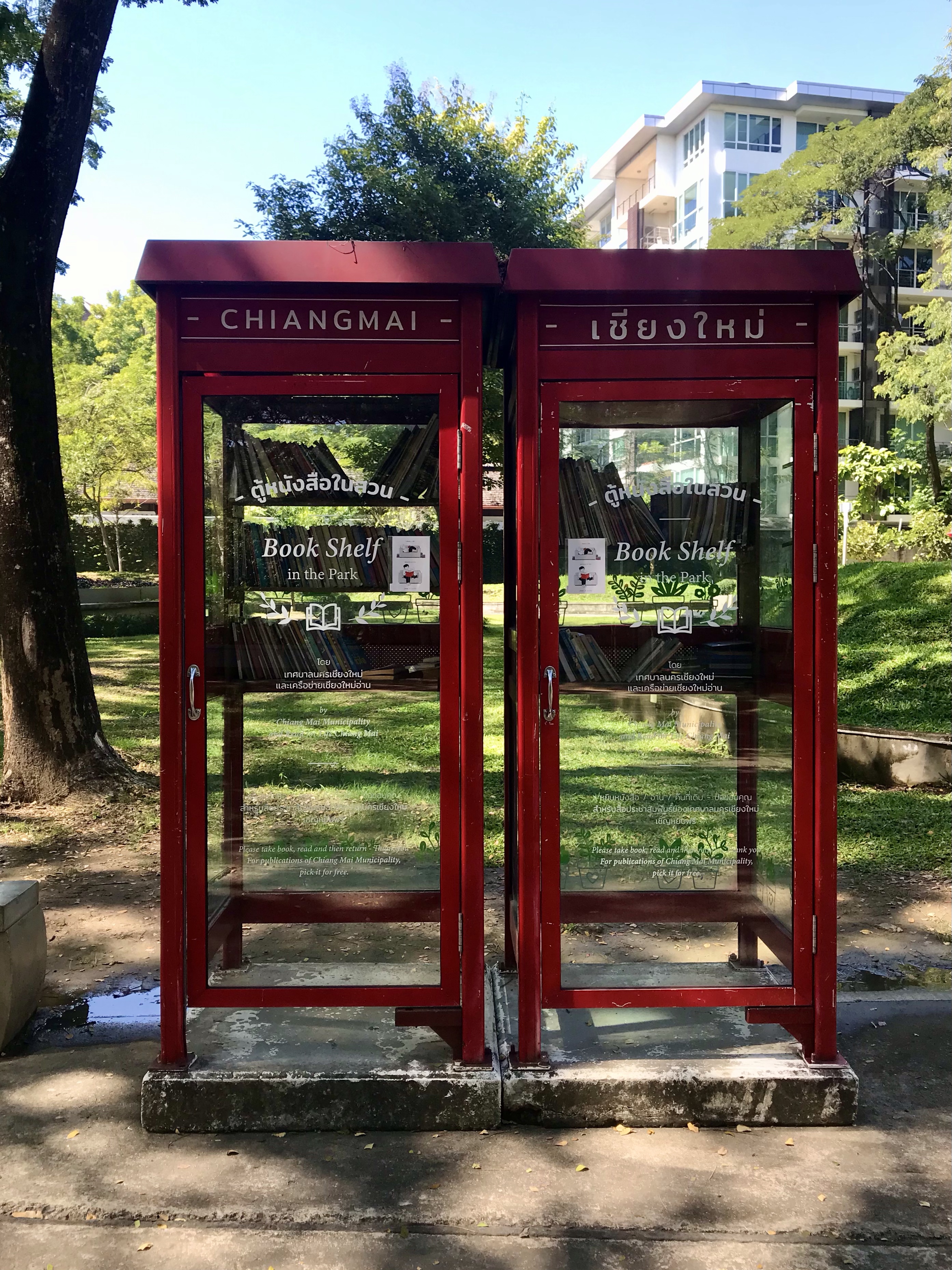
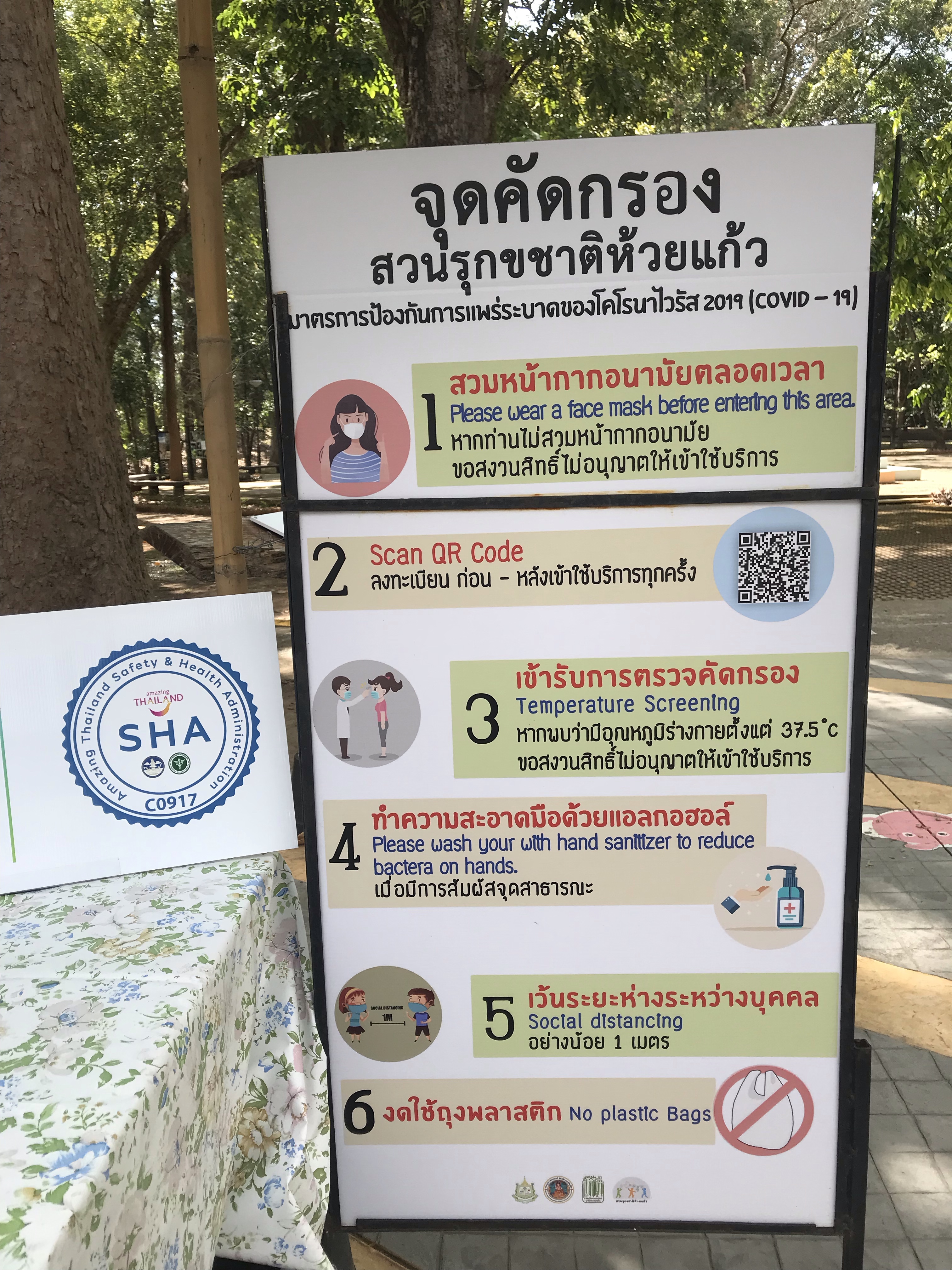
Playground Gym equipment is common in many Thai parks.Space to walk by the river Free & clean public toilets A track. Sidewalk walking or running for exercise is tough.Little libraryAt the entrance to the arboretum. Thailand takes COVID-19 very seriously.
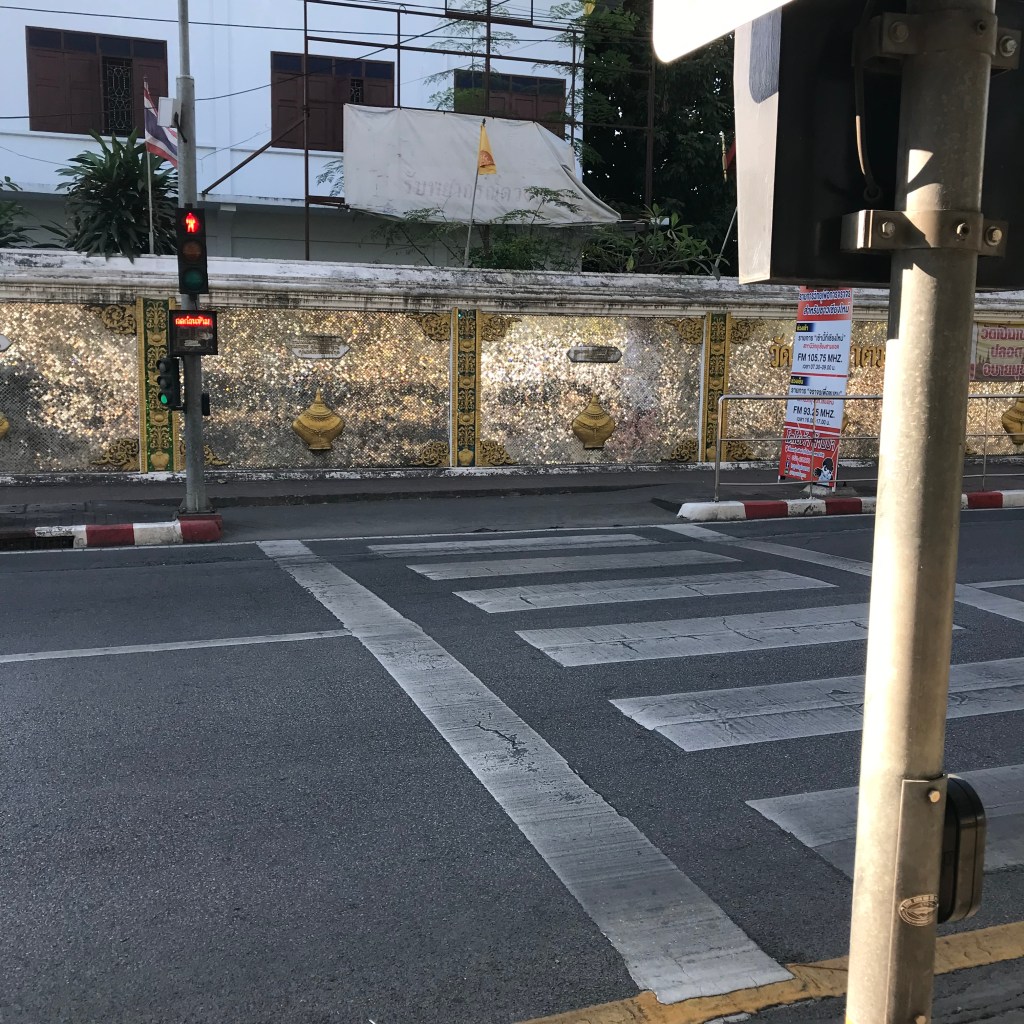
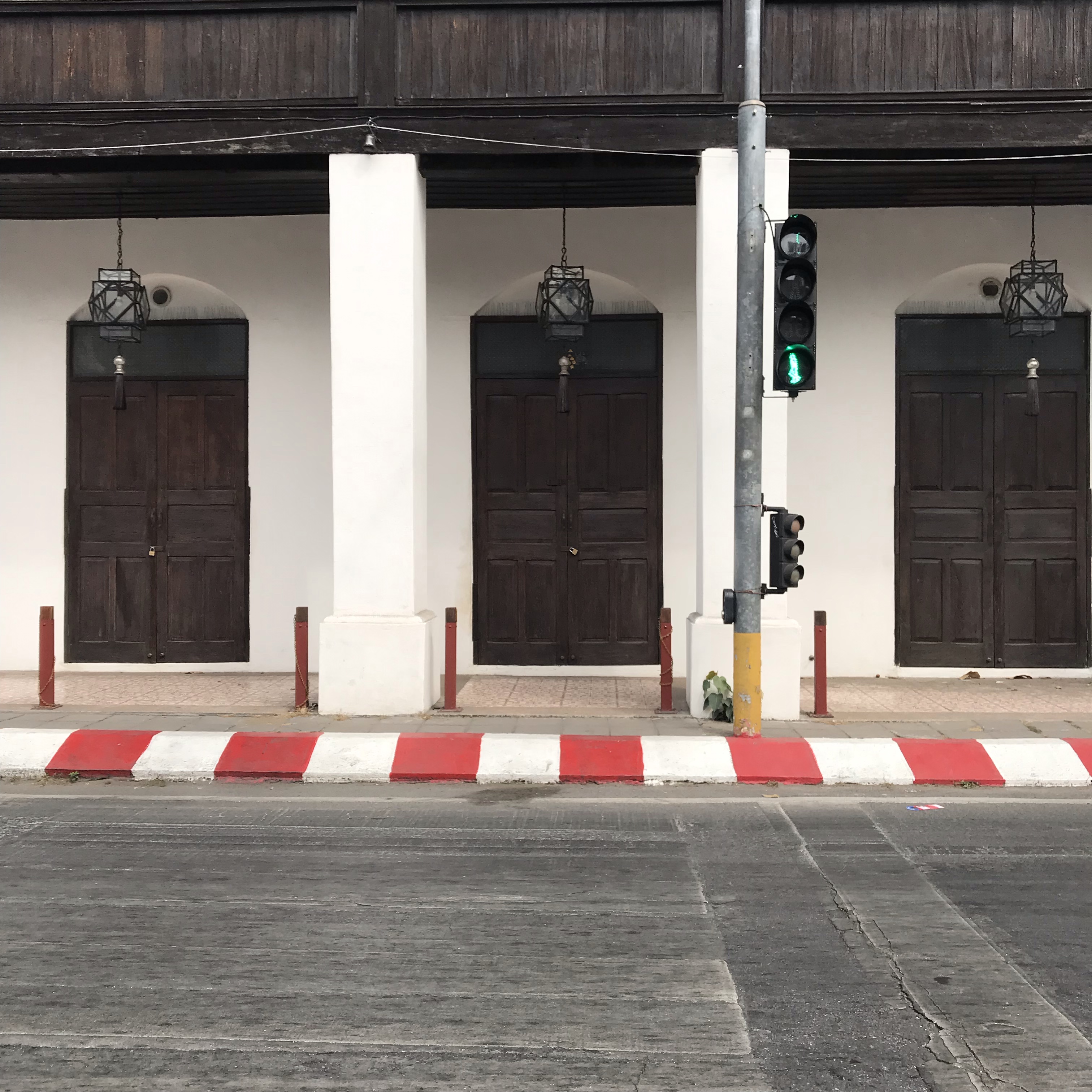
To cross the street in the city you have to be aggressive i.e. walk out into the traffic and hope they stop. Luckily they do have buttons to push that stop the traffic on demand (theoretically, they get a red light but not all drivers acknowledge it). You (sometimes) get a warning on how many seconds you have to wait, then a yellow light, and then you’d better move it for the 11 seconds or so you get to cross.
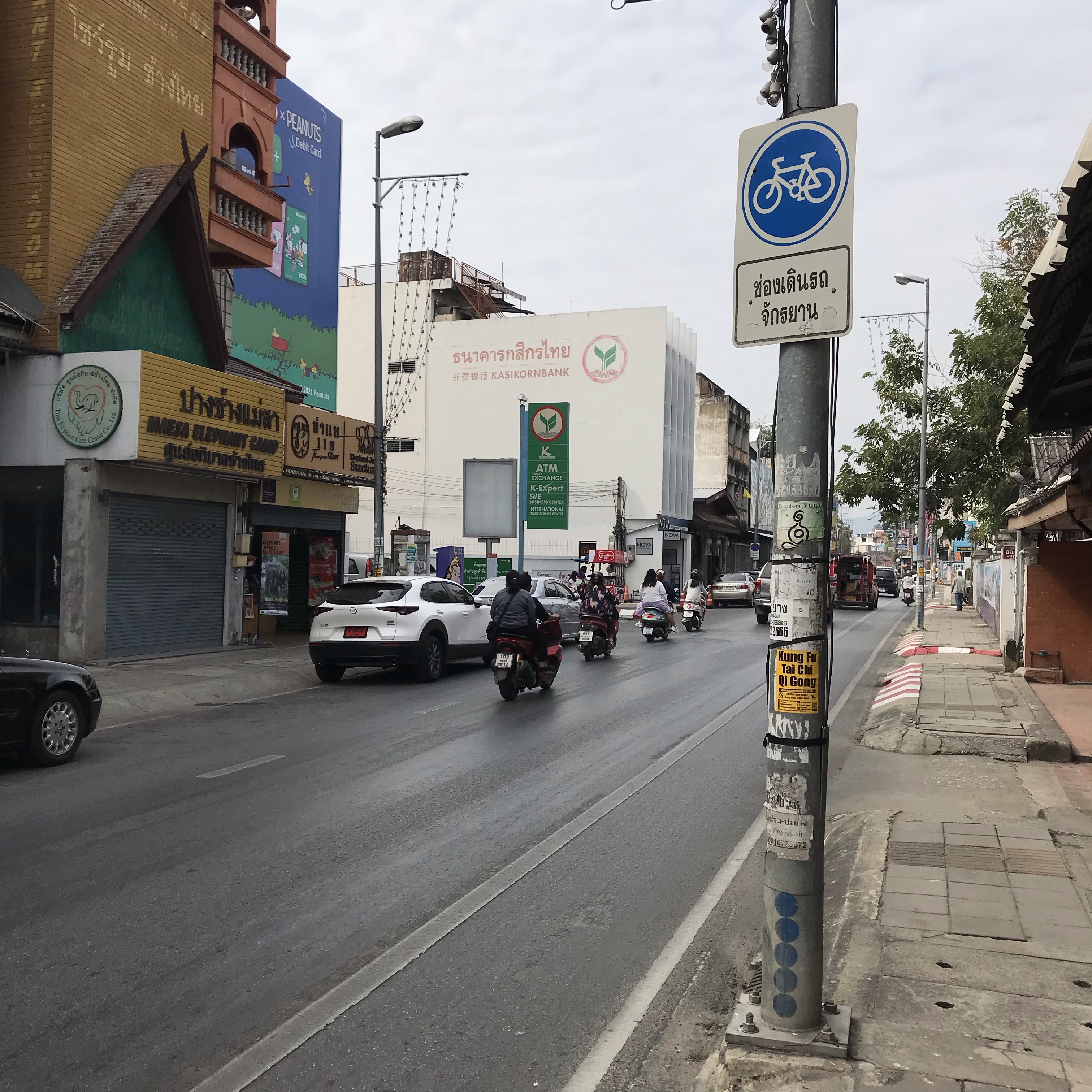
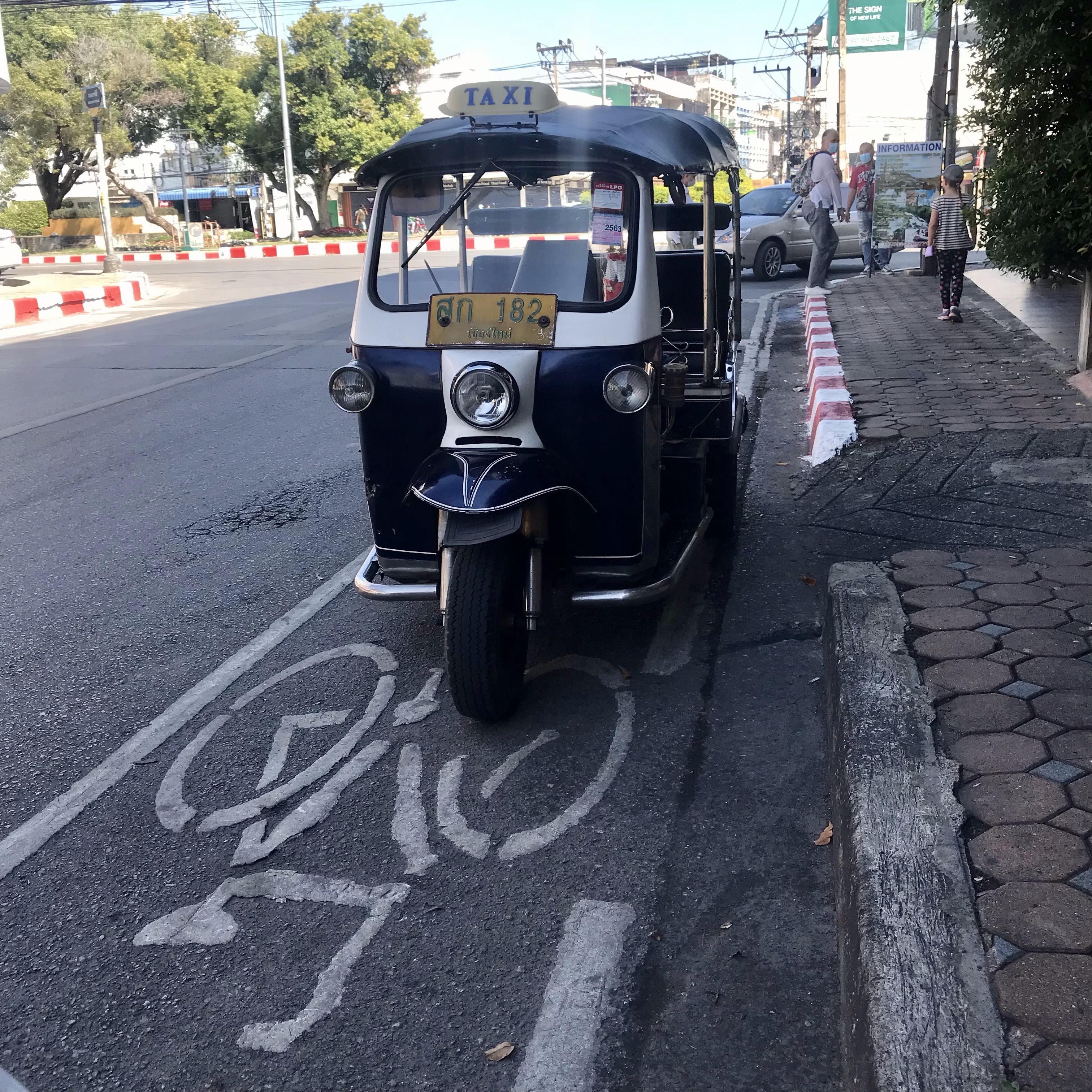
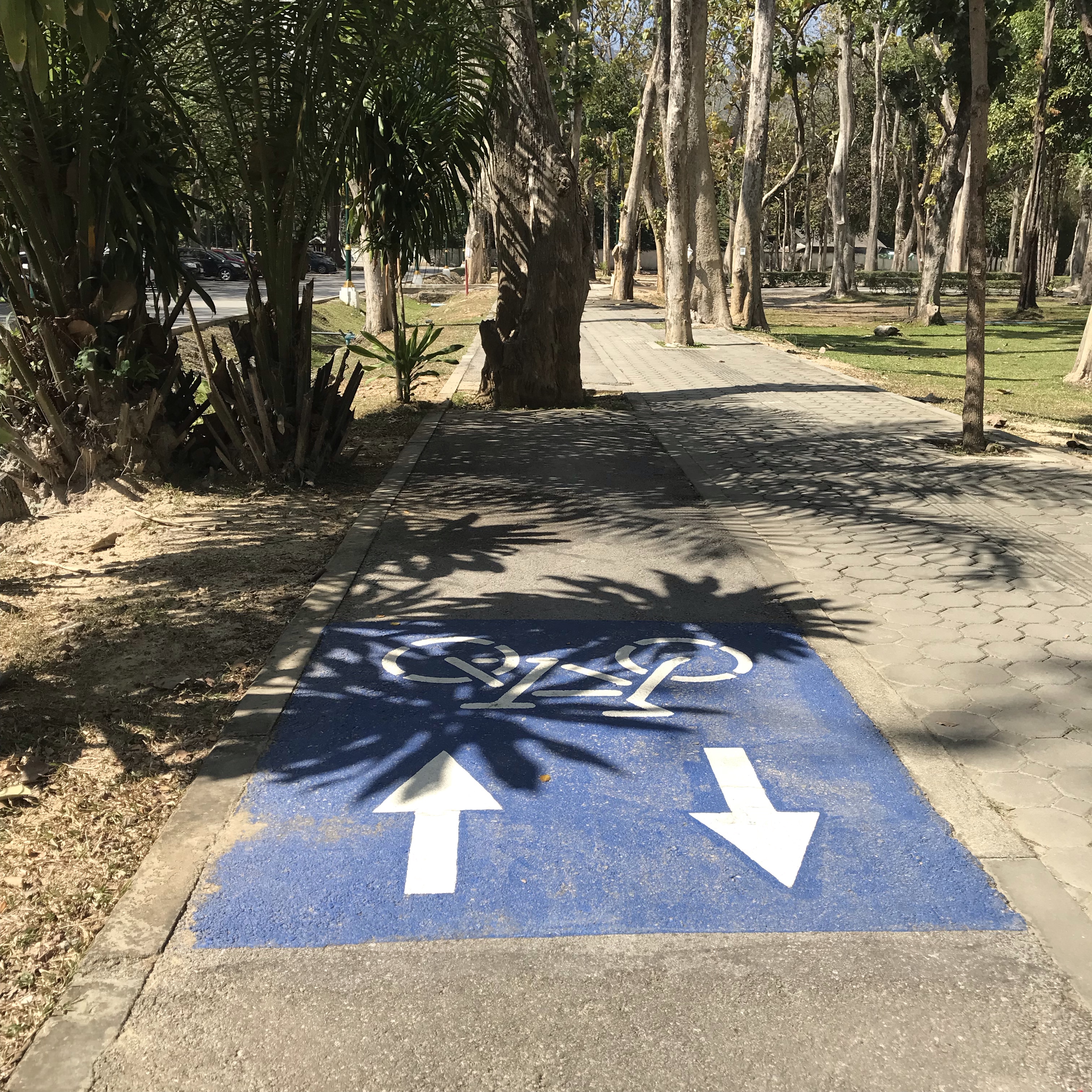
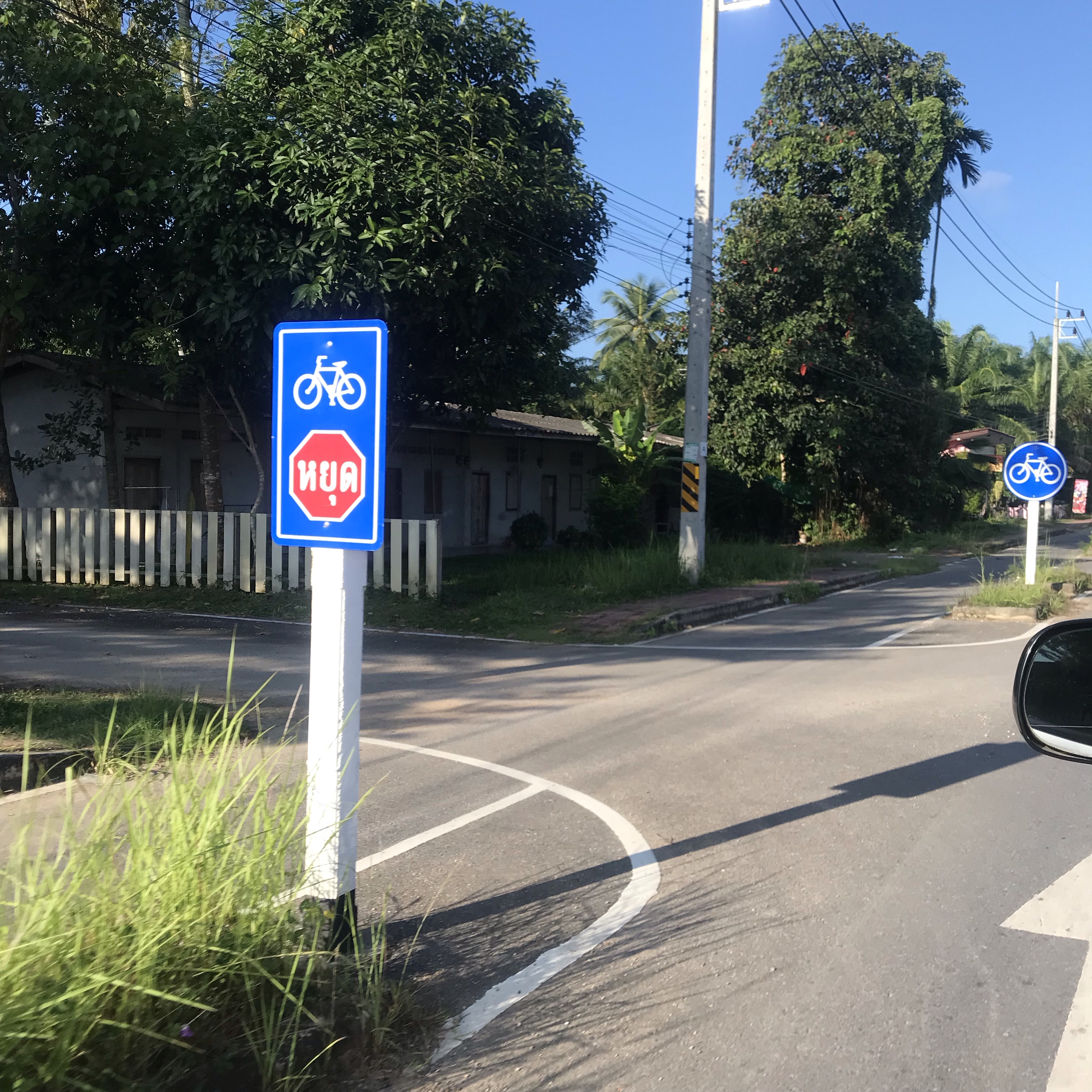
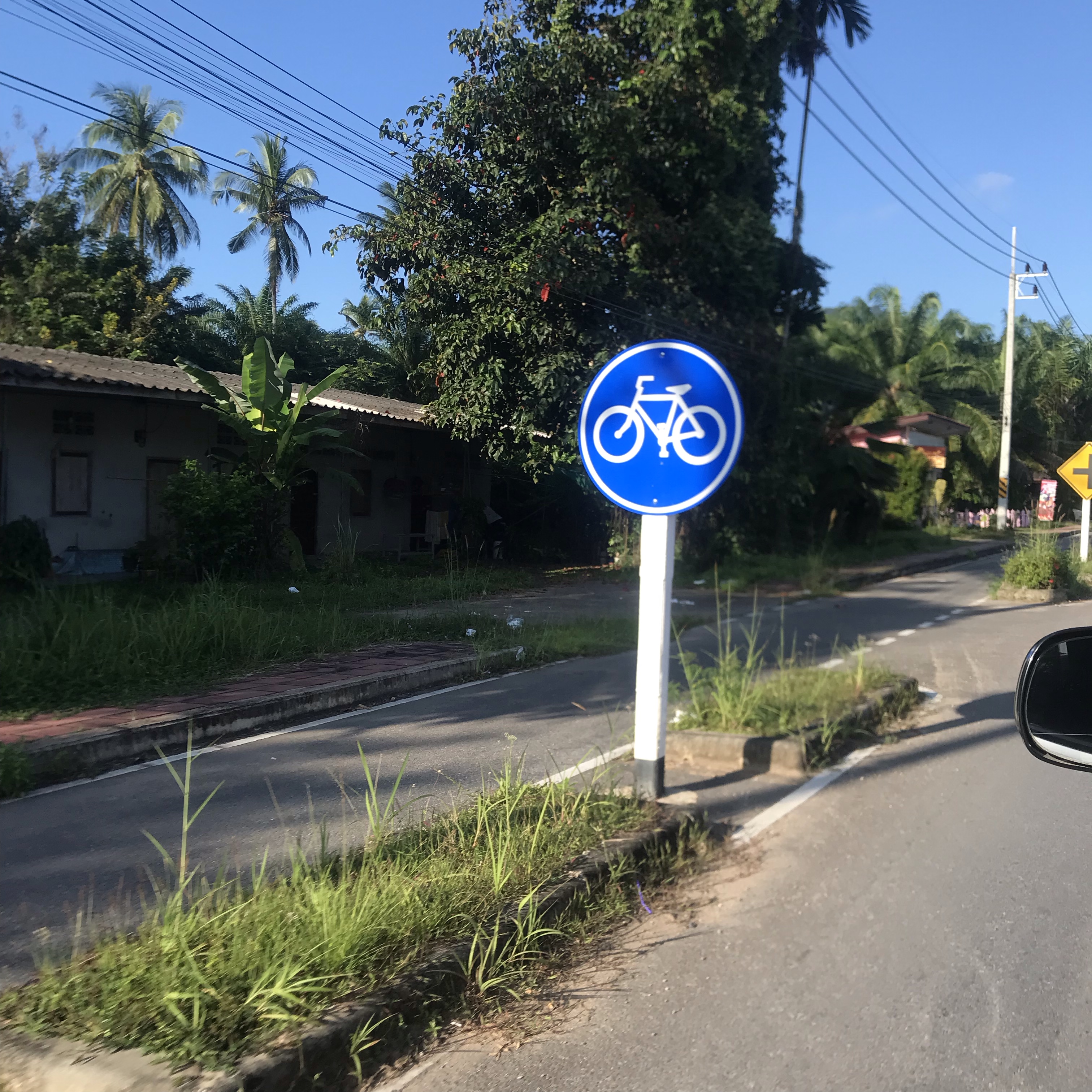
Bike infrastructure is not common, but it does exist.
Chiang Mai University (CMU) no problem, just use the sidewalk 😆
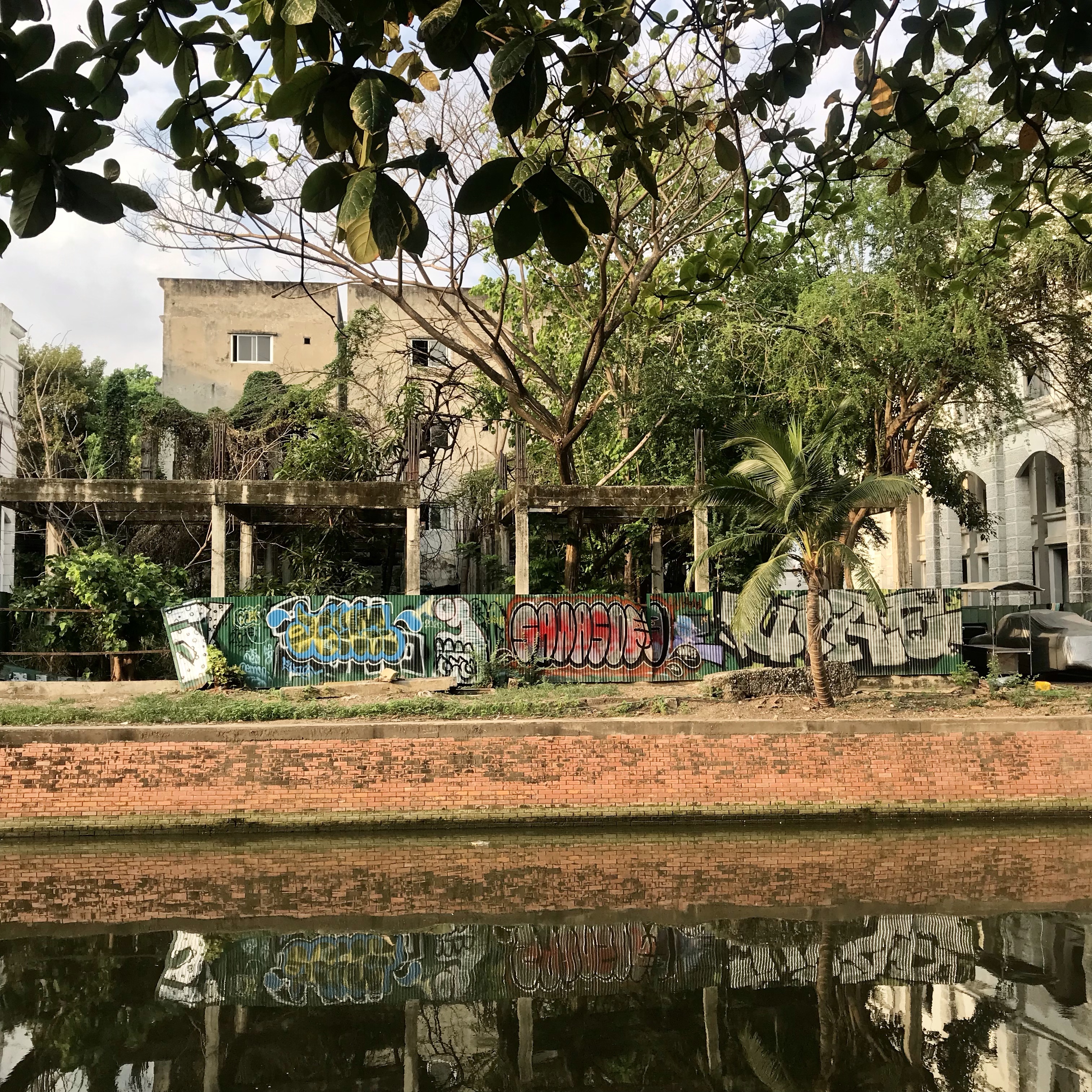
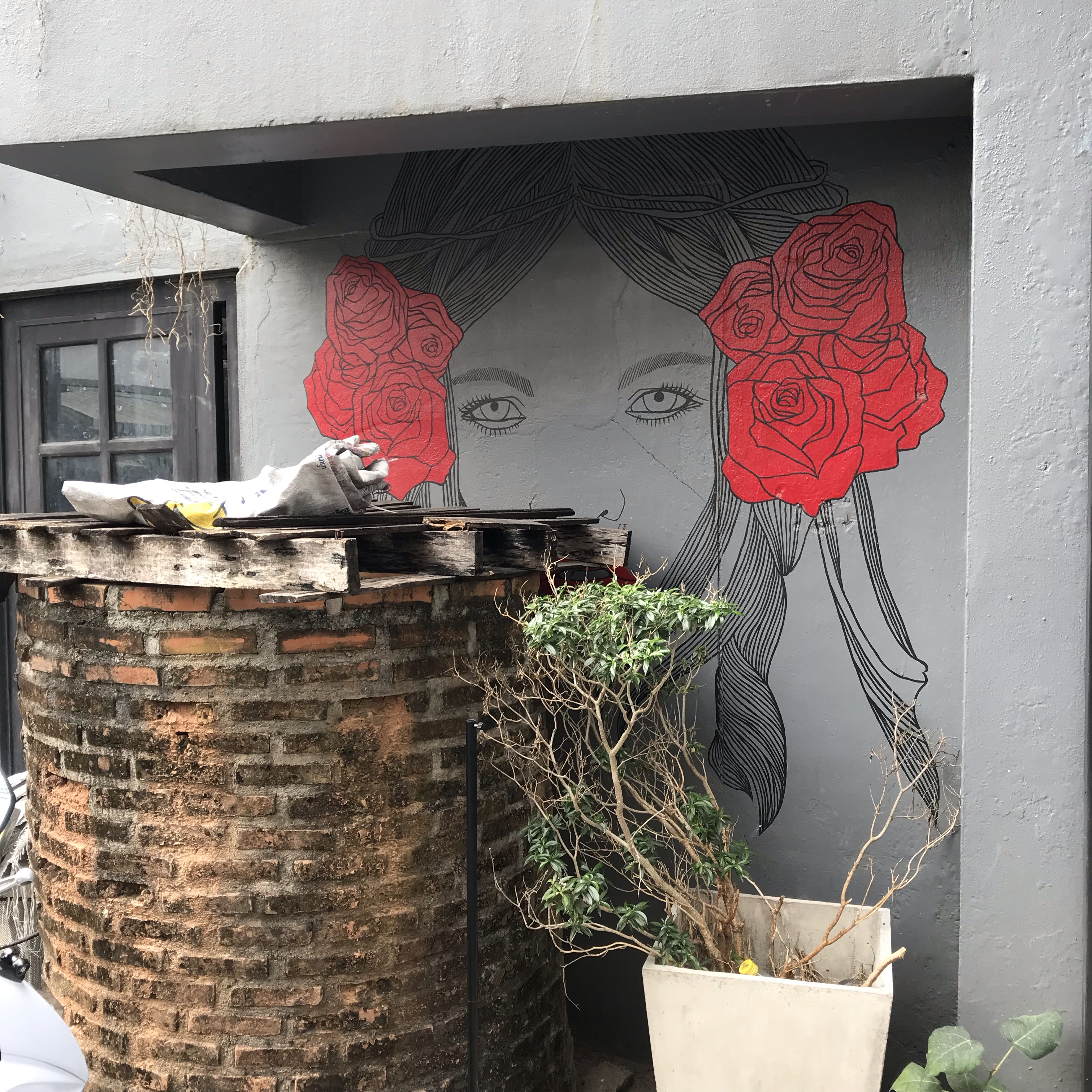
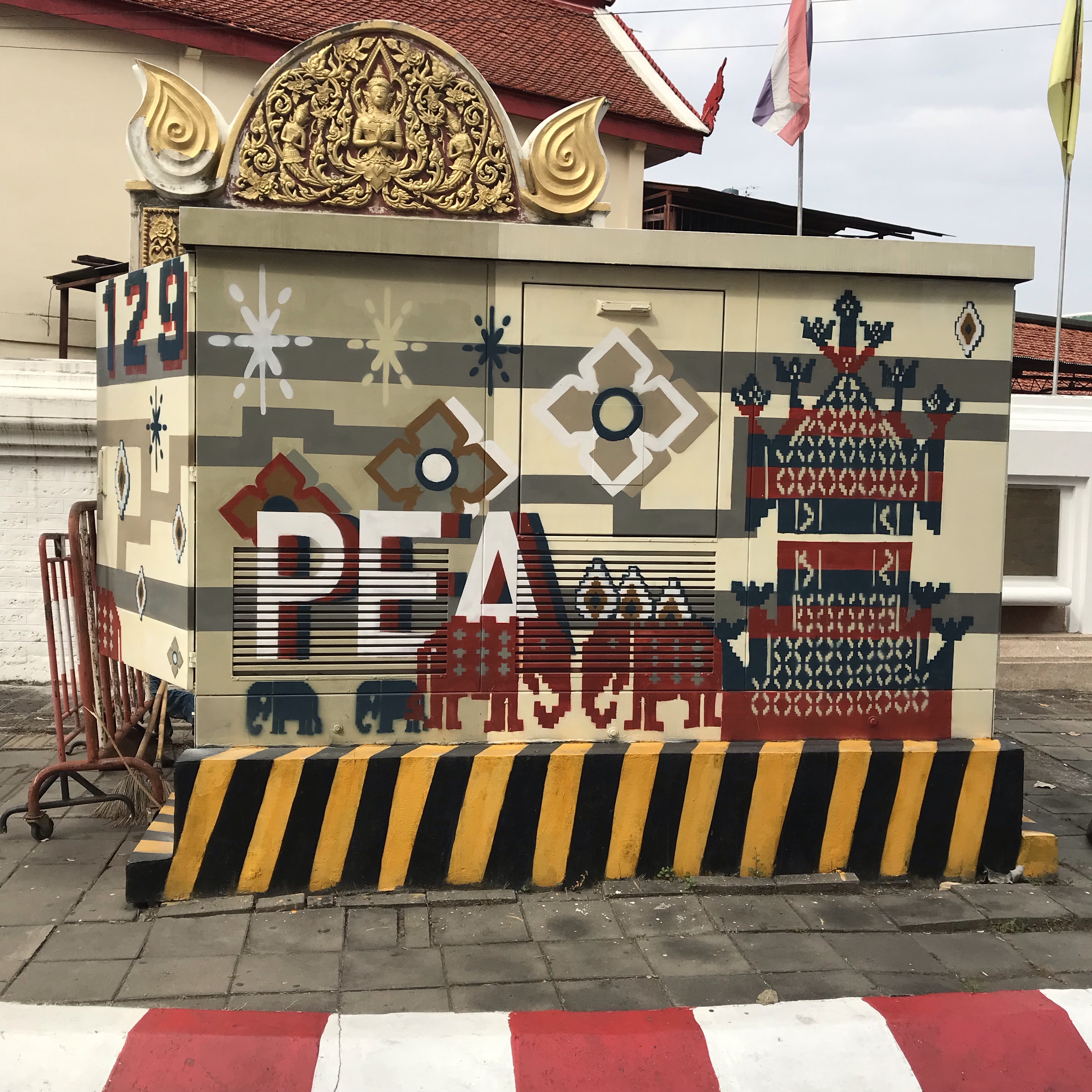
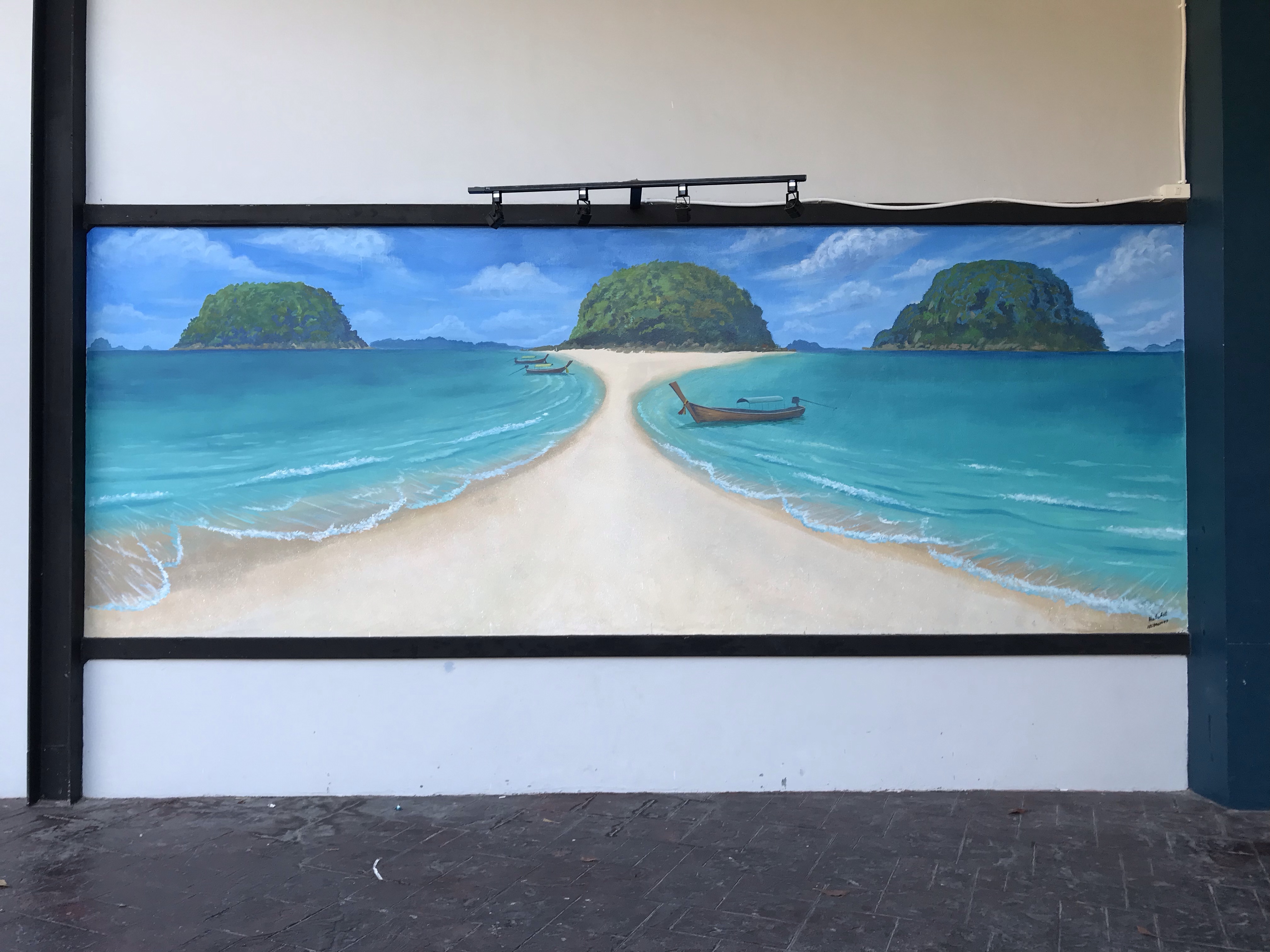
There is a lot of beautiful public art around Chiang Mai.
Even the power company is into it.Motorcycle parking at a school There are a number of parked cars that seem to be on display.
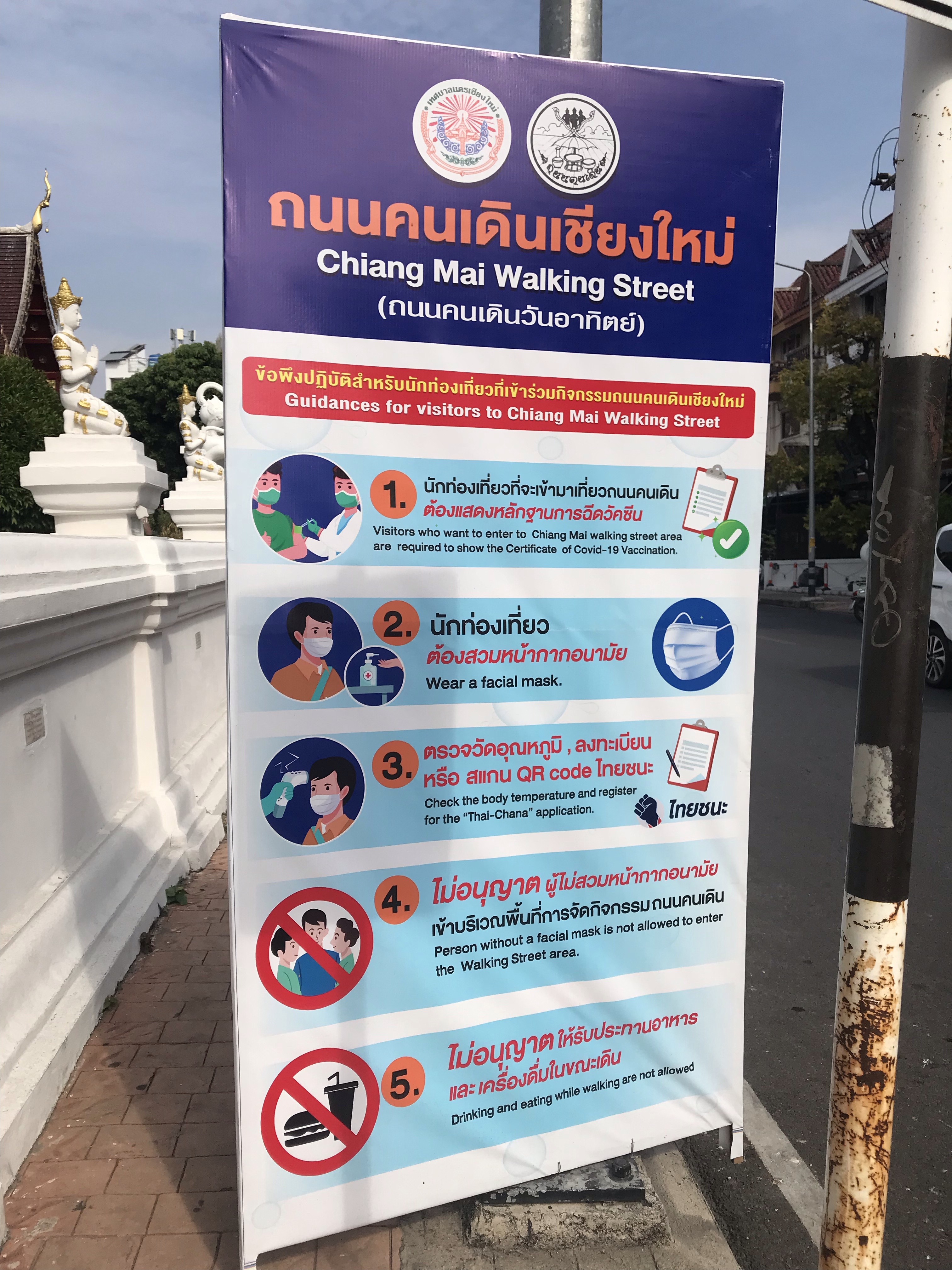
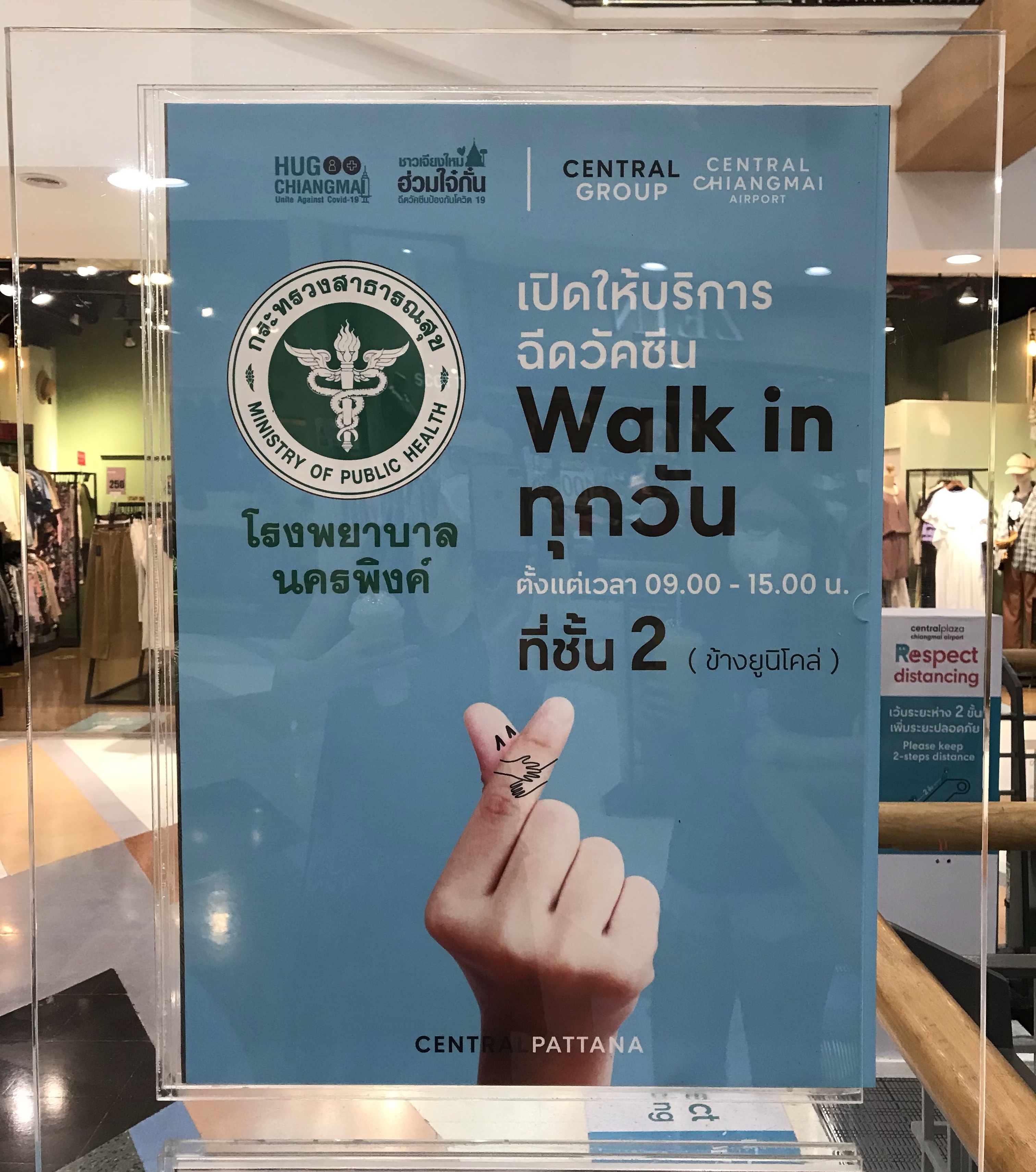
Covid-19 spread is prevented wherever possible, while the country remains open for business including tourism. Our family received 1 free vaccine dose and paid for 1 privately while in Chiang Mai. There is an outdoor as well as indoor mask mandate.
A few other highlights around town:
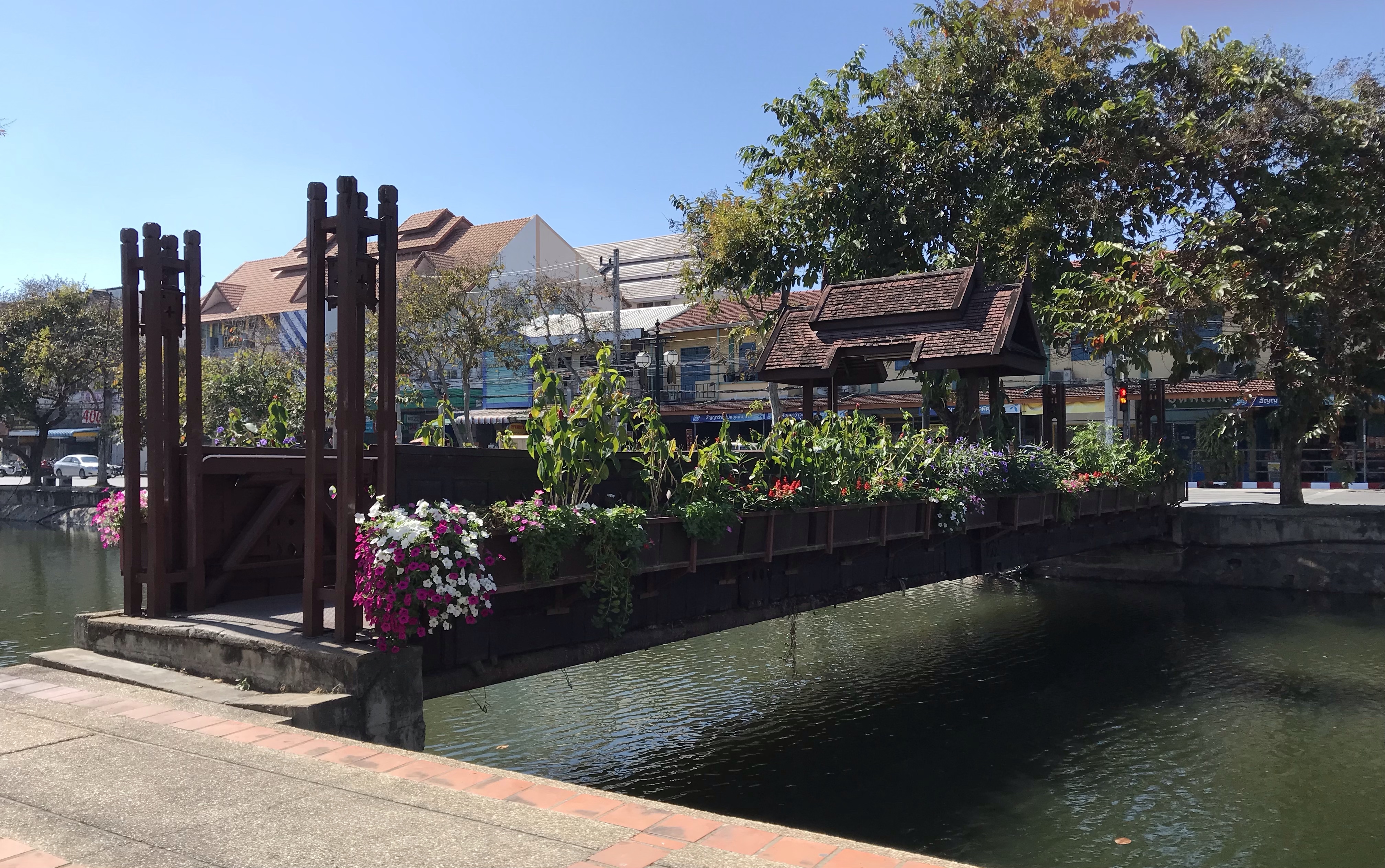
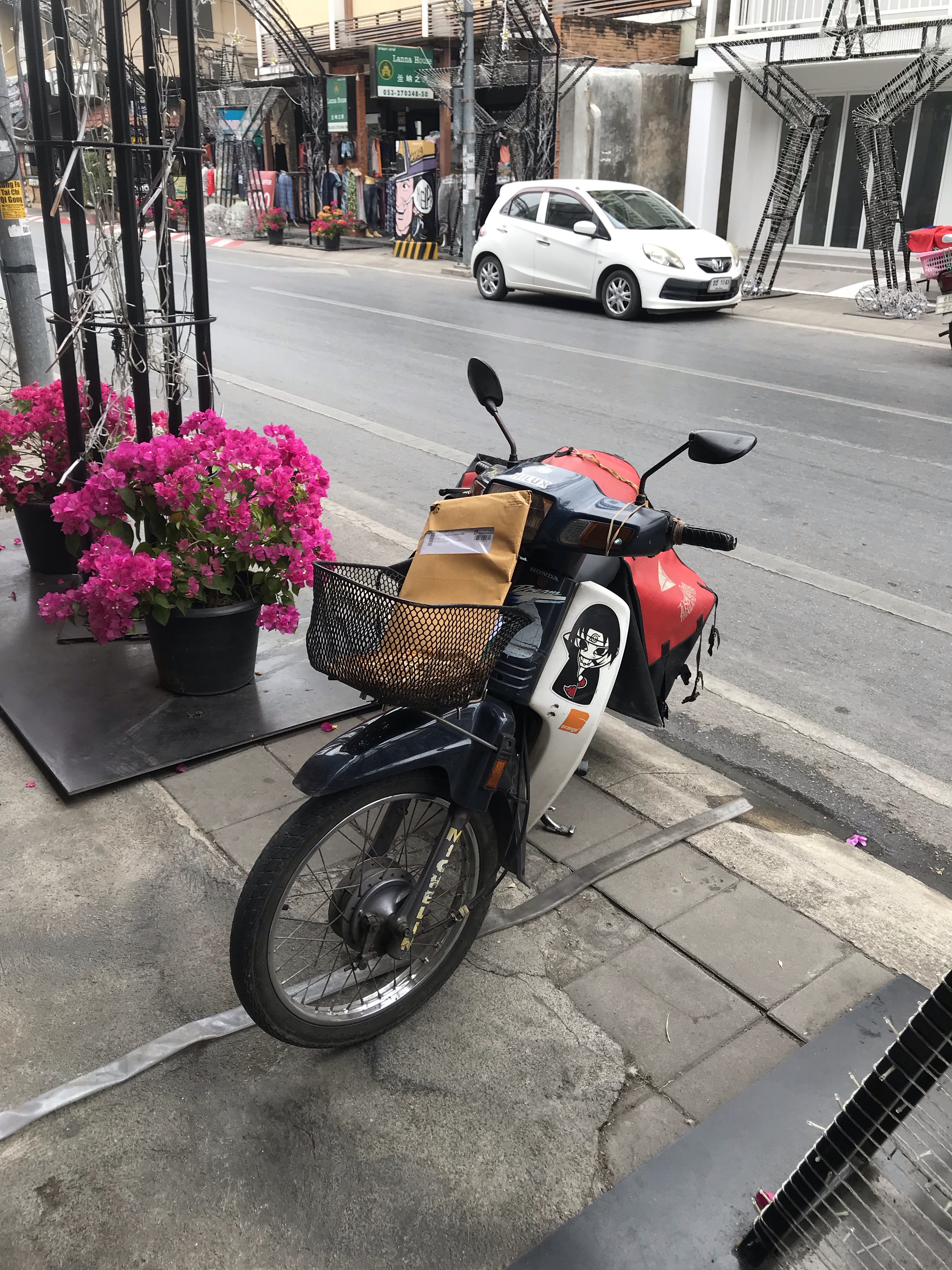
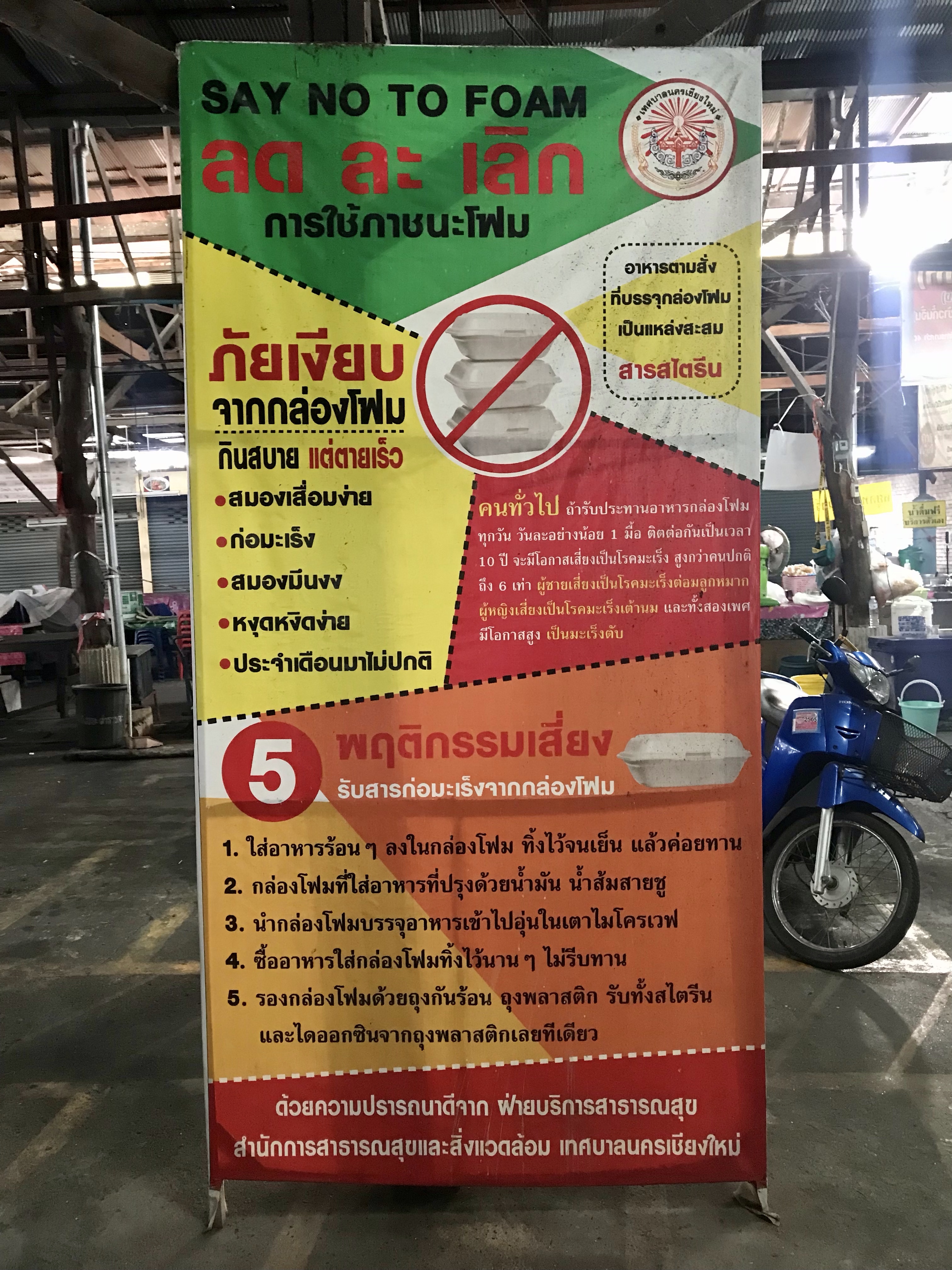
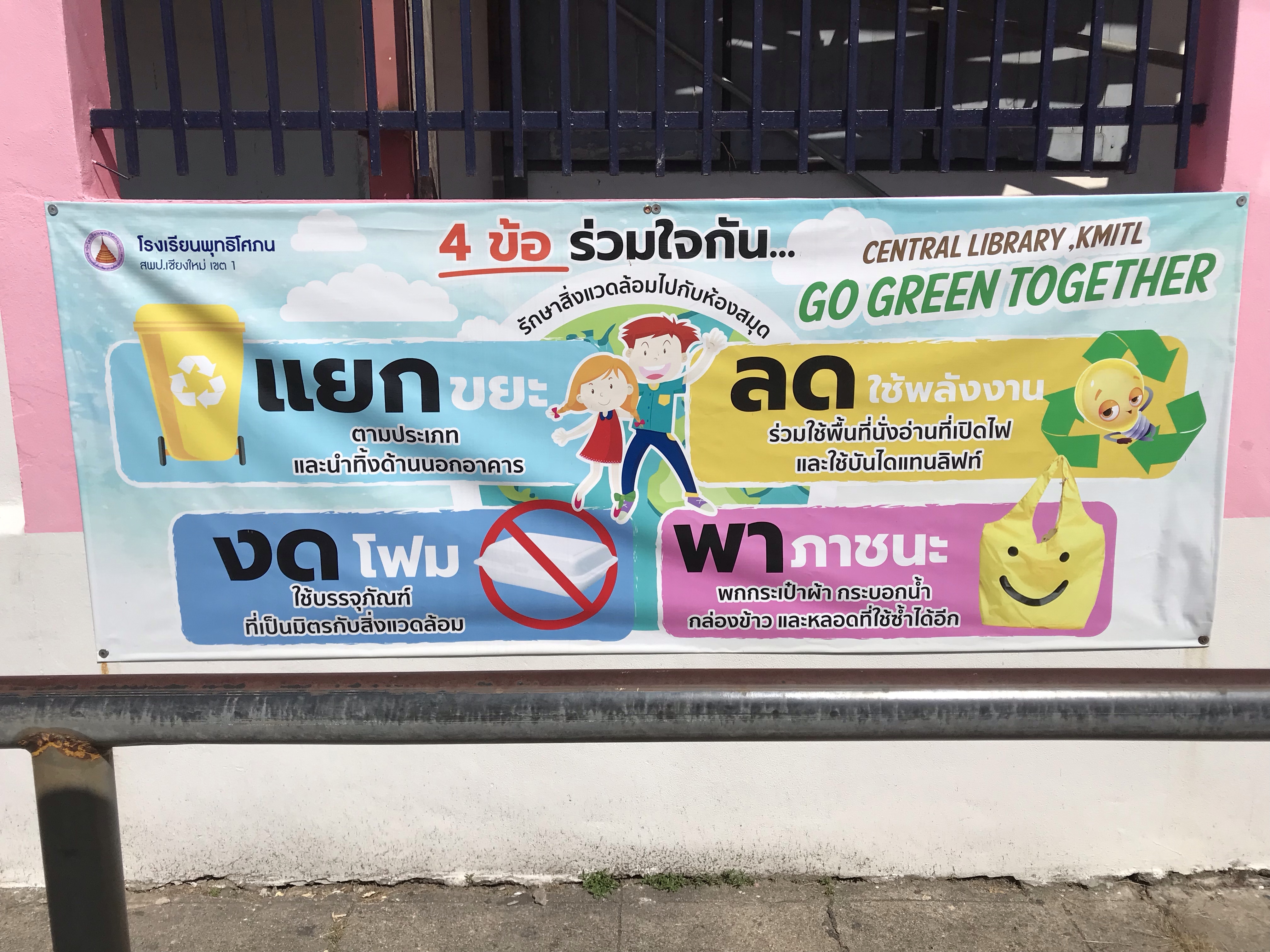
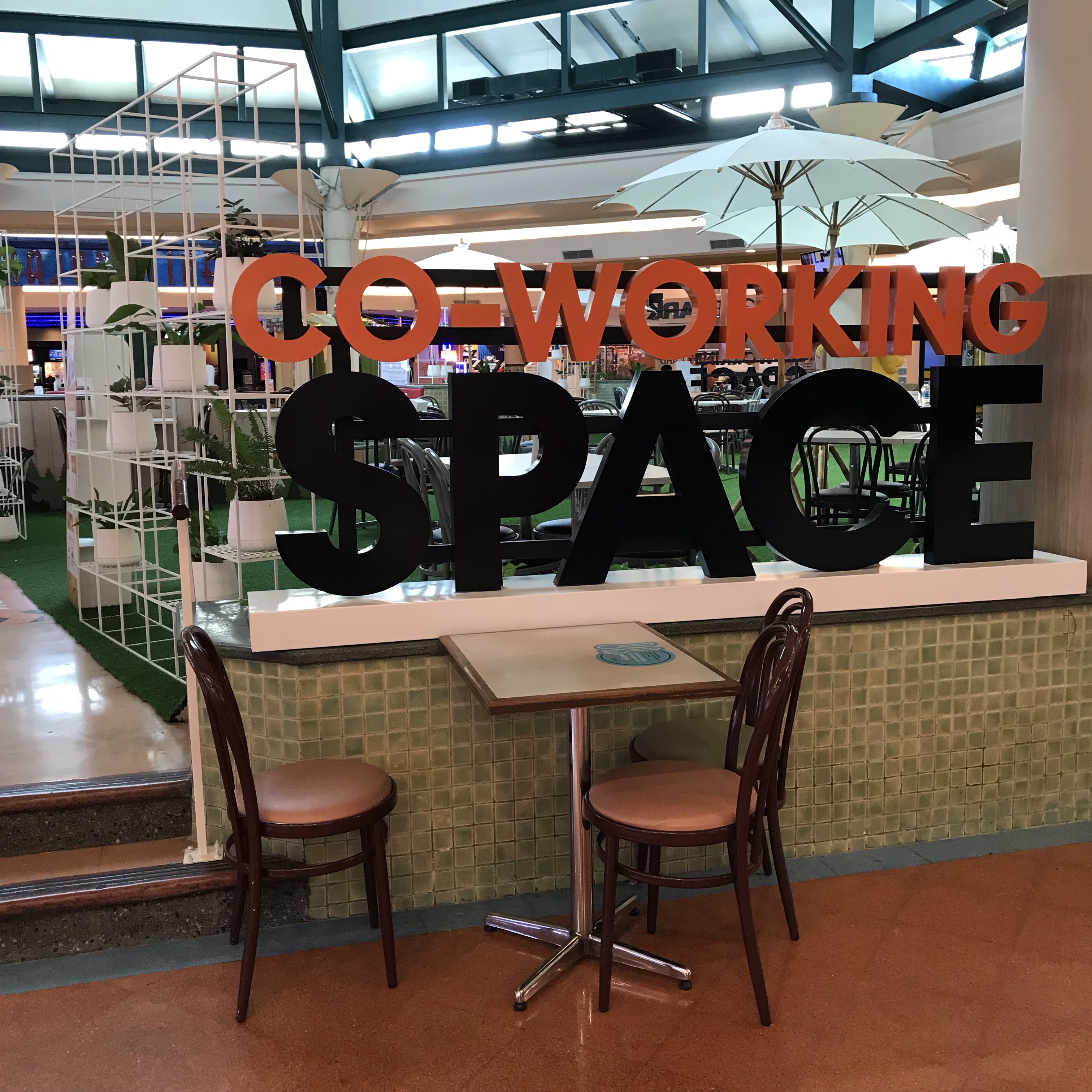
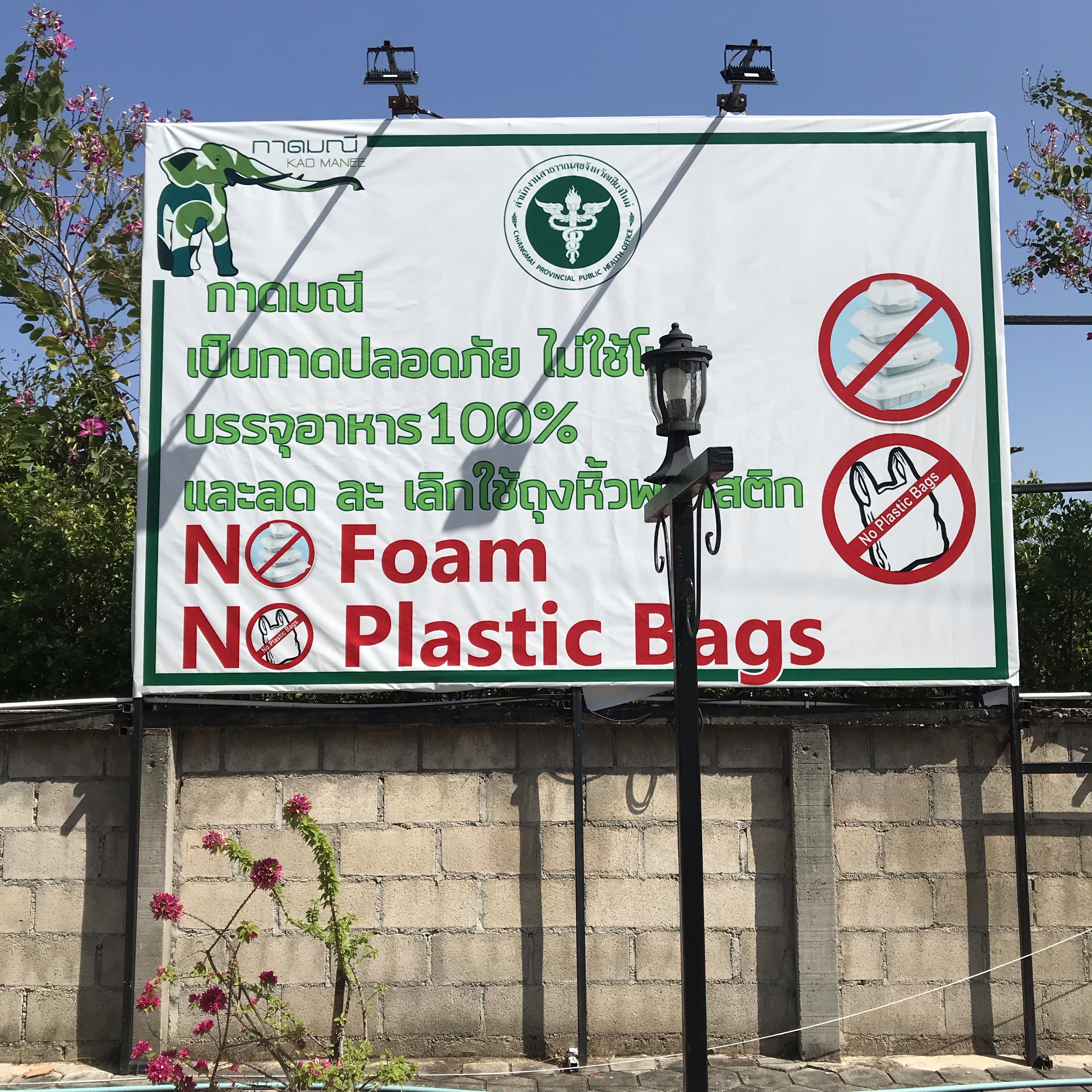
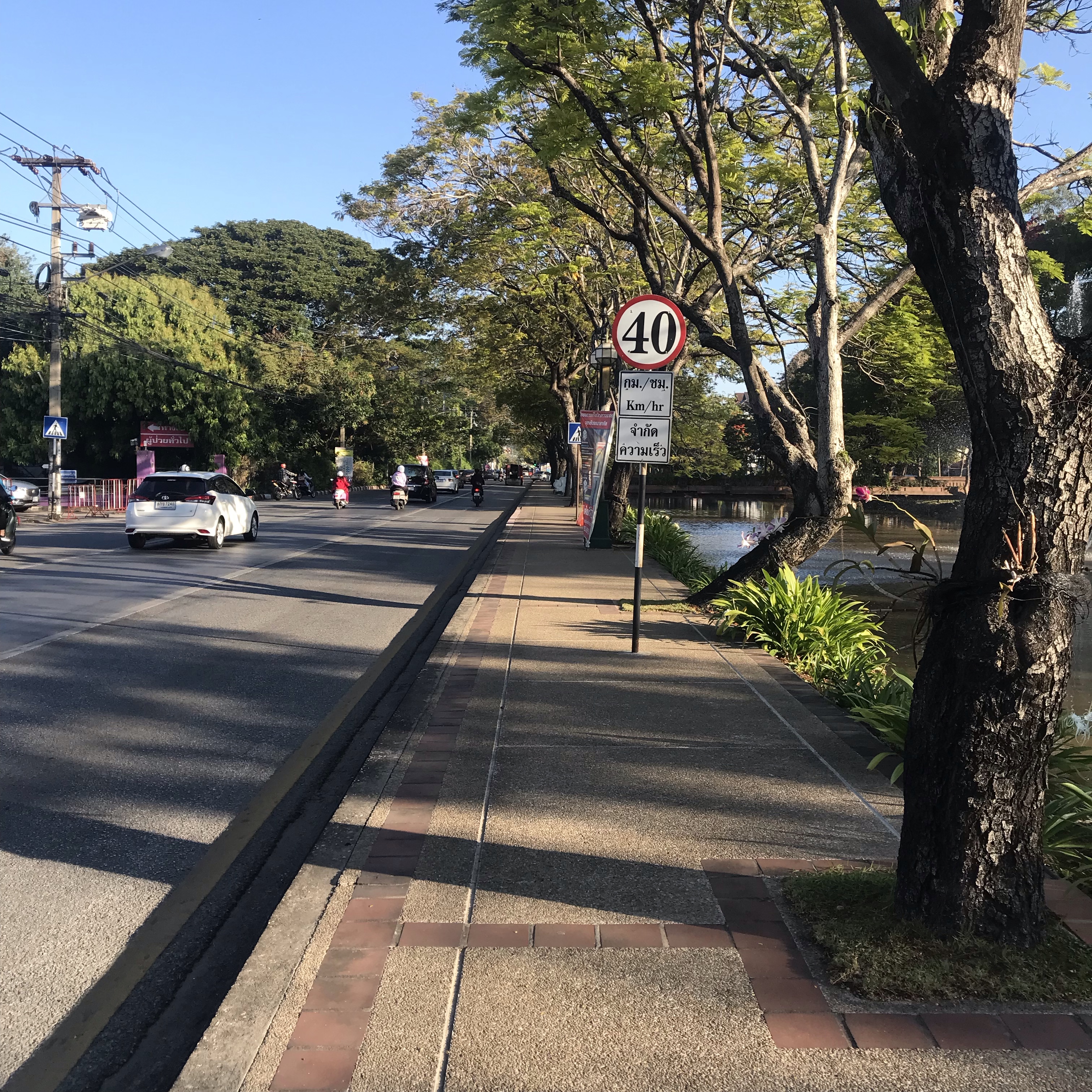
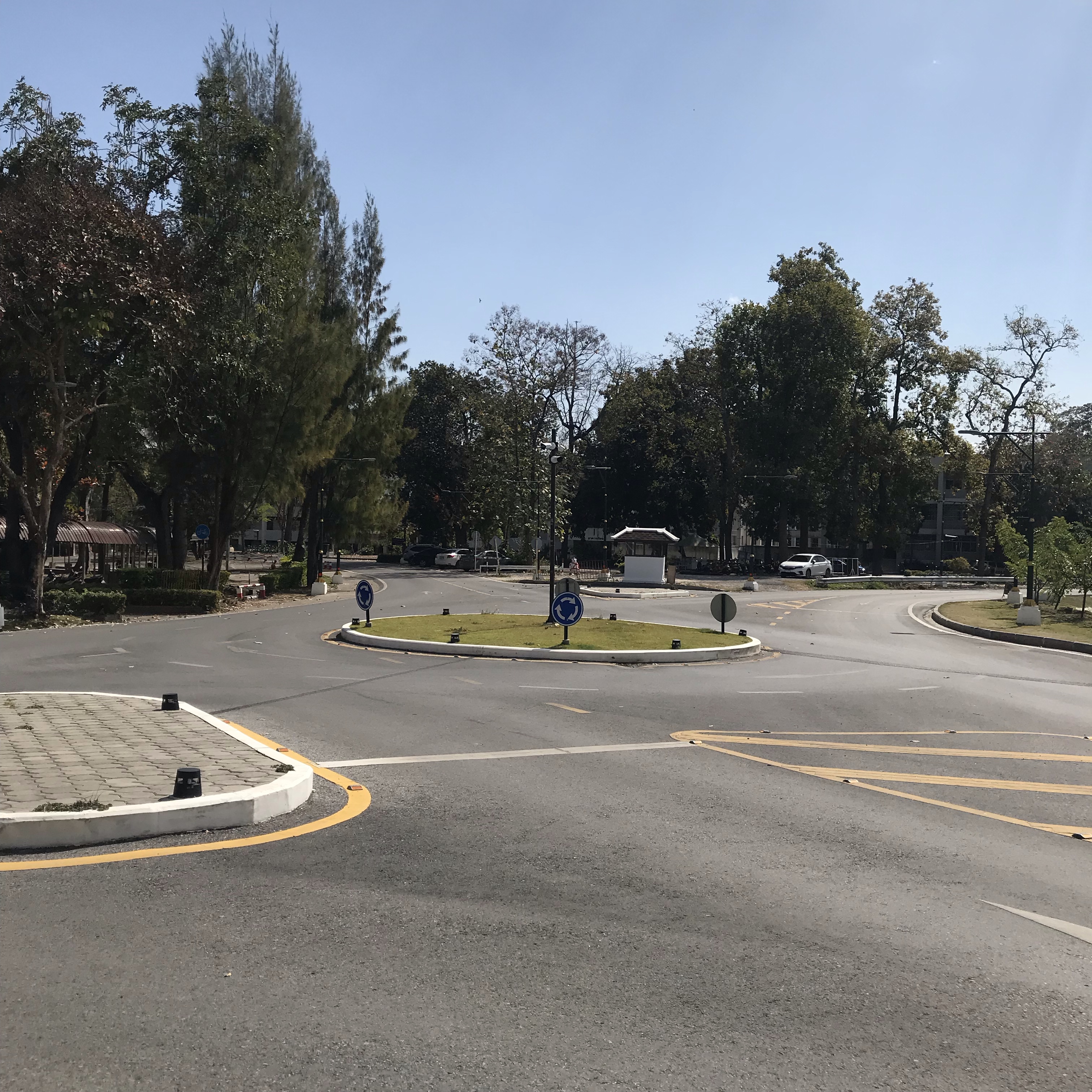
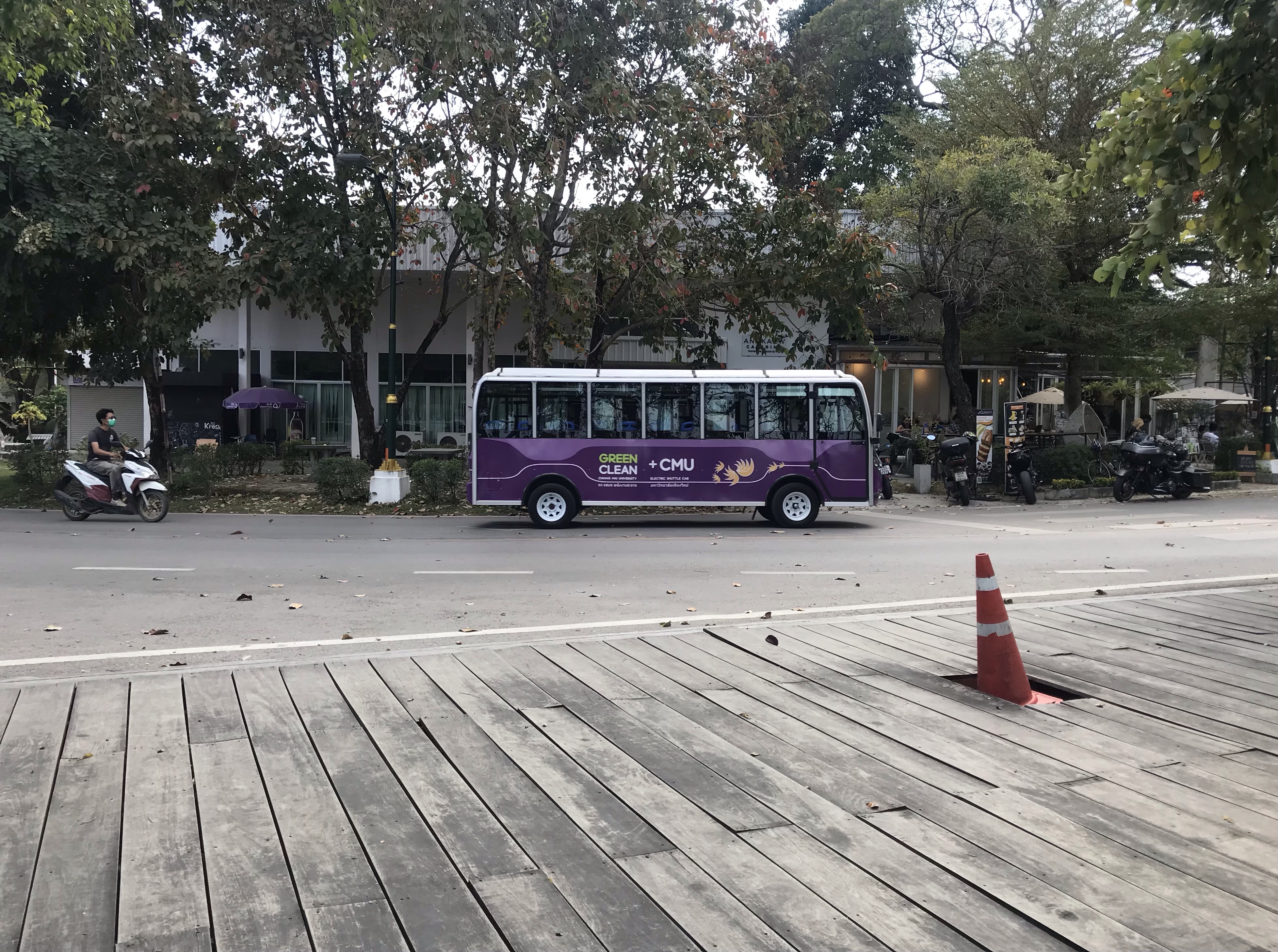
Pedestrian canal crossingMost temples are free to enter and have washroomsSolarSolarPost by motorcycle Working to reduce waste E-tukRental work space at mall food court 40 sounds good, but traffic goes much fasterRoundabout Electric busses at CMU
Until now I have posted public spaces observations on my Twitter profile @lecwhite (you can see them by selecting the media tab). I’ll continue on here, and possibly add pics later from our time in (mostly) France, Belgium & the Netherlands in the fall. I have a lot of catching up to do! We are now back in Europe after 3 months in Thailand 🇹🇭.
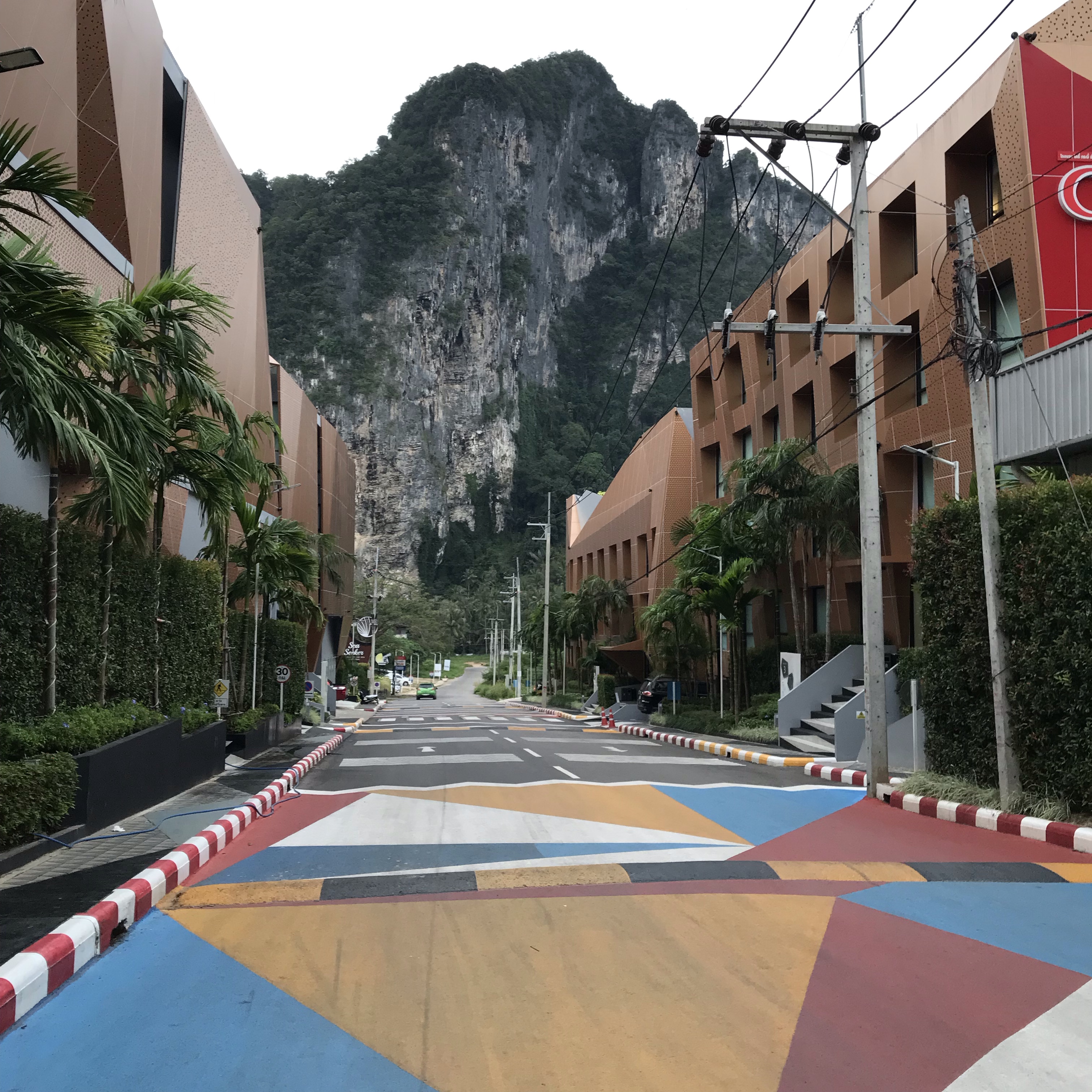
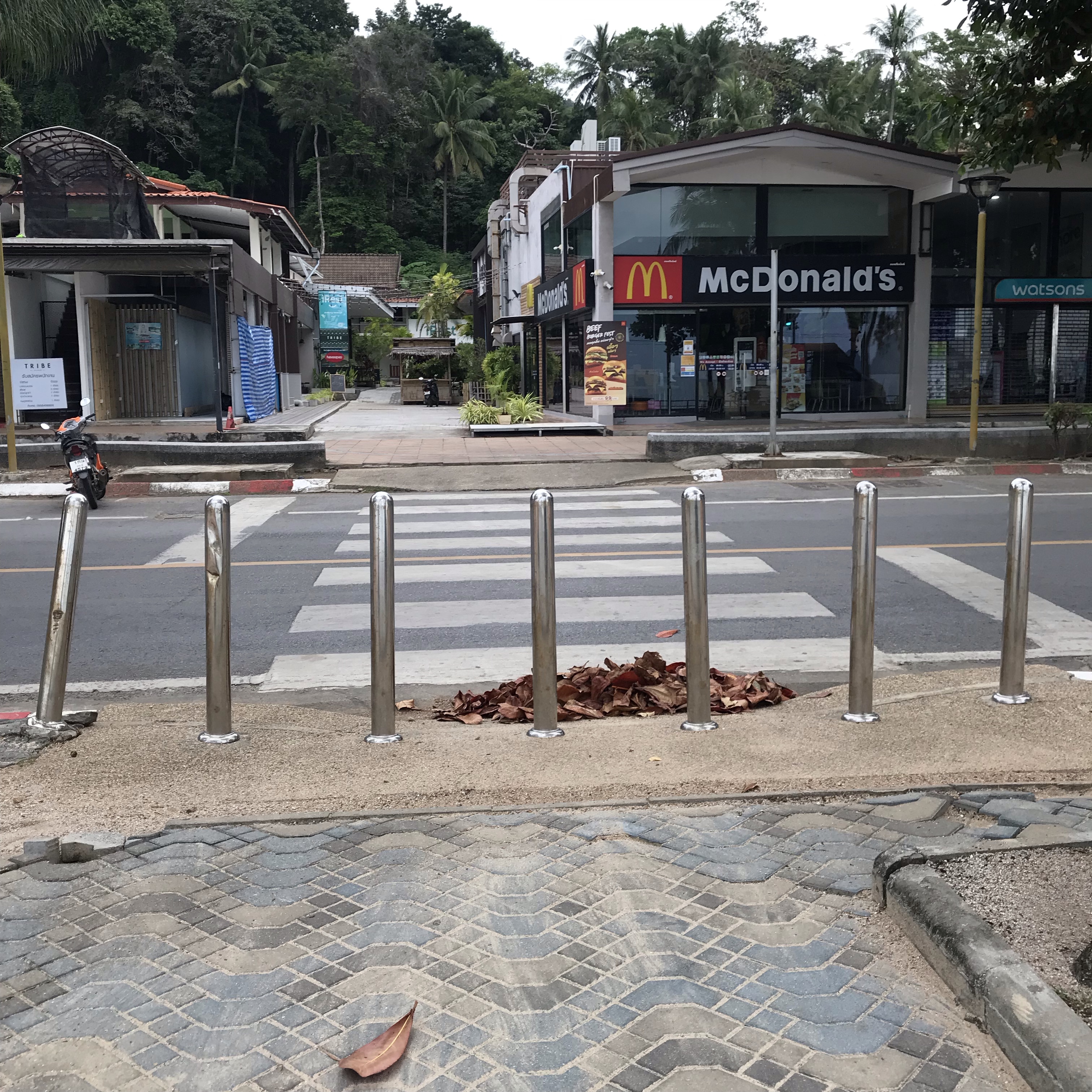
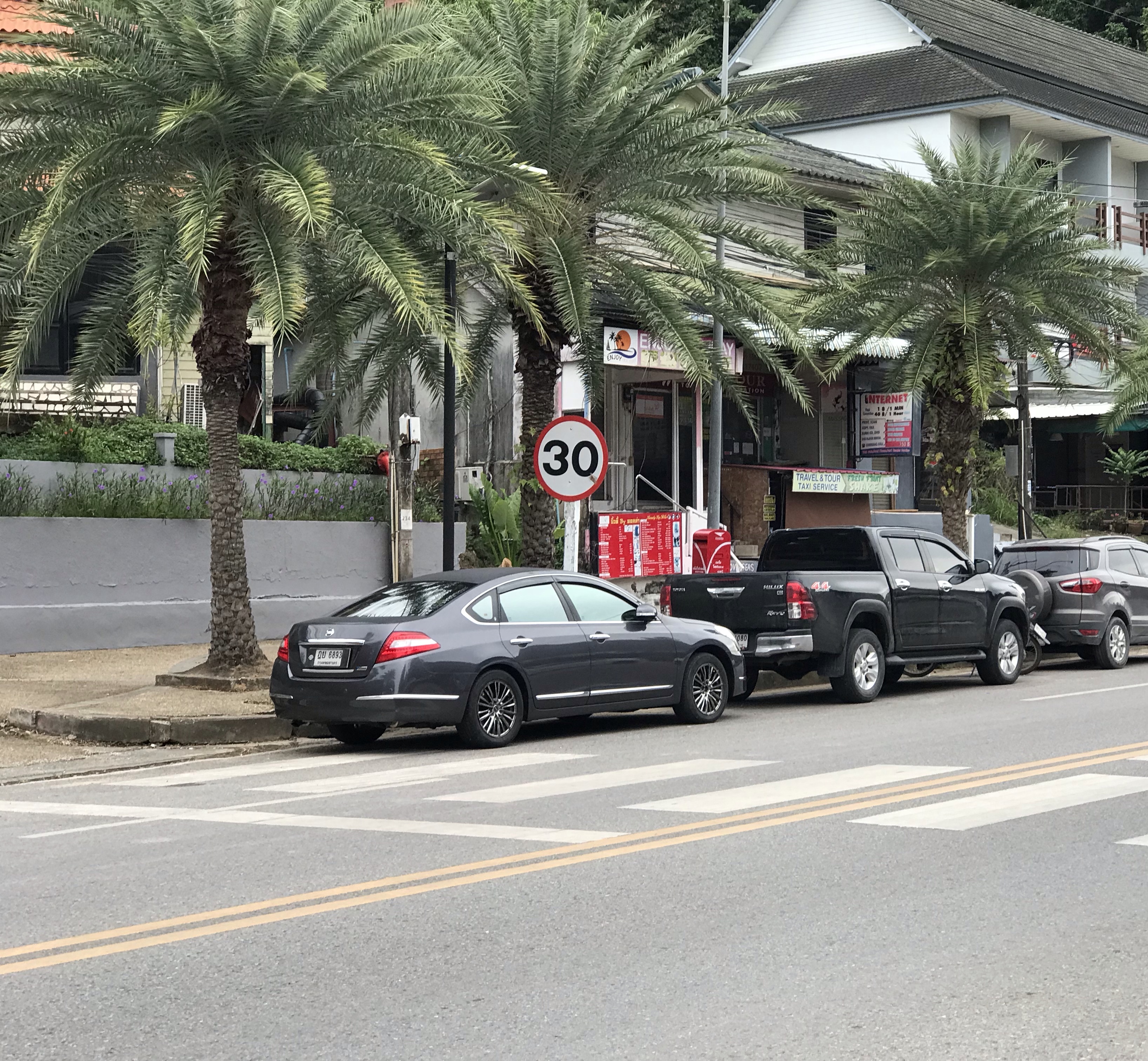
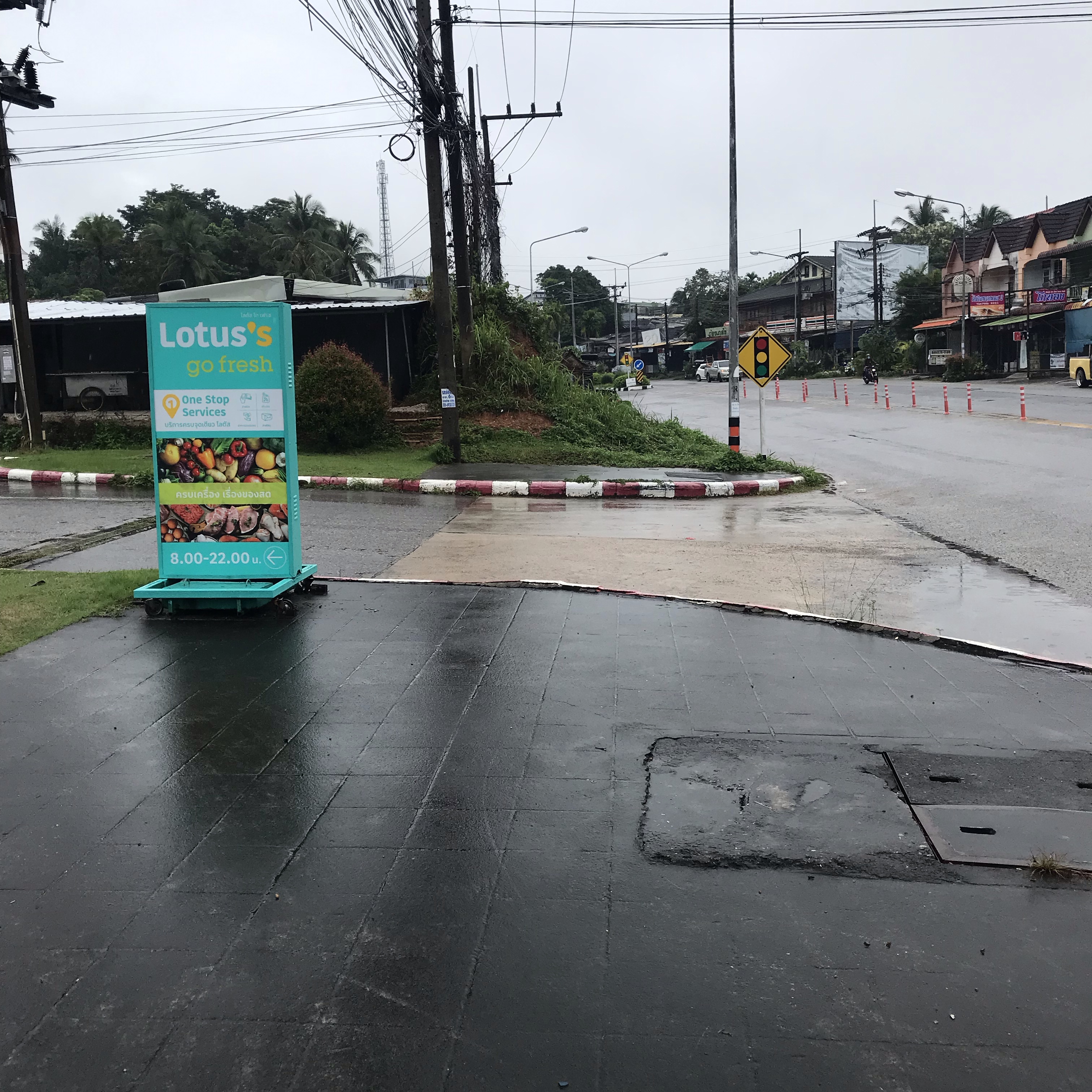
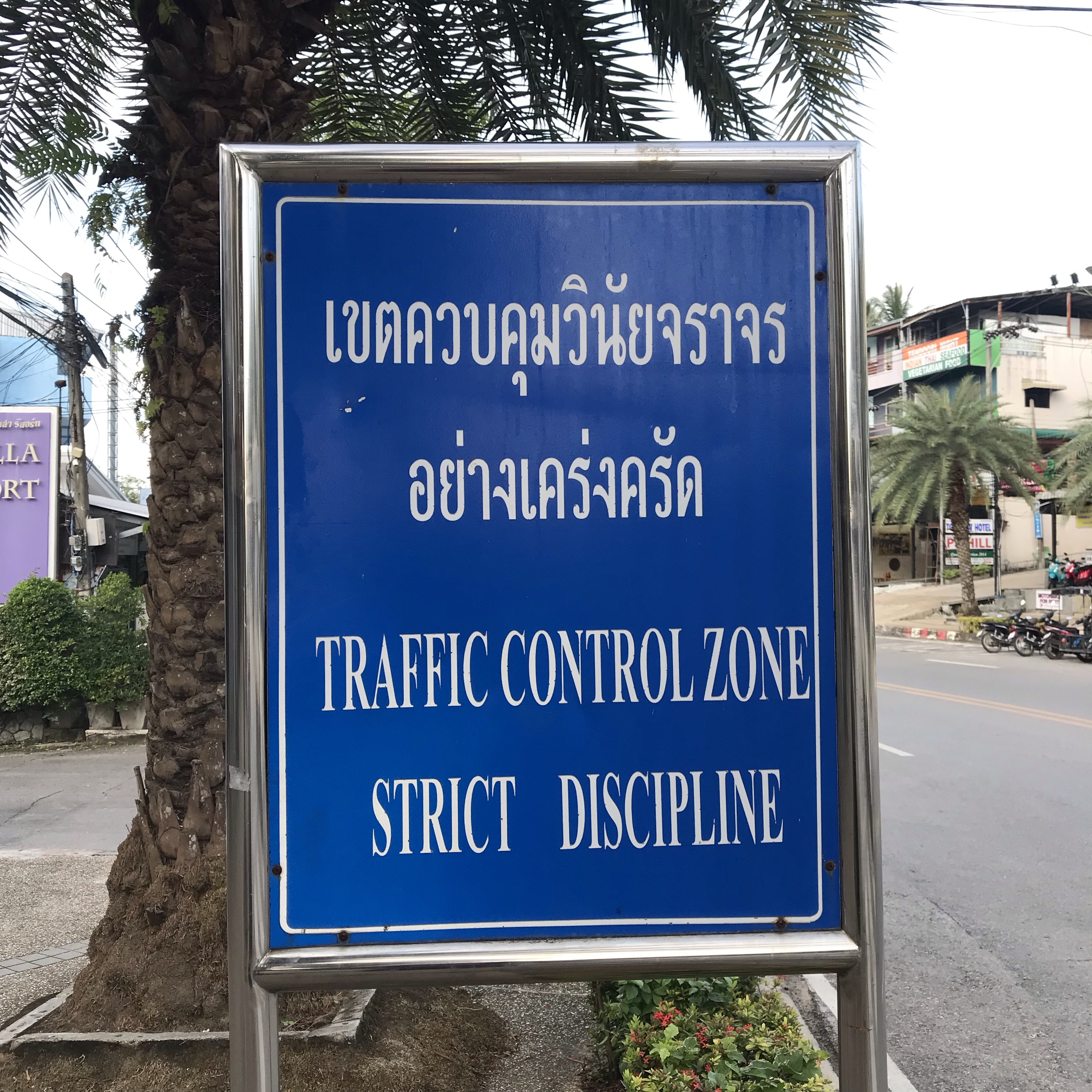
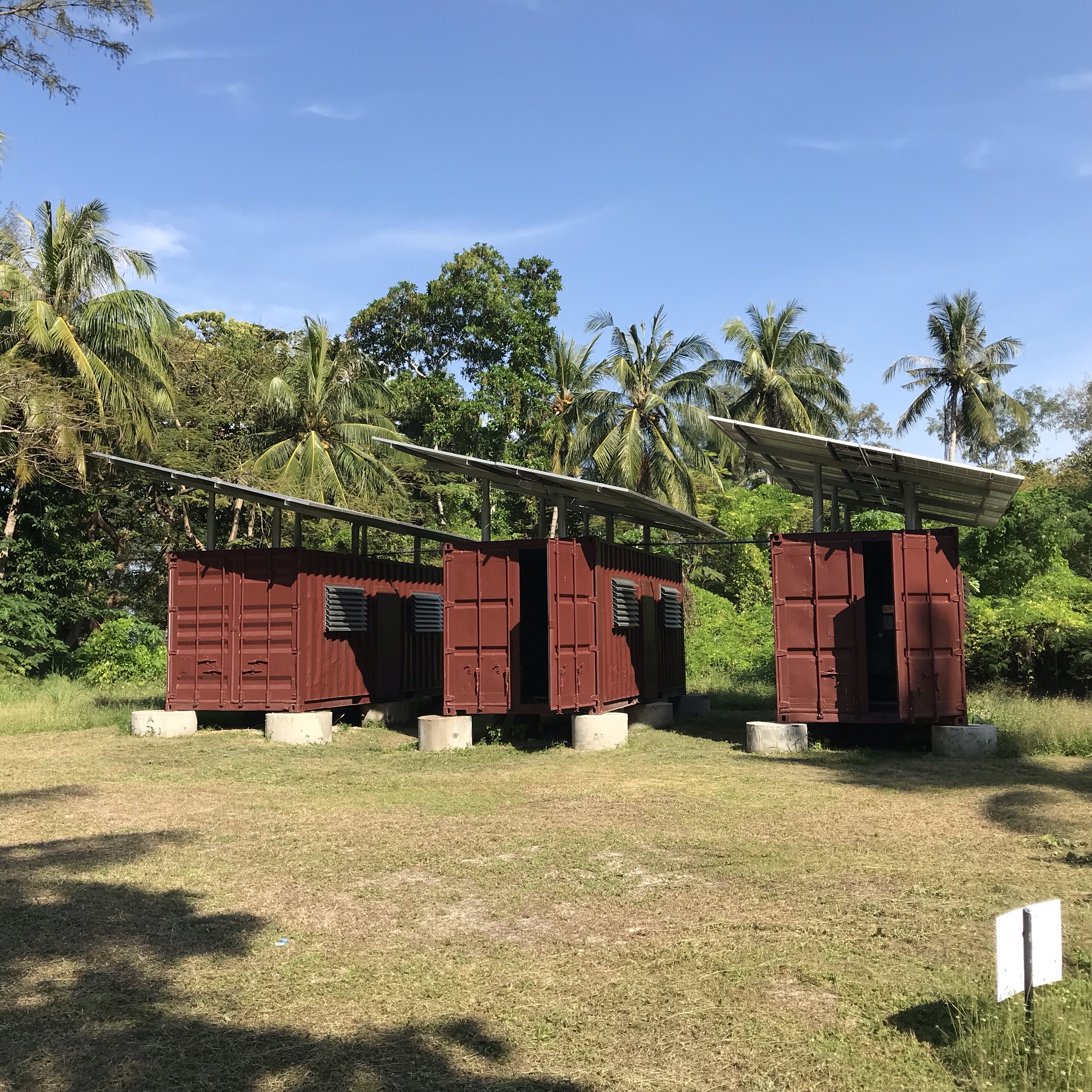
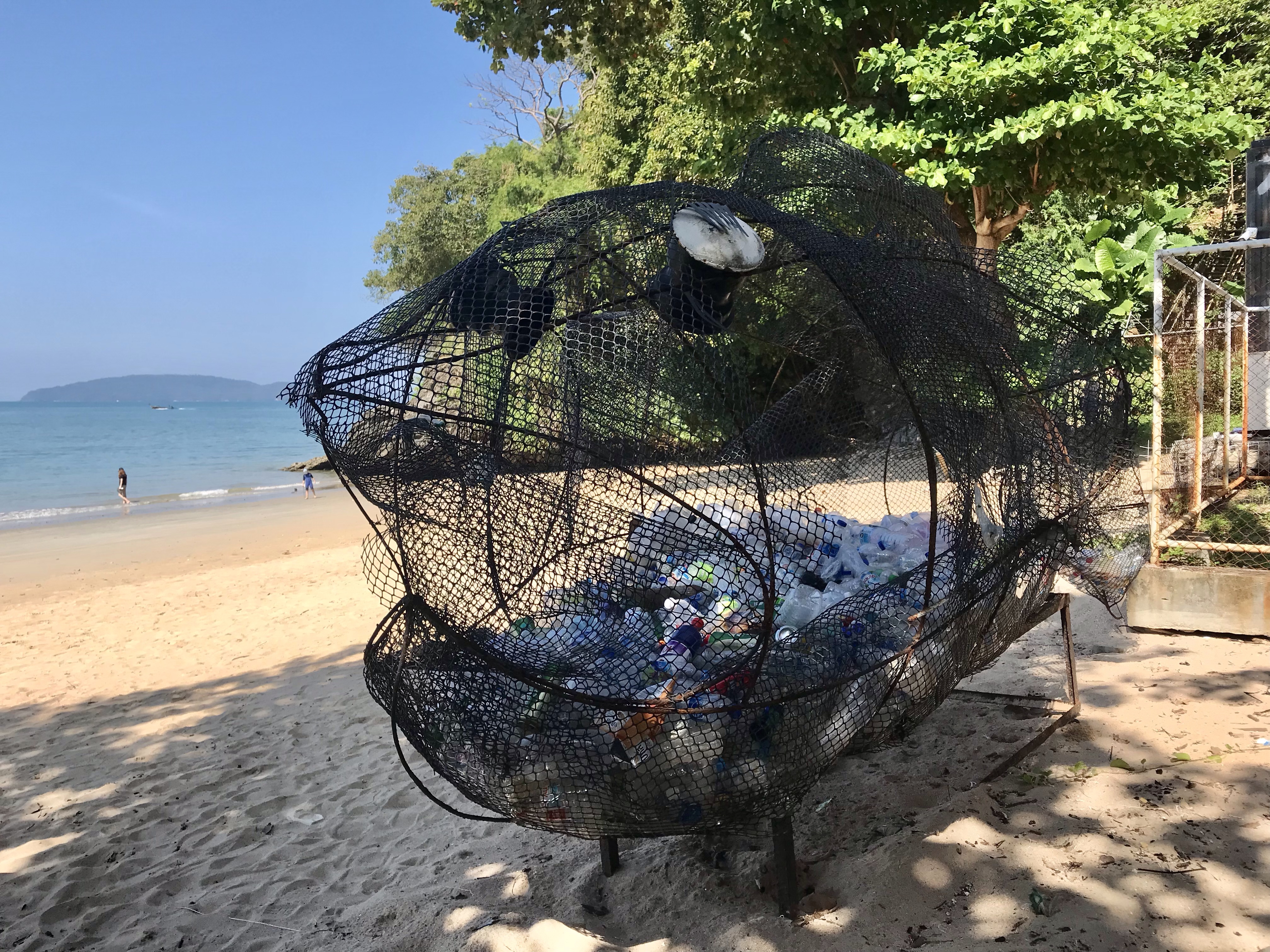
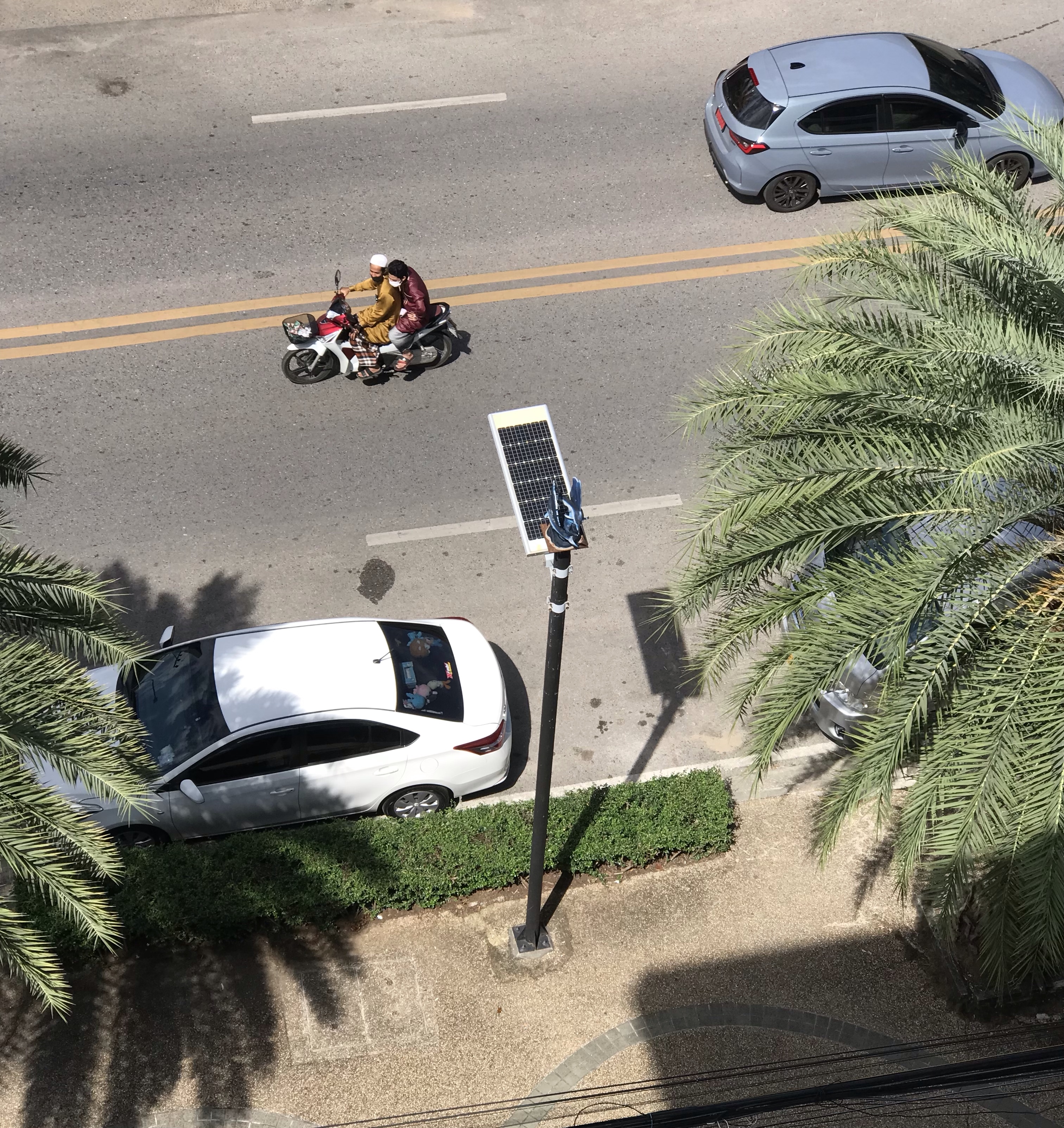
I expect these speed bumps were installed by the adjacent hotel.Bollards to prevent motorcycles on the wide sidewalk I think.The limit was 30 km/hr but other than the parked cars & congestion, there was nothing to slow traffic.Great wide sidewalk in the tourist area, but then it ends abruptly.We did witness a collision between a car and a motorcycle, but thankfully the drivers walked away seemingly unharmed.Public compost bins, yay! Should we think about this for NS? Unlikely, but possible.Solar on an island.For ocean plastic collection & awareness.Love the variety of street food available.Rural bike lanes! Seemed like developer chose to build these rather than government, as they did not really lead anywhere in particular.Public toilets were easy to come by including at free entry attractions.Solar powered LED street lights
This is certainly not a net zero trip, but we do make decisions to reduce our impact where possible considering time, COVID-19 & our budget.
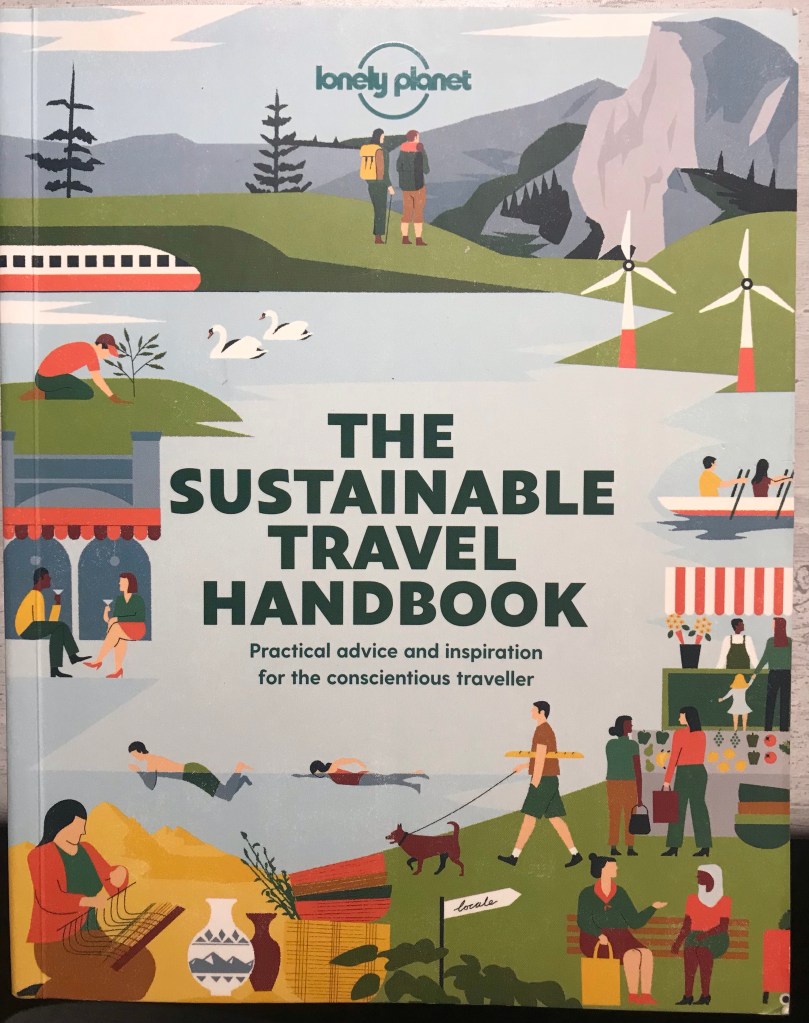
This is a great resource.
Here are the ways we have decreased our impact to date (6 March 2022):
1) We are limiting our flights. So far (half way through our year-long trip) we have flown 3 times (4 take offs & landings) and plan to fly 2 more times (3 more take offs & landings). We are offsetting our emissions using the Gold Standard-Certified International Credits at less.ca.
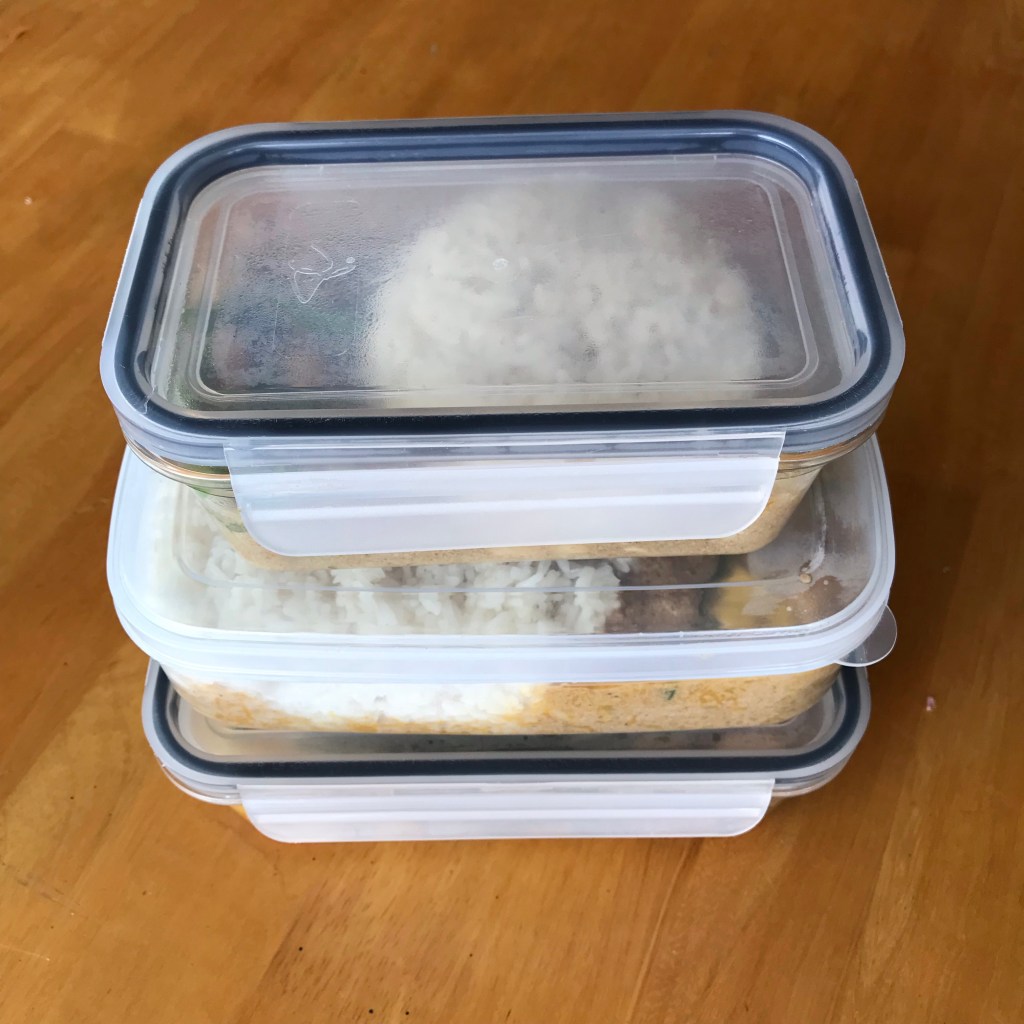
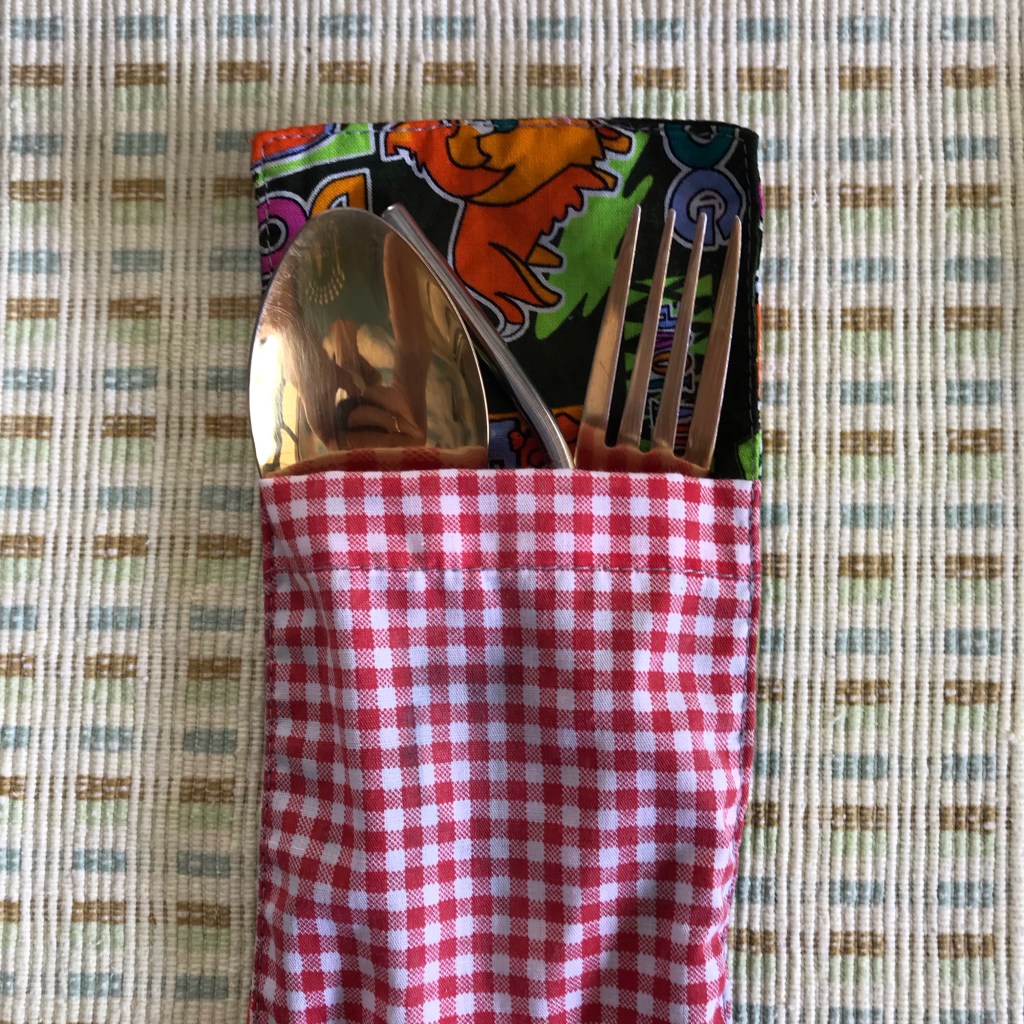
2) We brought a few reusable shopping bags, a set of cutlery, food containers & water bottles.
Our leftovers from a Thai cooking class mmmmmmm. (The Best Thai Cookery School)
3) We rented an electric vehicle for the first 88 days of our trip (mostly France).
4) We eat mainly lacto ovo vegetarian meals.
5) We used an E-Tuk a few times, both planned & by chance. There is a tuk-tuk app in Bangkok called MuvMi that we have not been able to make use of yet, but we were excited to see it around town.
Bangkok E-tuk
6) Dryers are not a thing in France or Thailand. Rack or line drying clothes definitely takes more effort, but I actually enjoy the task.
7) We eat-in at local restaurants for most of our meals in Thailand, choosing reusable utensils over single use ones. There is a lot of plastic around here! Often it is as a sign of cleanliness when it is not required (like over TV remotes).
This veg restaurant in Chiang Mai had a reusable wrapper (V Lodge Vegetarian Vegan Hotel)
8) Compost is not collected in France, but we were able to compost when house sitting (trustedhousesitters.com). The only collection that I recall was at a space museum.
In Thailand I have seen a few compost bins around towns/parks, but it has never been an option for us at hotels. We don’t have much food waste anyway because we are not cooking.
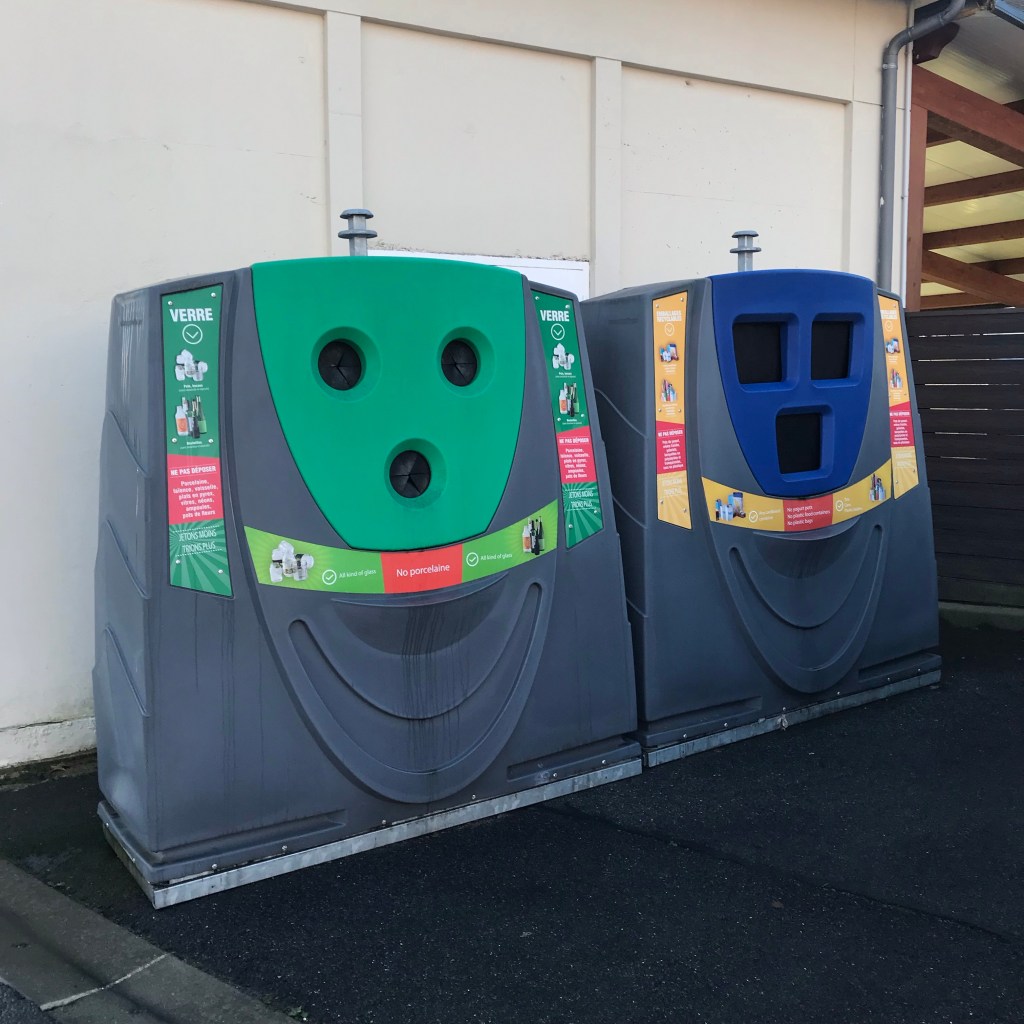
9) Recycling bins are found in every French community. There doesn’t seem to be any household pick-up, but community bins for household drop-off are very common.
Marriott Disneyland Paris. We saw the truck pick these up one day. They grab it from the top hook, and the bottom folds open to drop the items into the truck.
In Thailand the only reliable community recycling bins are outside 7 eleven (for drink containers). There are sometimes bins in parks and at tourist attractions. We are able to recycle at the condo we are currently staying at.
10) Slow travel. We are typically staying 1-3 weeks in each location.
11) All of the hotels that we have stayed at that serve breakfast provide filtered water that is safe to drink. I was hesitant to trust them on this one given past experiences, but was appreciative once we got in the groove. This saves some money and decreases plastic bottle waste.
1) Make sure you know if you are paying per kWh or per minute. We found per kWh more economical as we were often charging from 50-100%. (I believe the recommended way to charge is from ~20-80%, but we were not confident with this until the end of our rental period.)
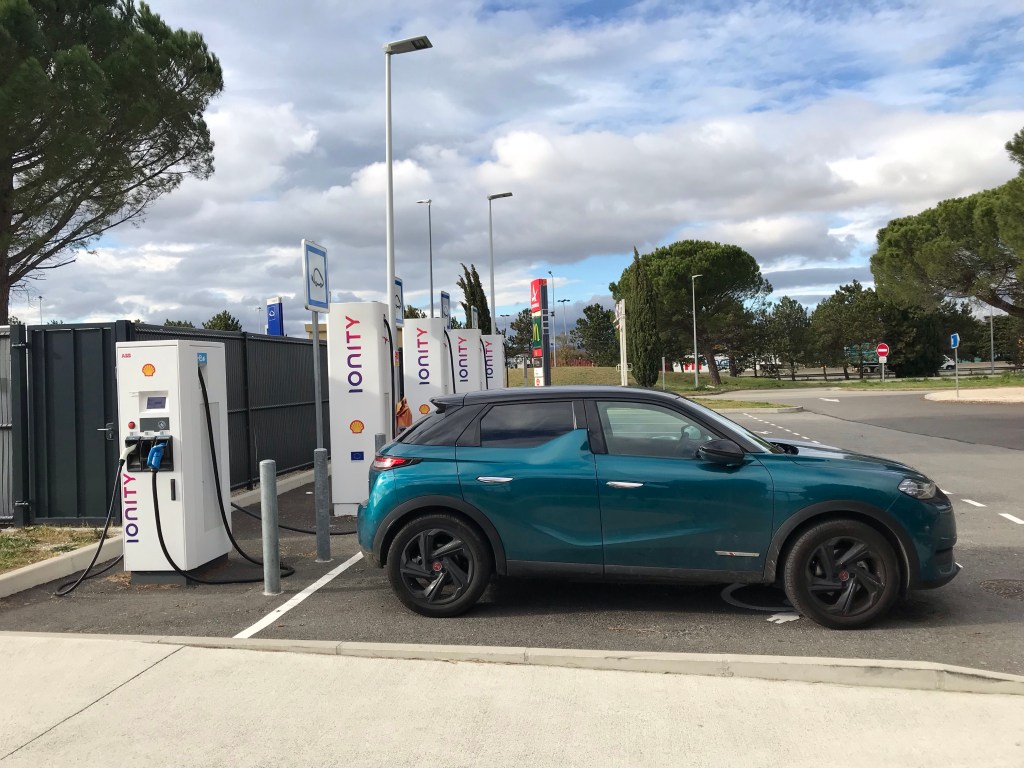
2) If you have the choice, choose the charger that matches the maximum power of your vehicle (ours was 50 kW). We saved money when we realized we could charge just as quickly at the smaller Ionity chargers for half the price.
3) Order a key fob from a consolidator ASAP, because they take awhile to come in the mail. Public charging became much easier for us when we had the fob. (We used Plugsurfing.)
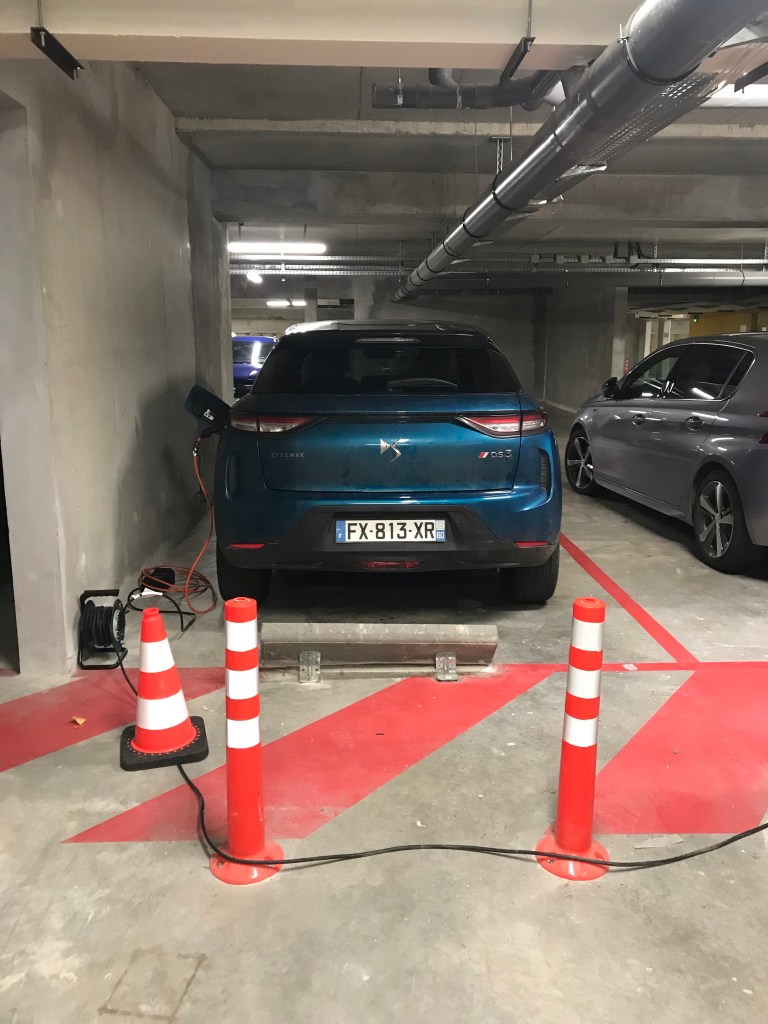
4) Check with your accommodations contact as to whether or not you can charge at their facility. We charged for free at hotels & Airbnbs, and paid domestic rates to the people we house sat for.
Hotel in Toulouse ran an extension cord to our parking spot for us.
5) Useful apps in France: TotalEnergy, Chargemap, freshmile, Ionity, OuestCharge. (Plugsurfing too, but our Canadian App Store wouldn’t let us access it.)
6) On holidays when more people are travelling, chargers are in use more often. Add some time to your itinerary to wait for a charger. In general, you need to have a plan B in case the charger you are planning to use is unavailable/out of order etc.
PS: There are often no washrooms associated with public chargers except at highway rest stops.
*See all of our charging data & notes in an Excel file on the blog home page.
Technically, charging an EV is very simple. You plug it in, that’s it. You can plug in to a regular AC wall outlet (~3 kW) for a slow (~12 hr) charge, to an AC (~7 kW) charger for a full charge in a few hours, or to a DC fast charger (25-350 kW) for a full charge in about 30 minutes. However, we have found that when using public charging stations in Europe (mostly) & Nova Scotia, there can be a variety of hiccups before the electrons start flowing.
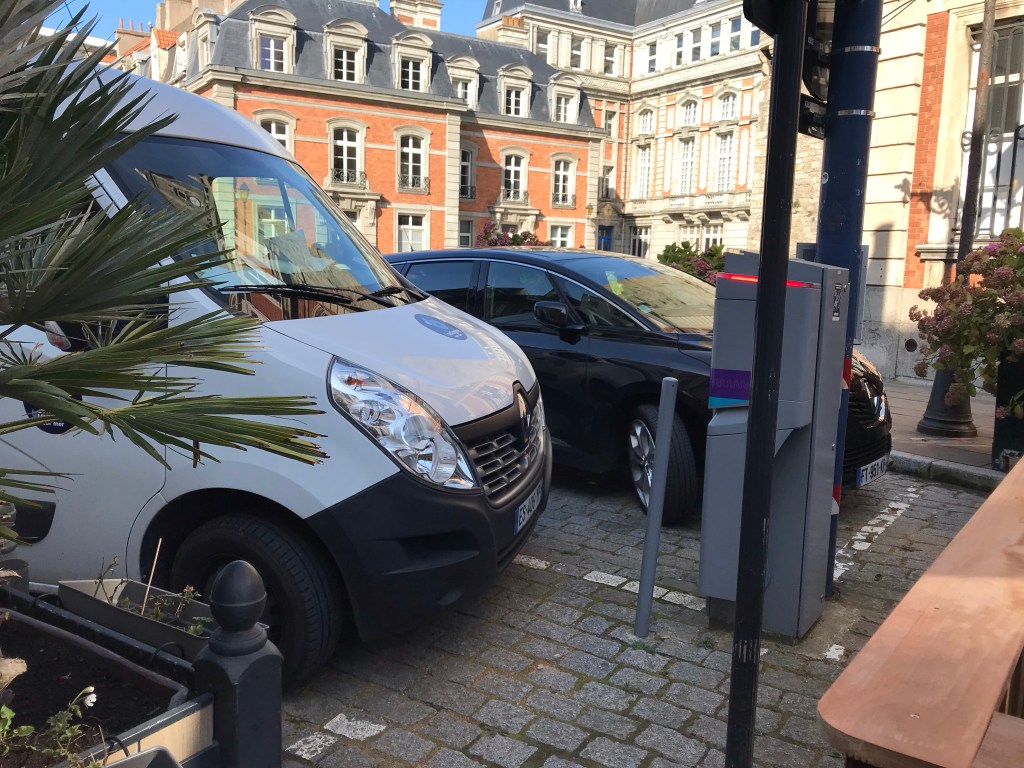
1) A vehicle is parked in the EV charging spot:
the charger is in use
an EV is parked there but not charging
a gas vehicle is parked there
an app indicates that the charger is available, but it is not
No one charging.
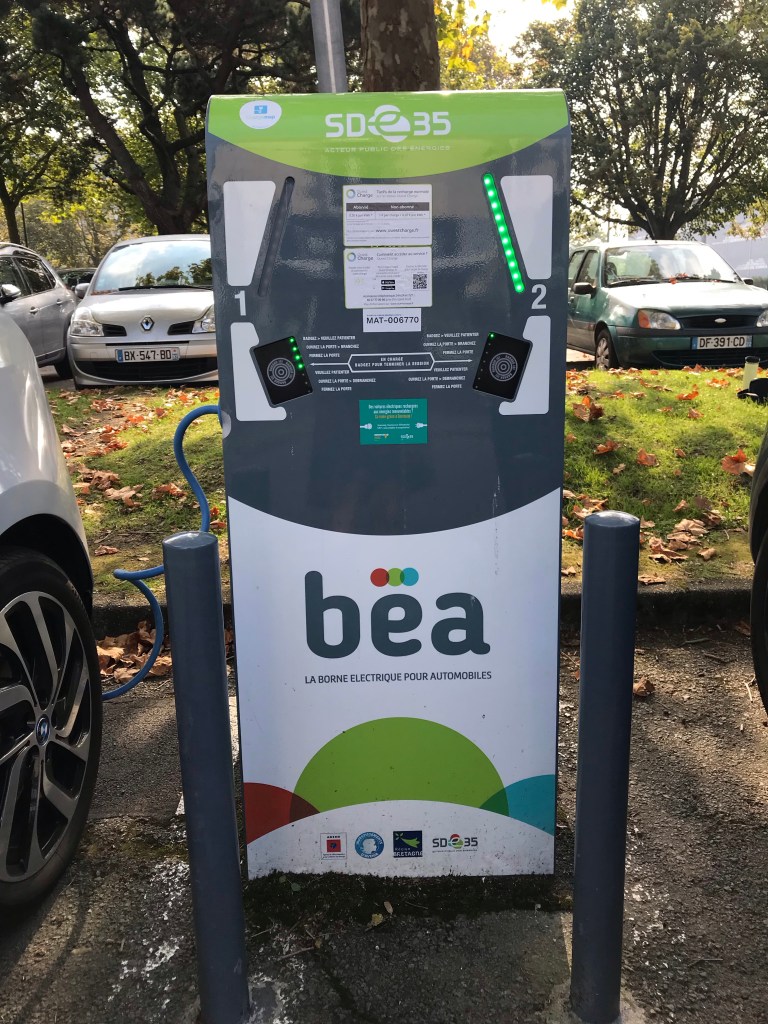
2) The charger requires an app, website or a key fob to start rather than simply tapping a credit card as we do to pump gas:
sometimes the app and the charger do not communicate well
keep informed of the information provided by your key fob provider (consolidator) to ensure it will function as expected
3) The charger infrastructure does not match your vehicle port or cable connector:
the charging outlet is outdated
the charger connector is not the type that your car accepts (ex. CCS vs CHAdeMO)
4) Only a domestic outlet is available on a charger to provide a slow charge, which is often not helpful for public charging (for a road trip).
5) The charger is in a private parking lot.
6) The parking spot by the charger is:
an accessible spot
a tow away zone
nonexistent (i.e. one spot for two chargers)
7) The charger is powered down:
it is old and never used
it requires technical support from customer service to get it going
8) The charger power is on, but will not charge the vehicle. Customer service cannot troubleshoot the problem successfully over the phone. A site visit is required.
9) Two step verification is sometimes required by North American credit card companies to use a card for an internet (app) purchase. We were not able to access the code that is texted to our phone number on file. The phone number must be North American, so we used a family member’s phone number, but they are not always available when we needed the code.
10) Cost:
some apps require prepaid credit before they will charge the vehicle
some apps/websites add a flat fee to the per kW or per minute price if you are not a subscriber
the highest prices we encountered were 52.27 Euros/hr and 0.79 Euros/kWh (lowest cost was 0)
1 Euro surcharge for non subscribers (zoom in to read sticker).
Despite these inconveniences, I would do it again for sure. There is a learning curve, but it feels great to drive a clean, peppy & quiet vehicle.
*See all of our charging data & notes in an Excel file on the blog home page.
Due to COVID (especially with 2 unvaccinated children) we wanted to rent a car for transportation rather than using public transit (13 Sept – 9 Dec 2021). We did not weigh the pros and cons of renting an electric vehicle (EV) vs a gas car, because we wanted to reduce our emissions wherever possible and I had some familiarity with EVs through my work and family. An EV driver at a curb-side charger in Paris told us that we were adventurous (to be generous) for making this choice!
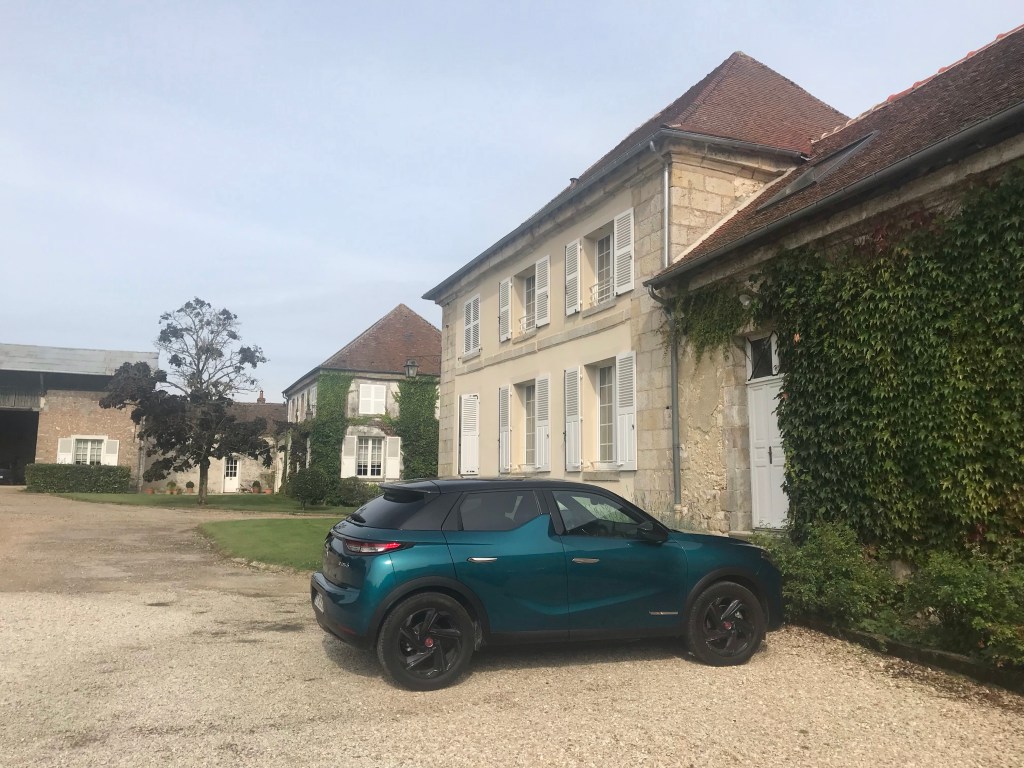
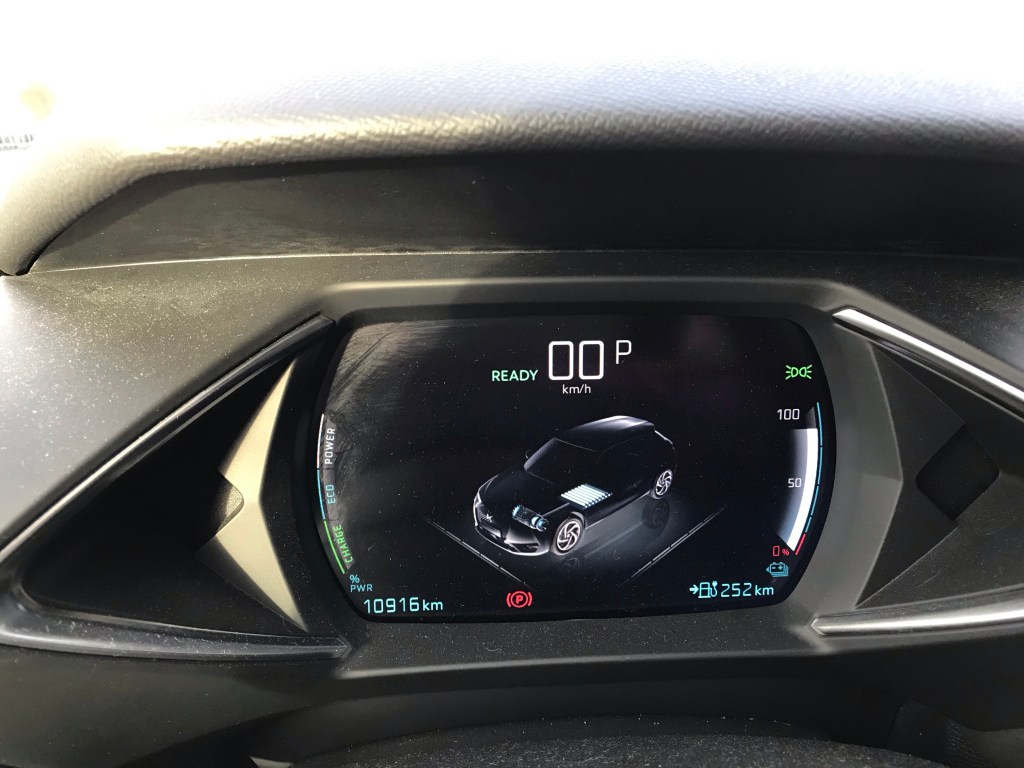
We rented a DS 3 CROSSBACK E-TENSE 100% EV on a subscription basis from Sixt for ~three months. (The car had only 4000 km on it at the start of our rental. We’re not sure if it was a 2020 or a 2021 model.)
We prepaid for 2000 km per month, and purchased extra kms when necessary. (Make sure you do this before reporting your monthly mileage, or you will be charged a higher rate automatically).
Our first Airbnb. We charged for no additional fee overnight from an outlet in the barn.
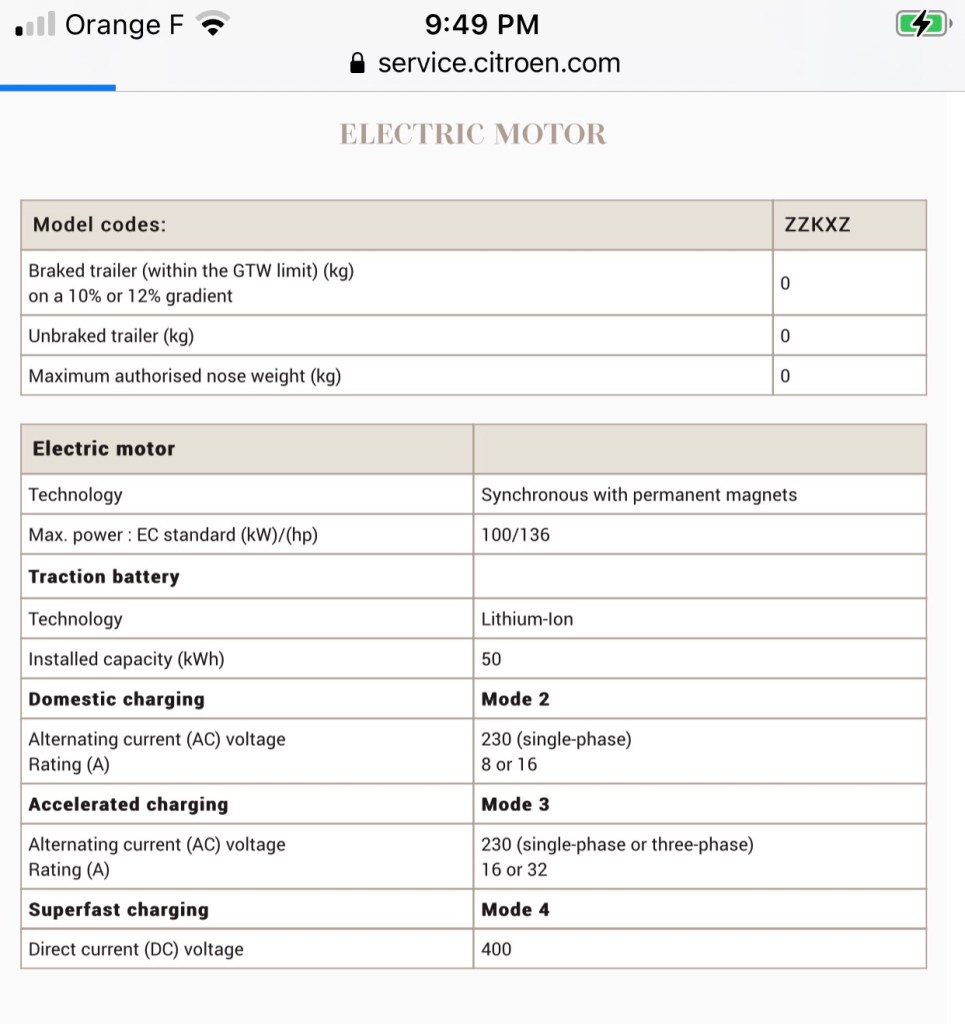
The vehicle had a 50 kWh lithium-ion battery with a maximum power of 100 kW. The five of us and all of our luggage just barely fit in the car, but we wouldn’t have wanted anything larger considering the narrow roads and parking spots in Europe.
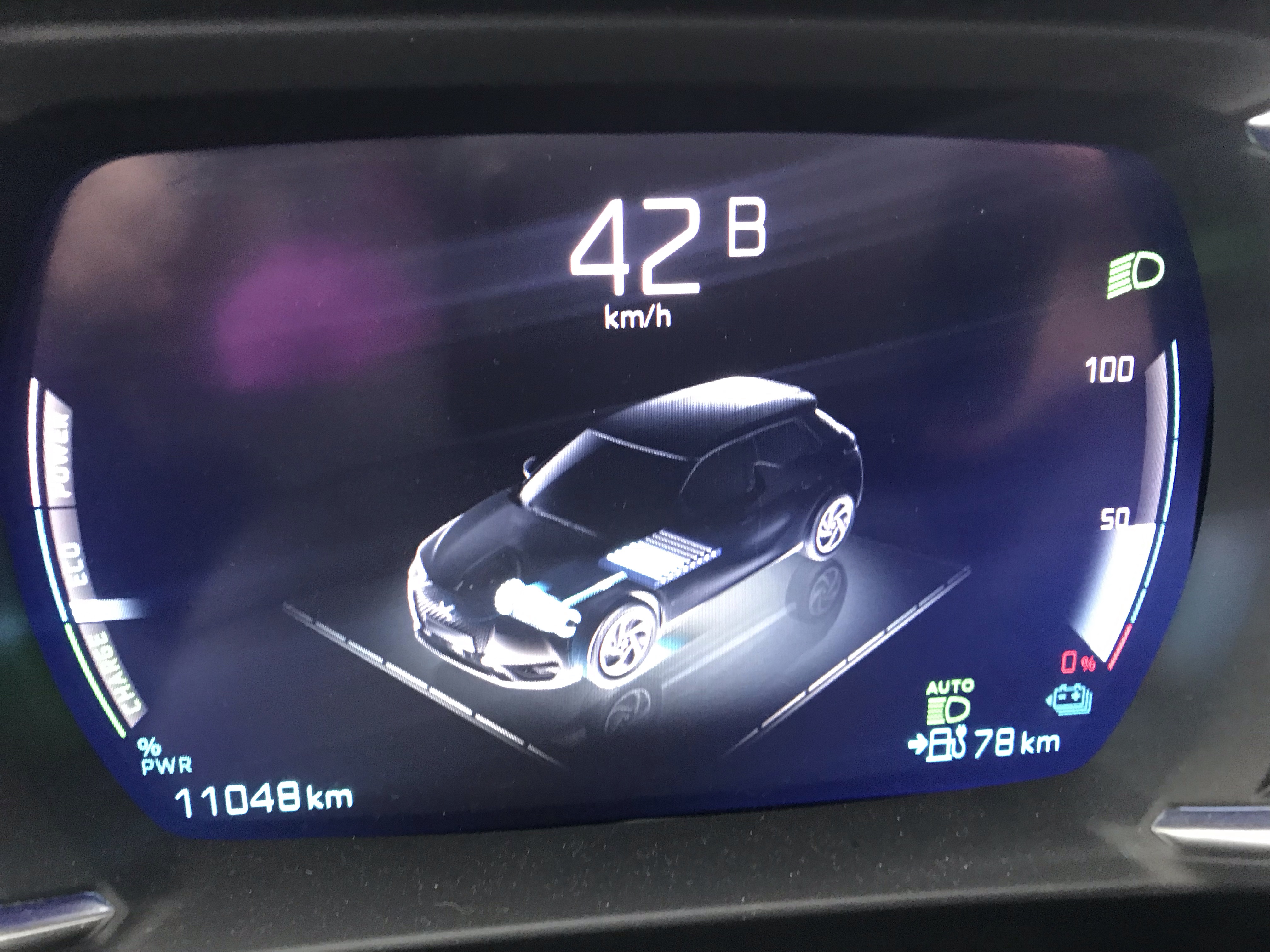
The car had Eco, Normal and Sport modes and regenerative breaking (B) or regular drive (D) modes as well. D mode does use the regenerative braking, but not as much. I noticed that I hardly had to use the brake pedal at all in B, but a friend let me know that this can damage the brakes long term due to lack of use, so I did try to use them a bit more after learning that.
The car was super peppy in normal and sport modes. I drove in Eco mode or light on the pedal to conserve energy on open roads. We found that the battery drained very quickly during highway driving, so I stayed around 95 km per hour on large highways. Up hills also drained the battery quickly. Driving around Paris, we barely noticed any decrease in battery charge at all, due to the slow speeds and frequent regenerative braking.
The charging port for the car accepts CCS (Type 2 combo) or Type 2 connectors. The CCS (or Type 2 combo connector) cables are for DC fast charging. The Type 2 cables are for charging at medium speed (Level 2 chargers in North America). For slow charging from a wall outlet (Level 1 charging in North America), the car comes equipped with a cable/power supply with a regular plug at one end for the wall and a Type 2 connector for the car. The car also comes with a cable with Type 2 connectors at both ends to use with chargers that do not provide a cable.
For DC fast charging (Type 2 combo or CCS). Fast charger cables are attached to the chargers.
*See all of our charging data & notes in an Excel file on the blog home page.
*Since writing this, I learned that Cam received an email from Plugsurfing on 29 November that required us to take action in order for our fob to keep working. The email was not read until February 😬 Ooops!! Details! 😆
**See all of our charging data & notes in an Excel file on the blog home page.
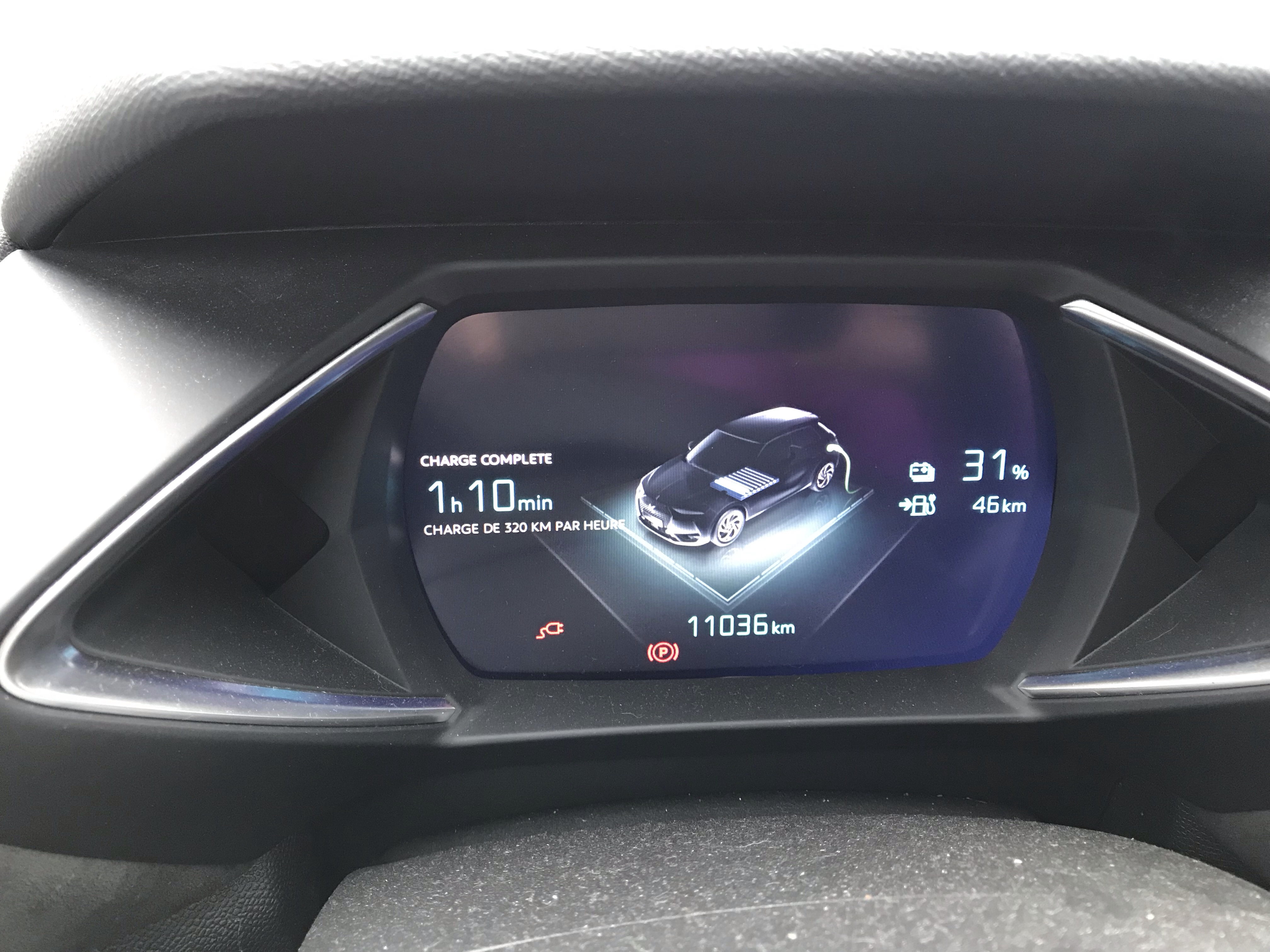
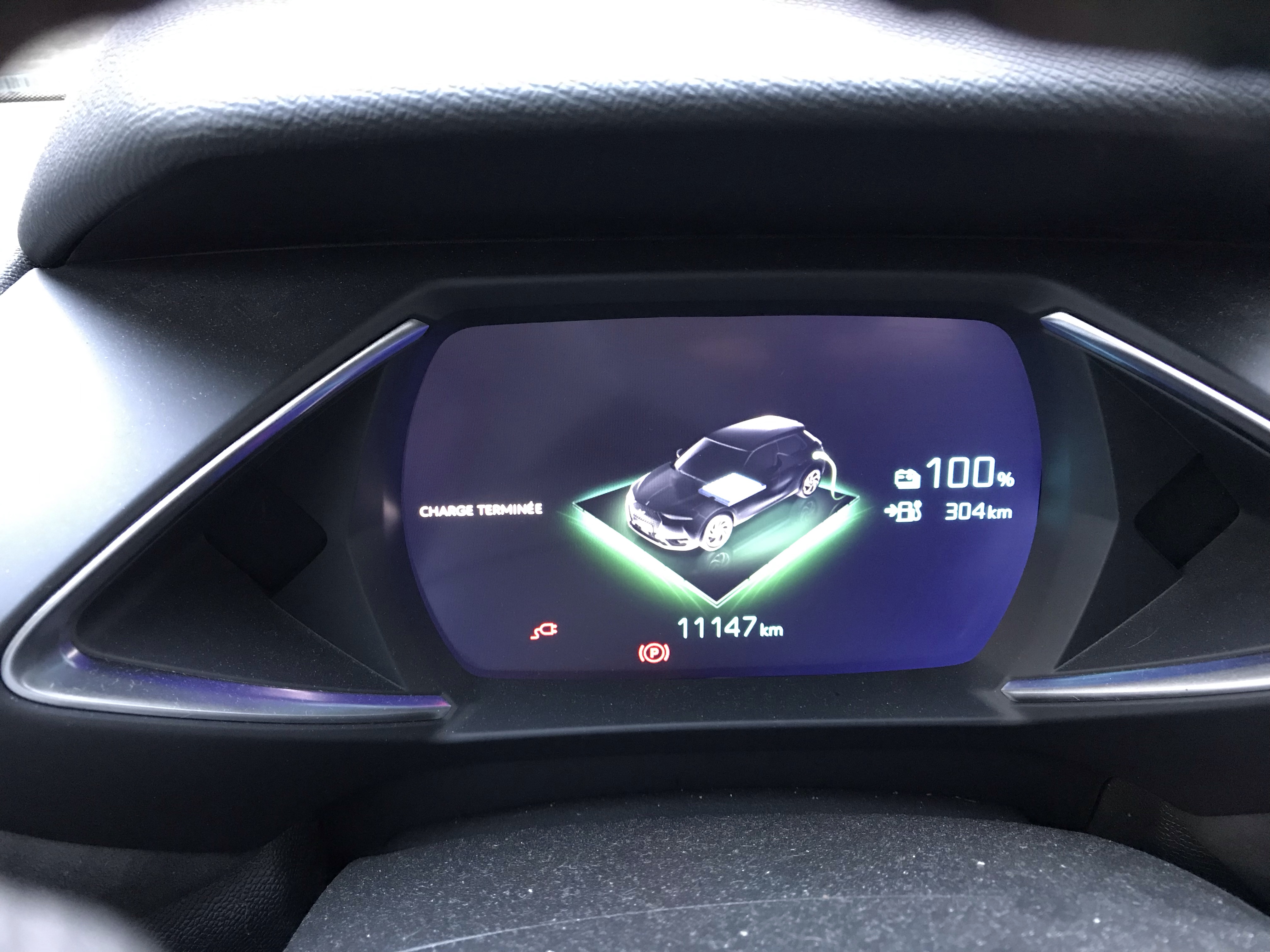
We started our longest driving day of the trip at 7:30 am before the sun was up. We had been fortunate to be able to charge overnight at our hotel (Hôtel Première Classe Bourg En Bresse), but the car battery was only at 71% in the morning despite having been charging for about 14 hours. Another EV was also charging at the same building, so we expect that this was the reason we did not wake up to a fully charged battery.
We decided to drain the battery down fairly low for our first driving segment as recommended by the Chargemap app instead of stopping to charge around 40-50% as had been our comfort zone for most of the three month rental, due to not being able to rely on chargers working easily for us.
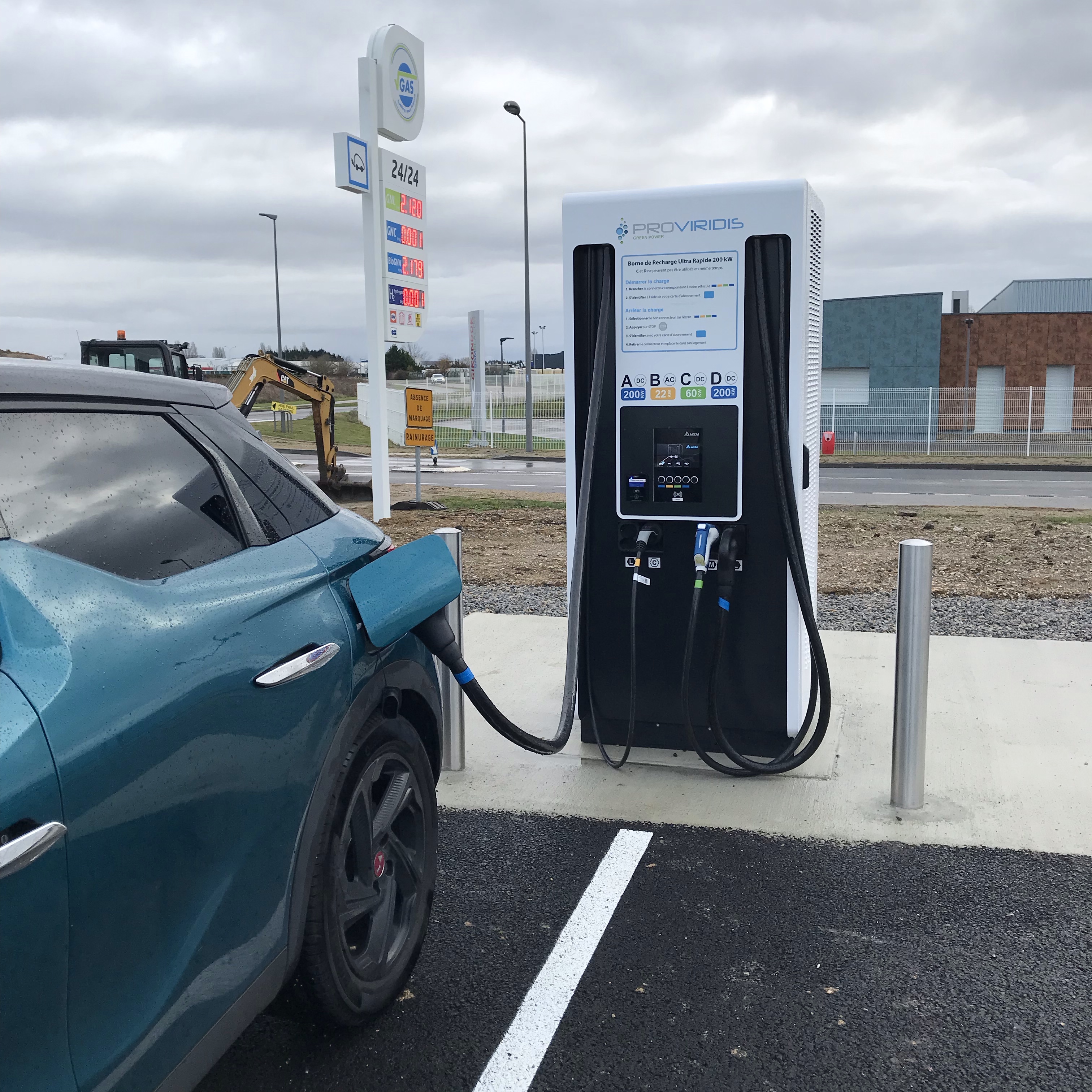
Charge attempt 1: ✅ Our Plugsurfing fob did not work for us at the awesome V-GAS FRAGNES charging station, and neither did our Amex. Card #2, a MasterCard did the trick. We charged for 49 minutes from ~22-85% using a 200 kW DC fast charger with a CCS (Type 2 combo) connector.
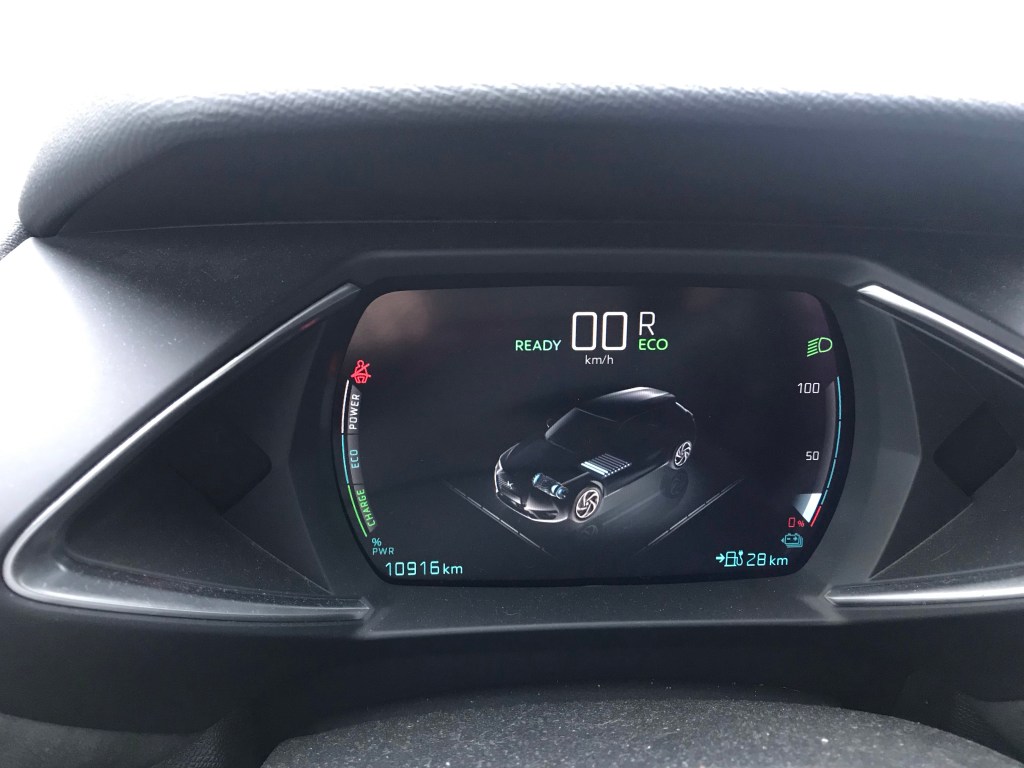
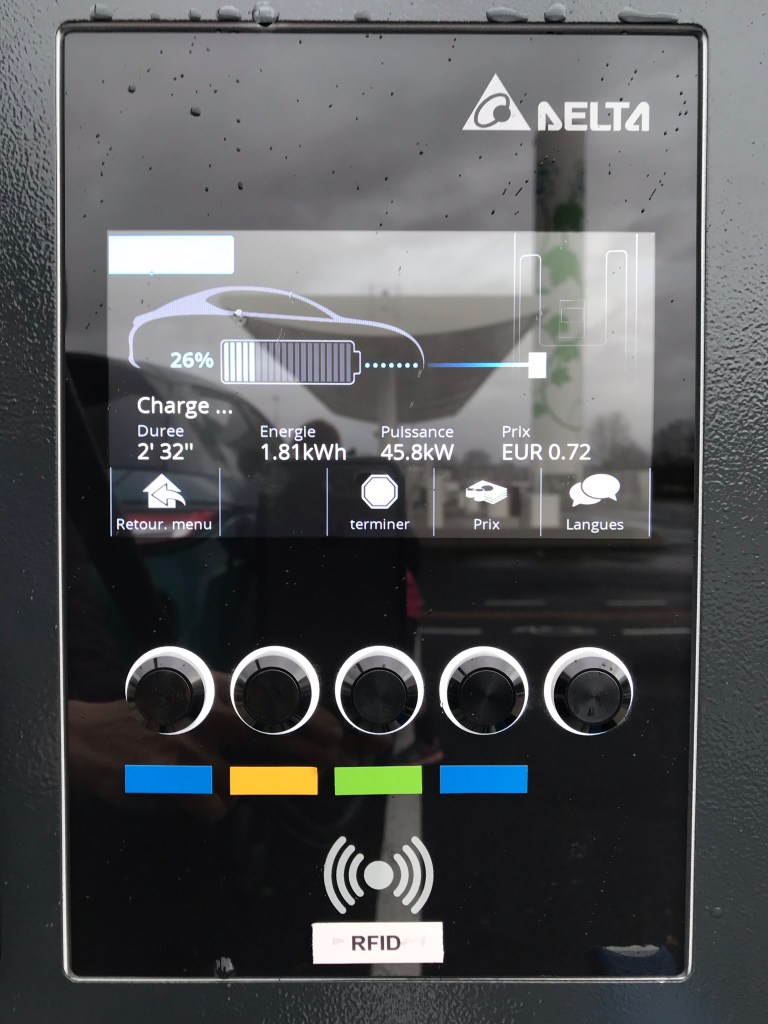
Glad the charger worked with only ~ 28 km left of range!Real time data display. The price feature was helpful. This station charged per kWh rather than per minute which is generally more expensive.
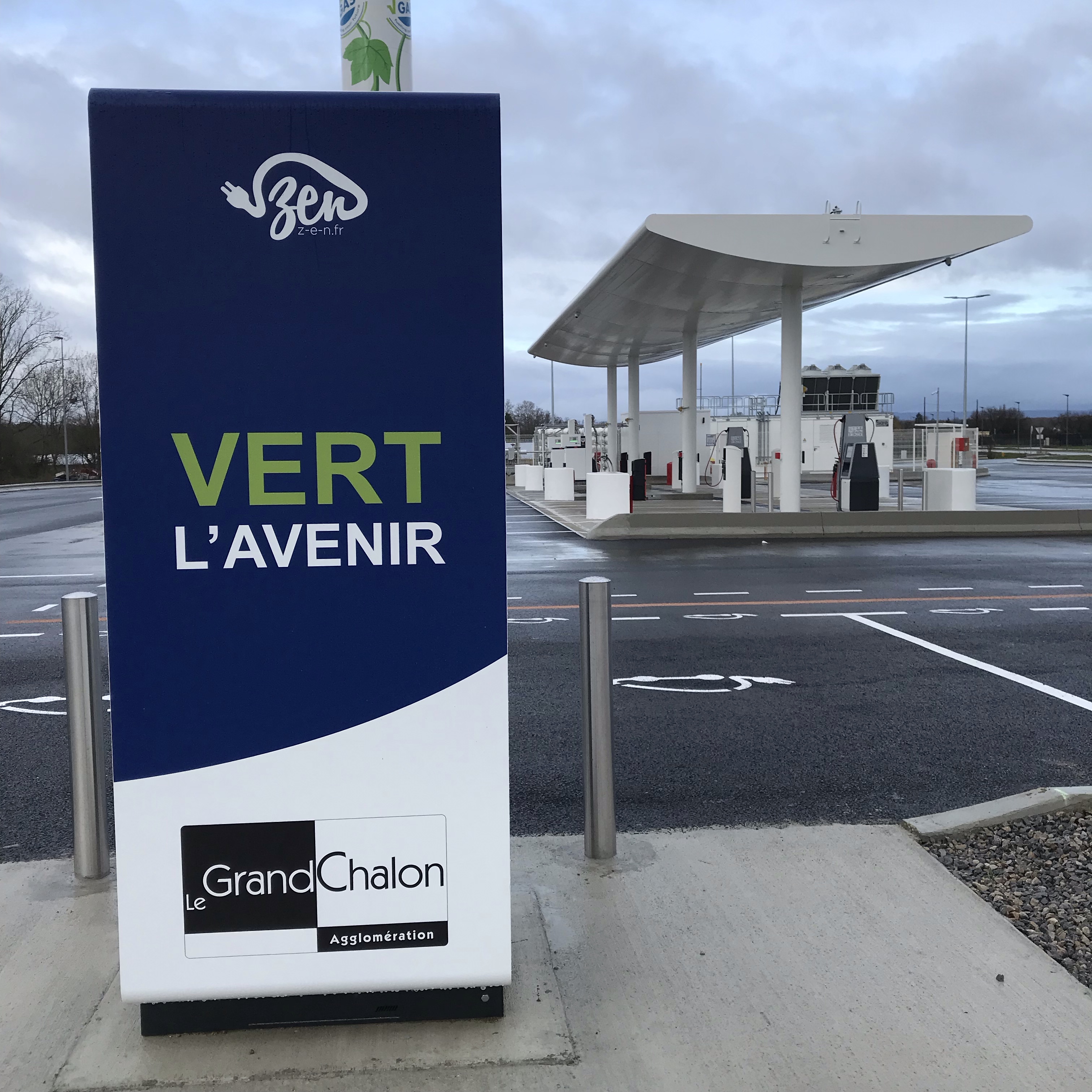
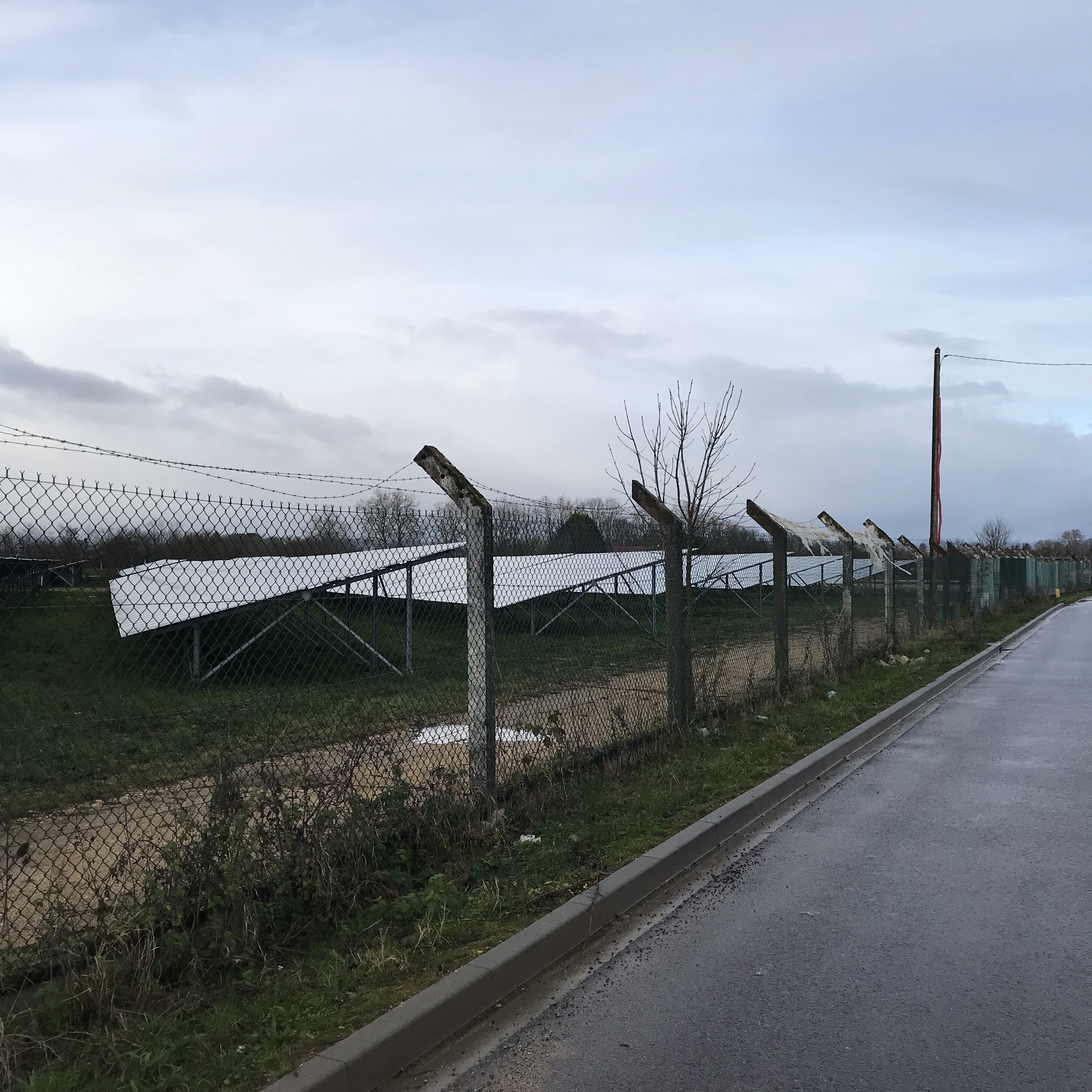
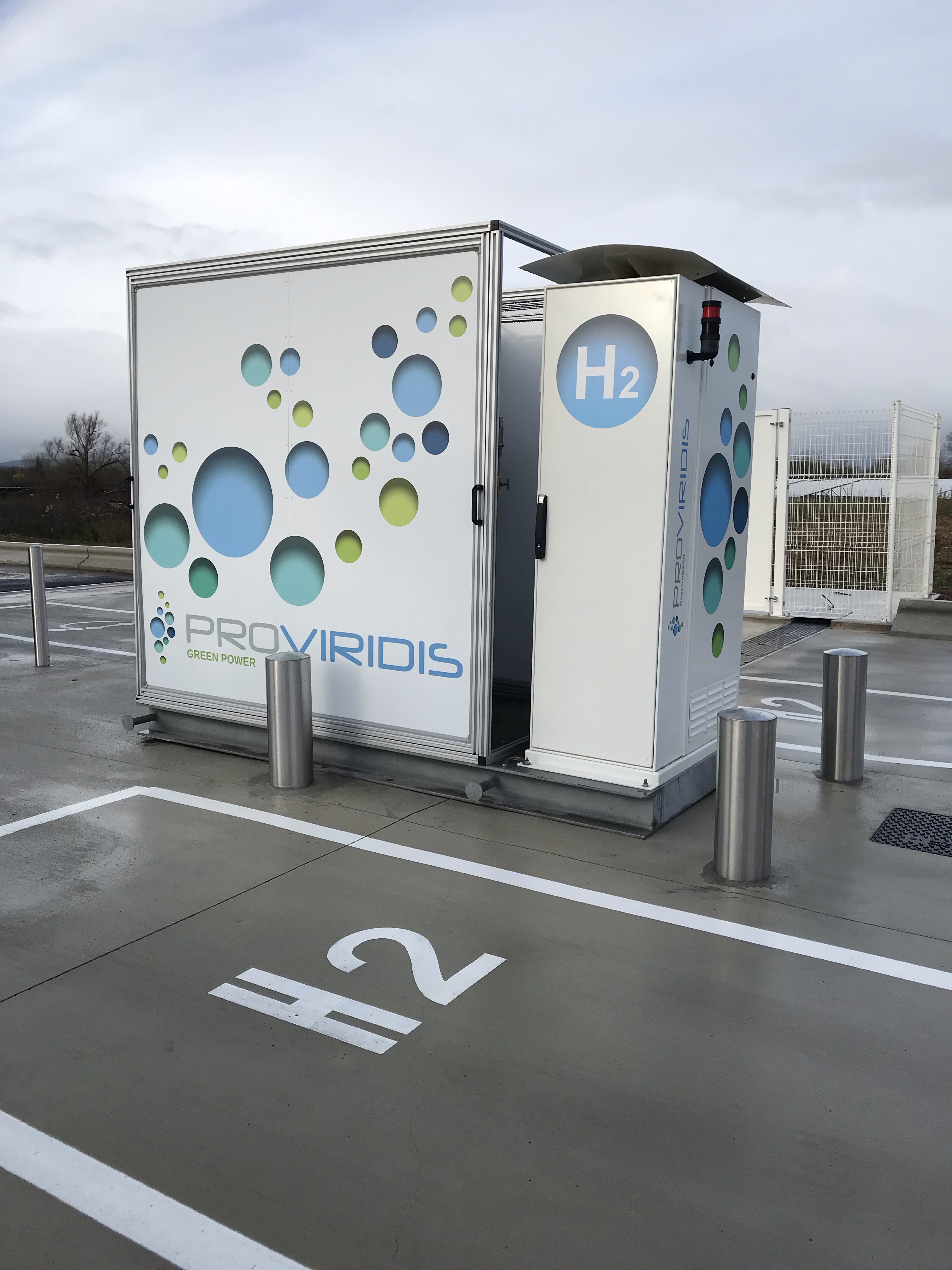
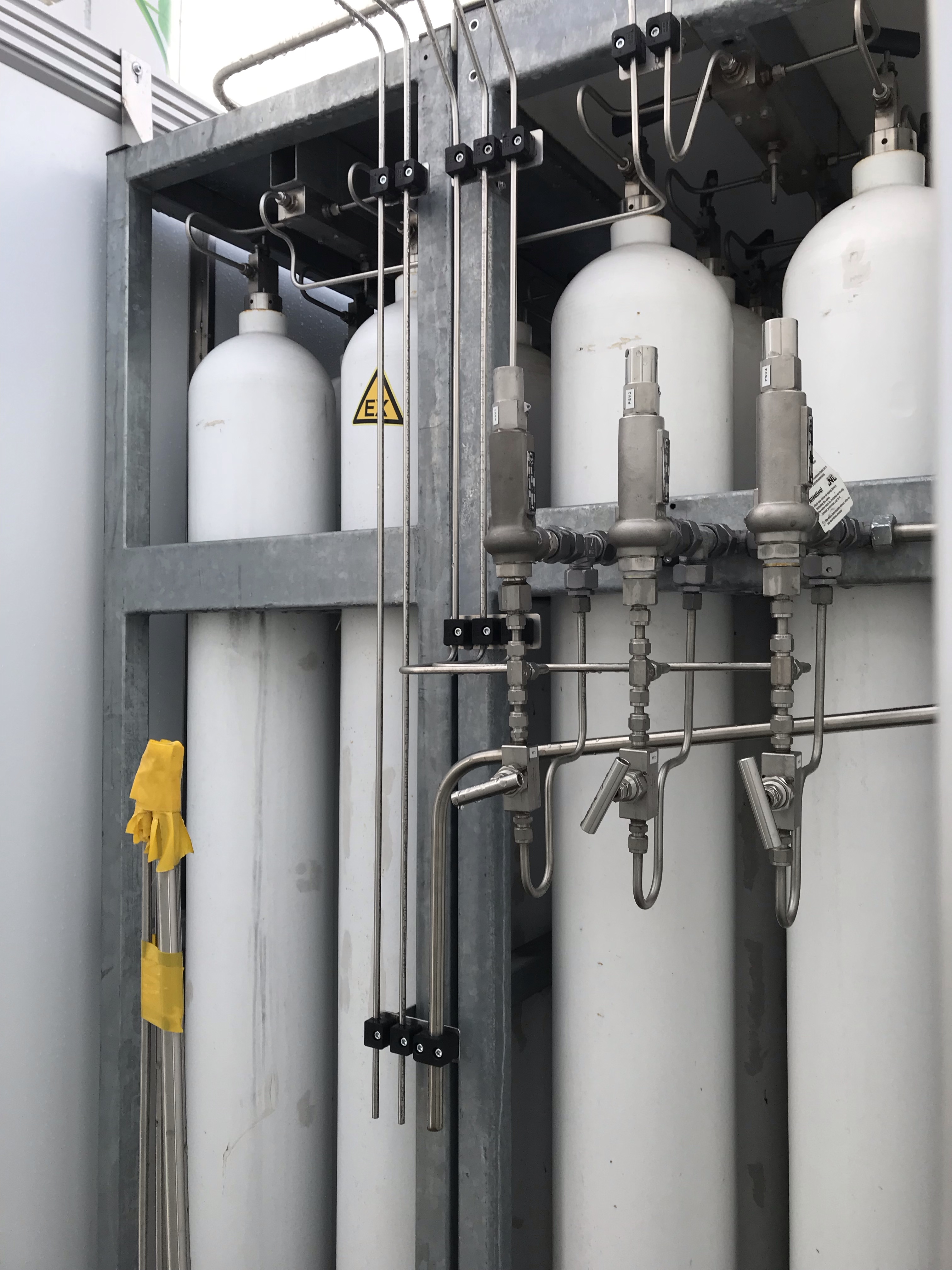
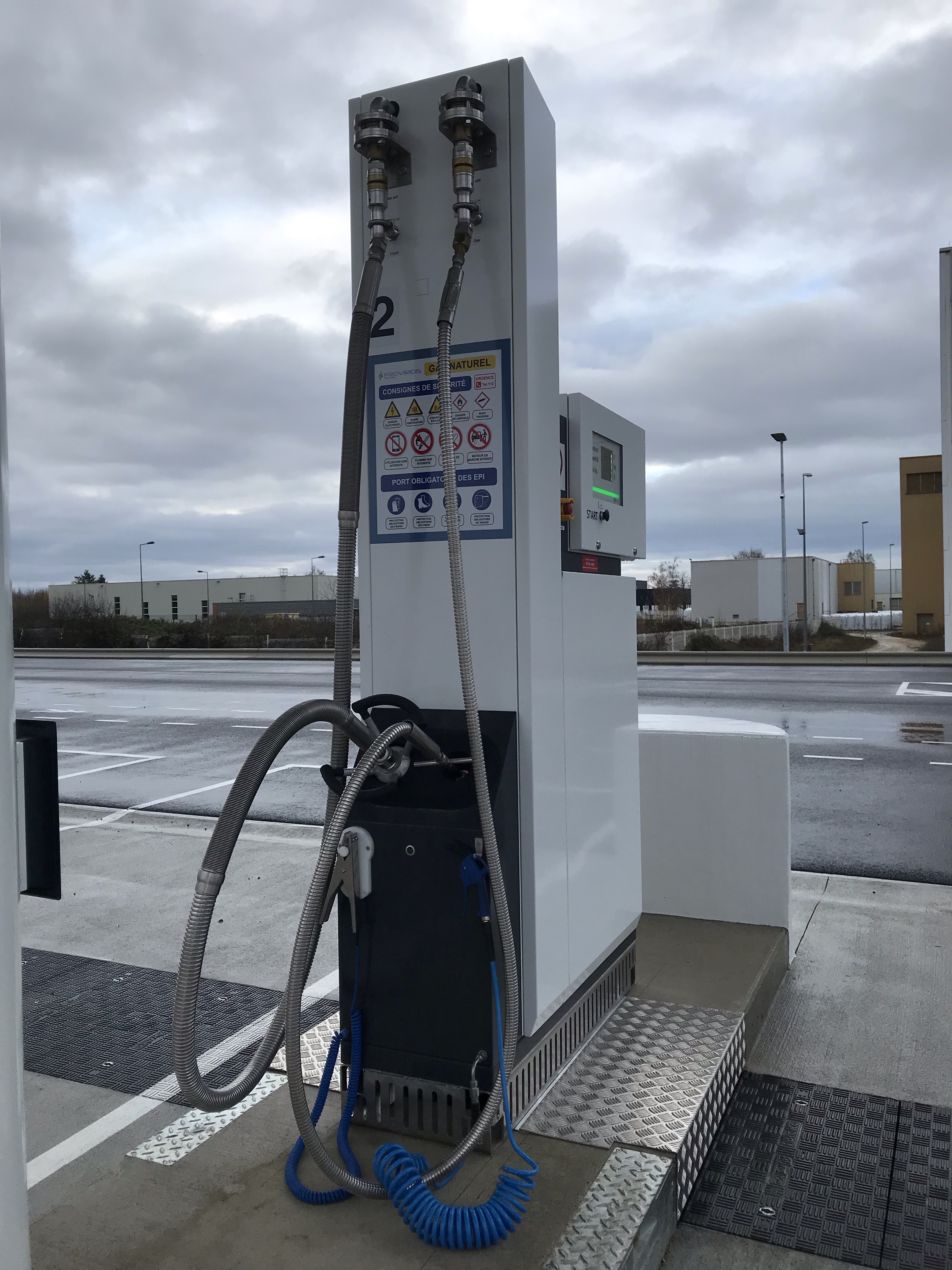
The V-GAS station is under construction, but has a lot of cool features. There is a large solar farm right behind the station, so we know that this charge was zero emissions! The location also has natural gas filling stations and hydrogen stations are being set up. There is a walking path right beside the station to pass the time productively which we did for a little while after a snack. Unfortunately the bathrooms are accessible only by pass card (perhaps frequent users like truckers and bus drivers can access the building).
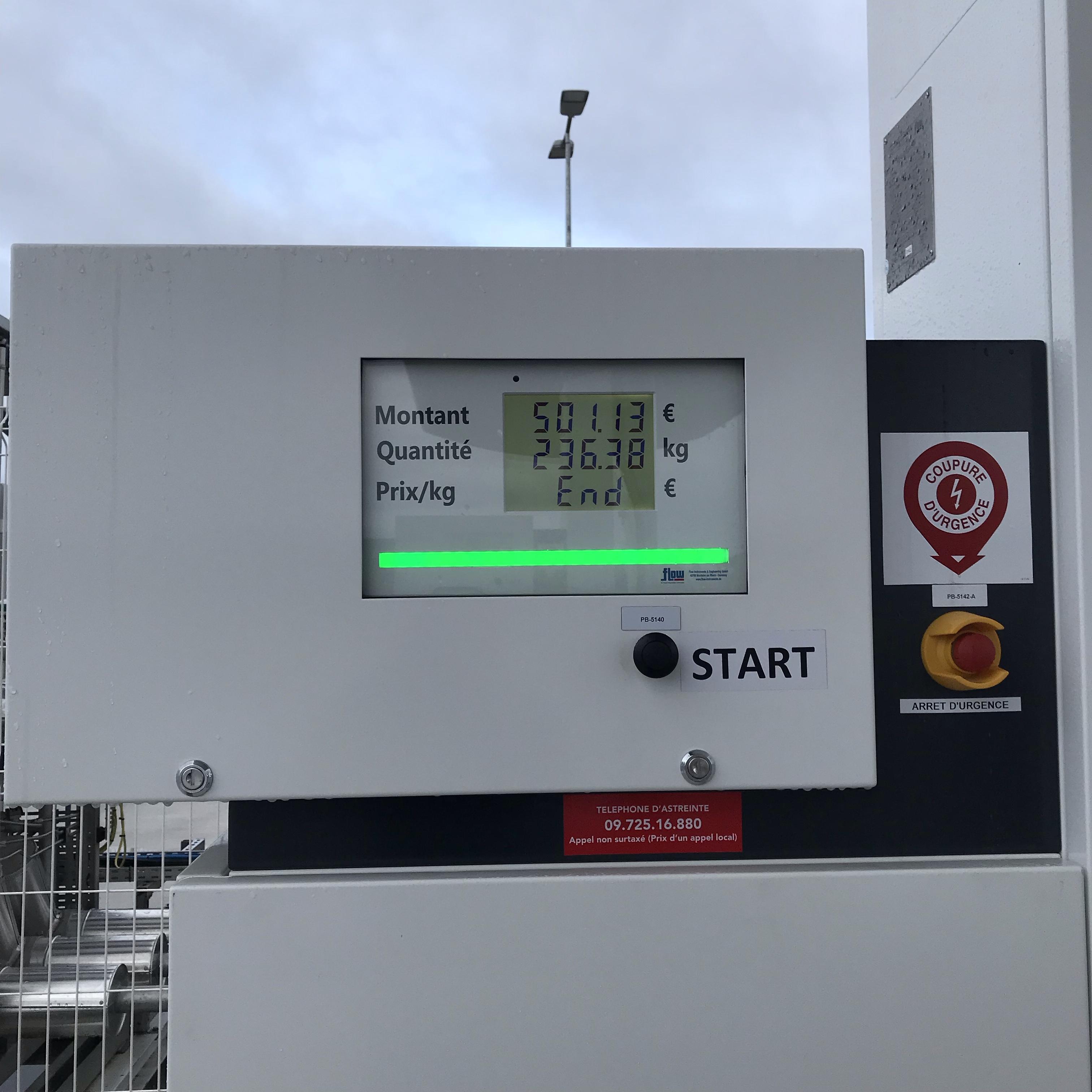
H2Natural gasNatural gas pricingReady to go ~85% charge. The charging speed drops off after this point, so for a long day we don’t stick around.
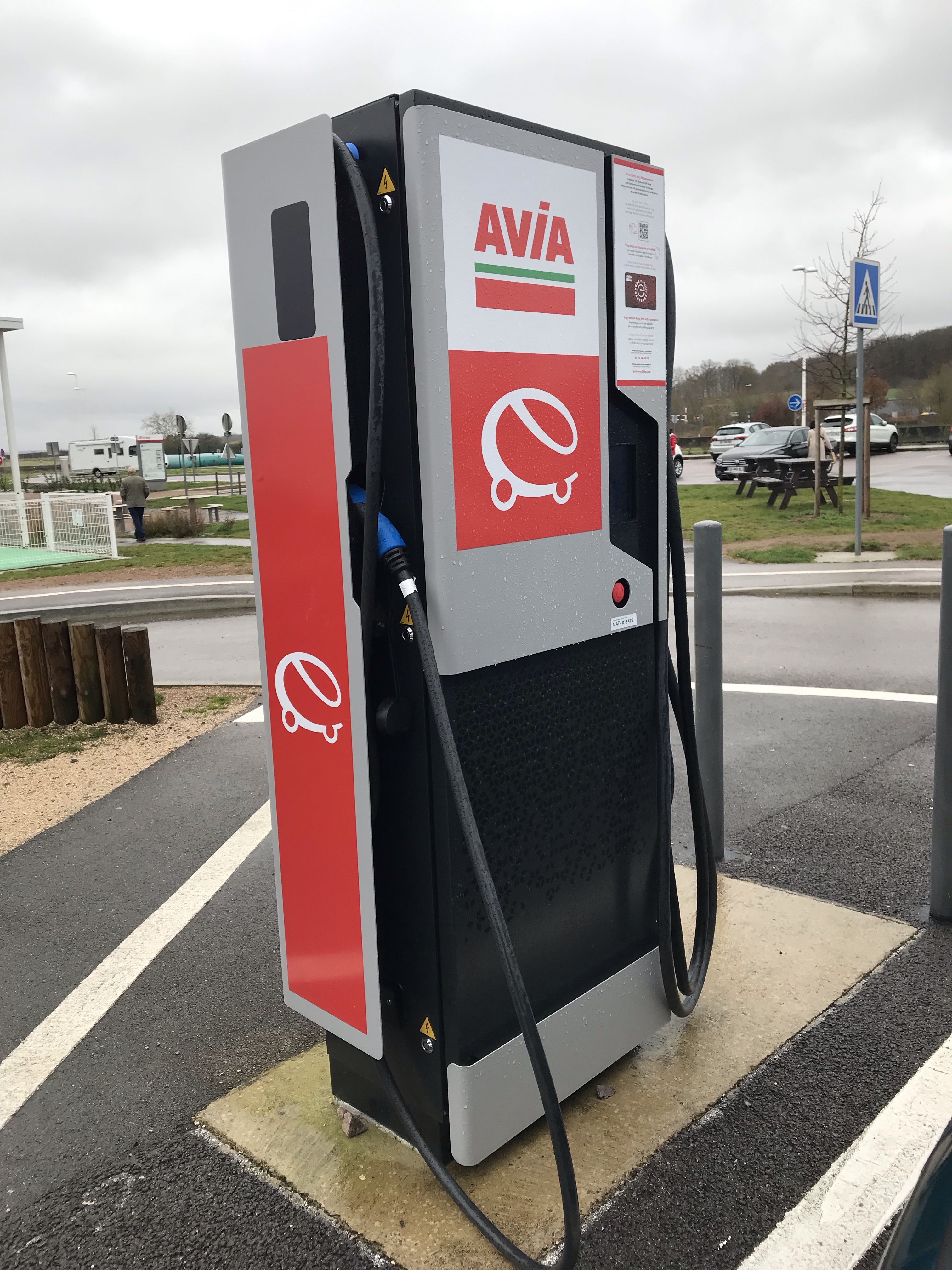
Charge attempt 2: ⚠️Our luck started to go south at our next stop, Aire de Maison Dieu. Our fob worked to get the AVIA charging station going, but the station crashed after a few minutes of charging (screen went black). We did not call the help line to see if they could restart it. We were left with ~44% of battery charge, so we wanted to find another fast charger fairly close by.
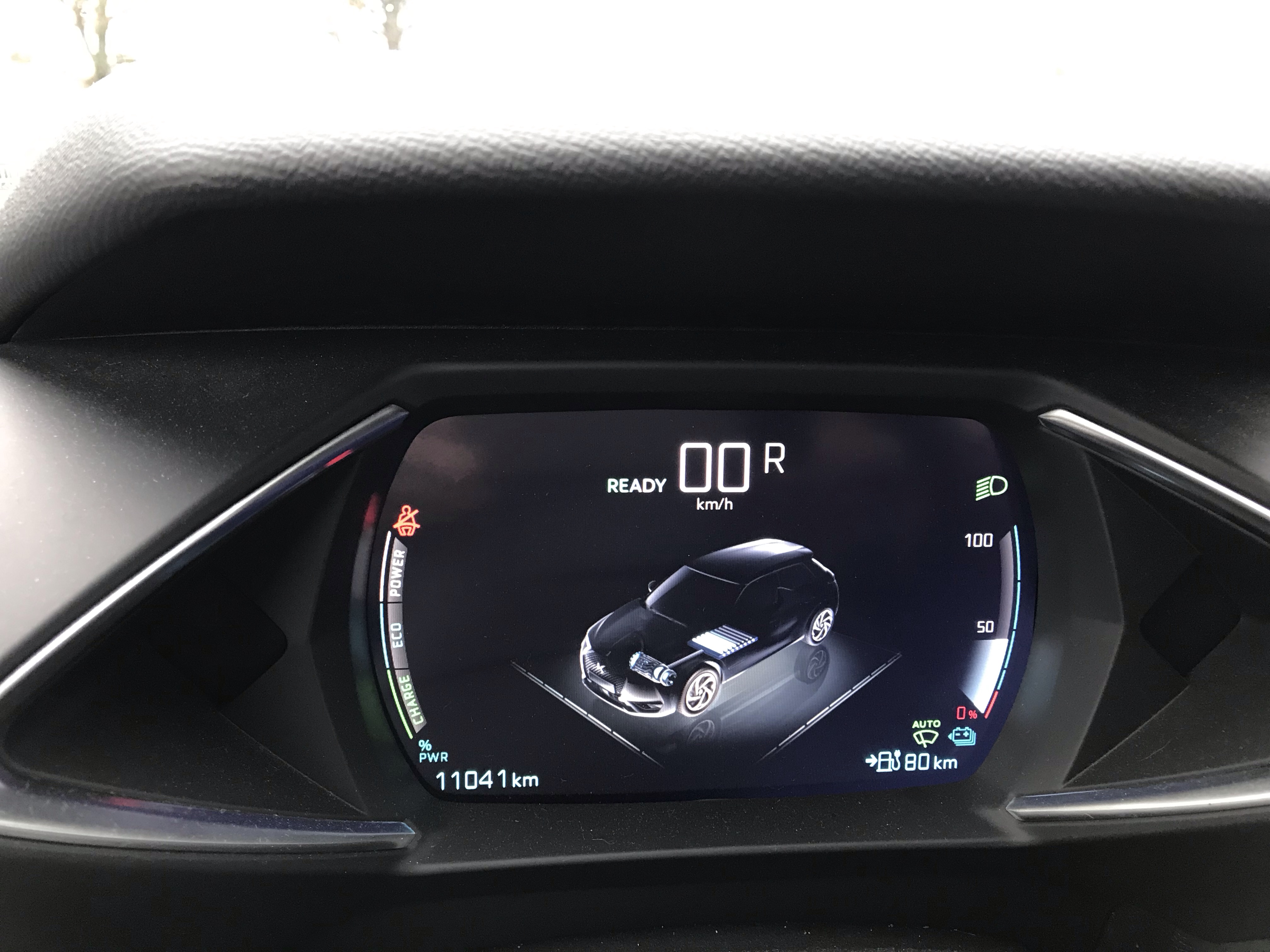
Charge attempt 3: ❌ We headed to a fast charger just outside an A6 toll booth station, but it was in use (at the start of a charge). We didn’t have enough charge to go the next closest fast charger, so we had to find a Level 2 charger. (These are more common, but take 2 or 3 hours to charge, so are not practical for long driving days).
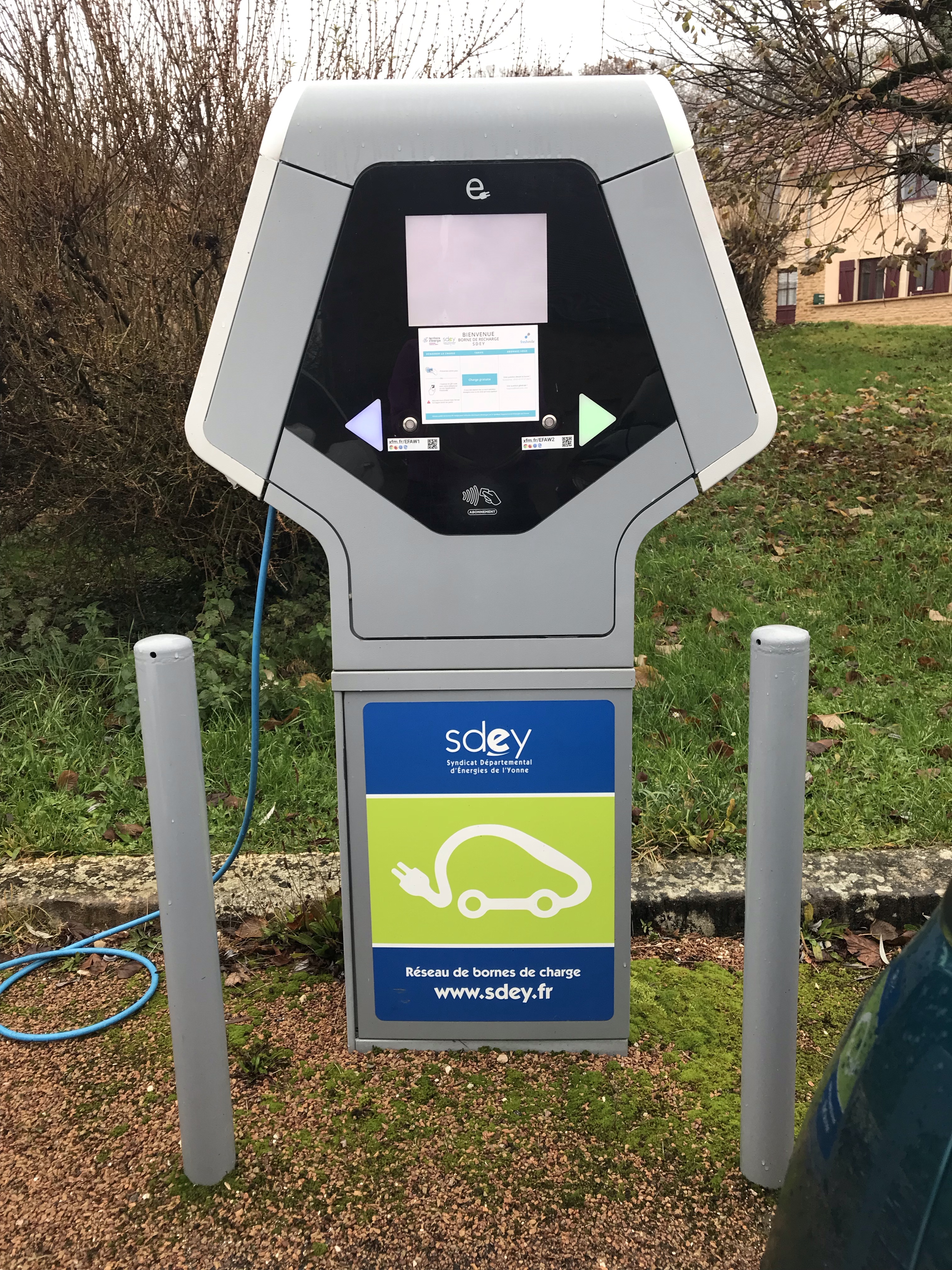
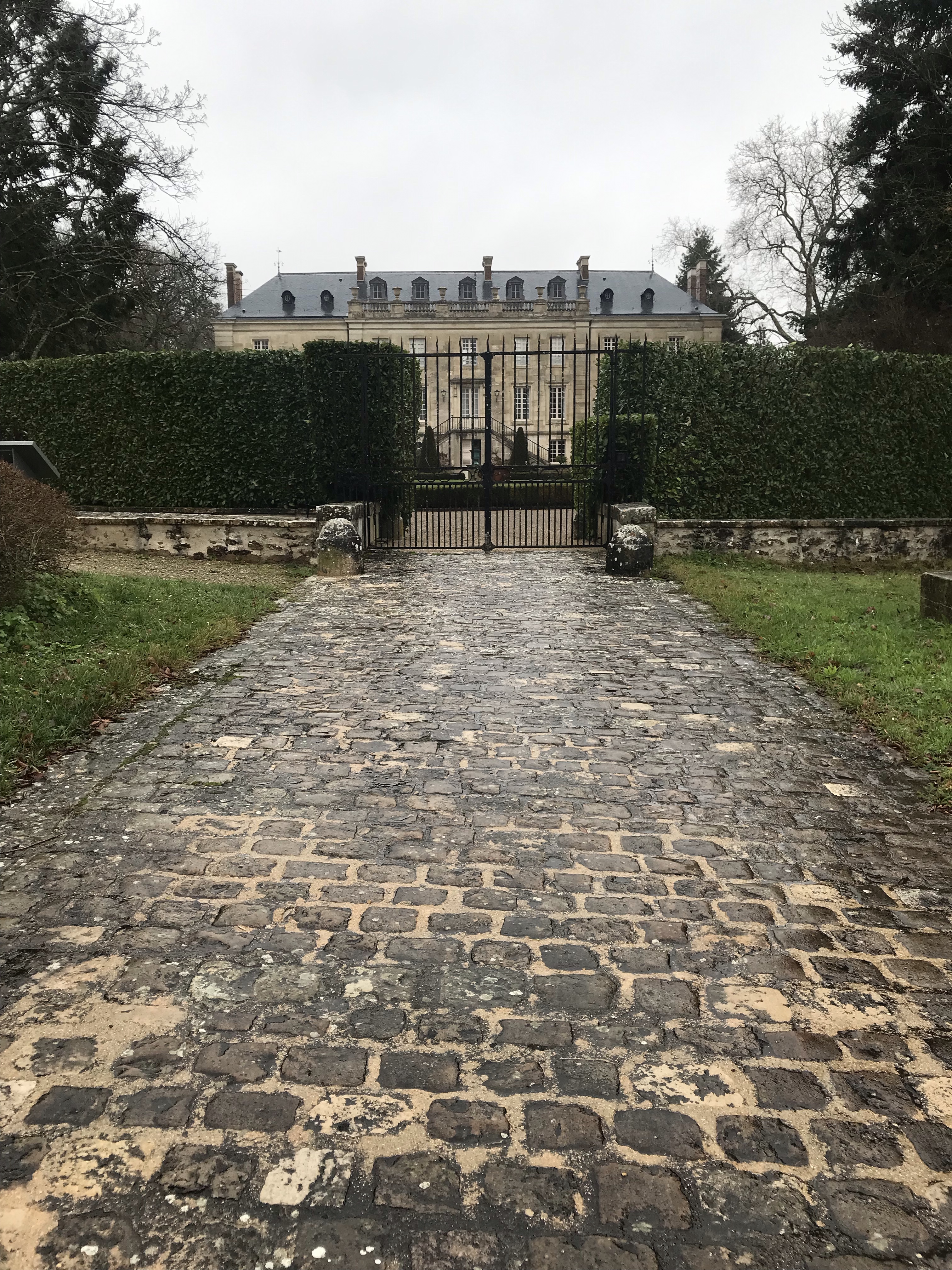
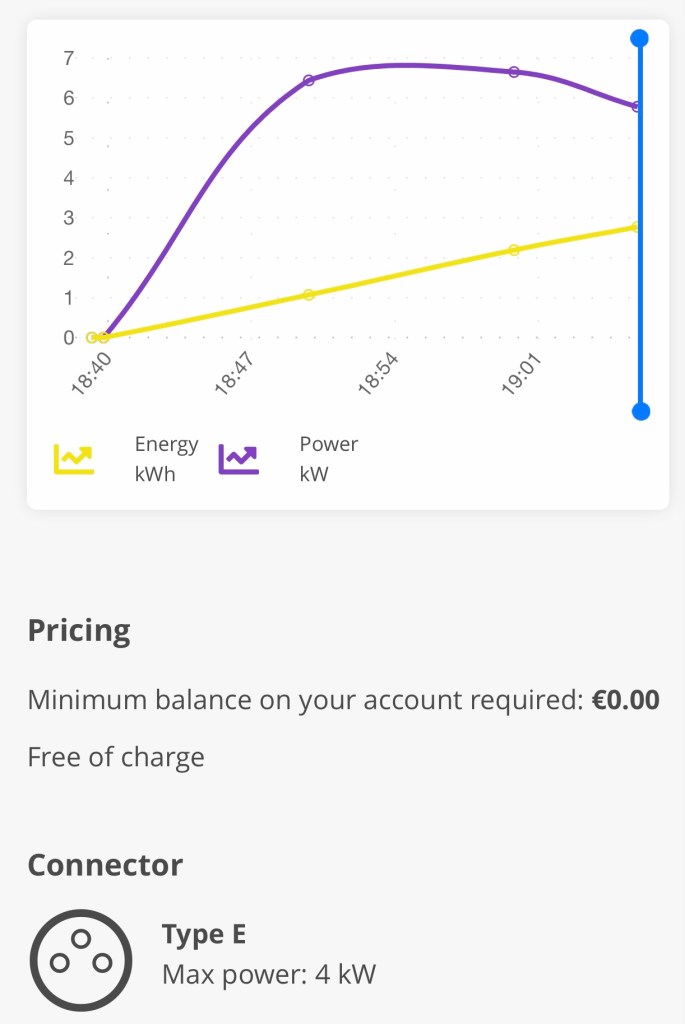
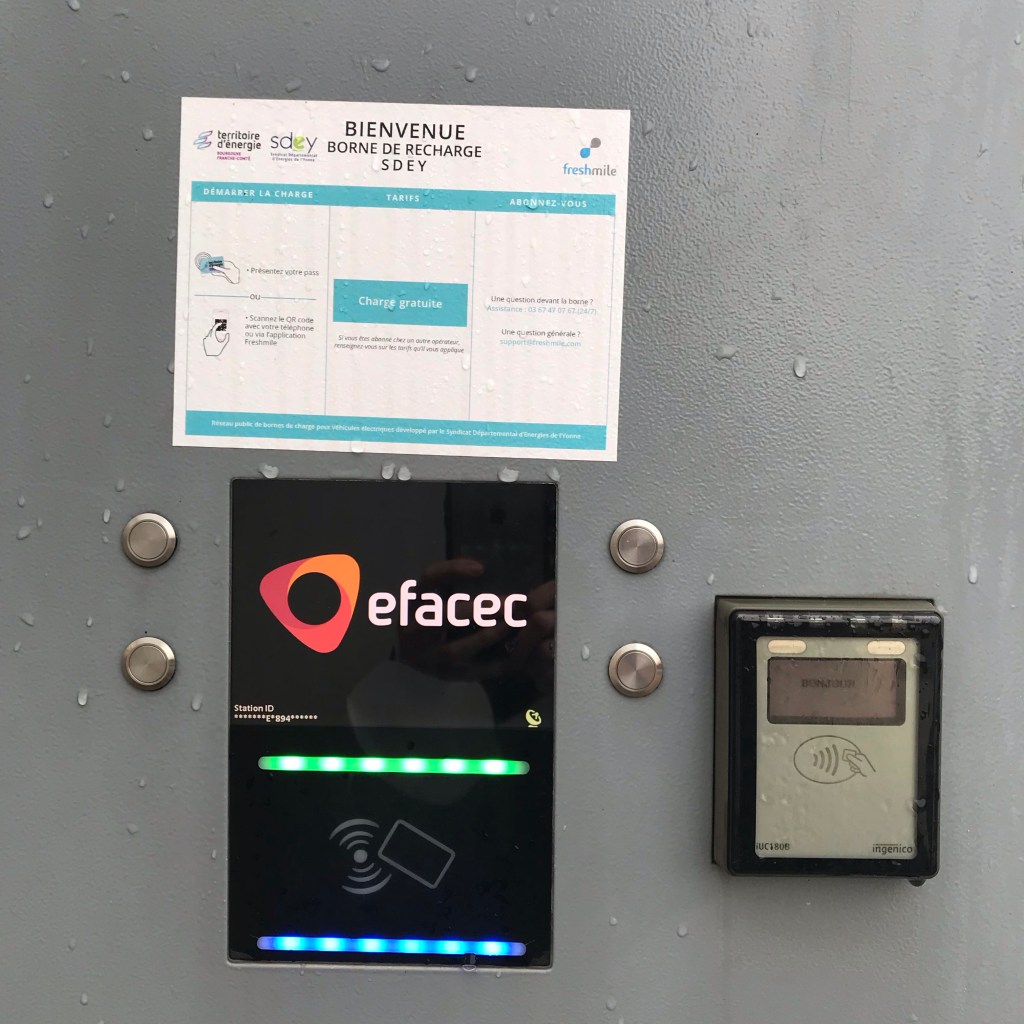
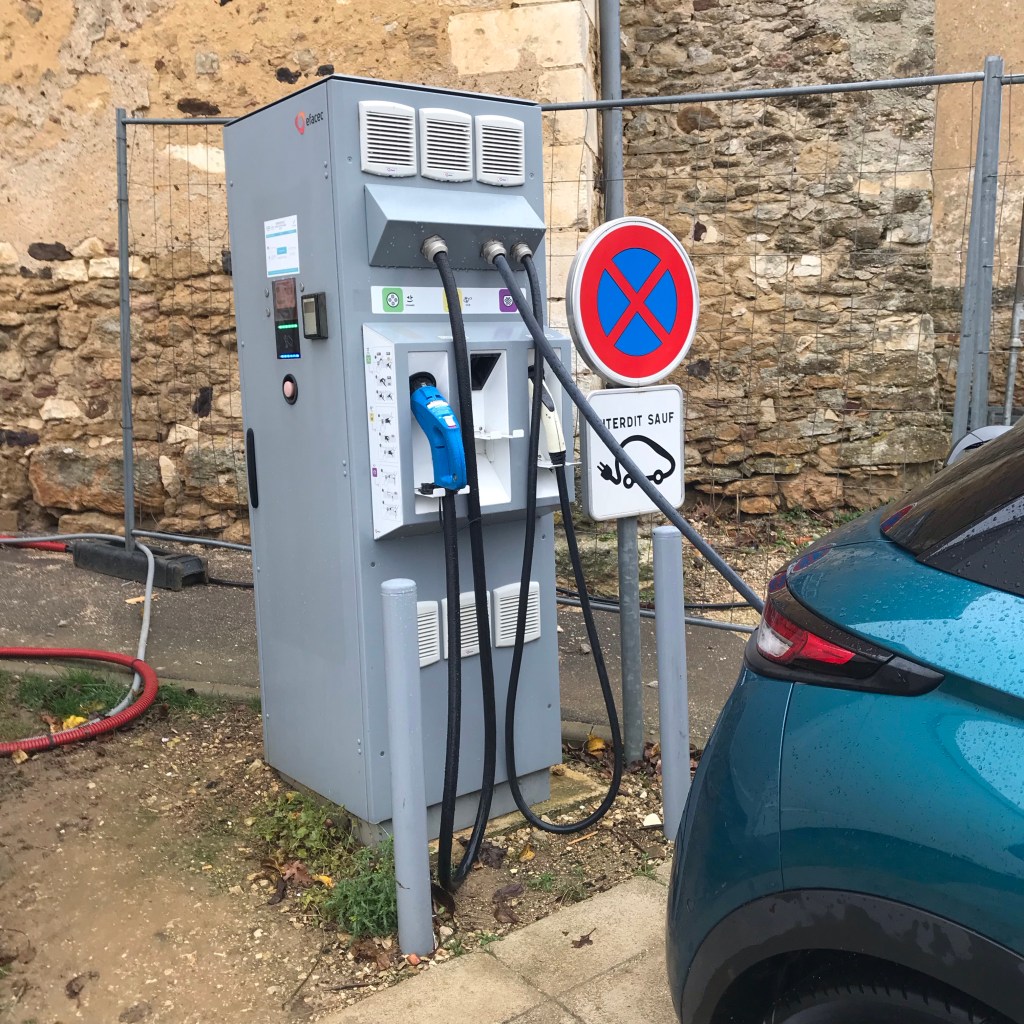
Charge attempt 4 ✅ At the Sauvigny-le-Bois charger our fob didn’t work again. The freshmile app got the charger going. We charged for 26:37 (min:sec) to add 2.77 kWh to our battery. This charge was free (presumably the commune pays). The bright side of this pit stop was discovering the local chateau and getting in another little walk.
The maximum power output from this type of Level 2 charger (Sdey) is 7 kW. The connector was a Type 2. I’m not sure why the freshmile app indicates that this connector is called a Type E with a max power capacity of 4 kW, because as you can see on the graph, we did peak just under 7 kW. Off we went to the closest fast charger again.
Charge attempt 5: ❌ After taking a chance on an aire sign that indicated an EV charger was present (under construction, not operational yet), we continued on to our destination (per Chargemap app) for the 4th charge of the day in Venoy.
Charge attempt 6: ✅ Venoy has a free access fast charger. Sweet. Again, our fob didn’t work, obviously we have problem to sort out with Plugsurfing. It took 3 tries with the freshmile app to get it going, but at least we didn’t have to make a phone call (customer service has always been able to get us charging for free when we call, but it takes about 20+ minutes to go through their process).
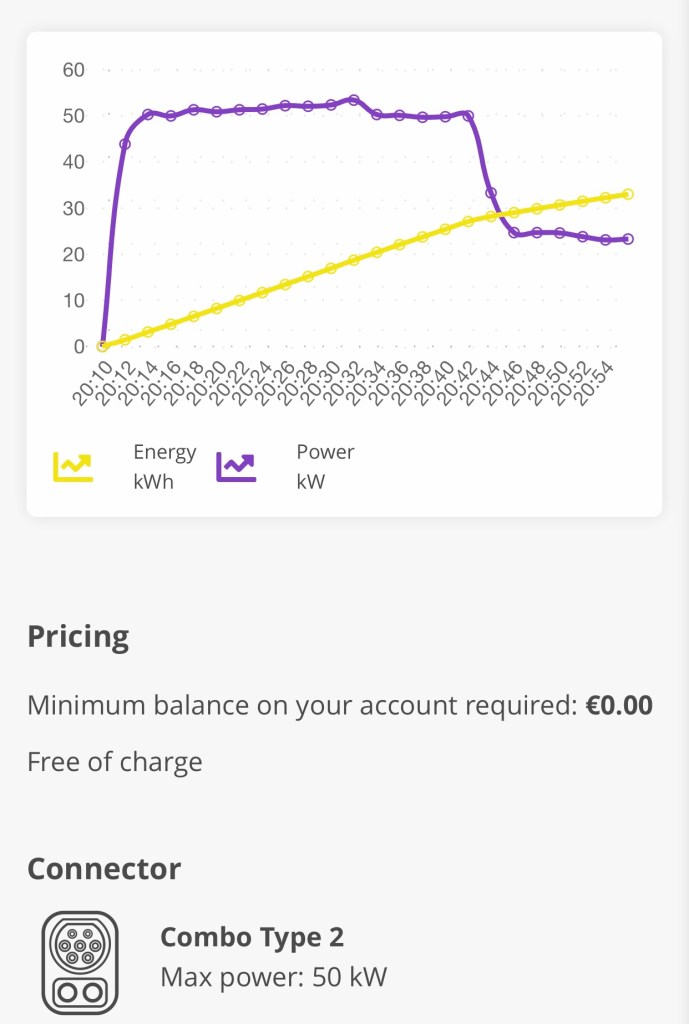
We charged from 23-96% in 46:10 (min:sec) consuming 33.01 kWh. The max power for this charger is 50 kW. We used the CCS (Type 2 combo) connector. A CHAdeMO connector is also available here. You can see in the graph below that the power drawn drops dramatically when the battery has reached ~80/85% full. We kept charging because it was free and we had the time.
Venoy free DC fast charger
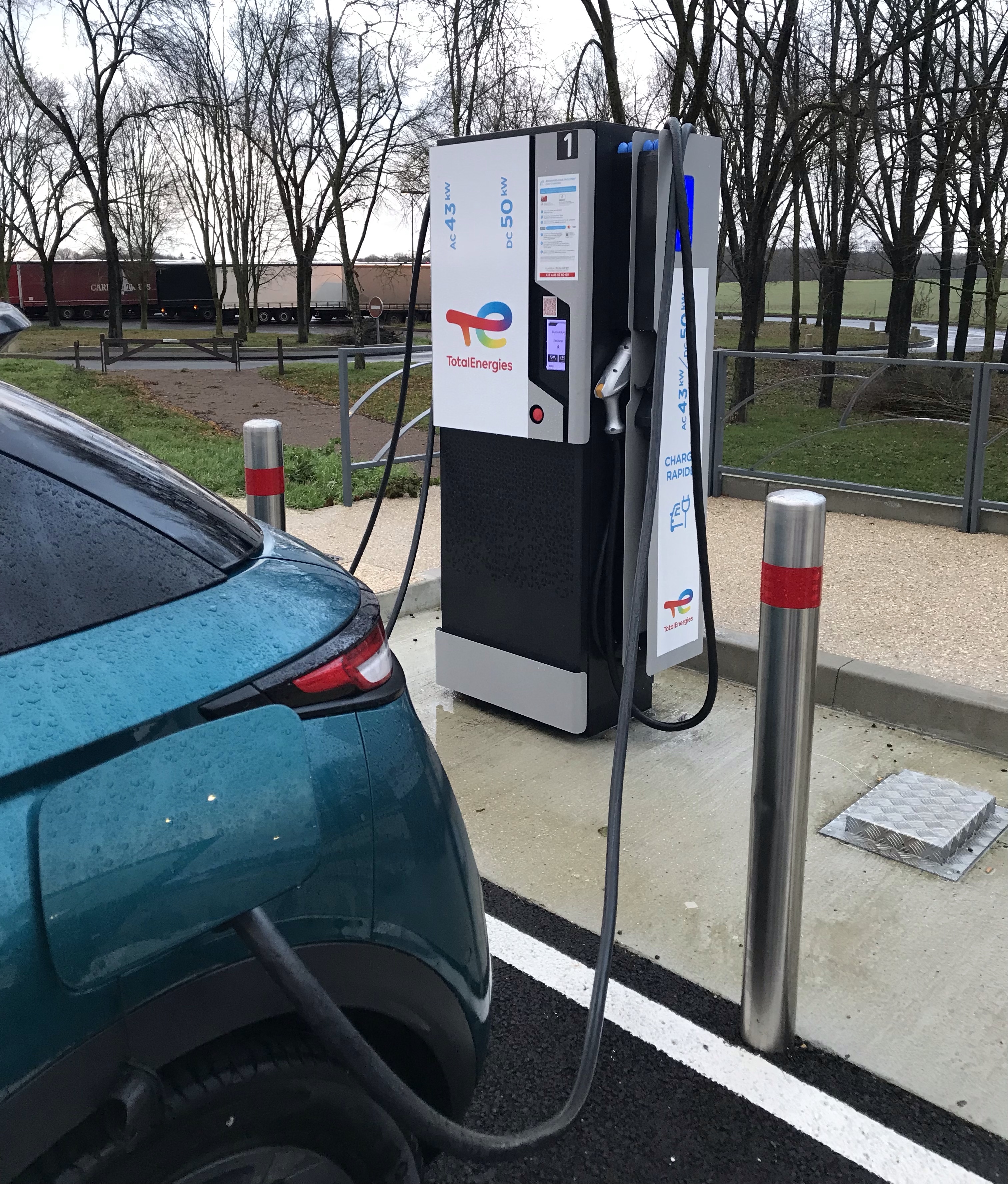
Charge attempt 7: ✅ Our fifth & final charge of the journey was at the Aire de la Couline. Our fob didn’t work again. The Total app seemed to be working fine, but we ran into a credit card issue. As our cards are Canadian, we are sometimes asked for a verification code when doing an online transaction that is sent to our cell # (for our MasterCard, our Amex sends it to email so this is easier). The phone number must be Canadian, so we have a family member’s number on file. With the time difference etc., we cannot always get ahold of them when necessary. To get charging, we called the help line and got 30 minutes for free.
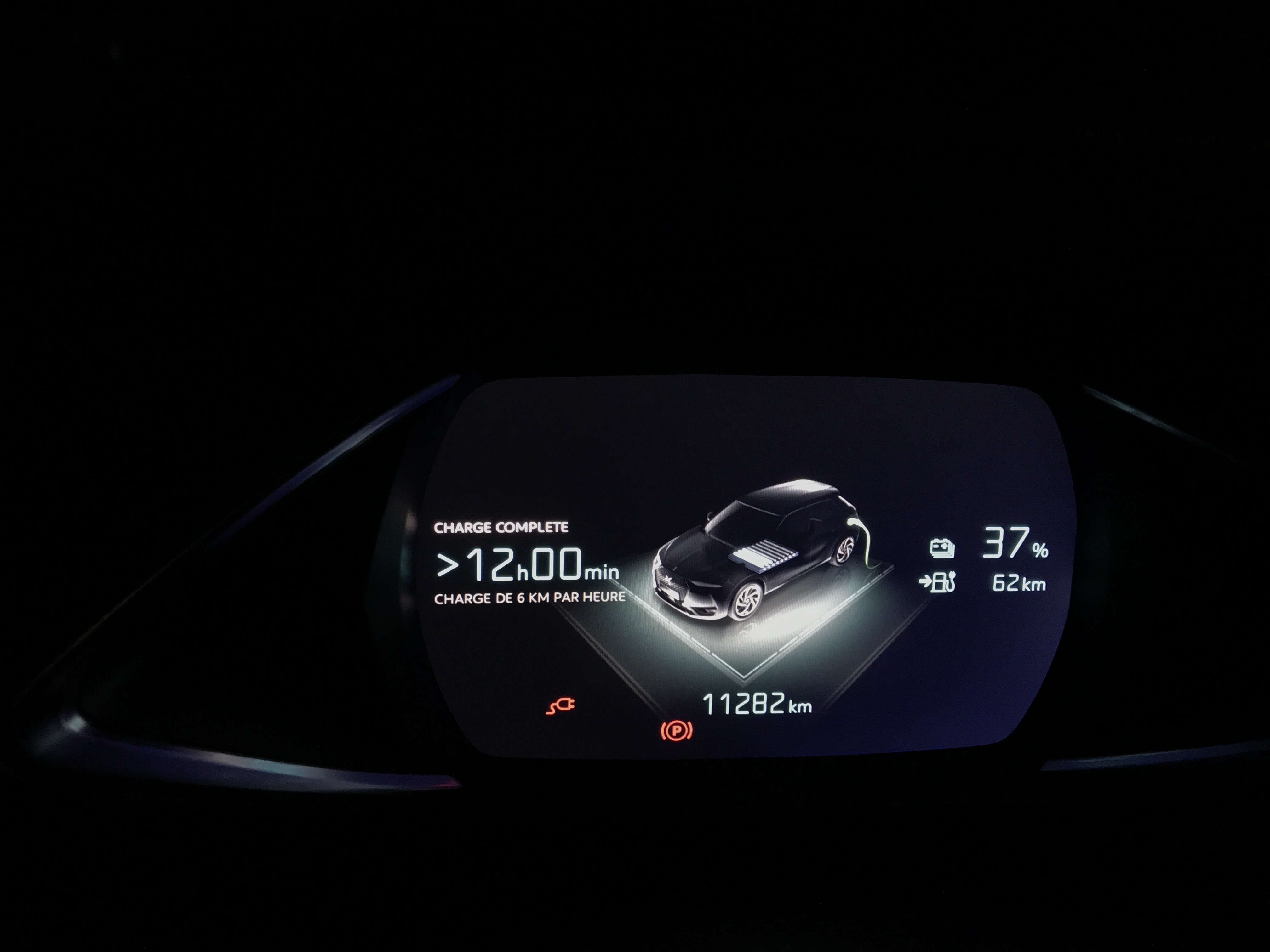
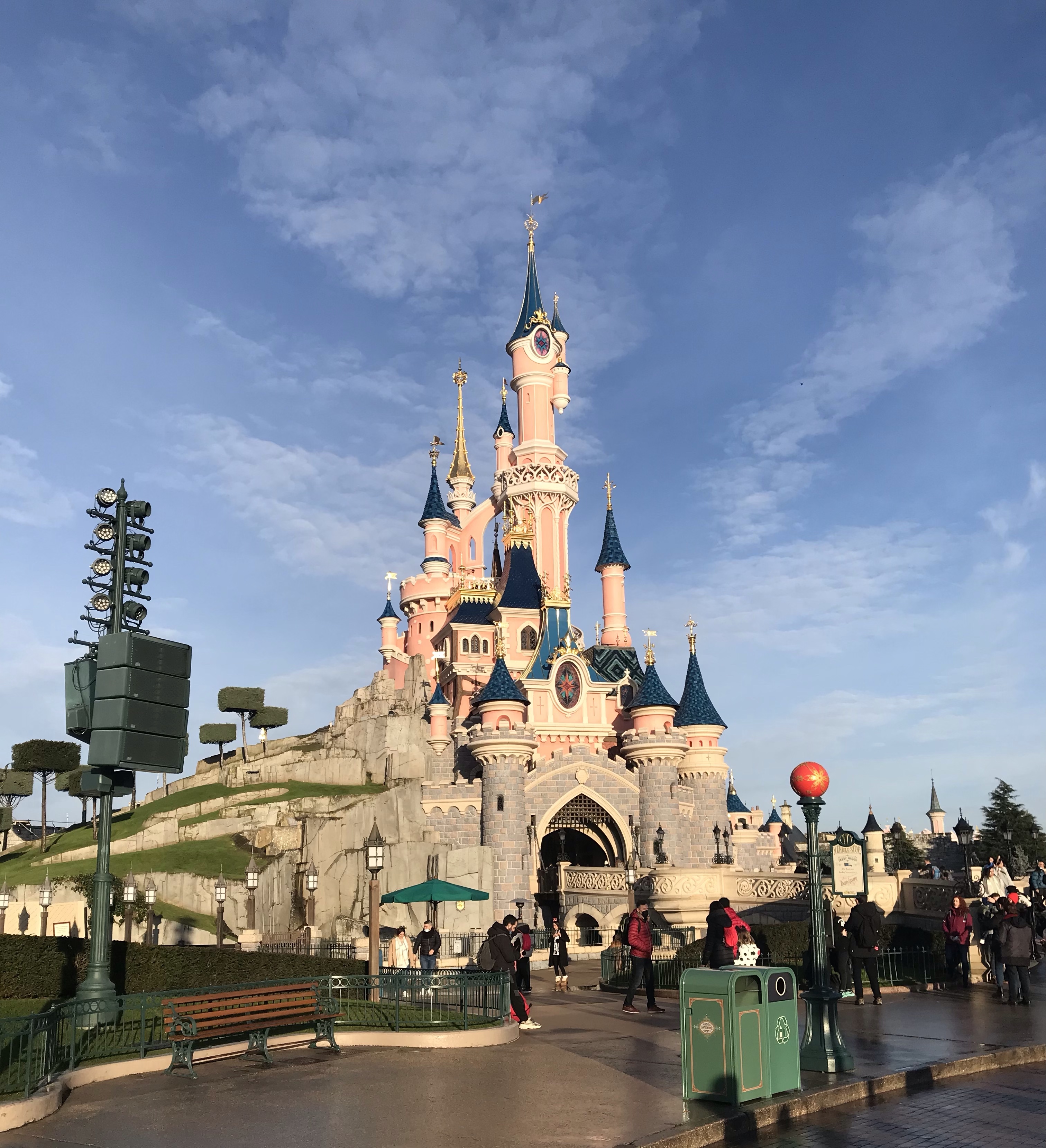
We arrived at our destination with a 37% charged battery. Thankfully, our hotel had a regular outlet available to use, which is the most reliable, convenient and cost effective way for us to charge (overnight). Next stop, Disneyland!






 Carbon conscious COVID dodging family travel